01 / Morfologi

Ciri dan struktur

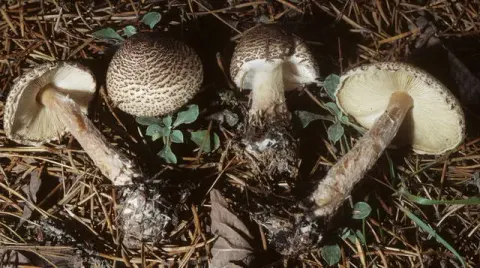
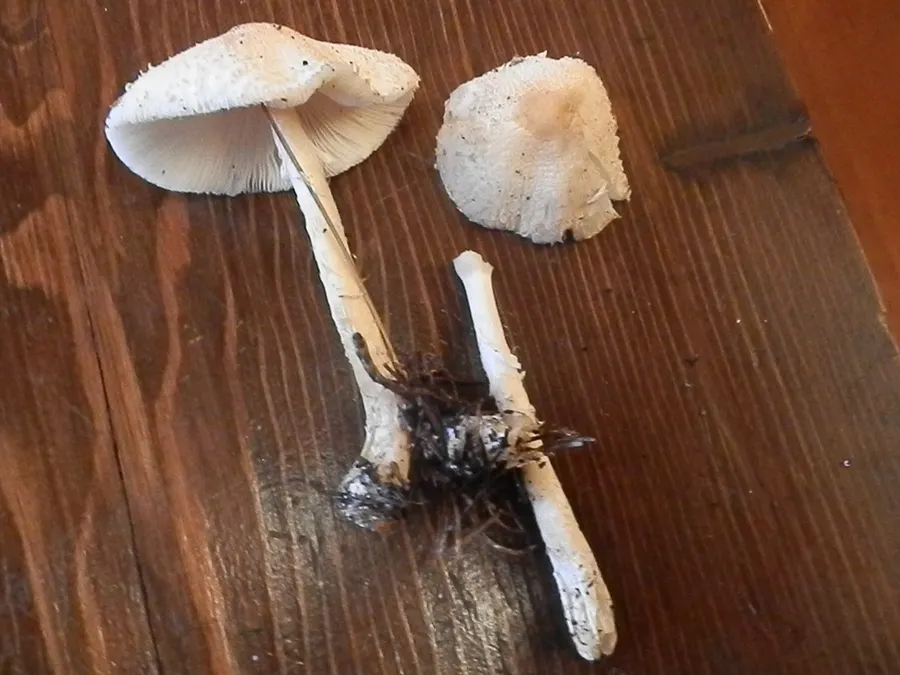
The cap is egg-shaped when young, soon broadly bell-shaped and has pale straw- or orange-brown scales on a pale background. The central umbo is covered with a well-delimited uniform disk of the same colour as the scales. It grows to a diameter of 4–7 cm. The gills are white, crowded, free from attachment to the stipe. The white stem has an indistinct ring, below which it is coarsely woolly, giving an appearance which is sometimes described as "booted". The stipe, which measures 5–12 cm long by 0.3–1 cm thick, is hollow and slender, expanding slightly at the base into a club shape. The flesh is white and has an unpleasant smell. The spore print is white. The spores are fuse-shaped (fusiform), meaning that they are tapered at both ends. They have dimensions of 12–16 by 5–6 μm. Cystidia on the gill edge (cheilocystidia) are club-shaped to cylindrical, and measure 20–40 by 5–15 μm.

Sebagian uraian ditampilkan dalam bahasa sumber; terjemahannya belum tersedia atau belum lolos pemeriksaan.

Rujukan: [1]

Pengukuran mengikuti objek, spesimen atau kultur, dan metode yang disebutkan sumber. Baca uraian asli untuk konteks lengkap.

02 / Kehidupan

Habitat dan peran ekologis

The fruit bodies grow singly or in small groups on the ground in deciduous and coniferous forests. Spesies umum, ia tersebar luas di daerah temperat dari Belahan Bumi Utara, dan telah dilaporkan dari Asia, Eropa, Amerika Utara, dan Amerika Selatan. Fruiting occurs di musim gugur. Di Cina, dikenal dari provinsi Heilongjiang, Jilin, Liaoning, Jiangsu, Guangdong, dan Yunnan.

Sebagian uraian ditampilkan dalam bahasa sumber; terjemahannya belum tersedia atau belum lolos pemeriksaan.

Rujukan: [1]

Habitat atau konteks temuan
hutan
Substrat
tanah
Peran atau konteks
Belum dikategorikan pada rilis ini.
Temukan hubungan serupa
03 / Siklus hidup

Reproduksi

The spore print is white. The spores are fuse-shaped (fusiform), meaning that they are tapered at both ends. They have dimensions of 12–16 by 5–6 μm. Cystidia on the gill edge (cheilocystidia) are club-shaped to cylindrical, and measure 20–40 by 5–15 μm.

Sebagian uraian ditampilkan dalam bahasa sumber; terjemahannya belum tersedia atau belum lolos pemeriksaan.

Rujukan: [1]

Sinonim menurut acuan taksonomi rilis: Agaricus clypeolarius; Agaricus clypeolarius var. applanatus; Agaricus clypeolarius var. granulosus; Agaricus clypeolarius var. roseus; Lepiota clypeolaria f. cedretorum; Lepiota clypeolaria f. foetens; Lepiota clypeolaria f. umbrinosquamosa; Lepiota clypeolaria subsp. parmata; Lepiota clypeolaria var. caldariorum; Lepiota clypeolaria var. campanetta; Lepiota clypeolaria var. concentrica; Lepiota clypeolaria var. crocea; Lepiota clypeolaria var. minor; Lepiota clypeolaria var. muscariodora; Lepiota clypeolaria var. ochraceosulfurescens; Lepiota clypeolaria var. pantherina; Lepiota clypeolaria var. rosea; Lepiota colubrina; Lepiota colubrina pantherina; Lepiota colubrina var. pantherina; Lepiota ochraceosulfurescens; Lepiota ventriosospora var. umbrinosquamosa
04 / Batas informasi

Catatan identitas dan cakupan

  • Nama diterima mengikuti Catalogue of Life Base2026-09-11; uraian mempertahankan konsep dan nama sumber aslinya.
  • Original geographic, specimen and life-cycle scope retained; source import awaits individual editorial review.
  • Impor dan terjemahan otomatis belum diperiksa editorial per profil. Struktur reproduktif yang disebutkan tidak membuktikan seluruh siklus hidup diketahui.
  • Pengukuran pada uraian mengikuti spesimen, kultur, dan metode sumber; angka tidak diperluas ke semua populasi.

Catatan distribusi dalam narasi mengikuti sumbernya. Dokumentasi spesimen atau foto mengikuti catatan sumber. Bukti wilayah Indonesia dan penilaian konservasi tidak disimpulkan dari gambar.

05 / Dokumentasi

Melihat dengan konteks

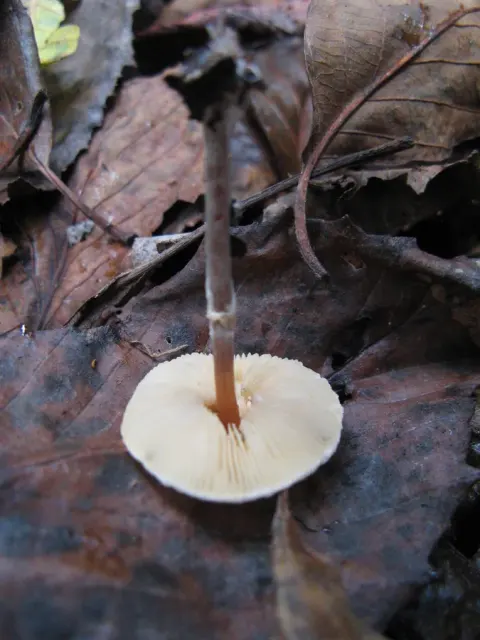
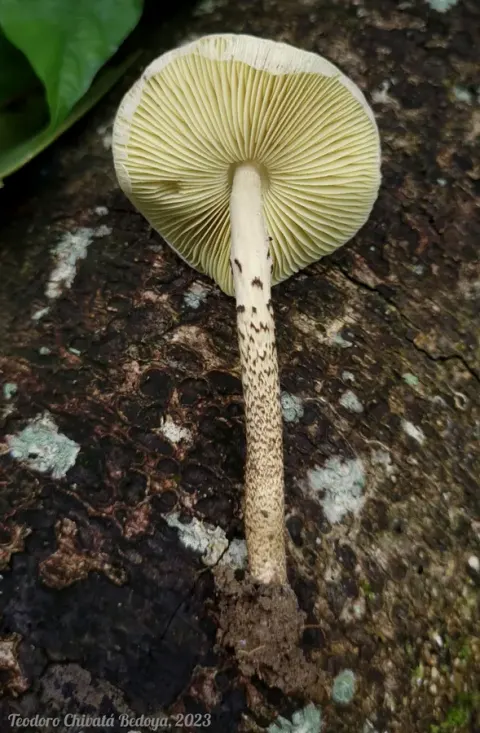
Dokumentasi Lepiota clypeolaria menurut asosiasi foto pada record takson iNaturalist. Kredit: pinonbistro. Identitas mengikuti sumber; bukan penentuan spesimen independen.

Jenis
Fotografi
Kredit
(c) pinonbistro, einige Rechte vorbehalten (CC BY-SA), hochgeladen von pinonbistro
Sumber media
Buka entri sumber

Gambar menunjukkan objek menurut identifikasi sumber, bukan verifikasi independen spesimen oleh Fungi. Tidak ada skala baru yang ditambahkan.

06 / Rujukan

Sumber profil

  1. [1] Lepiota clypeolaria — Wikipedia (en)Bagian sumber: Frozen revision 1293179336
    Tanggal penghimpunan sumber: 2026-10-12
    Teks sumber: CC BY-SA4.0 · Wikipedia contributors
  2. [2] Catalogue of Life Base2026-09-11 — Lepiota clypeolariaBagian sumber: ColDP NameUsage.tsv ID 6PDNS; accepted species; source 2073
    Tanggal penghimpunan sumber: 2026-10-12
  3. [3] Dokumentasi visual — Lepiota clypeolariaBagian sumber: Individual media record; identification follows the source, not independent determination
    Tanggal penghimpunan sumber: 2026-10-12
    Media sumber: CC BY-SA 4.0 · (c) pinonbistro, einige Rechte vorbehalten (CC BY-SA), hochgeladen von pinonbistro

Adaptasi teks: CC BY-SA 4.0. Wikipedia contributors — Lepiota clypeolaria — Wikipedia (en)

Uraian asli dan riwayat sumber

Riwayat atau halaman sumber

Ringkasan sumber

Lepiota clypeolaria, commonly known as the shield dapperling or the shaggy-stalked Lepiota, is a common species of mushroom in the genus Lepiota. The fruit bodies have a brownish cap, a shaggy stipe with a collapsed, sheathing ring or ring zone, and spindle-shaped spores. It is widely distributed in northern temperate zones, where it grows in deciduous and coniferous forests.

Revisi sumber

Morfologi sumber

The cap is egg-shaped when young, soon broadly bell-shaped and has pale straw- or orange-brown scales on a pale background. The central umbo is covered with a well-delimited uniform disk of the same colour as the scales. It grows to a diameter of 4–7 cm. The gills are white, crowded, free from attachment to the stipe. The white stem has an indistinct ring, below which it is coarsely woolly, giving an appearance which is sometimes described as "booted". The stipe, which measures 5–12 cm long by 0.3–1 cm thick, is hollow and slender, expanding slightly at the base into a club shape. The flesh is white and has an unpleasant smell. The spore print is white. The spores are fuse-shaped (fusiform), meaning that they are tapered at both ends. They have dimensions of 12–16 by 5–6 μm. Cystidia on the gill edge (cheilocystidia) are club-shaped to cylindrical, and measure 20–40 by 5–15 μm.

Revisi sumber

Ekologi sumber

The fruit bodies grow singly or in small groups on the ground in deciduous and coniferous forests. A common species, it is widespread in temperate regions of the Northern Hemisphere, and has been reported from Asia, Europe, North America, and South America. Fruiting occurs in autumn. In China, it is known from the provinces of Heilongjiang, Jilin, Liaoning, Jiangsu, Guangdong, and Yunnan.

Revisi sumber

Struktur reproduksi sumber

The spore print is white. The spores are fuse-shaped (fusiform), meaning that they are tapered at both ends. They have dimensions of 12–16 by 5–6 μm. Cystidia on the gill edge (cheilocystidia) are club-shaped to cylindrical, and measure 20–40 by 5–15 μm.

Revisi sumber

Rujukan halaman ini

Fungi. Lepiota clypeolaria. Rilis data fungi-2026-10-12-expansion-2. https://fungi-atlas.mgadib.chatgpt.site/jamur/lepiota-clypeolaria/.

Status: impor sumber; pemeriksaan editorial per profil belum selesai. Untuk klaim biologis, gunakan rujukan pada bagian terkait dan periksa konteks sumber aslinya.