01 / Morfologi

Ciri dan struktur

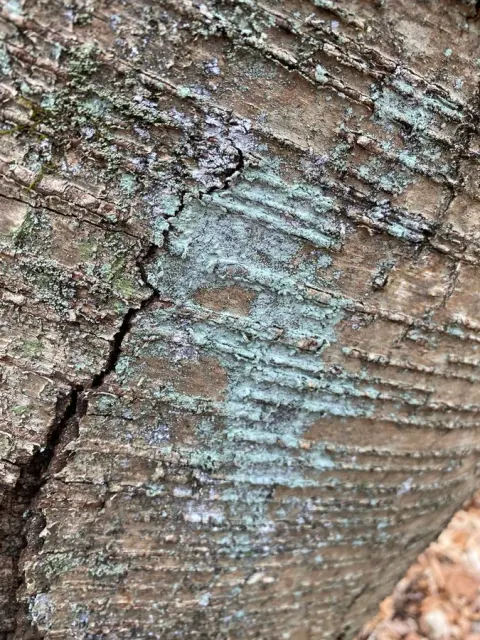
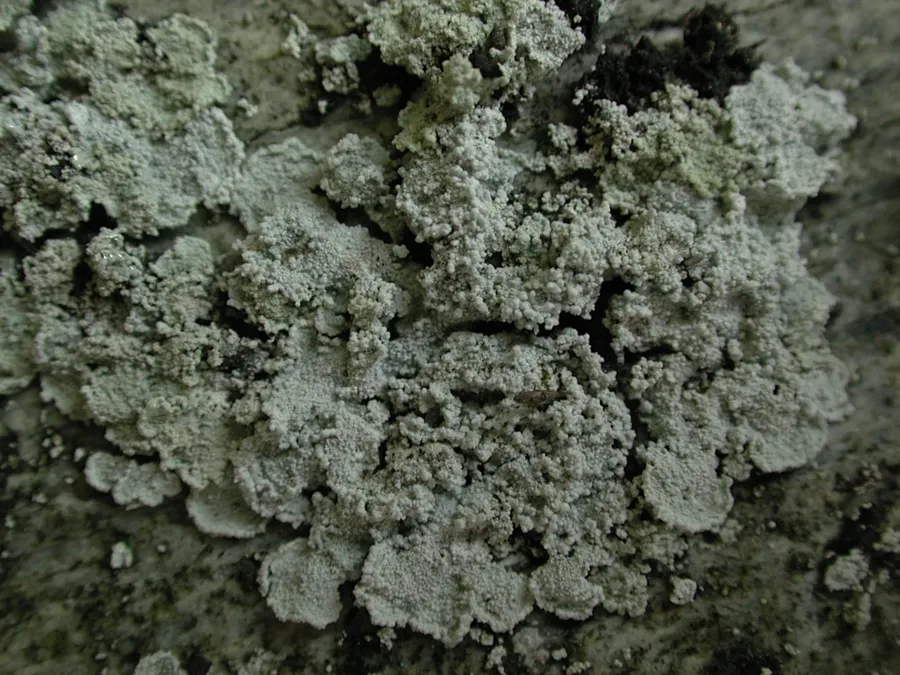
Lepraria bergensis has a thallus that is pale bluish-grey and can form small, rounded rosettes up to a few millimeters in diameter. As the lichen matures, these rosettes often merge with other thalli, creating patches up to 1 centimeter or more in diameter. The thallus can be up to 220 micrometres (μm) thick, excluding loose soredia and consoredia. The of Lepraria bergensis are distinct, especially in young specimens growing on rocks. These lobes can be a few millimetres wide and have sharply raised margins that reveal a white lower surface with colourless hyphae projecting outward. The upper surface is powdery and composed of loosely packed soredia (tiny reproductive granules) and (larger aggregations of soredia). The lower surface is whitish, at least along the margin, and can be pale yellowish or brown. The , which forms the lower layer of the thallus, is inconspicuous and either absent or brown in colour. Soredia are up to 25 μm in diameter, and consoredia can be up to 200 (sometimes up to 340) μm in diameter. Both are densely packed with crystals and may have short, projecting hyphae. The medulla (the inner layer of the thallus) is white and distinct only in patches. The (the photosynthetic partner) is and measures up to 16 μm in diameter. The chemical profile of Lepraria bergensis includes several compounds: atranorin, fragilin, 7-chloroemodin, parietin, A01-athrone, emodin, and a mixture of rangiformic/jackinic acid along with trace amounts of their derivatives norrangiformic/norjackinic acid. The thallus surface is K−, C− and PD−, but the lower surface is K+ (purple).

Sebagian uraian ditampilkan dalam bahasa sumber; terjemahannya belum tersedia atau belum lolos pemeriksaan.

Rujukan: [1]

Pengukuran mengikuti objek, spesimen atau kultur, dan metode yang disebutkan sumber. Baca uraian asli untuk konteks lengkap.

02 / Kehidupan

Habitat dan peran ekologis

Lepraria bergensis is primarily saxicolous (rock-dwelling), found under shallow overhang on siliceous rock walls. It also grows on moss-covered, nearly vertical to slightly sloping rocks. In its type locality, Lepraria bergensis is relatively common, frequently intermingling with Leproloma membranaceum to create mosaic-like patterns. It also coexists with other lichen species such as Cystocoleus ebeneus, Lepraria rigidula, and Parmelia saxatilis. At its second known Norwegian site in Åsane, it grows on mosses such as Andreaea and is associated with Lepraria neglecta. Lepraria bergensis was later reported by Alan Orange from a spruce plantation in Brynmawr (Great Britain) in 2005, and was formally documented from Deville, Ardennes (France) in 2007. It was also reported from Hesse, Germany, in 2007, where it was found on a sun-exposed cliff of green shale, growing on moss and humus.

Sebagian uraian ditampilkan dalam bahasa sumber; terjemahannya belum tersedia atau belum lolos pemeriksaan.

Rujukan: [1]

Habitat atau konteks temuan
Informasi belum tersedia pada sumber rilis ini.
Substrat
Informasi belum tersedia pada sumber rilis ini.
Peran atau konteks
Pembentuk liken
Temukan hubungan serupa
03 / Siklus hidup

Reproduksi

Lepraria bergensis has a thallus that is pale bluish-grey and can form small, rounded rosettes up to a few millimeters in diameter. As the lichen matures, these rosettes often merge with other thalli, creating patches up to 1 centimeter or more in diameter. The thallus can be up to 220 micrometres (μm) thick, excluding loose soredia and consoredia. The of Lepraria bergensis are distinct, especially in young specimens growing on rocks. These lobes can be a few millimetres wide and have sharply raised margins that reveal a white lower surface with colourless hyphae projecting outward. The upper surface is powdery and composed of loosely packed soredia (tiny reproductive granules) and (larger aggregations of soredia).

Sebagian uraian ditampilkan dalam bahasa sumber; terjemahannya belum tersedia atau belum lolos pemeriksaan.

Rujukan: [1]

04 / Batas informasi

Catatan identitas dan cakupan

  • Nama diterima mengikuti Catalogue of Life Base2026-09-11; uraian mempertahankan konsep dan nama sumber aslinya.
  • Original geographic, specimen and life-cycle scope retained; source import awaits individual editorial review.
  • Impor dan terjemahan otomatis belum diperiksa editorial per profil. Struktur reproduktif yang disebutkan tidak membuktikan seluruh siklus hidup diketahui.
  • Pengukuran pada uraian mengikuti spesimen, kultur, dan metode sumber; angka tidak diperluas ke semua populasi.

Catatan distribusi dalam narasi mengikuti sumbernya. Dokumentasi spesimen atau foto mengikuti catatan sumber. Bukti wilayah Indonesia dan penilaian konservasi tidak disimpulkan dari gambar.

05 / Dokumentasi

Melihat dengan konteks

Dokumentasi Lepraria bergensis dari Wikimedia Commons. The leprose lichen Lepraria bergensis Identifikasi mengikuti record berkas sumber.

Jenis
Fotografi
Kredit
Einar Timdal
Sumber media
Buka entri sumber

Gambar menunjukkan objek menurut identifikasi sumber, bukan verifikasi independen spesimen oleh Fungi. Tidak ada skala baru yang ditambahkan.

06 / Rujukan

Sumber profil

  1. [1] Lepraria bergensis — Wikipedia (en)Bagian sumber: Frozen revision 1341958729
    Tanggal penghimpunan sumber: 2026-10-12
    Teks sumber: CC BY-SA4.0 · Wikipedia contributors
  2. [2] Catalogue of Life Base2026-09-11 — Lepraria bergensisBagian sumber: ColDP NameUsage.tsv ID 3TGFQ; accepted species; source 2073
    Tanggal penghimpunan sumber: 2026-10-12
  3. [3] Dokumentasi visual — Lepraria bergensisBagian sumber: Individual media record; identification follows the source, not independent determination
    Tanggal penghimpunan sumber: 2026-10-12
    Media sumber: CC BY-SA 4.0 · Einar Timdal

Adaptasi teks: CC BY-SA 4.0. Wikipedia contributors — Lepraria bergensis — Wikipedia (en)

Uraian asli dan riwayat sumber

Riwayat atau halaman sumber

Ringkasan sumber

Lepraria bergensis is an uncommon crustose lichen in the family Stereocaulaceae. It occurs in Northern and Central Europe, where it grows on siliceous (silicon-rich) rock walls, particularly under small overhangs, and on mosses on vertical to slightly sloping rock surfaces. The lichen thallus forms as a pale bluish-grey crust-like growth on rocks and mosses. The lichen begins as small, rounded patches a few millimetres wide, which may eventually coalesce into larger areas exceeding 1 centimetre in diameter.

Revisi sumber

Morfologi sumber

Lepraria bergensis has a thallus that is pale bluish-grey and can form small, rounded rosettes up to a few millimeters in diameter. As the lichen matures, these rosettes often merge with other thalli, creating patches up to 1 centimeter or more in diameter. The thallus can be up to 220 micrometres (μm) thick, excluding loose soredia and consoredia. The of Lepraria bergensis are distinct, especially in young specimens growing on rocks. These lobes can be a few millimetres wide and have sharply raised margins that reveal a white lower surface with colourless hyphae projecting outward. The upper surface is powdery and composed of loosely packed soredia (tiny reproductive granules) and (larger aggregations of soredia). The lower surface is whitish, at least along the margin, and can be pale yellowish or brown. The , which forms the lower layer of the thallus, is inconspicuous and either absent or brown in colour. Soredia are up to 25 μm in diameter, and consoredia can be up to 200 (sometimes up to 340) μm in diameter. Both are densely packed with crystals and may have short, projecting hyphae. The medulla (the inner layer of the thallus) is white and distinct only in patches. The (the photosynthetic partner) is and measures up to 16 μm in diameter. The chemical profile of Lepraria bergensis includes several compounds: atranorin, fragilin, 7-chloroemodin, parietin, A01-athrone, emodin, and a mixture of rangiformic/jackinic acid along with trace amounts of their derivatives norrangiformic/norjackinic acid. The thallus surface is K−, C− and PD−, but the lower surface is K+ (purple).

Revisi sumber

Ekologi sumber

Lepraria bergensis is primarily saxicolous (rock-dwelling), found under shallow overhang on siliceous rock walls. It also grows on moss-covered, nearly vertical to slightly sloping rocks. In its type locality, Lepraria bergensis is relatively common, frequently intermingling with Leproloma membranaceum to create mosaic-like patterns. It also coexists with other lichen species such as Cystocoleus ebeneus, Lepraria rigidula, and Parmelia saxatilis. At its second known Norwegian site in Åsane, it grows on mosses such as Andreaea and is associated with Lepraria neglecta. Lepraria bergensis was later reported by Alan Orange from a spruce plantation in Brynmawr (Great Britain) in 2005, and was formally documented from Deville, Ardennes (France) in 2007. It was also reported from Hesse, Germany, in 2007, where it was found on a sun-exposed cliff of green shale, growing on moss and humus.

Revisi sumber

Struktur reproduksi sumber

Lepraria bergensis has a thallus that is pale bluish-grey and can form small, rounded rosettes up to a few millimeters in diameter. As the lichen matures, these rosettes often merge with other thalli, creating patches up to 1 centimeter or more in diameter. The thallus can be up to 220 micrometres (μm) thick, excluding loose soredia and consoredia. The of Lepraria bergensis are distinct, especially in young specimens growing on rocks. These lobes can be a few millimetres wide and have sharply raised margins that reveal a white lower surface with colourless hyphae projecting outward. The upper surface is powdery and composed of loosely packed soredia (tiny reproductive granules) and (larger aggregations of soredia).

Revisi sumber

Rujukan halaman ini

Fungi. Lepraria bergensis. Rilis data fungi-2026-10-12-expansion-2. https://fungi-atlas.mgadib.chatgpt.site/jamur/lepraria-bergensis/.

Status: impor sumber; pemeriksaan editorial per profil belum selesai. Untuk klaim biologis, gunakan rujukan pada bagian terkait dan periksa konteks sumber aslinya.