01 / Morfologi

Ciri dan struktur

This lichen forms a powdery crust with edges that are either diffuse or poorly defined. It lacks and has no medulla or base layer (). The thallus is crustose, leprose, and aggregated, appearing discontinuous and not stratified. It initially forms isolated granules that divide to form aggregations, eventually merging to form a thin crust (less than 0.1 mm thick), gray-blue in color. The reproductive structures consist of well-organized and discrete spherical () granules, typically 35–59 μm in diameter (range 24–76 μm). These granules are ecorticate and remain distinct rather than forming compound units. The photobiont is green and coccoid, with globose cells typically 8–12 μm in width (range 6–16 μm). The hyphae are hyaline, typically 2–4 μm in width (range 1.8–5 μm), and are septate and obscured by a thick layer of crystals that appear bright under polarized light (POL+), which dissolve in KOH solution and recrystallize as thin bent needles. The main chemical constituents are atranorin, zeorin, and pallidic acid. Some specimens have been found to also contain roccellic/angardianic acid or an unidentified fatty acid. The expected results of chemical spot tests are K+ (yellow), C−, KC−, and P+ (weak yellow), and UV−.

Sebagian uraian ditampilkan dalam bahasa sumber; terjemahannya belum tersedia atau belum lolos pemeriksaan.

Rujukan: [1]

Pengukuran mengikuti objek, spesimen atau kultur, dan metode yang disebutkan sumber. Baca uraian asli untuk konteks lengkap.

02 / Kehidupan

Habitat dan peran ekologis

Lepraria caesiella is common and widely distributed throughout temperate and boreal northeastern North America, extending southward in the Appalachian Mountains. The species occurs on a wide diversity of bark-bearing (corticolous) substrates, including both conifers and hardwoods, though the majority of corticolous collections are from hardwoods, particularly oaks (Quercus). Disjunct saxicolous populations also occur in the Ozark ecoregion. While primarily a corticolous species, it can also be found on noncalcareous rocks. These saxicolous populations are ecologically distinct from other sympatric Lepraria species because they occur on dry, protected rock faces that are sheltered from rain but still exposed to some light. This differs from most other species which occur either on rock faces fully exposed to the elements, or in shaded overhangs that are completely protected and always shaded.

Sebagian uraian ditampilkan dalam bahasa sumber; terjemahannya belum tersedia atau belum lolos pemeriksaan.

Rujukan: [1]

Habitat atau konteks temuan
Informasi belum tersedia pada sumber rilis ini.
Substrat
Informasi belum tersedia pada sumber rilis ini.
Peran atau konteks
Pembentuk liken
Temukan hubungan serupa
03 / Siklus hidup

Reproduksi

The reproductive structures consist of well-organized and discrete spherical () granules, typically 35–59 μm in diameter (range 24–76 μm). These granules are ecorticate and remain distinct rather than forming compound units. The photobiont is green and coccoid, with globose cells typically 8–12 μm in width (range 6–16 μm). The hyphae are hyaline, typically 2–4 μm in width (range 1.8–5 μm), and are septate and obscured by a thick layer of crystals that appear bright under polarized light (POL+), which dissolve in KOH solution and recrystallize as thin bent needles.

Sebagian uraian ditampilkan dalam bahasa sumber; terjemahannya belum tersedia atau belum lolos pemeriksaan.

Rujukan: [1]

04 / Batas informasi

Catatan identitas dan cakupan

  • Nama diterima mengikuti Catalogue of Life Base2026-09-11; uraian mempertahankan konsep dan nama sumber aslinya.
  • Original geographic, specimen and life-cycle scope retained; source import awaits individual editorial review.
  • Impor dan terjemahan otomatis belum diperiksa editorial per profil. Struktur reproduktif yang disebutkan tidak membuktikan seluruh siklus hidup diketahui.
  • Pengukuran pada uraian mengikuti spesimen, kultur, dan metode sumber; angka tidak diperluas ke semua populasi.

Catatan distribusi dalam narasi mengikuti sumbernya. Dokumentasi spesimen atau foto mengikuti catatan sumber. Bukti wilayah Indonesia dan penilaian konservasi tidak disimpulkan dari gambar.

05 / Dokumentasi

Melihat dengan konteks

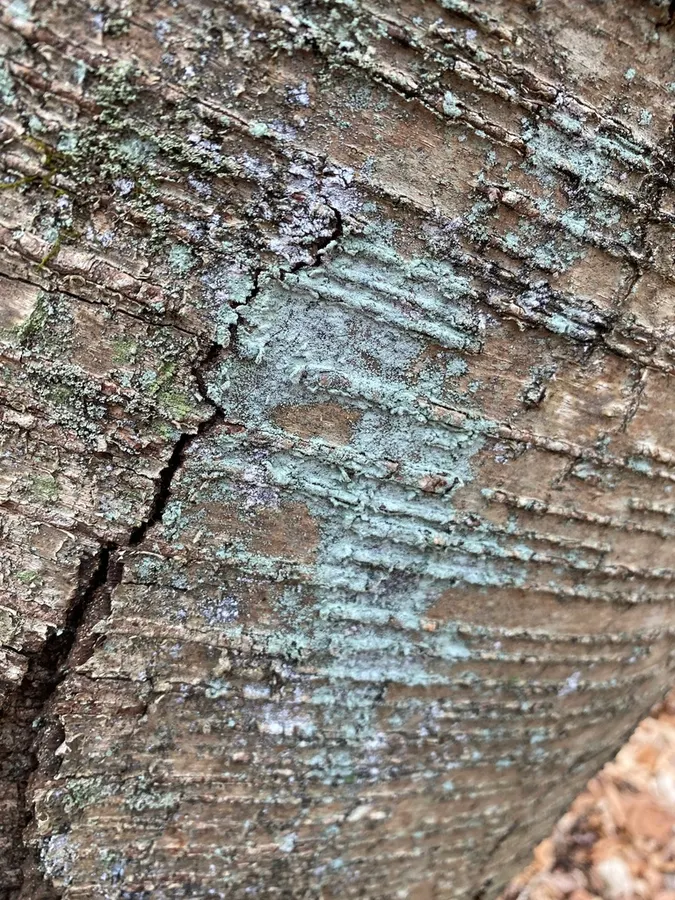
Dokumentasi Lepraria caesiella menurut asosiasi foto pada record takson iNaturalist. Kredit: Bonnie Semmling. Identitas mengikuti sumber; bukan penentuan spesimen independen.

Jenis
Fotografi
Kredit
(c) Bonnie Semmling, some rights reserved (CC BY), uploaded by Bonnie Semmling
Lisensi
CC BY 4.0
Sumber media
Buka entri sumber

Gambar menunjukkan objek menurut identifikasi sumber, bukan verifikasi independen spesimen oleh Fungi. Tidak ada skala baru yang ditambahkan.

06 / Rujukan

Sumber profil

  1. [1] Lepraria caesiella — Wikipedia (en)Bagian sumber: Frozen revision 1331233425
    Tanggal penghimpunan sumber: 2026-10-12
    Teks sumber: CC BY-SA4.0 · Wikipedia contributors
  2. [2] Catalogue of Life Base2026-09-11 — Lepraria caesiellaBagian sumber: ColDP NameUsage.tsv ID 3TGFX; accepted species; source 2073
    Tanggal penghimpunan sumber: 2026-10-12
  3. [3] Dokumentasi visual — Lepraria caesiellaBagian sumber: Individual media record; identification follows the source, not independent determination
    Tanggal penghimpunan sumber: 2026-10-12
    Media sumber: CC BY 4.0 · (c) Bonnie Semmling, some rights reserved (CC BY), uploaded by Bonnie Semmling

Adaptasi teks: CC BY-SA 4.0. Wikipedia contributors — Lepraria caesiella — Wikipedia (en)

Uraian asli dan riwayat sumber

Riwayat atau halaman sumber

Ringkasan sumber

Lepraria caesiella is a species of leprose lichen in the family Stereocaulaceae. It forms a thin, gray-blue powdery crust composed of aggregations and lacks a true or . The species is widespread throughout northeastern North America, occurring primarily on tree bark, especially hardwoods like oaks, though it can also be found on non-calcareous rocks in sheltered locations. It was formally described by Richard C. Harris in 2005 and is characterized by its production of atranorin, zeorin, and pallidic acid. phylogenetics studies have helped distinguish it from the morphologically similar L. harrisiana, which was previously considered part of the same species.

Revisi sumber

Morfologi sumber

This lichen forms a powdery crust with edges that are either diffuse or poorly defined. It lacks and has no medulla or base layer (). The thallus is crustose, leprose, and aggregated, appearing discontinuous and not stratified. It initially forms isolated granules that divide to form aggregations, eventually merging to form a thin crust (less than 0.1 mm thick), gray-blue in color. The reproductive structures consist of well-organized and discrete spherical () granules, typically 35–59 μm in diameter (range 24–76 μm). These granules are ecorticate and remain distinct rather than forming compound units. The photobiont is green and coccoid, with globose cells typically 8–12 μm in width (range 6–16 μm). The hyphae are hyaline, typically 2–4 μm in width (range 1.8–5 μm), and are septate and obscured by a thick layer of crystals that appear bright under polarized light (POL+), which dissolve in KOH solution and recrystallize as thin bent needles. The main chemical constituents are atranorin, zeorin, and pallidic acid. Some specimens have been found to also contain roccellic/angardianic acid or an unidentified fatty acid. The expected results of chemical spot tests are K+ (yellow), C−, KC−, and P+ (weak yellow), and UV−.

Revisi sumber

Ekologi sumber

Lepraria caesiella is common and widely distributed throughout temperate and boreal northeastern North America, extending southward in the Appalachian Mountains. The species occurs on a wide diversity of bark-bearing (corticolous) substrates, including both conifers and hardwoods, though the majority of corticolous collections are from hardwoods, particularly oaks (Quercus). Disjunct saxicolous populations also occur in the Ozark ecoregion. While primarily a corticolous species, it can also be found on noncalcareous rocks. These saxicolous populations are ecologically distinct from other sympatric Lepraria species because they occur on dry, protected rock faces that are sheltered from rain but still exposed to some light. This differs from most other species which occur either on rock faces fully exposed to the elements, or in shaded overhangs that are completely protected and always shaded.

Revisi sumber

Struktur reproduksi sumber

The reproductive structures consist of well-organized and discrete spherical () granules, typically 35–59 μm in diameter (range 24–76 μm). These granules are ecorticate and remain distinct rather than forming compound units. The photobiont is green and coccoid, with globose cells typically 8–12 μm in width (range 6–16 μm). The hyphae are hyaline, typically 2–4 μm in width (range 1.8–5 μm), and are septate and obscured by a thick layer of crystals that appear bright under polarized light (POL+), which dissolve in KOH solution and recrystallize as thin bent needles.

Revisi sumber

Rujukan halaman ini

Fungi. Lepraria caesiella. Rilis data fungi-2026-10-12-expansion-2. https://fungi-atlas.mgadib.chatgpt.site/jamur/lepraria-caesiella/.

Status: impor sumber; pemeriksaan editorial per profil belum selesai. Untuk klaim biologis, gunakan rujukan pada bagian terkait dan periksa konteks sumber aslinya.