Ciri dan struktur
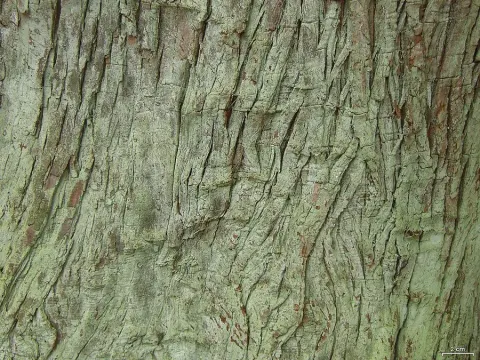
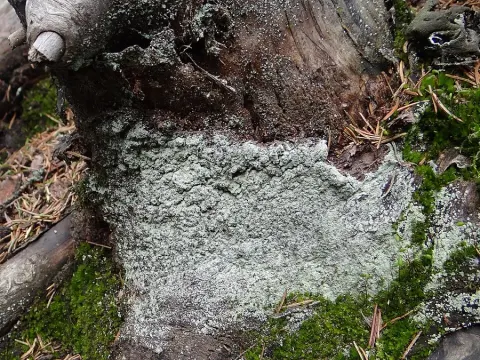
Lepraria elobata forms a leprose, powdery thallus that is bluish grey or greenish grey. The margin is diffuse (lacking clear boundaries), and are predominantly absent. The medulla and are both typically absent. The soredia are abundant and mostly fine, measuring 20–45 micrometres (μm) in diameter, lacking projecting hyphae, and are well separated from one another. (aggregations of soredia) are sometimes present, measuring up to 100 μm. The species is chemically characterised by containing atranorin, stictic acid, constictic acid, cryptostictic acid, zeorin and very rarely an unidentified fatty acid. All of these compounds can be present in varying amounts from major to trace quantities. Spot tests show K− or K+ (yellow), C−, KC−, and Pd+ (orange).
Habitat dan peran ekologis
The species grows on bark and sometimes on soil, wood, siliceous rock and mosses. It typically occurs in shady, humid places. Lepraria elobata has been recorded from Europe, North America, and Greenland.
- Habitat atau konteks temuan
- Informasi belum tersedia pada sumber rilis ini.
- Substrat
- kulit kayu; tanah
- Peran atau konteks
- Pembentuk liken
Reproduksi
Lepraria elobata forms a leprose, powdery thallus that is bluish grey or greenish grey. The margin is diffuse (lacking clear boundaries), and are predominantly absent. The medulla and are both typically absent. The soredia are abundant and mostly fine, measuring 20–45 micrometres (μm) in diameter, lacking projecting hyphae, and are well separated from one another. (aggregations of soredia) are sometimes present, measuring up to 100 μm. The species is chemically characterised by containing atranorin, stictic acid, constictic acid, cryptostictic acid, zeorin and very rarely an unidentified fatty acid. All of these compounds can be present in varying amounts from major to trace quantities. Spot tests show K− or K+ (yellow), C−, KC−, and Pd+ (orange).
Catatan identitas dan cakupan
- Nama diterima mengikuti Catalogue of Life Base2026-09-11; uraian mempertahankan konsep dan nama sumber aslinya.
- Original geographic, specimen and life-cycle scope retained; source import awaits individual editorial review.
- Impor dan terjemahan otomatis belum diperiksa editorial per profil. Struktur reproduktif yang disebutkan tidak membuktikan seluruh siklus hidup diketahui.
- Pengukuran pada uraian mengikuti spesimen, kultur, dan metode sumber; angka tidak diperluas ke semua populasi.
Catatan distribusi dalam narasi mengikuti sumbernya. Dokumentasi spesimen atau foto mengikuti catatan sumber. Bukti wilayah Indonesia dan penilaian konservasi tidak disimpulkan dari gambar.
Melihat dengan konteks
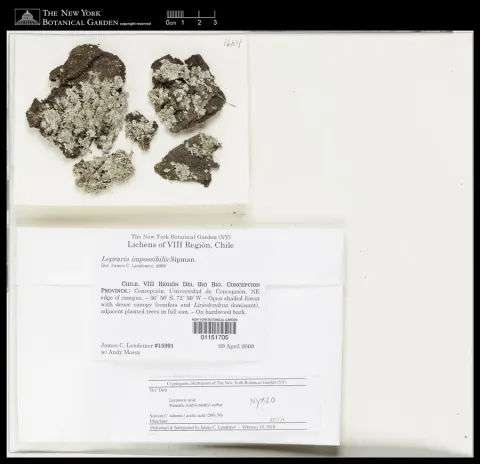
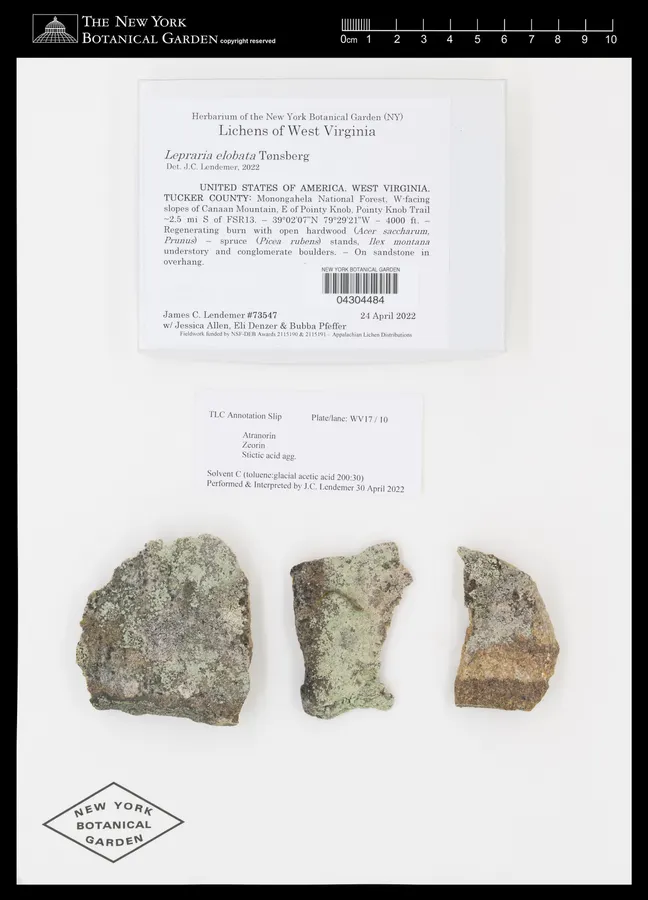
Voucher herbarium Lepraria elobata (04304484), The New York Botanical Garden. Identifikasi mengikuti record spesimen sumber. Foto bahan, kemasan, atau label herbarium sebagaimana tersedia pada record institusi; bukan foto lapangan atau penentuan spesimen independen.
- Jenis
- Voucher herbarium
- Kredit
- The New York Botanical Garden
- Lisensi
- CC BY 4.0
- Sumber media
- Buka entri sumber
Sumber profil
- [1] Lepraria elobata — Wikipedia (en)
- [2] Catalogue of Life Base2026-09-11 — Lepraria elobata
- [3] Dokumentasi visual — Lepraria elobata
Rujukan halaman ini
Fungi. Lepraria elobata. Rilis data fungi-2026-10-12-expansion-2. https://fungi-atlas.mgadib.chatgpt.site/jamur/lepraria-elobata/.
Status: impor sumber; pemeriksaan editorial per profil belum selesai. Untuk klaim biologis, gunakan rujukan pada bagian terkait dan periksa konteks sumber aslinya.