Ciri dan struktur
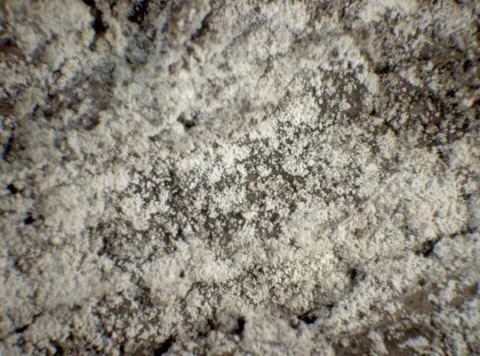
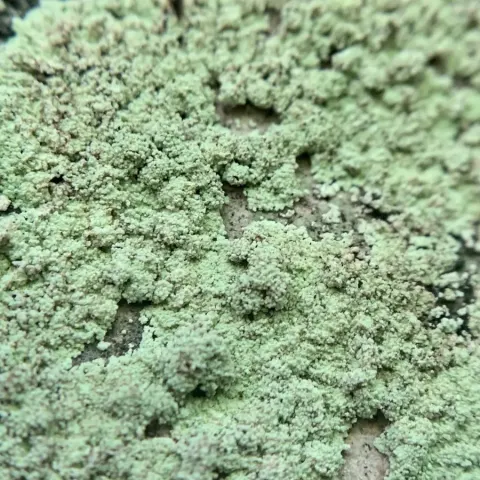
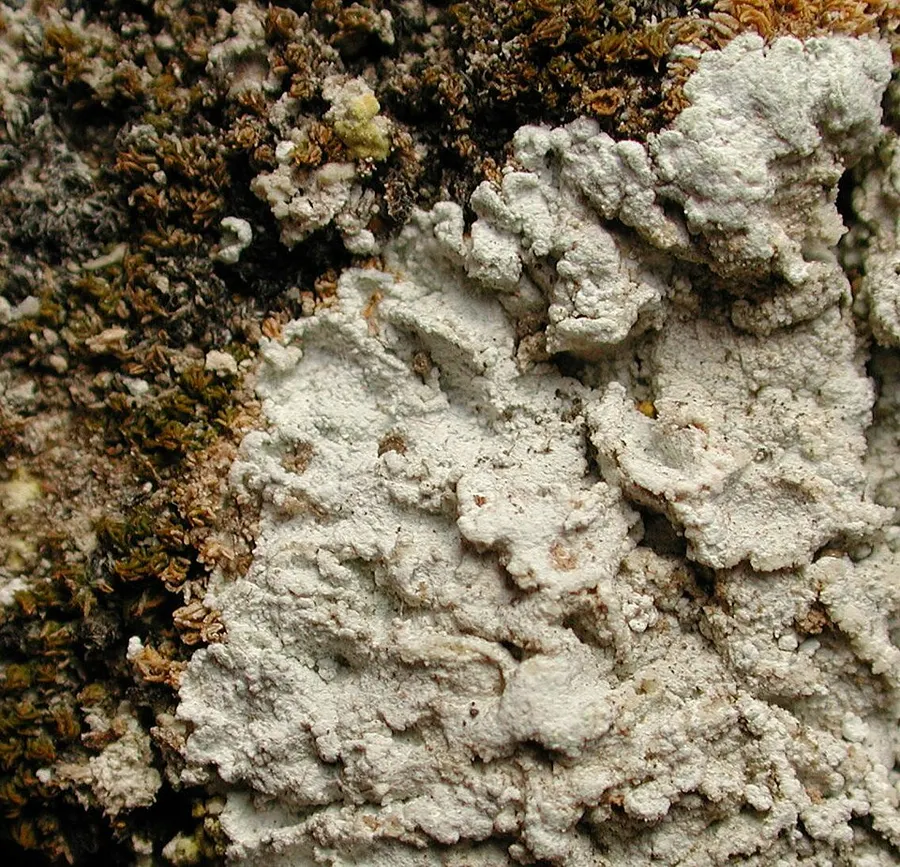
The species forms a crustose to subfoliose thallus that ranges from membranous to in texture. It has a well-defined margin with distinct that have raised edges. The thallus sometimes develops a light brownish (attachment layer), and may have patches with a subcorticate (partially ) surface. One of its most distinctive features is the presence of coarse that resemble true isidia, measuring 0.32–0.54 mm in diameter. These structures have a compact outer layer and lack projecting hyphae. The granules often become sorediate (producing powder-like reproductive structures).
Habitat dan peran ekologis
The species grows on calcareous soil and rock surfaces, sometimes colonising mosses. It shows a preference for sun-exposed, arid habitats that receive direct rainfall, and can be found in various exposed settings like road escarpments and areas with sparse annual vegetation. The species occurs in both Mediterranean and sub-Mediterranean vegetation belts. While it was long considered endemic to gypsum outcrops in the Mediterranean basin, it has since been documented on various calcareous substrates. It is typically found in shaded but well-lit locations. Its distribution is currently known to be limited to Mediterranean countries in Europe.
- Habitat atau konteks temuan
- Informasi belum tersedia pada sumber rilis ini.
- Substrat
- Informasi belum tersedia pada sumber rilis ini.
- Peran atau konteks
- Pembentuk liken
Reproduksi
The species forms a crustose to subfoliose thallus that ranges from membranous to in texture. It has a well-defined margin with distinct that have raised edges. The thallus sometimes develops a light brownish (attachment layer), and may have patches with a subcorticate (partially ) surface. One of its most distinctive features is the presence of coarse that resemble true isidia, measuring 0.32–0.54 mm in diameter. These structures have a compact outer layer and lack projecting hyphae. The granules often become sorediate (producing powder-like reproductive structures).
Catatan identitas dan cakupan
- Nama diterima mengikuti Catalogue of Life Base2026-09-11; uraian mempertahankan konsep dan nama sumber aslinya.
- Original geographic, specimen and life-cycle scope retained; source import awaits individual editorial review.
- Impor dan terjemahan otomatis belum diperiksa editorial per profil. Struktur reproduktif yang disebutkan tidak membuktikan seluruh siklus hidup diketahui.
- Pengukuran pada uraian mengikuti spesimen, kultur, dan metode sumber; angka tidak diperluas ke semua populasi.
Catatan distribusi dalam narasi mengikuti sumbernya. Dokumentasi spesimen atau foto mengikuti catatan sumber. Bukti wilayah Indonesia dan penilaian konservasi tidak disimpulkan dari gambar.
Melihat dengan konteks
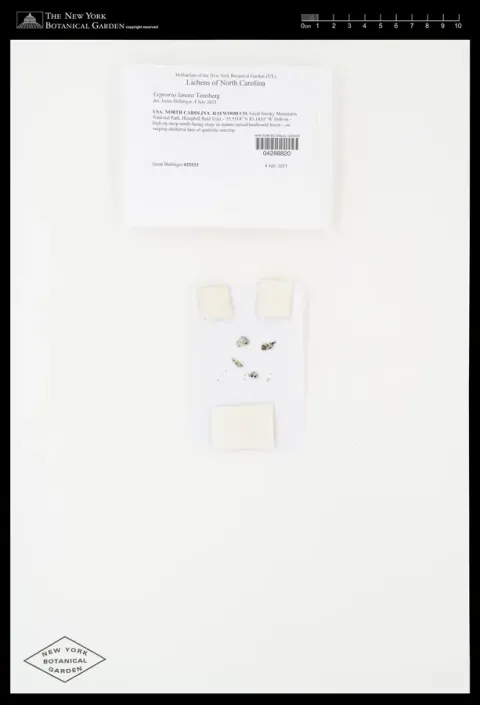
Dokumentasi Lepraria isidiata dari Wikimedia Commons. The thallus of the leprose lichen Lepraria isidiata Identifikasi mengikuti record berkas sumber.
- Jenis
- Fotografi
- Kredit
- ELena Pittao
- Lisensi
- CC BY-SA 4.0
- Sumber media
- Buka entri sumber
Sumber profil
- [1] Lepraria isidiata — Wikipedia (en)
- [2] Catalogue of Life Base2026-09-11 — Lepraria isidiata
- [3] Dokumentasi visual — Lepraria isidiata
Rujukan halaman ini
Fungi. Lepraria isidiata. Rilis data fungi-2026-10-12-expansion-2. https://fungi-atlas.mgadib.chatgpt.site/jamur/lepraria-isidiata/.
Status: impor sumber; pemeriksaan editorial per profil belum selesai. Untuk klaim biologis, gunakan rujukan pada bagian terkait dan periksa konteks sumber aslinya.