Ciri dan struktur
The thallus of Lepraria lobificans is cottony, only rarely powdery, with a usually diffuse margin and weakly developed when present. A thick, white medulla is characteristic; the is seldom developed and then pale brown. Unsorediate patches may expose the medulla. The propagules are abundant, fine soredia to about 60 μm across with long, projecting hyphae; they commonly form clustered about 100–200 μm in diameter. Chemically, the species contains atranorin together with the stictic acid complex and zeorin. Lepraria elobata has the same major substances but differs in having a non-lobate, leprose thallus and discrete soredia lacking projecting hyphae. Spot test reactions are typically C−, KC−, P+ (orange), and K negative to weakly yellow; the chemistry is dominated by atranorin with stictic/constictic acids, often with zeorin, and may include traces of additional fat-soluble (lipophilic) compounds. This combination matches the "L. lobificans s.str." chemotypes reported from southern Europe, which can include occasional roccellic acid, and it contrasts with L. finkii, where sequence-based work and chemistry (including zeorin with minor norstictic acid) support separation. Differentially, look-alikes with a similar depsidone profile can be told apart as follows: L. elobata (discrete soredia, no projecting hyphae); L. leprolomopsis (zeorin replaced by an unidentified terpenoid); and L. multiacida (additional salazinic/consalazinic acids). The name L. santosii used by some older authors refers to a lobate-margined taxon with a slightly raised rim.
Habitat dan peran ekologis
Lepraria lobificans grows on bark, rock (often where mosses are present), and other substrates, typically in shaded or otherwise sheltered microsites; it has been reported from many regions worldwide. Pre-molecular treatments recorded it as cosmopolitan and very common in parts of its range, with reports from all continents except Antarctica and first national records that include Jamaica and Vietnam. In South America it has been reported from Bolivia and Uruguay, occurring in high-elevation Andean vegetation, mountain cloud forest and lowlands. More recent sequence-based work indicates that material once referred to L. lobificans in the Southern Hemisphere (e.g. Chile) belongs to L. finkii, and that L. lobificans sensu stricto may have a more restricted distribution than previously assumed. In India the species occurs widely from the Himalayan foothills to southern hill ranges at elevations of roughly 500–3,000 m, on bark, rock, soil and mossy substrates, often alongside other leprose lichens. In Central Europe, studies in the Knyszyn Forest (NE Poland) found L. lobificans to be among the most frequent Lepraria species, chiefly on bark of deciduous trees such as Carpinus betulus, Quercus robur, Fraxinus excelsior, Populus tremula and Tilia cordata, with occasional records on Picea abies.
- Habitat atau konteks temuan
- hutan
- Substrat
- kulit kayu
- Peran atau konteks
- Pembentuk liken
Reproduksi
The thallus of Lepraria lobificans is cottony, only rarely powdery, with a usually diffuse margin and weakly developed when present. A thick, white medulla is characteristic; the is seldom developed and then pale brown. Unsorediate patches may expose the medulla. The propagules are abundant, fine soredia to about 60 μm across with long, projecting hyphae; they commonly form clustered about 100–200 μm in diameter. Chemically, the species contains atranorin together with the stictic acid complex and zeorin. Lepraria elobata has the same major substances but differs in having a non-lobate, leprose thallus and discrete soredia lacking projecting hyphae. Spot test reactions are typically C−, KC−, P+ (orange), and K negative to weakly yellow; the chemistry is dominated by atranorin with stictic/constictic acids, often with zeorin, and may include traces of additional fat-soluble (lipophilic) compounds.
Catatan identitas dan cakupan
- Nama diterima mengikuti Catalogue of Life Base2026-09-11; uraian mempertahankan konsep dan nama sumber aslinya.
- Original geographic, specimen and life-cycle scope retained; source import awaits individual editorial review.
- Impor dan terjemahan otomatis belum diperiksa editorial per profil. Struktur reproduktif yang disebutkan tidak membuktikan seluruh siklus hidup diketahui.
- Pengukuran pada uraian mengikuti spesimen, kultur, dan metode sumber; angka tidak diperluas ke semua populasi.
Catatan distribusi dalam narasi mengikuti sumbernya. Dokumentasi spesimen atau foto mengikuti catatan sumber. Bukti wilayah Indonesia dan penilaian konservasi tidak disimpulkan dari gambar.
Melihat dengan konteks
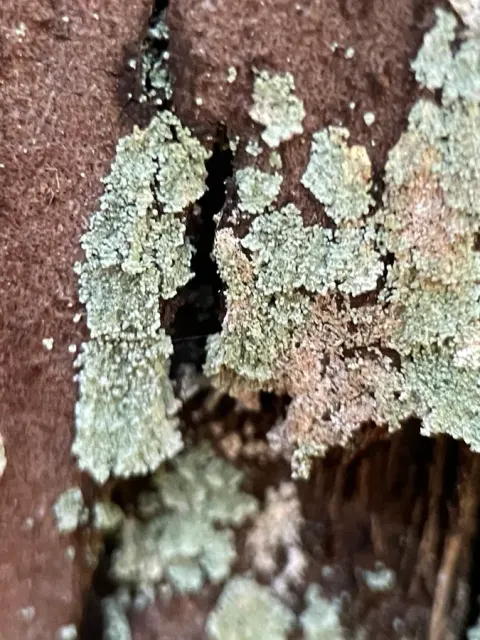
Dokumentasi Lepraria finkii menurut asosiasi foto pada record takson iNaturalist. Kredit: Neal Kelso. Identitas mengikuti sumber; bukan penentuan spesimen independen.
- Jenis
- Fotografi
- Kredit
- (c) Neal Kelso, some rights reserved (CC BY), uploaded by Neal Kelso
- Lisensi
- CC BY 4.0
- Sumber media
- Buka entri sumber
Dokumentasi tambahan
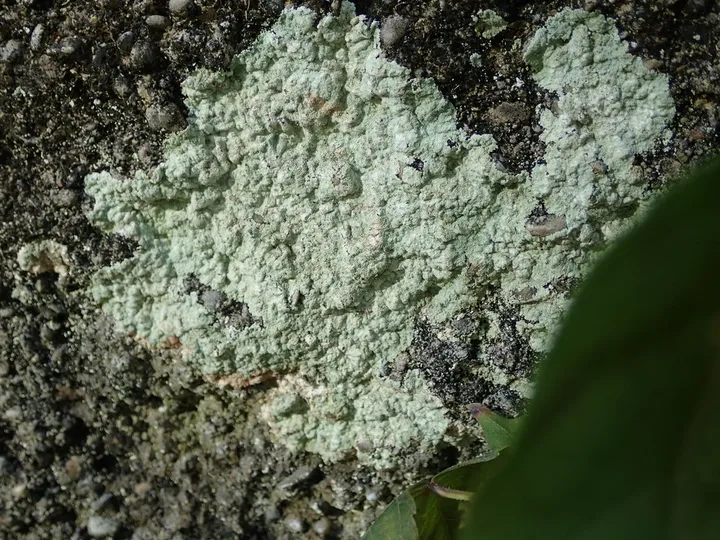
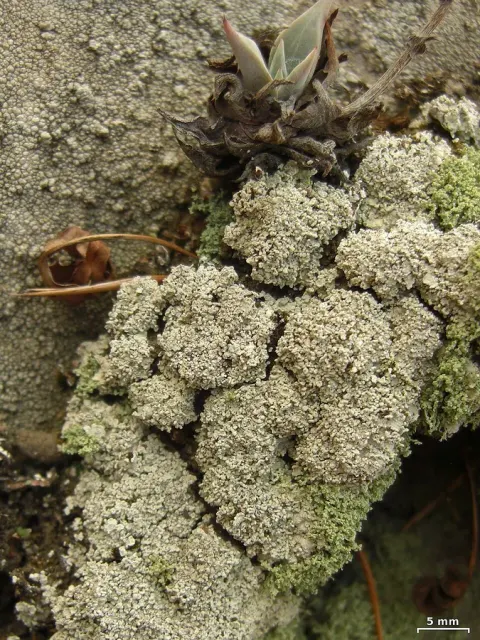
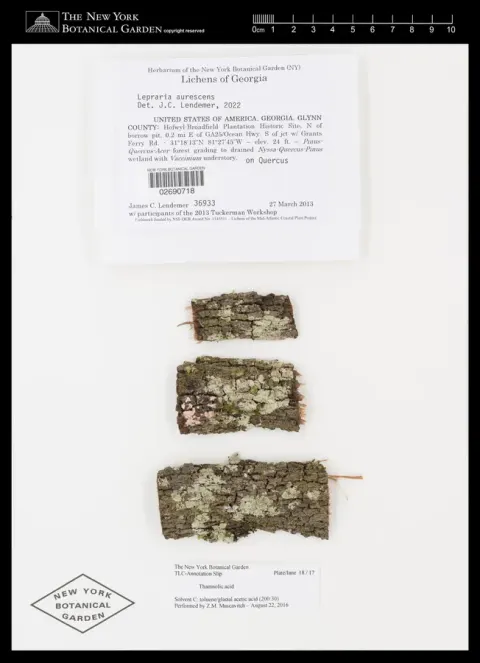
Foto yang diasosiasikan dengan Lepraria lobificans pada iNaturalist. Identifikasi mengikuti sumber; bukan penentuan spesimen independen.
Kredit dan penggunaan
no rights reserved, uploaded by Yann Kemper
Ukuran dan format gambar disesuaikan tanpa pemotongan, retus, atau penambahan skala. Lisensi sumber dipertahankan.
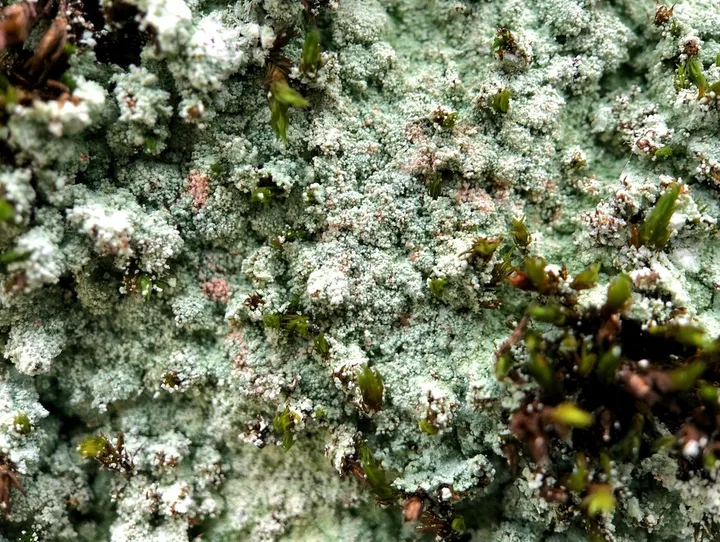
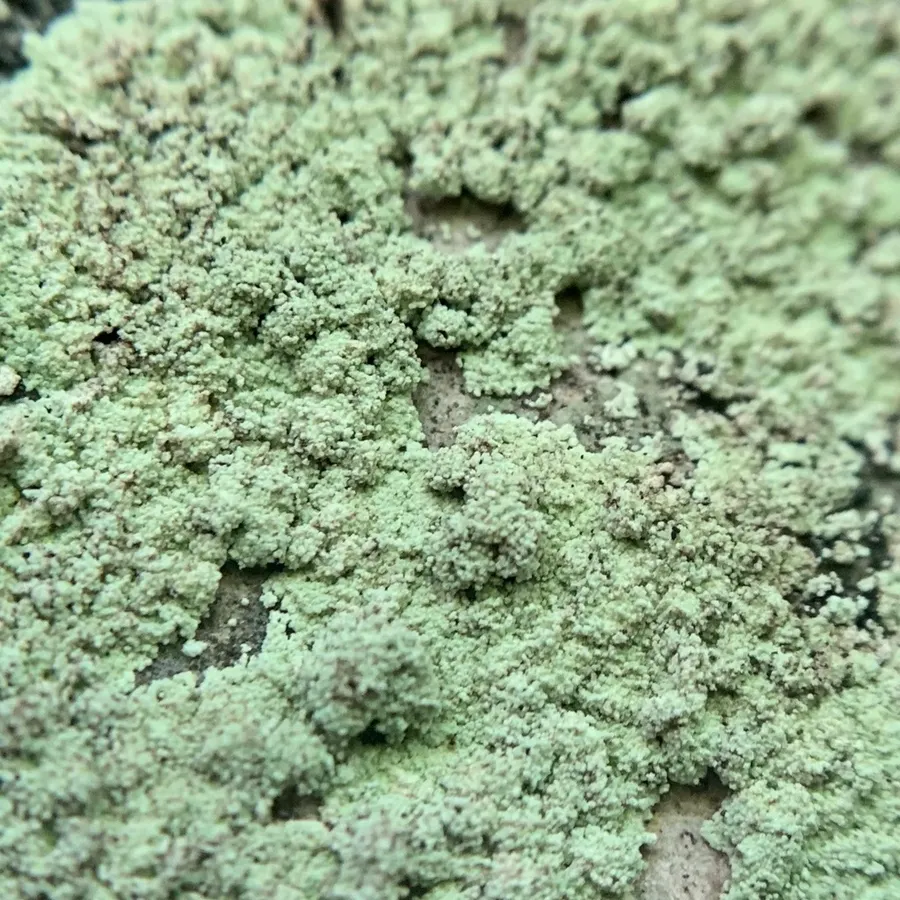
Foto yang diasosiasikan dengan Lepraria lobificans pada iNaturalist. Identifikasi mengikuti sumber; bukan penentuan spesimen independen.
Kredit dan penggunaan
(c) Nova Patch, some rights reserved (CC BY-SA), uploaded by Nova Patch
Ukuran dan format gambar disesuaikan tanpa pemotongan, retus, atau penambahan skala. Lisensi sumber dipertahankan.
Sumber profil
- [1] Lepraria lobificans — Wikipedia (en)
- [2] Catalogue of Life Base2026-09-11 — Lepraria lobificans
- [3] Dokumentasi visual — Lepraria lobificans
- [4] Dokumentasi visual — Lepraria lobificans
- [5] Dokumentasi visual — Lepraria lobificans
Rujukan halaman ini
Fungi. Lepraria lobificans. Rilis data fungi-2026-10-12-expansion-2. https://fungi-atlas.mgadib.chatgpt.site/jamur/lepraria-lobificans/.
Status: impor sumber; pemeriksaan editorial per profil belum selesai. Untuk klaim biologis, gunakan rujukan pada bagian terkait dan periksa konteks sumber aslinya.