Ciri dan struktur
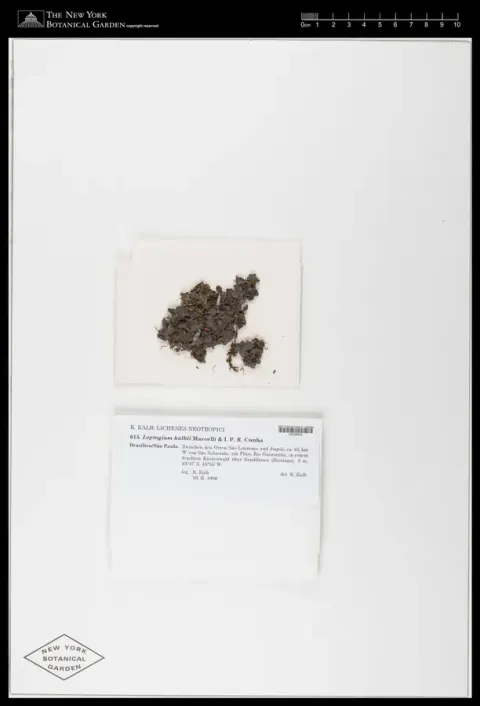
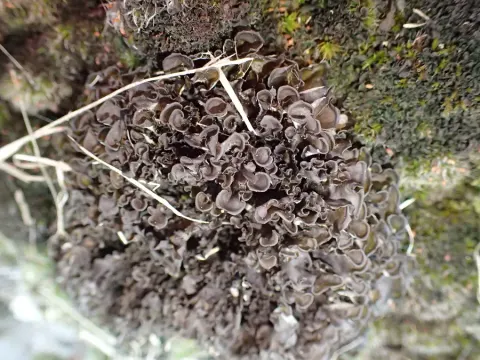
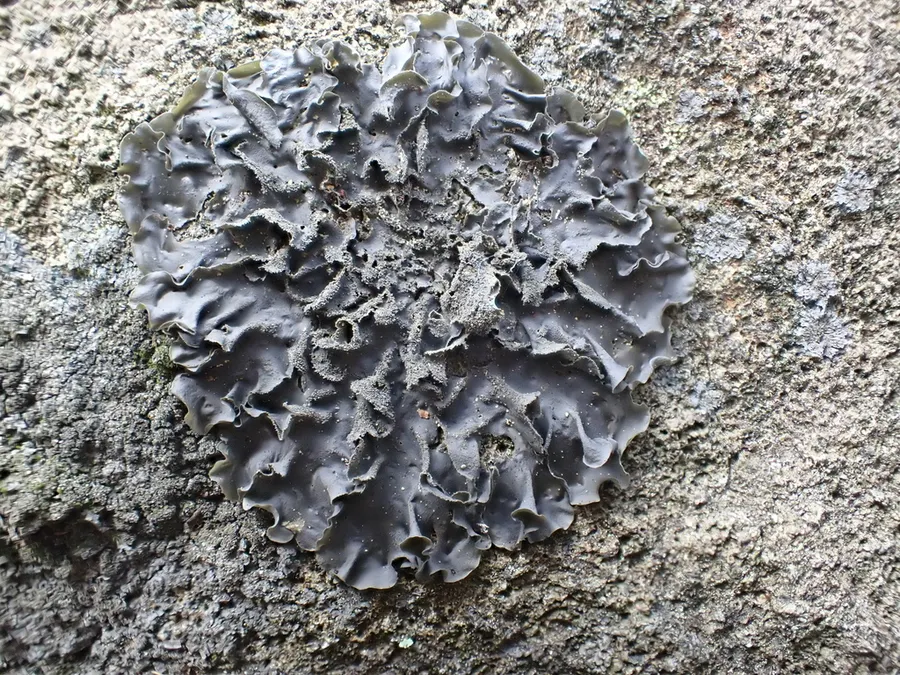
The lichen forms soft, sheet-like thalli that become jelly-like when wet and crisp when dry. Individual rosettes usually measure 1–5 cm across (occasionally to 10 cm) and consist of flat, irregular 4–5 mm wide. The upper surface is smooth to slightly wrinkled and characteristically blue-grey; the lower surface is similar in colour but may carry scattered tufts of white attachment hairs (). Minute, finger-shaped outgrowths called isidia cover the lobes, beginning as simple cylinders and often branching or flattening with age. These structures break off easily and serve as the main means of reproduction. Sexual fruit-bodies are rare. When present, the disc-shaped apothecia are 0.5–2 mm in diameter with a brown centre and an isidiate . are translucent (hyaline), usually three-septate (occasionally with an extra longitudinal septum) and measure 18–23 μm by 7–10 μm. Like all members of the genus, L. cyanescens houses chains of the cyanobacterium Nostoc throughout its interior; no secondary lichen substances have been detected in spot tests.
Habitat dan peran ekologis
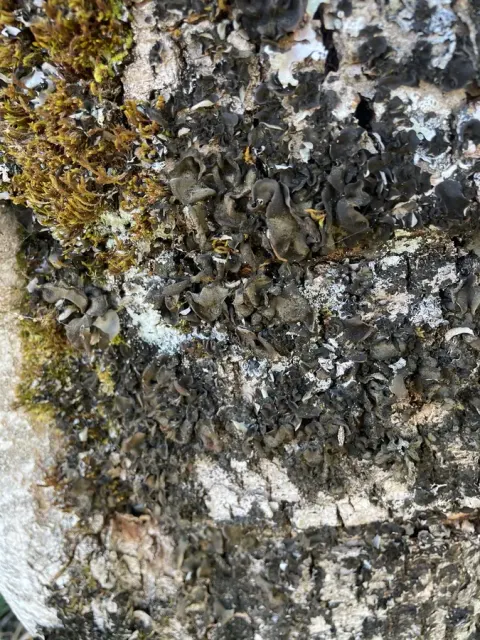
NatureServe rates the species G5 ("secure") because of its virtually worldwide range and frequency. In North America it is frequent on the bark of deciduous trees from southern Canada through the eastern United States, extending westward into humid forests of British Columbia where populations are considered vulnerable to intensive logging. European records span from the British Isles and Fennoscandia to the Mediterranean; the species is also documented in Chile, the Galápagos, Madeira and South-East Asia. Across its range L. cyanescens prefers shaded, persistently humid microsites—stream-side hardwoods, old orchards, coastal fog belts and rainforest mangroves are typical substrates. Although most collections are corticolous, the thallus can occasionally colonise shaded siliceous rock or mossy soil in spray zones beside waterfalls. Field observations from Brazil show colonies on mangrove trunks and restinga shrubs only a few metres above sea-level, demonstrating the species' tolerance for salt‐laden air.
- Habitat atau konteks temuan
- hutan
- Substrat
- Informasi belum tersedia pada sumber rilis ini.
- Peran atau konteks
- Pembentuk liken
Reproduksi
Minute, finger-shaped outgrowths called isidia cover the lobes, beginning as simple cylinders and often branching or flattening with age. These structures break off easily and serve as the main means of reproduction. Sexual fruit-bodies are rare. When present, the disc-shaped apothecia are 0.5–2 mm in diameter with a brown centre and an isidiate . are translucent (hyaline), usually three-septate (occasionally with an extra longitudinal septum) and measure 18–23 μm by 7–10 μm.
Catatan identitas dan cakupan
- Nama diterima mengikuti Catalogue of Life Base2026-09-11; uraian mempertahankan konsep dan nama sumber aslinya.
- Original geographic, specimen and life-cycle scope retained; source import awaits individual editorial review.
- Impor dan terjemahan otomatis belum diperiksa editorial per profil. Struktur reproduktif yang disebutkan tidak membuktikan seluruh siklus hidup diketahui.
- Pengukuran pada uraian mengikuti spesimen, kultur, dan metode sumber; angka tidak diperluas ke semua populasi.
Catatan distribusi dalam narasi mengikuti sumbernya. Dokumentasi spesimen atau foto mengikuti catatan sumber. Bukti wilayah Indonesia dan penilaian konservasi tidak disimpulkan dari gambar.
Melihat dengan konteks
Dokumentasi Leptogium cyanescens menurut asosiasi foto pada record takson iNaturalist. Kredit: Roger Rittmaster. Identitas mengikuti sumber; bukan penentuan spesimen independen.
- Jenis
- Fotografi
- Kredit
- (c) Roger Rittmaster, some rights reserved (CC BY), uploaded by Roger Rittmaster
- Lisensi
- CC BY 4.0
- Sumber media
- Buka entri sumber
Dokumentasi tambahan
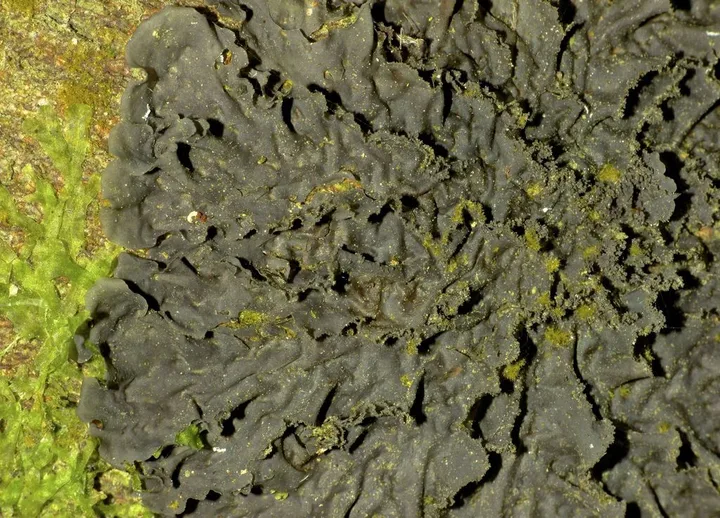
Foto yang diasosiasikan dengan Leptogium cyanescens pada iNaturalist. Identifikasi mengikuti sumber; bukan penentuan spesimen independen.
Kredit dan penggunaan
(c) Steve Kerr, some rights reserved (CC BY), uploaded by Steve Kerr
Ukuran dan format gambar disesuaikan tanpa pemotongan, retus, atau penambahan skala. Lisensi sumber dipertahankan.
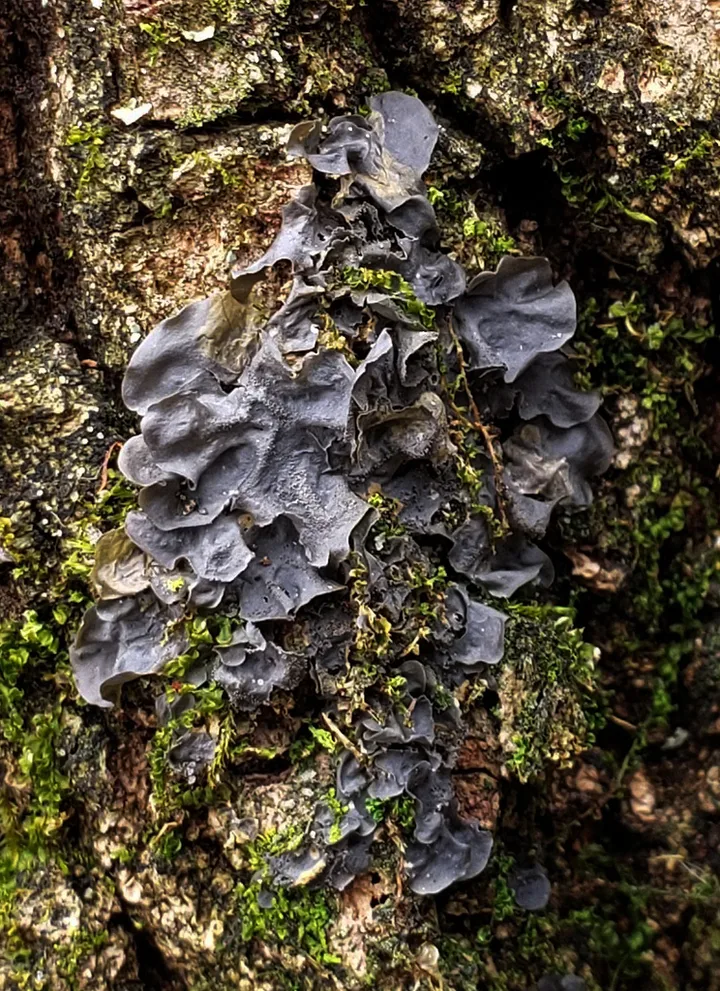
Foto yang diasosiasikan dengan Leptogium cyanescens pada iNaturalist. Identifikasi mengikuti sumber; bukan penentuan spesimen independen.
Kredit dan penggunaan
(c) aarongunnar, some rights reserved (CC BY), uploaded by aarongunnar
Ukuran dan format gambar disesuaikan tanpa pemotongan, retus, atau penambahan skala. Lisensi sumber dipertahankan.
Sumber profil
- [1] Leptogium cyanescens — Wikipedia (en)
- [2] Catalogue of Life Base2026-09-11 — Leptogium cyanescens
- [3] Dokumentasi visual — Leptogium cyanescens
- [4] Dokumentasi visual — Leptogium cyanescens
- [5] Dokumentasi visual — Leptogium cyanescens
Rujukan halaman ini
Fungi. Leptogium cyanescens. Rilis data fungi-2026-10-12-expansion-2. https://fungi-atlas.mgadib.chatgpt.site/jamur/leptogium-cyanescens/.
Status: impor sumber; pemeriksaan editorial per profil belum selesai. Untuk klaim biologis, gunakan rujukan pada bagian terkait dan periksa konteks sumber aslinya.