Ciri dan struktur
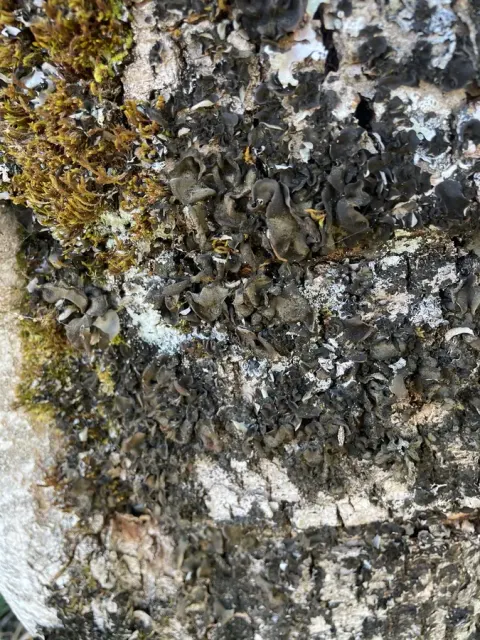
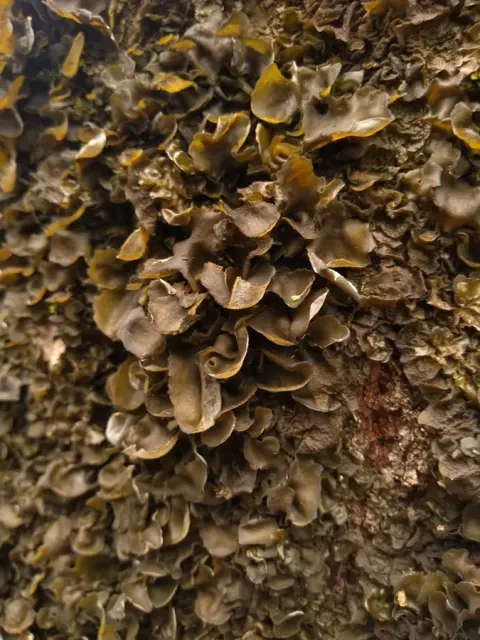
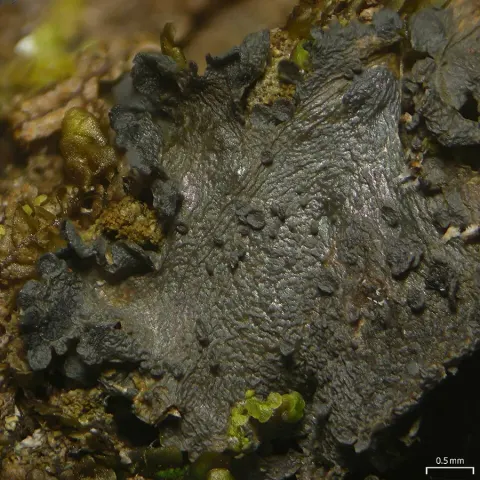
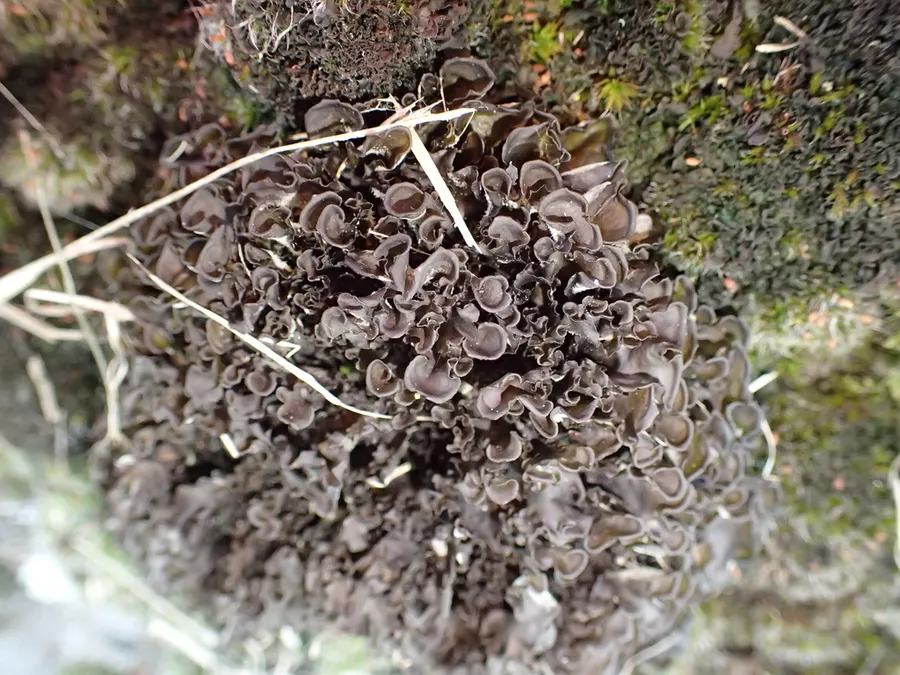
The thallus is about 7 cm across and 50–75 micrometres (μm) thick, brownish-grey in fluorescent light and greenish-grey under a stereomicroscope. Lobes are broad (to about 10 mm), overlapping and appressed; their tips are rounded and smooth, and the margins are thin and even. Isidia (tiny detachable outgrowths used for clonal spread) and (small flap-like propagules) are absent. Attachment is by abundant simple hairs that become "beard-like" as they agglutinate; the lower surface is (felted). The upper is a single layer of brick-like () cells; the lower cortex is likewise single-layered and felted. In section, the medulla shows the fungal hyphae compactly woven with the cyanobacteria; columnar (pillar-like) hyphae were not seen in the studied material, although the authors caution that rapid drying may have obscured them. Fruiting bodies (apothecia) of L. menziesii are small (to about 1.5 mm), and short-stalked. The apothecial discs are concave and their margins smooth to slightly wrinkled, without any or warting. The apothecial wall lacks a ; the (the tissue beneath the spore layer) is built of elongated cells (), whereas the parahymenial tissue is brick-like (). Ascospores were not observed in the material examined; in earlier work they were reported as having dimensions of 22–27 × 8–10 μm. Pycnidia occur on the thallus, usually near the margin, producing slender conidia about 3.75 × 1.25 μm. The bases of both apothecia and pycnidia are covered by hairs.
Habitat dan peran ekologis
Leptogium menziesii is subantarctic in character. The species was first collected in the Strait of Magellan area and is recorded from the Falkland Islands and South Georgia, with additional southern hemisphere records from Australia, Chile, Japan, New Zealand and Uruguay; other sources also list Peru. The lichen grows in dry herbfield and grassland, on or amongst bryophytes including Syntrichia robusta, Acaena magellanica, and Festuca contracta. In South Georgia it has been documented growing amongst Tortula robusta and, less frequently, in damp hollows on Chorisodontium and Polytrichum banks.
- Habitat atau konteks temuan
- padang rumput
- Substrat
- Informasi belum tersedia pada sumber rilis ini.
- Peran atau konteks
- Pembentuk liken
Reproduksi
The thallus is about 7 cm across and 50–75 micrometres (μm) thick, brownish-grey in fluorescent light and greenish-grey under a stereomicroscope. Lobes are broad (to about 10 mm), overlapping and appressed; their tips are rounded and smooth, and the margins are thin and even. Isidia (tiny detachable outgrowths used for clonal spread) and (small flap-like propagules) are absent. Attachment is by abundant simple hairs that become "beard-like" as they agglutinate; the lower surface is (felted). The upper is a single layer of brick-like () cells; the lower cortex is likewise single-layered and felted. In section, the medulla shows the fungal hyphae compactly woven with the cyanobacteria; columnar (pillar-like) hyphae were not seen in the studied material, although the authors caution that rapid drying may have obscured them.
Catatan identitas dan cakupan
- Nama diterima mengikuti Catalogue of Life Base2026-09-11; uraian mempertahankan konsep dan nama sumber aslinya.
- Original geographic, specimen and life-cycle scope retained; source import awaits individual editorial review.
- Impor dan terjemahan otomatis belum diperiksa editorial per profil. Struktur reproduktif yang disebutkan tidak membuktikan seluruh siklus hidup diketahui.
- Pengukuran pada uraian mengikuti spesimen, kultur, dan metode sumber; angka tidak diperluas ke semua populasi.
Catatan distribusi dalam narasi mengikuti sumbernya. Dokumentasi spesimen atau foto mengikuti catatan sumber. Bukti wilayah Indonesia dan penilaian konservasi tidak disimpulkan dari gambar.
Melihat dengan konteks
Dokumentasi Leptogium menziesii menurut asosiasi foto pada record takson iNaturalist. Kredit: Liadan Dickie. Identitas mengikuti sumber; bukan penentuan spesimen independen.
- Jenis
- Fotografi
- Kredit
- (c) Liadan Dickie, some rights reserved (CC BY)
- Lisensi
- CC BY 4.0
- Sumber media
- Buka entri sumber
Dokumentasi tambahan
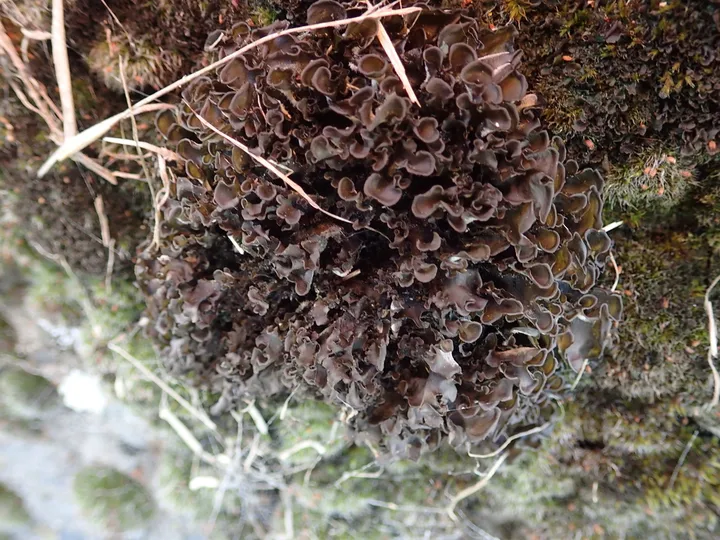
Foto yang diasosiasikan dengan Leptogium menziesii pada iNaturalist. Identifikasi mengikuti sumber; bukan penentuan spesimen independen.
Kredit dan penggunaan
(c) Liadan Dickie, some rights reserved (CC BY)
Ukuran dan format gambar disesuaikan tanpa pemotongan, retus, atau penambahan skala. Lisensi sumber dipertahankan.
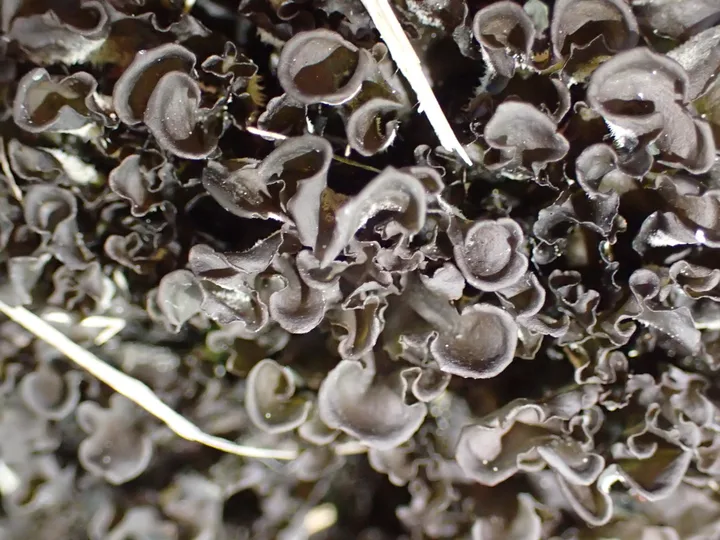
Foto yang diasosiasikan dengan Leptogium menziesii pada iNaturalist. Identifikasi mengikuti sumber; bukan penentuan spesimen independen.
Kredit dan penggunaan
(c) Liadan Dickie, some rights reserved (CC BY)
Ukuran dan format gambar disesuaikan tanpa pemotongan, retus, atau penambahan skala. Lisensi sumber dipertahankan.
Sumber profil
- [1] Leptogium menziesii — Wikipedia (en)
- [2] Catalogue of Life Base2026-09-11 — Leptogium menziesii
- [3] Dokumentasi visual — Leptogium menziesii
- [4] Dokumentasi visual — Leptogium menziesii
- [5] Dokumentasi visual — Leptogium menziesii
Rujukan halaman ini
Fungi. Leptogium menziesii. Rilis data fungi-2026-10-12-expansion-2. https://fungi-atlas.mgadib.chatgpt.site/jamur/leptogium-menziesii/.
Status: impor sumber; pemeriksaan editorial per profil belum selesai. Untuk klaim biologis, gunakan rujukan pada bagian terkait dan periksa konteks sumber aslinya.