Ciri dan struktur
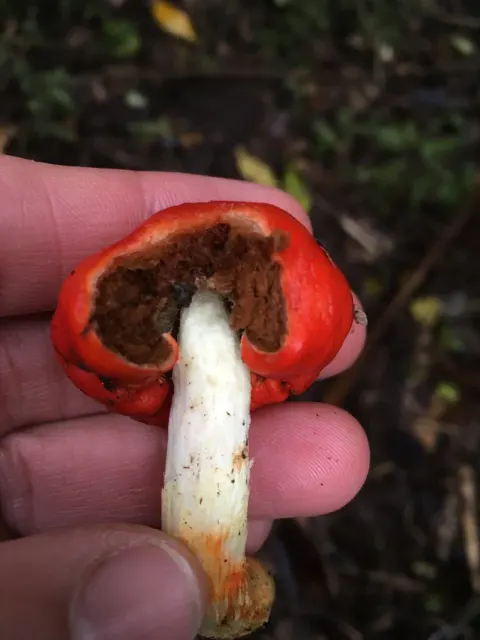
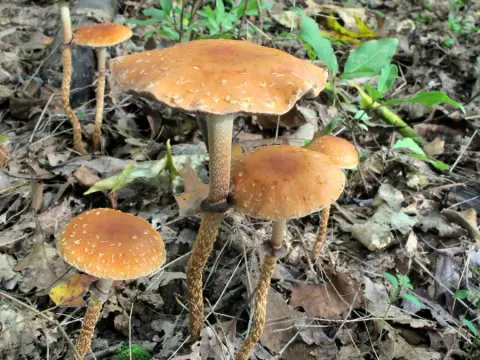
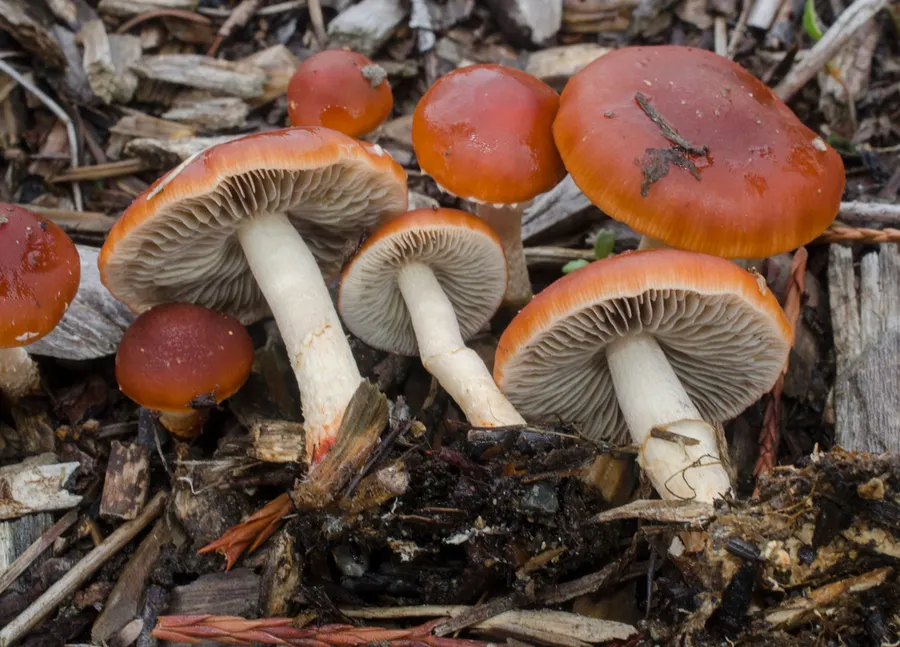
L. ceres may be described as follows. with thin flesh and a bright red to orange top which is convex to plane in age. Has white partial veil remnants when young. The cap surface is usually dry, but can be slightly viscid when moist. Gills: White to pale grey at first, later darker purple/brown or purplish grey which often wash off in rain. Spores: Dark purple/brown. 10–13.5 × 6–8.5 m. Elliptical and smooth. Other microscopic features: Chrysocystidia are present both on the edges and on the faces of the gills. File:Leratiomyces ceres (2004).jpg|L. ceres File:Leratiomyces ceres (formerly known as Stropharia aurantiaca, Hypholoma aurantiaca, Naematoloma aurantiaca, etc.) (15809298769).jpg File:Leratiomyces ceres spores 1000x.JPG|Spores 1000×
Habitat dan peran ekologis
It is usually found growing gregariously on wood chips and is one of the most common and most distinctive mushrooms found in that habitat. It is somewhat common in parts of North America, Europe, Australia and New Zealand
- Habitat atau konteks temuan
- Informasi belum tersedia pada sumber rilis ini.
- Substrat
- kayu
- Peran atau konteks
- Belum dikategorikan pada rilis ini.
Reproduksi
L. ceres may be described as follows. with thin flesh and a bright red to orange top which is convex to plane in age. Has white partial veil remnants when young. The cap surface is usually dry, but can be slightly viscid when moist. Gills: White to pale grey at first, later darker purple/brown or purplish grey which often wash off in rain. Spores: Dark purple/brown. 10–13.5 × 6–8.5 m. Elliptical and smooth. Other microscopic features: Chrysocystidia are present both on the edges and on the faces of the gills. File:Leratiomyces ceres (2004).jpg|L. ceres File:Leratiomyces ceres (formerly known as Stropharia aurantiaca, Hypholoma aurantiaca, Naematoloma aurantiaca, etc.) (15809298769).jpg File:Leratiomyces ceres spores 1000x.JPG|Spores 1000×
Catatan identitas dan cakupan
- Nama diterima mengikuti Catalogue of Life Base2026-09-11; uraian mempertahankan konsep dan nama sumber aslinya.
- Original geographic, specimen and life-cycle scope retained; source import awaits individual editorial review.
- Impor dan terjemahan otomatis belum diperiksa editorial per profil. Struktur reproduktif yang disebutkan tidak membuktikan seluruh siklus hidup diketahui.
- Pengukuran pada uraian mengikuti spesimen, kultur, dan metode sumber; angka tidak diperluas ke semua populasi.
Catatan distribusi dalam narasi mengikuti sumbernya. Dokumentasi spesimen atau foto mengikuti catatan sumber. Bukti wilayah Indonesia dan penilaian konservasi tidak disimpulkan dari gambar.
Melihat dengan konteks
Dokumentasi Leratiomyces ceres menurut asosiasi foto pada record takson iNaturalist. Kredit: Tim Sage. Identitas mengikuti sumber; bukan penentuan spesimen independen.
- Jenis
- Fotografi
- Kredit
- (c) Tim Sage, kai kurios teisės saugomos (CC BY-SA), uploaded by Tim Sage
- Lisensi
- CC BY-SA 4.0
- Sumber media
- Buka entri sumber
Dokumentasi tambahan
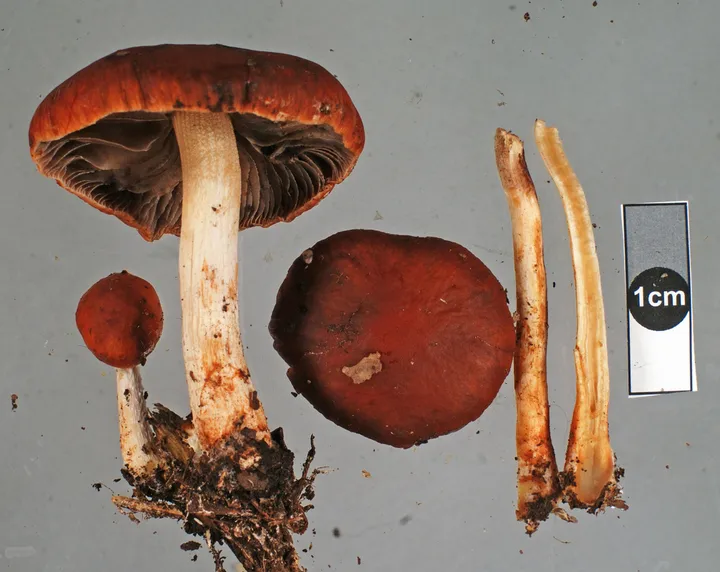
Foto yang diasosiasikan dengan Leratiomyces ceres pada iNaturalist. Identifikasi mengikuti sumber; bukan penentuan spesimen independen.
Kredit dan penggunaan
(c) Jerry Cooper, some rights reserved (CC BY), uploaded by Jerry Cooper
Ukuran dan format gambar disesuaikan tanpa pemotongan, retus, atau penambahan skala. Lisensi sumber dipertahankan.
Sumber profil
- [1] Leratiomyces ceres — Wikipedia (en)
- [2] Catalogue of Life Base2026-09-11 — Leratiomyces ceres
- [3] Dokumentasi visual — Leratiomyces ceres
- [4] Dokumentasi visual — Leratiomyces ceres
Rujukan halaman ini
Fungi. Leratiomyces ceres. Rilis data fungi-2026-10-12-expansion-2. https://fungi-atlas.mgadib.chatgpt.site/jamur/leratiomyces-ceres/.
Status: impor sumber; pemeriksaan editorial per profil belum selesai. Untuk klaim biologis, gunakan rujukan pada bagian terkait dan periksa konteks sumber aslinya.