01 / Morfologi

Ciri dan struktur

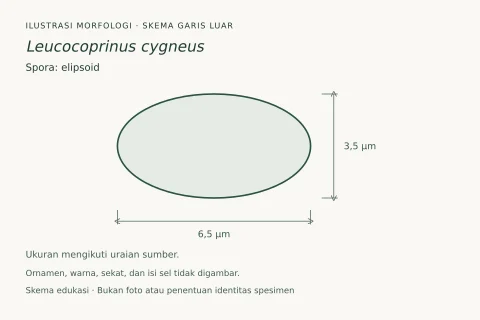
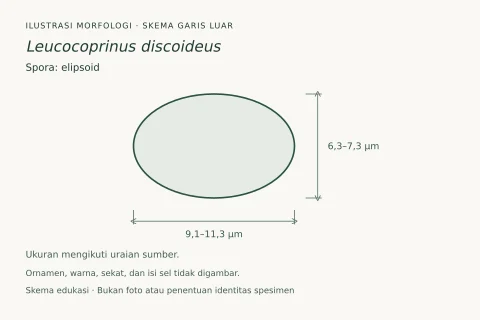
Leucocoprinus cepistipes is a small dapperling mushroom with white flesh. Cap: 3–9 cm. Bulbous when immature becoming convex with a pronounced umbo which may be darker in the centre against the white colour of the rest of the cap. Stem: 6–9 cm in height. 4-10mm thick. Slightly bulbous at the base with a stem ring which may quickly disappear. May discolour slightly yellow or pinkish brown. Gills: White, sometimes discolouring to pinkish brown with age. Free and crowded. Spore print: White. Spores: Ellipsoid and smooth with a tiny pore. Dextrinoid.7–11 x 4–7 μm. Smell: Indistinct. Cap: 3–6.5 cm wide when expanded. Starts paraboloid before expanding to campanulate and then flattening. When immature the surface is brown with brown scales more densely clustered towards the centre but as it expands the surface becomes white or creamy coloured with the brown colour only remaining at the centre. There is yellow bruising when touched and sulcate striations are present at the margins. Stem: 3–13 cm long and 2.5-5mm thick becoming wider at the base and tapering upwards with a hollow interior. The surface has a dense, fine pubescent coating all over and is white when immature becoming cream to brownish-cream coloured with age. It bruises yellow when young and yellow-brown to brown when the mature stem is damaged. Clear drops are exuded when immature and may coat the surface. The ascending stem ring is white when young with yellow exudation and some thick scales at the margin similar to those of the cap however it is evanescent and may disappear. Small scales are present on the stem below the annulus.

Sebagian uraian ditampilkan dalam bahasa sumber; terjemahannya belum tersedia atau belum lolos pemeriksaan.

Rujukan: [1]

Pengukuran mengikuti objek, spesimen atau kultur, dan metode yang disebutkan sumber. Baca uraian asli untuk konteks lengkap.

02 / Kehidupan

Habitat dan peran ekologis

Spesies ini biasanya telah dijelaskan dari rumah kaca dan rumah panas dan terutama dikenal karena tumbuh di tempat tidur kulit. Di 1867 Jean Belgian botanist Kickx documented Agaricus cepaestipes tumbuh di tanbark di rumah kaca Gent Botanical garden selama musim panas.

Rujukan: [1]

Habitat atau konteks temuan
Informasi belum tersedia pada sumber rilis ini.
Substrat
Informasi belum tersedia pada sumber rilis ini.
Peran atau konteks
Belum dikategorikan pada rilis ini.
Temukan hubungan serupa
03 / Siklus hidup

Reproduksi

Cap: 3–9 cm. Bulbous when immature becoming convex with a pronounced umbo which may be darker in the centre against the white colour of the rest of the cap. Stem: 6–9 cm in height. 4-10mm thick. Slightly bulbous at the base with a stem ring which may quickly disappear. May discolour slightly yellow or pinkish brown. Gills: White, sometimes discolouring to pinkish brown with age. Free and crowded. Spore print: White. Spores: Ellipsoid and smooth with a tiny pore. Dextrinoid.7–11 x 4–7 μm. Smell: Indistinct. Cap: 3–6.5 cm wide when expanded. Starts paraboloid before expanding to campanulate and then flattening. When immature the surface is brown with brown scales more densely clustered towards the centre but as it expands the surface becomes white or creamy coloured with the brown colour only remaining at the centre.

Sebagian uraian ditampilkan dalam bahasa sumber; terjemahannya belum tersedia atau belum lolos pemeriksaan.

Rujukan: [1]

Sinonim menurut acuan taksonomi rilis: Agaricus cepistipes; Agaricus cepistipes var. luteus; Agaricus cepistipes var. nigrescens; Agaricus cheimonoceps; Agaricus praealtus; Agaricus rorulentus; Agaricus sordescens; Coprinus cepistipes; Hiatula cepistipes; Lepiota cepistipes; Lepiota cepistipes var. praealta; Lepiota cheimonoceps; Lepiota hiatuloides; Lepiota rorulenta; Lepiota sordescens; Leucocoprinus cepistipes f. macrosporus; Leucocoprinus cepistipes var. hiatuloides; Leucocoprinus cepistipes var. pseudofarinosus; Leucocoprinus cepistipes var. rorulentus; Leucocoprinus cheimonoceps; Sclerotium mycetospora
04 / Batas informasi

Catatan identitas dan cakupan

  • Nama diterima mengikuti Catalogue of Life Base2026-09-11; uraian mempertahankan konsep dan nama sumber aslinya.
  • Original geographic, specimen and life-cycle scope retained; source import awaits individual editorial review.
  • Impor dan terjemahan otomatis belum diperiksa editorial per profil. Struktur reproduktif yang disebutkan tidak membuktikan seluruh siklus hidup diketahui.
  • Pengukuran pada uraian mengikuti spesimen, kultur, dan metode sumber; angka tidak diperluas ke semua populasi.

Catatan distribusi dalam narasi mengikuti sumbernya. Dokumentasi spesimen atau foto mengikuti catatan sumber. Bukti wilayah Indonesia dan penilaian konservasi tidak disimpulkan dari gambar.

05 / Dokumentasi

Melihat dengan konteks

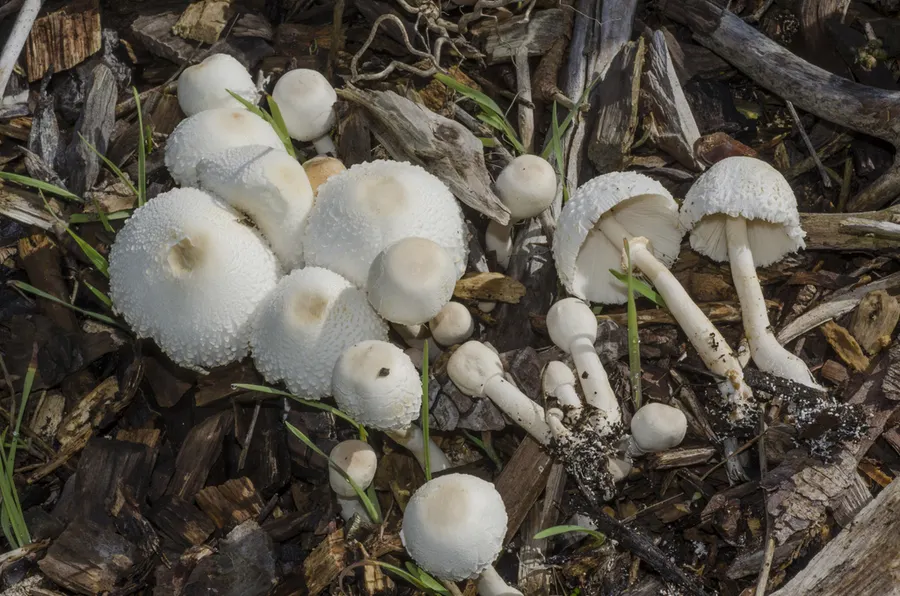
Dokumentasi Leucocoprinus cepistipes menurut asosiasi foto pada record takson iNaturalist. Kredit: Jerry Cooper. Identitas mengikuti sumber; bukan penentuan spesimen independen.

Jenis
Fotografi
Kredit
(c) Jerry Cooper, some rights reserved (CC BY), uploaded by Jerry Cooper
Lisensi
CC BY 4.0
Sumber media
Buka entri sumber

Gambar menunjukkan objek menurut identifikasi sumber, bukan verifikasi independen spesimen oleh Fungi. Tidak ada skala baru yang ditambahkan.

06 / Rujukan

Sumber profil

  1. [1] Leucocoprinus cepistipes — Wikipedia (en)Bagian sumber: Frozen revision 1289359835
    Tanggal penghimpunan sumber: 2026-10-12
    Teks sumber: CC BY-SA4.0 · Wikipedia contributors
  2. [2] Catalogue of Life Base2026-09-11 — Leucocoprinus cepistipesBagian sumber: ColDP NameUsage.tsv ID 6PT6C; accepted species; source 2073
    Tanggal penghimpunan sumber: 2026-10-12
  3. [3] Dokumentasi visual — Leucocoprinus cepistipesBagian sumber: Individual media record; identification follows the source, not independent determination
    Tanggal penghimpunan sumber: 2026-10-12
    Media sumber: CC BY 4.0 · (c) Jerry Cooper, some rights reserved (CC BY), uploaded by Jerry Cooper

Adaptasi teks: CC BY-SA 4.0. Wikipedia contributors — Leucocoprinus cepistipes — Wikipedia (en)

Uraian asli dan riwayat sumber

Riwayat atau halaman sumber

Ringkasan sumber

Leucocoprinus cepistipes (often spelled cepaestipes), is a species of fungus in the family Agaricaceae. It is also known by the common name onion-stalk parasol in reference to the bulbous stem base. Typical characteristics include a fine-scaled bell-shaped cap, a partial veil, and a tendency to bruise a yellow to brown when handled. It is typically found on wood debris, such as wood chips, but may also grow in potted plants or greenhouses.

Revisi sumber

Morfologi sumber

Leucocoprinus cepistipes is a small dapperling mushroom with white flesh. Cap: 3–9 cm. Bulbous when immature becoming convex with a pronounced umbo which may be darker in the centre against the white colour of the rest of the cap. Stem: 6–9 cm in height. 4-10mm thick. Slightly bulbous at the base with a stem ring which may quickly disappear. May discolour slightly yellow or pinkish brown. Gills: White, sometimes discolouring to pinkish brown with age. Free and crowded. Spore print: White. Spores: Ellipsoid and smooth with a tiny pore. Dextrinoid.7–11 x 4–7 μm. Smell: Indistinct. Cap: 3–6.5 cm wide when expanded. Starts paraboloid before expanding to campanulate and then flattening. When immature the surface is brown with brown scales more densely clustered towards the centre but as it expands the surface becomes white or creamy coloured with the brown colour only remaining at the centre. There is yellow bruising when touched and sulcate striations are present at the margins. Stem: 3–13 cm long and 2.5-5mm thick becoming wider at the base and tapering upwards with a hollow interior. The surface has a dense, fine pubescent coating all over and is white when immature becoming cream to brownish-cream coloured with age. It bruises yellow when young and yellow-brown to brown when the mature stem is damaged. Clear drops are exuded when immature and may coat the surface. The ascending stem ring is white when young with yellow exudation and some thick scales at the margin similar to those of the cap however it is evanescent and may disappear. Small scales are present on the stem below the annulus.

Revisi sumber

Ekologi sumber

This species has commonly been described from greenhouses and hothouses and is especially noted for growing in bark beds. In 1867 the Belgian botanist Jean Kickx documented Agaricus cepaestipes growing in tanbark in the greenhouses of the Ghent Botanical garden during the summer.

Revisi sumber

Struktur reproduksi sumber

Cap: 3–9 cm. Bulbous when immature becoming convex with a pronounced umbo which may be darker in the centre against the white colour of the rest of the cap. Stem: 6–9 cm in height. 4-10mm thick. Slightly bulbous at the base with a stem ring which may quickly disappear. May discolour slightly yellow or pinkish brown. Gills: White, sometimes discolouring to pinkish brown with age. Free and crowded. Spore print: White. Spores: Ellipsoid and smooth with a tiny pore. Dextrinoid.7–11 x 4–7 μm. Smell: Indistinct. Cap: 3–6.5 cm wide when expanded. Starts paraboloid before expanding to campanulate and then flattening. When immature the surface is brown with brown scales more densely clustered towards the centre but as it expands the surface becomes white or creamy coloured with the brown colour only remaining at the centre.

Revisi sumber

Rujukan halaman ini

Fungi. Leucocoprinus cepistipes. Rilis data fungi-2026-10-12-expansion-2. https://fungi-atlas.mgadib.chatgpt.site/jamur/leucocoprinus-cepistipes/.

Status: impor sumber; pemeriksaan editorial per profil belum selesai. Untuk klaim biologis, gunakan rujukan pada bagian terkait dan periksa konteks sumber aslinya.