01 / Morfologi

Ciri dan struktur

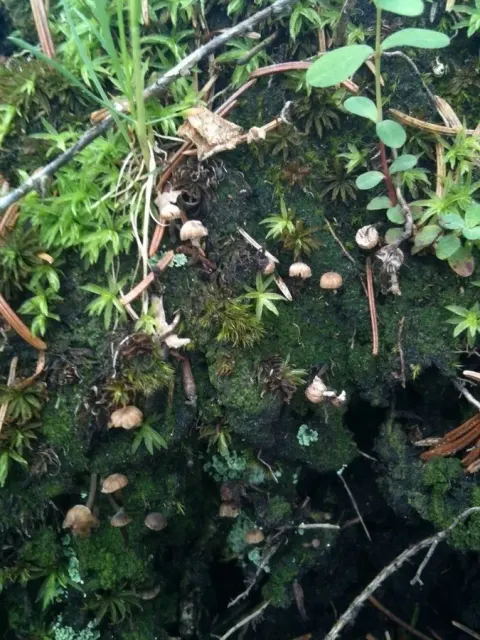
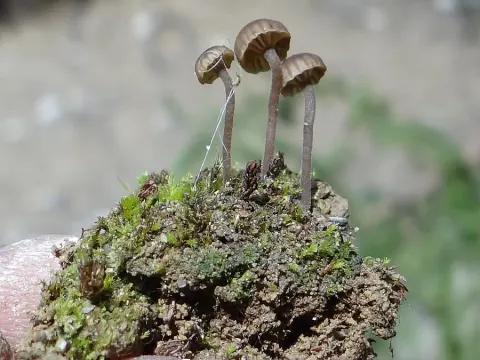
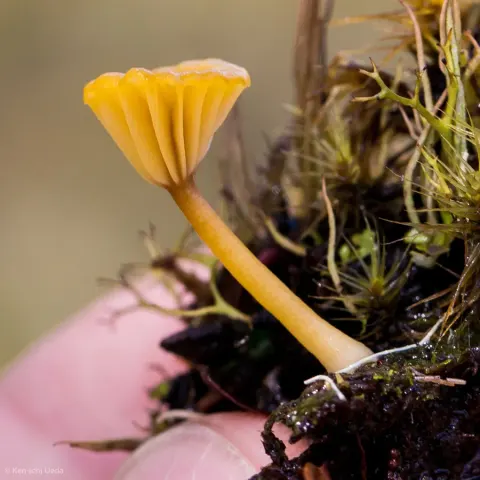
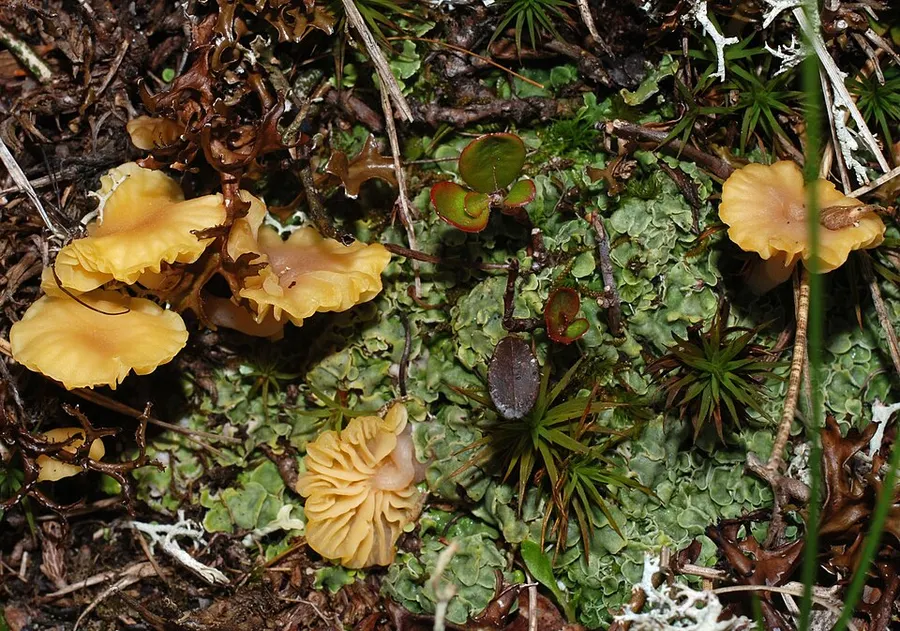
The vegetative thallus of Lichenomphalia hudsoniana comprises green to dark green, rounded squamules (scales) (known as the "Coriscium type") measuring 2–10 mm in diameter. The basidiolichen produces smooth, yellowish, mushroom-like fruitbodies 0.5 – 3 cm in diameter. When moist, they have a rubbery or cartilaginous texture and a viscid colour; this colour fades to pale yellow when dry. The gills on the underside of the cap are somewhat curved or arched (arcuate), and strongly decurrent; they are spaced apart distantly and have veins in the spaces between the gills (intervenose). The cartilaginous stipe is hollow, measuring 1 – 2.5 cm long and 1.5–2 mm thick. Spores are smooth, ellipsoid, hyaline, and measure 4–5 by 5–8 μm.

Sebagian uraian ditampilkan dalam bahasa sumber; terjemahannya belum tersedia atau belum lolos pemeriksaan.

Rujukan: [1]

Pengukuran mengikuti objek, spesimen atau kultur, dan metode yang disebutkan sumber. Baca uraian asli untuk konteks lengkap.

02 / Kehidupan

Habitat dan peran ekologis

Lichenomphalia hudsoniana is one of the most common and widely distributed members of its genus, and can use a variety of substrates for growth. It occurs in Asia, Europe, and North America, largely in alpine and arctic regions, but is also known from areas near the ocean in Norway and Great Britain. The preferred habitat for this basidiolichen is damp soil amongst mosses, and in bogs; less frequently it is recorded growing on decaying tree bark in shaded areas.

Sebagian uraian ditampilkan dalam bahasa sumber; terjemahannya belum tersedia atau belum lolos pemeriksaan.

Rujukan: [1]

Habitat atau konteks temuan
Informasi belum tersedia pada sumber rilis ini.
Substrat
Informasi belum tersedia pada sumber rilis ini.
Peran atau konteks
Pembentuk liken
Temukan hubungan serupa
03 / Siklus hidup

Reproduksi

The vegetative thallus of Lichenomphalia hudsoniana comprises green to dark green, rounded squamules (scales) (known as the "Coriscium type") measuring 2–10 mm in diameter. The basidiolichen produces smooth, yellowish, mushroom-like fruitbodies 0.5 – 3 cm in diameter. When moist, they have a rubbery or cartilaginous texture and a viscid colour; this colour fades to pale yellow when dry. The gills on the underside of the cap are somewhat curved or arched (arcuate), and strongly decurrent; they are spaced apart distantly and have veins in the spaces between the gills (intervenose). The cartilaginous stipe is hollow, measuring 1 – 2.5 cm long and 1.5–2 mm thick. Spores are smooth, ellipsoid, hyaline, and measure 4–5 by 5–8 μm.

Sebagian uraian ditampilkan dalam bahasa sumber; terjemahannya belum tersedia atau belum lolos pemeriksaan.

Rujukan: [1]

Sinonim menurut acuan taksonomi rilis: Botrydina viridis; Clitocybe hudsoniana; Coriscium viride; Dermatocarpon viride; Endocarpon laetevirens; Endocarpon viride; Gerronema hudsonianum; Hygrophorus hudsonianus; Lenormandia laetevirens; Lenormandia viridis; Lichen hepaticus viride; Normandina davidis; Normandina jungermanniae f. viridis; Normandina laetevirens; Normandina viridis; Omphalia luteolilacina; Omphalina hudsoniana; Omphalina luteolilacina; Phytoconis viridis; Solorina saccata f. laetevirens; Solorina saccata var. laetevirens
04 / Batas informasi

Catatan identitas dan cakupan

  • Nama diterima mengikuti Catalogue of Life Base2026-09-11; uraian mempertahankan konsep dan nama sumber aslinya.
  • Original geographic, specimen and life-cycle scope retained; source import awaits individual editorial review.
  • Impor dan terjemahan otomatis belum diperiksa editorial per profil. Struktur reproduktif yang disebutkan tidak membuktikan seluruh siklus hidup diketahui.
  • Pengukuran pada uraian mengikuti spesimen, kultur, dan metode sumber; angka tidak diperluas ke semua populasi.

Catatan distribusi dalam narasi mengikuti sumbernya. Dokumentasi spesimen atau foto mengikuti catatan sumber. Bukti wilayah Indonesia dan penilaian konservasi tidak disimpulkan dari gambar.

05 / Dokumentasi

Melihat dengan konteks

Dokumentasi Lichenomphalia hudsoniana dari Wikimedia Commons. Omphalina hudsoniana , Near Zunderwand, Carinthia, Austria Identifikasi mengikuti record berkas sumber.

Jenis
Fotografi
Kredit
Tigerente
Sumber media
Buka entri sumber

Gambar menunjukkan objek menurut identifikasi sumber, bukan verifikasi independen spesimen oleh Fungi. Tidak ada skala baru yang ditambahkan.

06 / Rujukan

Sumber profil

  1. [1] Lichenomphalia hudsoniana — Wikipedia (en)Bagian sumber: Frozen revision 1114997200
    Tanggal penghimpunan sumber: 2026-10-12
    Teks sumber: CC BY-SA4.0 · Wikipedia contributors
  2. [2] Catalogue of Life Base2026-09-11 — Lichenomphalia hudsonianaBagian sumber: ColDP NameUsage.tsv ID 729PN; accepted species; source 2073
    Tanggal penghimpunan sumber: 2026-10-12
  3. [3] Dokumentasi visual — Lichenomphalia hudsonianaBagian sumber: Individual media record; identification follows the source, not independent determination
    Tanggal penghimpunan sumber: 2026-10-12
    Media sumber: CC BY-SA 3.0 · Tigerente

Adaptasi teks: CC BY-SA 4.0. Wikipedia contributors — Lichenomphalia hudsoniana — Wikipedia (en)

Uraian asli dan riwayat sumber

Riwayat atau halaman sumber

Ringkasan sumber

Lichenomphalia hudsoniana is a species of basidiolichen in the family Hygrophoraceae. It is widely distributed in alpine and arctic regions of the world, where it grows on moist soil amongst moss.

Revisi sumber

Morfologi sumber

The vegetative thallus of Lichenomphalia hudsoniana comprises green to dark green, rounded squamules (scales) (known as the "Coriscium type") measuring 2–10 mm in diameter. The basidiolichen produces smooth, yellowish, mushroom-like fruitbodies 0.5 – 3 cm in diameter. When moist, they have a rubbery or cartilaginous texture and a viscid colour; this colour fades to pale yellow when dry. The gills on the underside of the cap are somewhat curved or arched (arcuate), and strongly decurrent; they are spaced apart distantly and have veins in the spaces between the gills (intervenose). The cartilaginous stipe is hollow, measuring 1 – 2.5 cm long and 1.5–2 mm thick. Spores are smooth, ellipsoid, hyaline, and measure 4–5 by 5–8 μm.

Revisi sumber

Ekologi sumber

Lichenomphalia hudsoniana is one of the most common and widely distributed members of its genus, and can use a variety of substrates for growth. It occurs in Asia, Europe, and North America, largely in alpine and arctic regions, but is also known from areas near the ocean in Norway and Great Britain. The preferred habitat for this basidiolichen is damp soil amongst mosses, and in bogs; less frequently it is recorded growing on decaying tree bark in shaded areas.

Revisi sumber

Struktur reproduksi sumber

The vegetative thallus of Lichenomphalia hudsoniana comprises green to dark green, rounded squamules (scales) (known as the "Coriscium type") measuring 2–10 mm in diameter. The basidiolichen produces smooth, yellowish, mushroom-like fruitbodies 0.5 – 3 cm in diameter. When moist, they have a rubbery or cartilaginous texture and a viscid colour; this colour fades to pale yellow when dry. The gills on the underside of the cap are somewhat curved or arched (arcuate), and strongly decurrent; they are spaced apart distantly and have veins in the spaces between the gills (intervenose). The cartilaginous stipe is hollow, measuring 1 – 2.5 cm long and 1.5–2 mm thick. Spores are smooth, ellipsoid, hyaline, and measure 4–5 by 5–8 μm.

Revisi sumber

Rujukan halaman ini

Fungi. Lichenomphalia hudsoniana. Rilis data fungi-2026-10-12-expansion-2. https://fungi-atlas.mgadib.chatgpt.site/jamur/lichenomphalia-hudsoniana/.

Status: impor sumber; pemeriksaan editorial per profil belum selesai. Untuk klaim biologis, gunakan rujukan pada bagian terkait dan periksa konteks sumber aslinya.