Ciri dan struktur
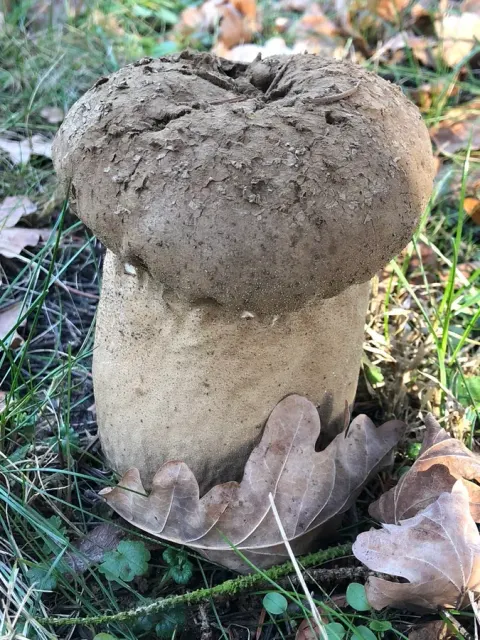
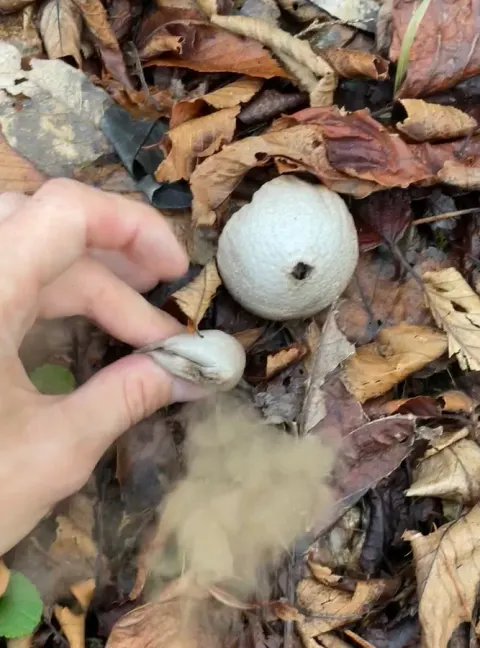
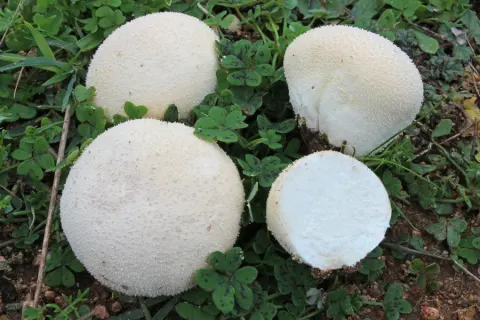
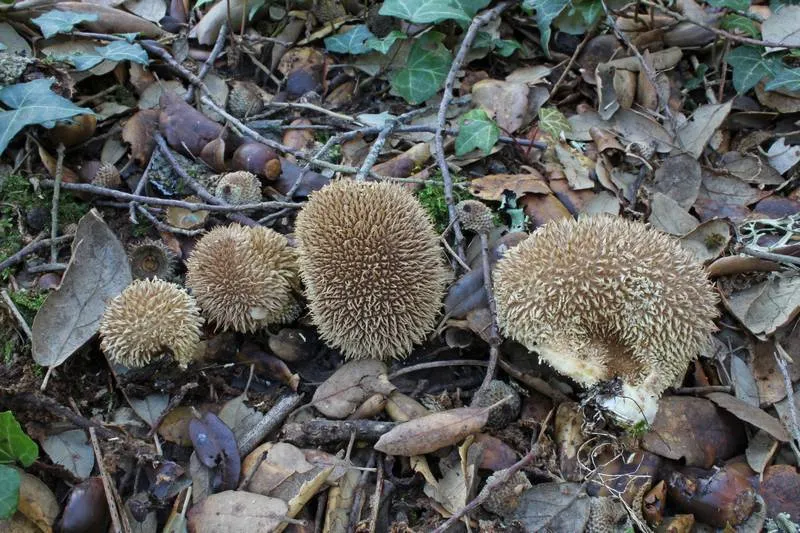
The fruit bodies of L. echinatum are 2 – 4 cm wide by 2 – 3.5 cm tall, and are roughly spherical, or pear-shaped. The exterior surface is crowded with spines that may be up to 0.6 cm long. According to Curtis Gates Lloyd, American specimens have more slender spines than European ones. Initially white and becoming dark brown in maturity, the spines are often joined at the tips in groups of three or four. In this form the puffballs resemble acorn caps of burr oak, with which they may readily be confused. The spines slough off in age, revealing a somewhat net-like or reticulated surface. The fruit body has a small base that is an off-white or purple-gray color, and it may be attached to the growing surface by thin white cords (rhizomorphs). The internal contents of the puffball contain the gleba, a mass of spores and associated spore-producing cells. In young specimens the gleba is white and firm, but as the puffball ages, it turns yellowish and then brown to purple-brown and powdery. Mature specimens develop a pore at the top of the fruit body through which spores are released when hit by falling raindrops. The spores of L. echinatum, roughly spherical with warts on the surface, have diameters between 4 and 6 μm. The capillitia (coarse thick-walled hyphae in the gleba) are elastic, brown in color, contain small pores, and are 5–8 μm thick. The basidia (the spore-bearing cells) may be attached to two to four spores, and the sterigmata (tapered spine-like projections from the basidia that attach the spores) are up to 5 μm long.
Habitat dan peran ekologis
Lycoperdon echinatum dapat ditemukan baik secara solitaris atau dalam kelompok kecil. It typically grows on the ground in deciduous forests and grassy areas, glades and pastures, on moss, humus, or woody debris. Jamur telah dicatat memiliki preferensi untuk hutan beech. Fruit bodies may make their appearance anytime from the late spring to autumn. Older specimens lebih mungkin diabaikan, karena warna coklatnya bercampur dengan lingkungan yang ada di sekitarnya dengan daun mati dan kayu mati. Puffball digunakan oleh berbagai spesies lalat scuttle (keluarga Phoridae) sebagai makanan larva. Spesies ini telah dikumpulkan dari Afrika tengah timur, Cina, Costa Rica, Iran, Jepang, dan Eropa (termasuk Inggris, Bulgaria, Republik Ceko, Finlandia, Jerman, Italia, Slowakia, Spanyol, Swedia, dan Swiss). Di Amerika Utara, "secara lokal sering" di timur Pegunungan Rocky. Hal ini dianggap spesies terancam di Åland (Finlandia). Sebuah studi tentang distribusi spesies di Sweden reported bahwa pada tahun 1940-an dan 50-an, tumbuh di hutan bukit dengan rumput dan ramuan berdaun lebar di atas tanah dengan tingkat pH tanah antara 5.0 dan 6.6, tetapi populasi telah berkurang karena penyedapannya selama beberapa dekade terakhir.
- Habitat atau konteks temuan
- hutan
- Substrat
- tanah
- Peran atau konteks
- Belum dikategorikan pada rilis ini.
Reproduksi
The fruit bodies of L. echinatum are 2 – 4 cm wide by 2 – 3.5 cm tall, and are roughly spherical, or pear-shaped. The exterior surface is crowded with spines that may be up to 0.6 cm long. According to Curtis Gates Lloyd, American specimens have more slender spines than European ones. Initially white and becoming dark brown in maturity, the spines are often joined at the tips in groups of three or four. In this form the puffballs resemble acorn caps of burr oak, with which they may readily be confused. The spines slough off in age, revealing a somewhat net-like or reticulated surface. The fruit body has a small base that is an off-white or purple-gray color, and it may be attached to the growing surface by thin white cords (rhizomorphs).
Catatan identitas dan cakupan
- Nama diterima mengikuti Catalogue of Life Base2026-09-11; uraian mempertahankan konsep dan nama sumber aslinya.
- Original geographic, specimen and life-cycle scope retained; source import awaits individual editorial review.
- Impor dan terjemahan otomatis belum diperiksa editorial per profil. Struktur reproduktif yang disebutkan tidak membuktikan seluruh siklus hidup diketahui.
- Pengukuran pada uraian mengikuti spesimen, kultur, dan metode sumber; angka tidak diperluas ke semua populasi.
Catatan distribusi dalam narasi mengikuti sumbernya. Dokumentasi spesimen atau foto mengikuti catatan sumber. Bukti wilayah Indonesia dan penilaian konservasi tidak disimpulkan dari gambar.
Melihat dengan konteks
Dokumentasi Lycoperdon echinatum menurut asosiasi foto pada record takson iNaturalist. Kredit: Davide Puddu. Identitas mengikuti sumber; bukan penentuan spesimen independen.
- Jenis
- Fotografi
- Kredit
- (c) Davide Puddu, some rights reserved (CC BY), uploaded by Davide Puddu
- Lisensi
- CC BY 4.0
- Sumber media
- Buka entri sumber
Dokumentasi tambahan
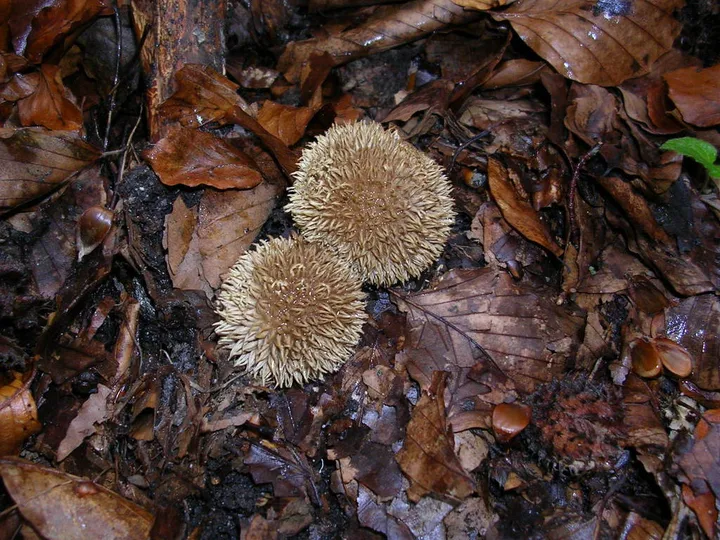
Foto yang diasosiasikan dengan Lycoperdon echinatum pada iNaturalist. Identifikasi mengikuti sumber; bukan penentuan spesimen independen.
Kredit dan penggunaan
(c) tomasz przechlewski, some rights reserved (CC BY)
Ukuran dan format gambar disesuaikan tanpa pemotongan, retus, atau penambahan skala. Lisensi sumber dipertahankan.
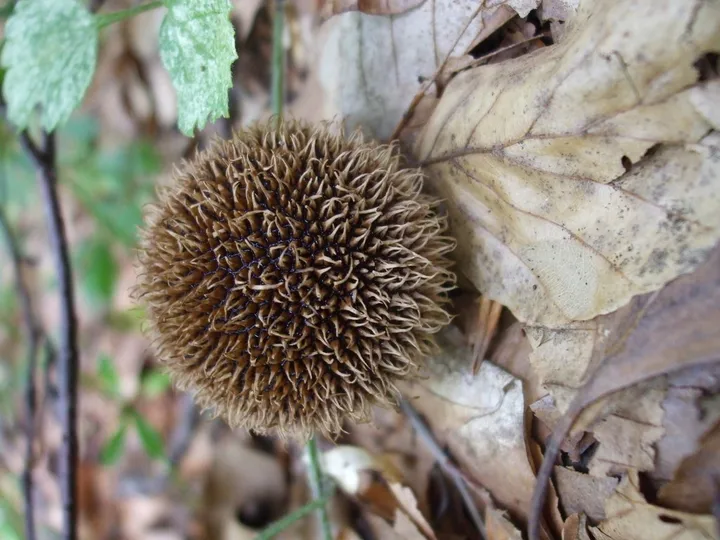
Foto yang diasosiasikan dengan Lycoperdon echinatum pada iNaturalist. Identifikasi mengikuti sumber; bukan penentuan spesimen independen.
Kredit dan penggunaan
(c) tomasz przechlewski, some rights reserved (CC BY)
Ukuran dan format gambar disesuaikan tanpa pemotongan, retus, atau penambahan skala. Lisensi sumber dipertahankan.
Sumber profil
- [1] Lycoperdon echinatum — Wikipedia (en)
- [2] Catalogue of Life Base2026-09-11 — Lycoperdon echinatum
- [3] Dokumentasi visual — Lycoperdon echinatum
- [4] Dokumentasi visual — Lycoperdon echinatum
- [5] Dokumentasi visual — Lycoperdon echinatum
Rujukan halaman ini
Fungi. Lycoperdon echinatum. Rilis data fungi-2026-10-12-expansion-2. https://fungi-atlas.mgadib.chatgpt.site/jamur/lycoperdon-echinatum/.
Status: impor sumber; pemeriksaan editorial per profil belum selesai. Untuk klaim biologis, gunakan rujukan pada bagian terkait dan periksa konteks sumber aslinya.