Ciri dan struktur
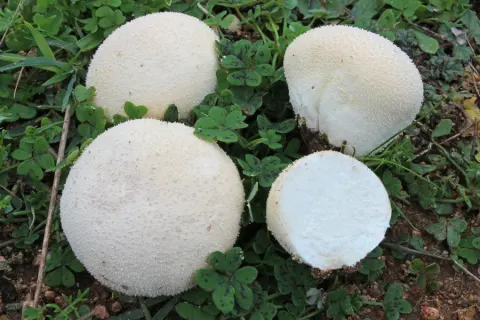
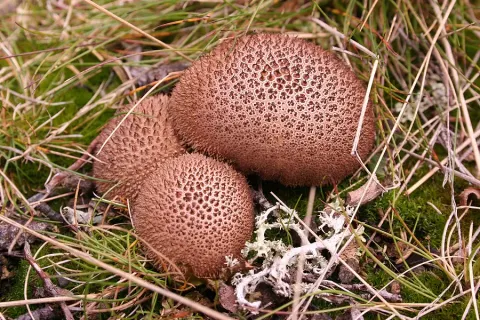
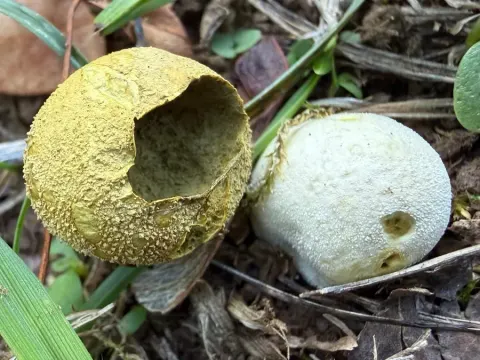
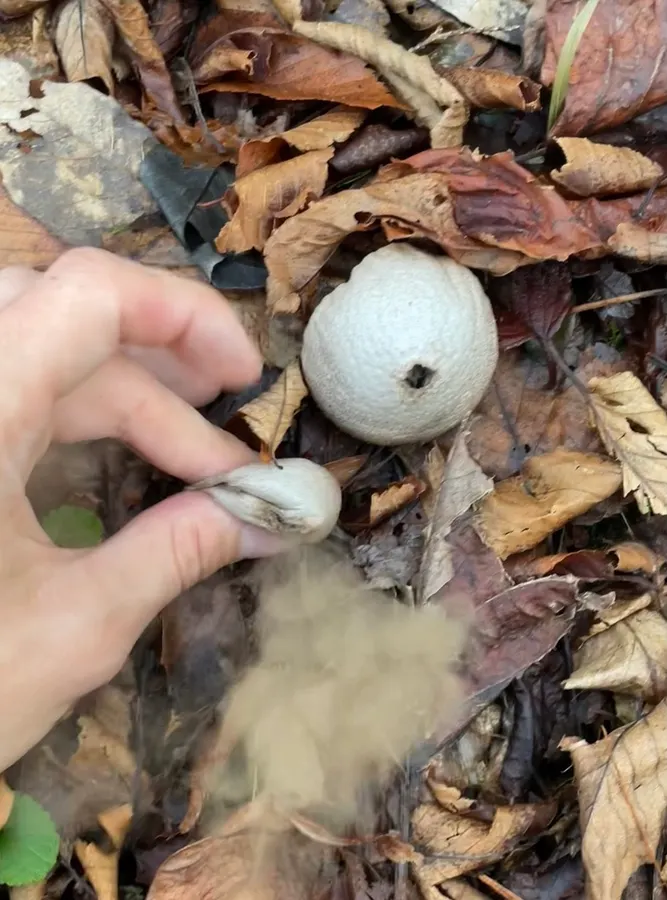
The fruit body ranges in shape from pear-like with a flattened top, to nearly spherical, and reaches dimensions of 1.5 to 6 cm wide by 3 to 9 cm tall. It has a stem-like base, and is whitish before browning in age. The outer surface of the fruit body (the exoperidium) is covered in short cone-shaped spines that are interspersed with granular warts. The spines, which are whitish, gray, or brown, can be easily rubbed off, and leave reticulate pock marks or scars after they are removed. The base of the puffball is thick. It is initially white, but turns yellow, olive, or brownish in age. The reticulate pattern resulting from the rubbed-off spines is less evident on the base. In maturity, the exoperidium at the top of the puffball sloughs away, revealing a pre-formed hole (ostiole) in the endoperidium, through which the spores can escape. In young puffballs, the internal contents, the gleba, is white and firm, but turns brown and powdery as the spores mature. The gleba contains minute chambers that are lined with hymenium (the fertile, spore-bearing tissue); the chambers collapse when the spores mature. Mature puffballs release their powdery spores through the ostiole when they are compressed by touch or falling raindrops. A study of the spore release mechanism in L. pyriforme using high-speed schlieren photography determined that raindrops of 1 mm diameter or greater, including rain drips from nearby trees, were sufficient to cause spore discharge. The puffed spores are ejected from the ostiole at a velocity of about 100 cm/second to form a centimeter-tall cloud one-hundredth of a second after impact.
Habitat dan peran ekologis
Spesies saprobik, Lycoperdon perlatum tumbuh sendiri, tersebar, atau dalam kelompok atau kelompok di tanah. Ia juga bisa tumbuh di cincin peri. Typical habitats mencakup hutan, daerah rumput, dan sepanjang jalan. Hal ini dilaporkan dari perkebunan Pinus patula di Tamil Nadu, India. Bola puffball kadang-kadang membingungkan para pemain golf karena mirip dengan bola golf ketika dilihat dari kejauhan. Spesies yang tersebar luas dengan distribusi hampir kosmopolitan, telah dilaporkan dari Afrika (Kenya, Rwanda, Tanzania), Asia (China, Himalaya, Jepang, India selatan Iran), Australia, Eropa, Selandia Baru, dan Amerika Selatan (Brazil). Hal ini telah dikumpulkan dari daerah subarktis Greenland, dan daerah subalpine di Islandia. In North America, where it is considered the most common puffball species, it ranges from Alaska to Mexico, although it is less common in Central America. Puffball bioakumulasi logam berat yang ada di tanah, dan dapat digunakan sebagai bioindicator polusi tanah oleh logam berat dan selenium. Dalam satu studi 1977, sampel yang dikumpulkan dari daerah rumput dekat sisi jalan raya antar negara bagian di Connecticut were menunjukkan konsentrasi kadmium dan timah yang tinggi. L. perlatum biomassa telah terbukti secara eksperimental untuk menghilangkan ion merkuri dari larutan cair, dan sedang diselidiki untuk potensi penggunaan sebagai bahan bioresorptif yang murah, terbarukan, dalam pengolahan air dan air limbah yang mengandung merkuri.
- Habitat atau konteks temuan
- Informasi belum tersedia pada sumber rilis ini.
- Substrat
- tanah
- Peran atau konteks
- Pengurai
Reproduksi
In maturity, the exoperidium at the top of the puffball sloughs away, revealing a pre-formed hole (ostiole) in the endoperidium, through which the spores can escape. In young puffballs, the internal contents, the gleba, is white and firm, but turns brown and powdery as the spores mature. The gleba contains minute chambers that are lined with hymenium (the fertile, spore-bearing tissue); the chambers collapse when the spores mature. Mature puffballs release their powdery spores through the ostiole when they are compressed by touch or falling raindrops. A study of the spore release mechanism in L. pyriforme using high-speed schlieren photography determined that raindrops of 1 mm diameter or greater, including rain drips from nearby trees, were sufficient to cause spore discharge.
Catatan identitas dan cakupan
- Nama diterima mengikuti Catalogue of Life Base2026-09-11; uraian mempertahankan konsep dan nama sumber aslinya.
- Original geographic, specimen and life-cycle scope retained; source import awaits individual editorial review.
- Impor dan terjemahan otomatis belum diperiksa editorial per profil. Struktur reproduktif yang disebutkan tidak membuktikan seluruh siklus hidup diketahui.
- Pengukuran pada uraian mengikuti spesimen, kultur, dan metode sumber; angka tidak diperluas ke semua populasi.
Catatan distribusi dalam narasi mengikuti sumbernya. Dokumentasi spesimen atau foto mengikuti catatan sumber. Bukti wilayah Indonesia dan penilaian konservasi tidak disimpulkan dari gambar.
Melihat dengan konteks
Dokumentasi Lycoperdon perlatum menurut asosiasi foto pada record takson iNaturalist. Kredit: Jacob Weston. Identitas mengikuti sumber; bukan penentuan spesimen independen.
- Jenis
- Fotografi
- Kredit
- (c) Jacob Weston, some rights reserved (CC BY), uploaded by Jacob Weston
- Lisensi
- CC BY 4.0
- Sumber media
- Buka entri sumber
Dokumentasi tambahan
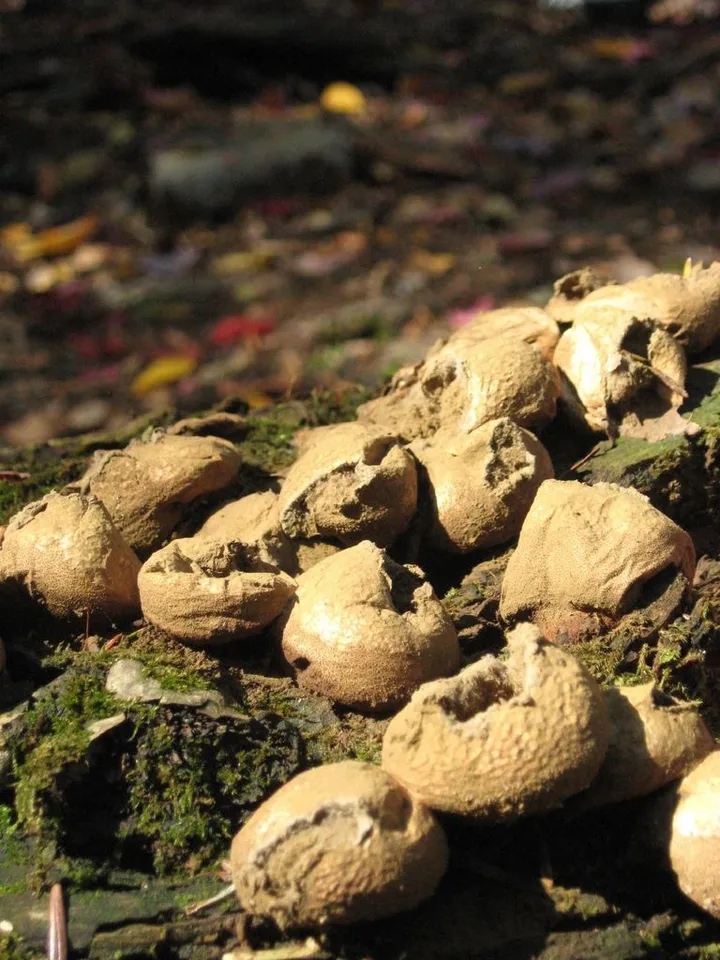
Foto yang diasosiasikan dengan Lycoperdon perlatum pada iNaturalist. Identifikasi mengikuti sumber; bukan penentuan spesimen independen.
Kredit dan penggunaan
(c) Justin, some rights reserved (CC BY)
Ukuran dan format gambar disesuaikan tanpa pemotongan, retus, atau penambahan skala. Lisensi sumber dipertahankan.
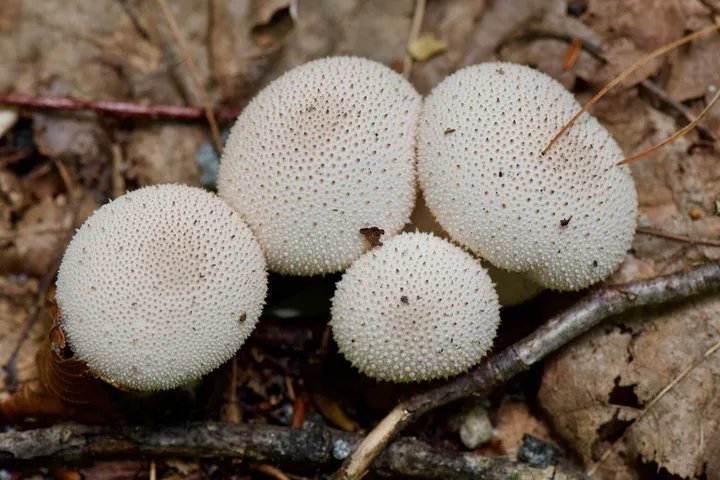
Foto yang diasosiasikan dengan Lycoperdon perlatum pada iNaturalist. Identifikasi mengikuti sumber; bukan penentuan spesimen independen.
Kredit dan penggunaan
(c) Michael Nerrie, some rights reserved (CC BY), uploaded by Michael Nerrie
Ukuran dan format gambar disesuaikan tanpa pemotongan, retus, atau penambahan skala. Lisensi sumber dipertahankan.
Sumber profil
- [1] Lycoperdon perlatum — Wikipedia (en)
- [2] Catalogue of Life Base2026-09-11 — Lycoperdon perlatum
- [3] Dokumentasi visual — Lycoperdon perlatum
- [4] Dokumentasi visual — Lycoperdon perlatum
- [5] Dokumentasi visual — Lycoperdon perlatum
Rujukan halaman ini
Fungi. Lycoperdon perlatum. Rilis data fungi-2026-10-12-expansion-2. https://fungi-atlas.mgadib.chatgpt.site/jamur/lycoperdon-perlatum/.
Status: impor sumber; pemeriksaan editorial per profil belum selesai. Untuk klaim biologis, gunakan rujukan pada bagian terkait dan periksa konteks sumber aslinya.