01 / Morfologi

Ciri dan struktur

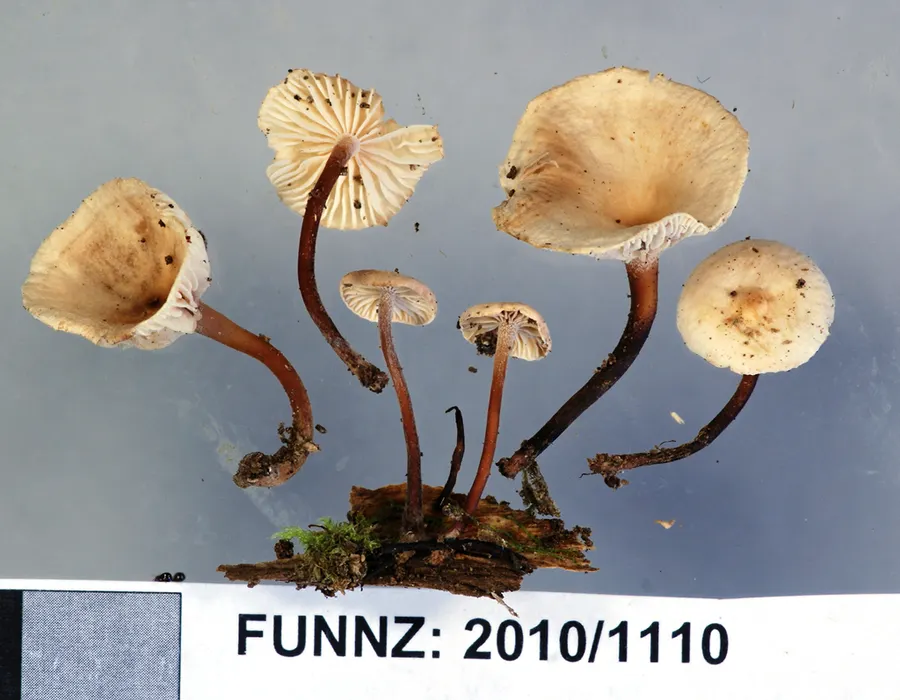
[GS] Pileus 11-17 mm. diam., dull white, thin, dry, hemispherical at first becoming plano-concave, somewhat fluted at margin. Gills adnate-decurrent, creamy white, distant, occasionally forked and with folds between. Stipe 2 cm. x 1 mm., tapering downwards, cream immediately under the gills, fawn to purple brown below, solid, tough. Spores 11-12 X 4-4.5um, non-amyloid, thin-walled. Hymenophoral trama non-amyloid. Cuticle of woven repent non-amyloid hyphae with clamp connections, with sparse superficial dermatocystidia which are hair-like, amyloid and thick-walled. (Fig. 2/14, P- 37) [EH] This species belongs to a group of apparently related Marasmiellus like fungi known from New Zealand which possess subamygdaliform, smooth spores and long, thick-walled, yellow-brown, hair-like dermatocystidia in the cuticle. To our knowledge there is no existing genus where these fungi could be adequately accommodated.[JAC] non Marasmiellus omphalodes (Berk & Curt.) Singer (twice). This material attacked by an Aspergillus. The gills have dried yellow/orange like some Campanellus. No sign of sterile gill edge. The cap appears minutely felty. Stipe with indistinct macro-visible cystidia. Stem arising from a superficial slightly enlarged base on wood with fine indistinct brown bristles. Pilleipellis with isolated clusters of yellow, thick-walled, fragile/fracturing hairs, associated with shorter, nearly vesiculose, and clamped elements (hydropoid?). Stipe with similar hyaline hairs (and numerous allantoid spores of a tremellaceous fungus). Spores somewhat collapsed. No cheilocystidia. No tissue amyloid or dextrinoid.

Sebagian uraian ditampilkan dalam bahasa sumber; terjemahannya belum tersedia atau belum lolos pemeriksaan.

Rujukan: [1]

Pengukuran mengikuti objek, spesimen atau kultur, dan metode yang disebutkan sumber. Baca uraian asli untuk konteks lengkap.

02 / Kehidupan

Habitat dan peran ekologis

[GS] Pileus 11-17 mm. diam., dull white, thin, dry, hemispherical at first becoming plano-concave, somewhat fluted at margin. Gills adnate-decurrent, creamy white, distant, occasionally forked and with folds between. Stipe 2 cm. x 1 mm., tapering downwards, cream immediately under the gills, fawn to purple brown below, solid, tough. Spores 11-12 X 4-4.5um, non-amyloid, thin-walled. Hymenophoral trama non-amyloid. Cuticle of woven repent non-amyloid hyphae with clamp connections, with sparse superficial dermatocystidia which are hair-like, amyloid and thick-walled. (Fig. 2/14, P- 37) [EH] This species belongs to a group of apparently related Marasmiellus like fungi known from New Zealand which possess subamygdaliform, smooth spores and long, thick-walled, yellow-brown, hair-like dermatocystidia in the cuticle. To our knowledge there is no existing genus where these fungi could be adequately accommodated.[JAC] non Marasmiellus omphalodes (Berk & Curt.) Singer (twice). This material attacked by an Aspergillus. The gills have dried yellow/orange like some Campanellus. No sign of sterile gill edge. The cap appears minutely felty. Stipe with indistinct macro-visible cystidia. Stem arising from a superficial slightly enlarged base on wood with fine indistinct brown bristles.

Sebagian uraian ditampilkan dalam bahasa sumber; terjemahannya belum tersedia atau belum lolos pemeriksaan.

Rujukan: [1]

Habitat atau konteks temuan
Informasi belum tersedia pada sumber rilis ini.
Substrat
kayu
Peran atau konteks
Belum dikategorikan pada rilis ini.
Temukan hubungan serupa
03 / Siklus hidup

Reproduksi

[GS] Pileus 11-17 mm. diam., dull white, thin, dry, hemispherical at first becoming plano-concave, somewhat fluted at margin. Gills adnate-decurrent, creamy white, distant, occasionally forked and with folds between. Stipe 2 cm. x 1 mm., tapering downwards, cream immediately under the gills, fawn to purple brown below, solid, tough. Spores 11-12 X 4-4.5um, non-amyloid, thin-walled. Hymenophoral trama non-amyloid. Cuticle of woven repent non-amyloid hyphae with clamp connections, with sparse superficial dermatocystidia which are hair-like, amyloid and thick-walled. (Fig. 2/14, P- 37) [EH] This species belongs to a group of apparently related Marasmiellus like fungi known from New Zealand which possess subamygdaliform, smooth spores and long, thick-walled, yellow-brown, hair-like dermatocystidia in the cuticle.

Sebagian uraian ditampilkan dalam bahasa sumber; terjemahannya belum tersedia atau belum lolos pemeriksaan.

Rujukan: [1]

04 / Batas informasi

Catatan identitas dan cakupan

  • Nama diterima mengikuti Catalogue of Life Base2026-09-11; uraian mempertahankan konsep dan nama sumber aslinya.
  • Historical description as cited by BiotaNZ. Preserve explicit New Zealand/locality, host and specimen qualifiers. Distribution is the cited source scope, not a current global range.
  • Impor dan terjemahan otomatis belum diperiksa editorial per profil. Struktur reproduktif yang disebutkan tidak membuktikan seluruh siklus hidup diketahui.
  • Pengukuran pada uraian mengikuti spesimen, kultur, dan metode sumber; angka tidak diperluas ke semua populasi.

Catatan distribusi dalam narasi mengikuti sumbernya. Dokumentasi spesimen atau foto mengikuti catatan sumber. Bukti wilayah Indonesia dan penilaian konservasi tidak disimpulkan dari gambar.

05 / Dokumentasi

Melihat dengan konteks

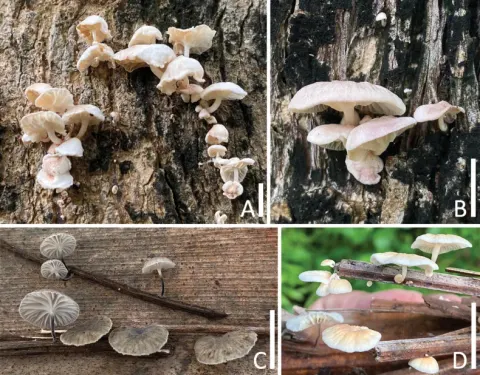
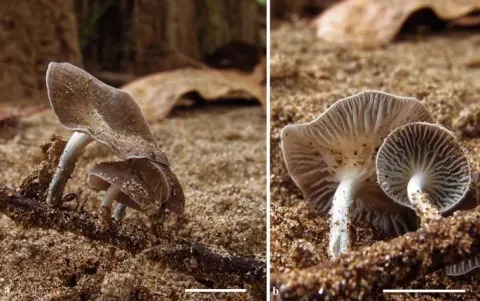
Dokumentasi Marasmiellus omphaloides menurut asosiasi foto pada record takson iNaturalist. Kredit: Jerry Cooper. Identitas mengikuti sumber; bukan penentuan spesimen independen.

Jenis
Fotografi
Kredit
(c) Jerry Cooper, some rights reserved (CC BY), uploaded by Jerry Cooper
Lisensi
CC BY 4.0
Sumber media
Buka entri sumber

Gambar menunjukkan objek menurut identifikasi sumber, bukan verifikasi independen spesimen oleh Fungi. Tidak ada skala baru yang ditambahkan.

06 / Rujukan

Sumber profil

  1. [1] Cooper, J.A. 2014-: Studies of New Zealand agaric type collections not deposited in PDD (unpublished). — Marasmiellus omphaloidesBagian sumber: biota:c1df7b41-0c90-4496-8066-750f4e46f610:1cb19232-36b9-11d5-9548-00d0592d548c
    Tanggal penghimpunan sumber: 2026-10-12
    Teks sumber: CC BY 4.0 · Cooper, J.A. 2014-: Studies of New Zealand agaric type collections not deposited in PDD (unpublished).
  2. [2] Catalogue of Life Base2026-09-11 — Marasmiellus omphaloidesBagian sumber: ColDP NameUsage.tsv ID 3XYTX; accepted species; source 2073
    Tanggal penghimpunan sumber: 2026-10-12
  3. [3] Dokumentasi visual — Marasmiellus omphaloidesBagian sumber: Individual media record; identification follows the source, not independent determination
    Tanggal penghimpunan sumber: 2026-10-12
    Media sumber: CC BY 4.0 · (c) Jerry Cooper, some rights reserved (CC BY), uploaded by Jerry Cooper

Adaptasi teks: CC BY 4.0. Cooper, J.A. 2014-: Studies of New Zealand agaric type collections not deposited in PDD (unpublished). — Cooper, J.A. 2014-: Studies of New Zealand agaric type collections not deposited in PDD (unpublished). — Marasmiellus omphaloides

Uraian asli dan riwayat sumber

Riwayat atau halaman sumber

Ringkasan sumber

[GS] Pileus 11-17 mm. diam., dull white, thin, dry, hemispherical at first becoming plano-concave, somewhat fluted at margin. Gills adnate-decurrent, creamy white, distant, occasionally forked and with folds between. Stipe 2 cm. x 1 mm., tapering downwards, cream immediately under the gills, fawn to purple brown below, solid, tough. Spores 11-12 X 4-4.5um, non-amyloid, thin-walled. Hymenophoral trama non-amyloid. Cuticle of woven repent non-amyloid hyphae with clamp connections, with sparse superficial dermatocystidia which are hair-like, amyloid and thick-walled. (Fig. 2/14, P- 37) [EH] This species belongs to a group of apparently related Marasmiellus like fungi known from New Zealand which possess subamygdaliform, smooth spores and long, thick-walled, yellow-brown, hair-like dermatocystidia in the cuticle.

Revisi sumber

Morfologi sumber

[GS] Pileus 11-17 mm. diam., dull white, thin, dry, hemispherical at first becoming plano-concave, somewhat fluted at margin. Gills adnate-decurrent, creamy white, distant, occasionally forked and with folds between. Stipe 2 cm. x 1 mm., tapering downwards, cream immediately under the gills, fawn to purple brown below, solid, tough. Spores 11-12 X 4-4.5um, non-amyloid, thin-walled. Hymenophoral trama non-amyloid. Cuticle of woven repent non-amyloid hyphae with clamp connections, with sparse superficial dermatocystidia which are hair-like, amyloid and thick-walled. (Fig. 2/14, P- 37) [EH] This species belongs to a group of apparently related Marasmiellus like fungi known from New Zealand which possess subamygdaliform, smooth spores and long, thick-walled, yellow-brown, hair-like dermatocystidia in the cuticle. To our knowledge there is no existing genus where these fungi could be adequately accommodated.[JAC] non Marasmiellus omphalodes (Berk & Curt.) Singer (twice). This material attacked by an Aspergillus. The gills have dried yellow/orange like some Campanellus. No sign of sterile gill edge. The cap appears minutely felty. Stipe with indistinct macro-visible cystidia. Stem arising from a superficial slightly enlarged base on wood with fine indistinct brown bristles. Pilleipellis with isolated clusters of yellow, thick-walled, fragile/fracturing hairs, associated with shorter, nearly vesiculose, and clamped elements (hydropoid?). Stipe with similar hyaline hairs (and numerous allantoid spores of a tremellaceous fungus). Spores somewhat collapsed. No cheilocystidia. No tissue amyloid or dextrinoid.

Revisi sumber

Ekologi sumber

[GS] Pileus 11-17 mm. diam., dull white, thin, dry, hemispherical at first becoming plano-concave, somewhat fluted at margin. Gills adnate-decurrent, creamy white, distant, occasionally forked and with folds between. Stipe 2 cm. x 1 mm., tapering downwards, cream immediately under the gills, fawn to purple brown below, solid, tough. Spores 11-12 X 4-4.5um, non-amyloid, thin-walled. Hymenophoral trama non-amyloid. Cuticle of woven repent non-amyloid hyphae with clamp connections, with sparse superficial dermatocystidia which are hair-like, amyloid and thick-walled. (Fig. 2/14, P- 37) [EH] This species belongs to a group of apparently related Marasmiellus like fungi known from New Zealand which possess subamygdaliform, smooth spores and long, thick-walled, yellow-brown, hair-like dermatocystidia in the cuticle. To our knowledge there is no existing genus where these fungi could be adequately accommodated.[JAC] non Marasmiellus omphalodes (Berk & Curt.) Singer (twice). This material attacked by an Aspergillus. The gills have dried yellow/orange like some Campanellus. No sign of sterile gill edge. The cap appears minutely felty. Stipe with indistinct macro-visible cystidia. Stem arising from a superficial slightly enlarged base on wood with fine indistinct brown bristles.

Revisi sumber

Struktur reproduksi sumber

[GS] Pileus 11-17 mm. diam., dull white, thin, dry, hemispherical at first becoming plano-concave, somewhat fluted at margin. Gills adnate-decurrent, creamy white, distant, occasionally forked and with folds between. Stipe 2 cm. x 1 mm., tapering downwards, cream immediately under the gills, fawn to purple brown below, solid, tough. Spores 11-12 X 4-4.5um, non-amyloid, thin-walled. Hymenophoral trama non-amyloid. Cuticle of woven repent non-amyloid hyphae with clamp connections, with sparse superficial dermatocystidia which are hair-like, amyloid and thick-walled. (Fig. 2/14, P- 37) [EH] This species belongs to a group of apparently related Marasmiellus like fungi known from New Zealand which possess subamygdaliform, smooth spores and long, thick-walled, yellow-brown, hair-like dermatocystidia in the cuticle.

Revisi sumber

Rujukan halaman ini

Fungi. Marasmiellus omphaloides. Rilis data fungi-2026-10-12-expansion-2. https://fungi-atlas.mgadib.chatgpt.site/jamur/marasmiellus-omphaloides/.

Status: impor sumber; pemeriksaan editorial per profil belum selesai. Untuk klaim biologis, gunakan rujukan pada bagian terkait dan periksa konteks sumber aslinya.