Ciri dan struktur
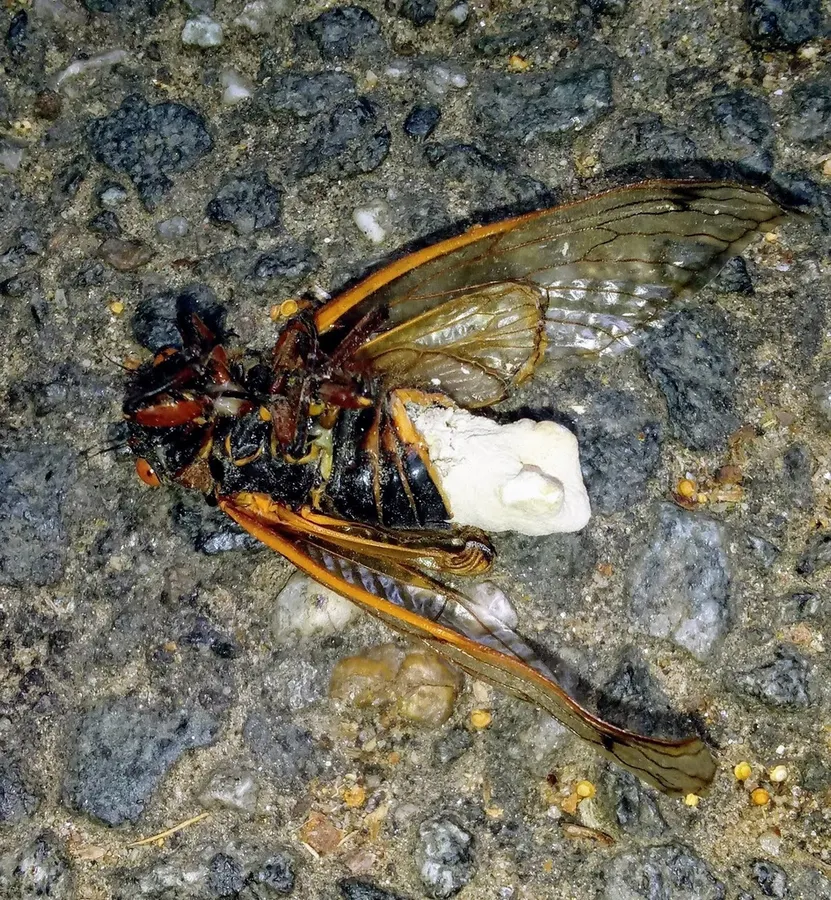
Massospora cicadina is a fungal pathogen that infects only 13 and 17 year periodical cicadas. Infection results in a "plug" of spores that replaces the end of the cicada's abdomen while it is still alive, leading to infertility, disease transmission, and eventual death of the cicada. In 1851, Joseph Leidy described and illustrated the fungus that had apparently caused the abdominal "rot" that Banneker had observed. In 1879, Charles Horton Peck described the fungus and named it Massospora cicadina. Peck placed the fungus among the class Coniomycetes, but in 1888 Thaxter and Forbes placed it instead in Entomophthoraceae. It was not until 1921 that the pathogen's microscopic characteristics were thoroughly studied by Speare, who found that conidia germinate quickly when placed in a nutrient substance. Spores of M. cicadina are capable of germinating and infecting cicadas at as little as one year but may remain dormant for either 13 or 17 years before becoming active. This synchronous cycle corresponds with local periods of cicada emergence. M. cicadina is thought to be the only pathogen that coincides with its host's 17-year life cycle; because of this it is considered to have the longest life cycle of any known fungus. M. cicadina resting spores do not require a dormant period: they are capable of germinating and infecting periodical cicadas after less than a year from their introduction into soil. Cicadas are believed to become infected by fungal spores as the nymphs dig tunnels to the soil surface days before their emergence as adults. Cicadas that come into contact with conidia from an infected adult cicada contract Stage II infection.
Habitat dan peran ekologis
M. cicadina infeksi Magicicada species, yang adalah cicada berkala 13 dan 17 tahun. Magicicada species menghabiskan sebagian besar hidup mereka di bawah tanah sebagai nimfa, makan cairan xylem akar pohon. They dig ke atas melalui tanah untuk berbentuk dewasa dan muncul di atas tanah setelah 13 atau 17 tahun. Adult periodical cicada hanya hidup selama 4 sampai 6 minggu, untuk mencuci dan melemparkan telur mereka. Females attract males for mating by flicking their wings, while males produce a mating call. After mating, cicada betina menyimpan hingga 600 atau lebih telur dalam potongan berbentuk V pada cabang pohon (biasanya 20 telur pada satu waktu dalam setiap potong). Species of genus Massospora are ditemukan di habitat yang sama dengan cicada tuan rumah mereka, yang mencakup rentang tempuh besar di Southern and Northern hemispheres. Another parasite yang menculik perilaku seksual tuan rumah adalah Massospora levispora, patogen cicada tahunan Okanagana rimosa. Ophiocordyceps sinensis adalah jamur entomopathogenic (jamur yang tumbuh pada serangga) dari keluarga Ophiocordycipitaceae. Hal ini terutama ditemukan di padang rumput di atas 3,500 m di Tibet Plateau in Barat Daya China and di Himalayan regions Nepal Bhutan and. Ini memparasitkan larva ngengat hantu dan menghasilkan tubuh berbuah yang dulu dihargai sebagai obat herbal dan dalam tradisional Chinese medicine.
- Habitat atau konteks temuan
- Informasi belum tersedia pada sumber rilis ini.
- Substrat
- Informasi belum tersedia pada sumber rilis ini.
- Peran atau konteks
- Belum dikategorikan pada rilis ini.
Reproduksi
Massospora cicadina is a fungal pathogen that infects only 13 and 17 year periodical cicadas. Infection results in a "plug" of spores that replaces the end of the cicada's abdomen while it is still alive, leading to infertility, disease transmission, and eventual death of the cicada. In 1851, Joseph Leidy described and illustrated the fungus that had apparently caused the abdominal "rot" that Banneker had observed. In 1879, Charles Horton Peck described the fungus and named it Massospora cicadina. Peck placed the fungus among the class Coniomycetes, but in 1888 Thaxter and Forbes placed it instead in Entomophthoraceae. It was not until 1921 that the pathogen's microscopic characteristics were thoroughly studied by Speare, who found that conidia germinate quickly when placed in a nutrient substance.
Catatan identitas dan cakupan
- Nama diterima mengikuti Catalogue of Life Base2026-09-11; uraian mempertahankan konsep dan nama sumber aslinya.
- Original geographic, specimen and life-cycle scope retained; source import awaits individual editorial review.
- Impor dan terjemahan otomatis belum diperiksa editorial per profil. Struktur reproduktif yang disebutkan tidak membuktikan seluruh siklus hidup diketahui.
- Pengukuran pada uraian mengikuti spesimen, kultur, dan metode sumber; angka tidak diperluas ke semua populasi.
Catatan distribusi dalam narasi mengikuti sumbernya. Dokumentasi spesimen atau foto mengikuti catatan sumber. Bukti wilayah Indonesia dan penilaian konservasi tidak disimpulkan dari gambar.
Melihat dengan konteks
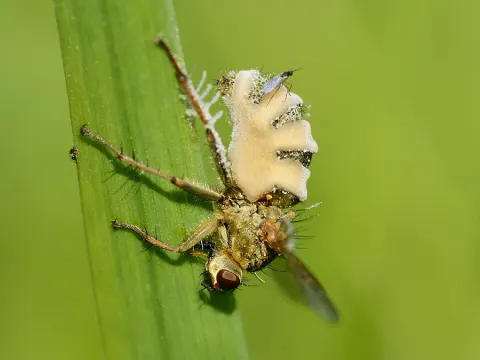
Dokumentasi Massospora cicadina menurut asosiasi foto pada record takson iNaturalist. Kredit: Zachary Dankowicz. Identitas mengikuti sumber; bukan penentuan spesimen independen.
- Jenis
- Fotografi
- Kredit
- (c) Zachary Dankowicz, some rights reserved (CC BY), uploaded by Zachary Dankowicz
- Lisensi
- CC BY 4.0
- Sumber media
- Buka entri sumber
Sumber profil
- [1] Massospora cicadina — Wikipedia (en)
- [2] Catalogue of Life Base2026-09-11 — Massospora cicadina
- [3] Dokumentasi visual — Massospora cicadina
Rujukan halaman ini
Fungi. Massospora cicadina. Rilis data fungi-2026-10-12-expansion-2. https://fungi-atlas.mgadib.chatgpt.site/jamur/massospora-cicadina/.
Status: impor sumber; pemeriksaan editorial per profil belum selesai. Untuk klaim biologis, gunakan rujukan pada bagian terkait dan periksa konteks sumber aslinya.