Ciri dan struktur
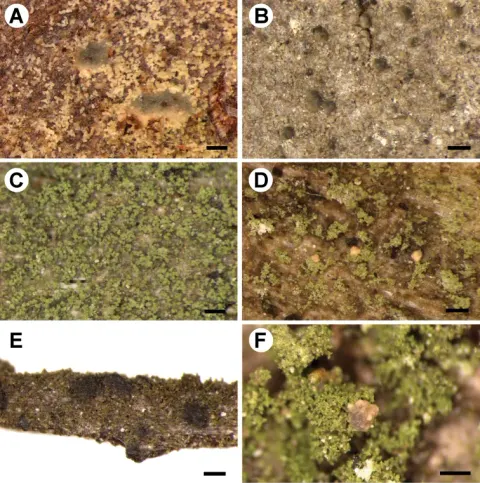
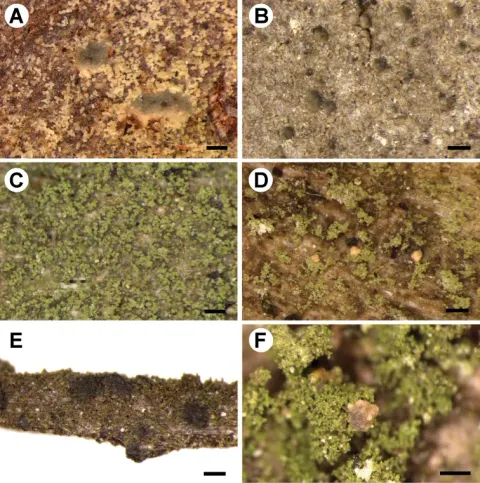
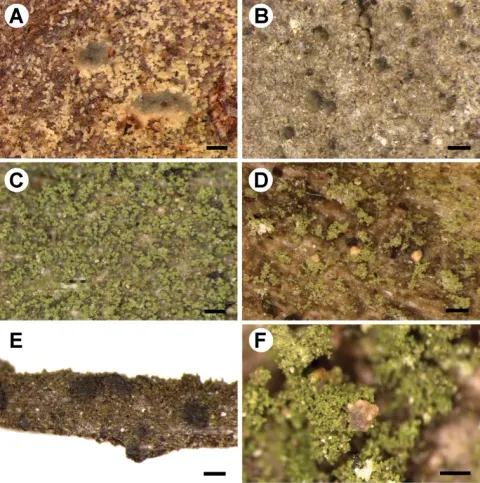
The thallus of Micarea viridileprosa is crustose, composed of bright greenish (vegetative propagules), which can coalesce to form larger . These goniocysts are typically 12–18 μm in diameter, but can grow up to 25–40 μm. The thallus may appear glossy when dry due to a thin coating of gelatinous algae. The lichen's growth often gives the appearance of irregular "soralia", producing powdery "soredia" which can cover the entire thallus. Each goniocyst contains a few green algal cells surrounded by hyphae, with the hyphae being hyaline (translucent) and incrusted with gyrophoric acid crystals. The algal cells are about 4.5–7 μm in diameter, each containing a clear oil-drop. Apothecia (fruiting bodies) are rare; if present they are adpressed to semi-immersed in the thallus, and measure 0.1–0.5 mm in width. The apothecia are whitish to pallid and convex, lacking a distinct margin. The hymenium is 35–50 μm tall, with the paraphyses being richly branched and about 1.5–2 μm wide in the mid-hymenium. The of Micarea viridileprosa are oblong-ellipsoid or in shape, measuring 8–12(-14) by 2.5–4 μm, and from zero to two septa. Pycnidia are very rare and grey-brown, either sessile or stalked, measuring 20–50 μm in diameter and 50–100 μm in height. The conidia are narrowly oblong-ellipsoid to bluntly , measuring 4.5–6 by 1.3–2 μm, and are often seen extruding from the ostiole.
Habitat dan peran ekologis
Micarea viridileprosa is found in various habitats, including on the bark of trees such as Betula, Alnus glutinosa, Pinus sylvestris, Prunus padus, and Quercus robur. It is also found on rotting wood and soil, in open woodlands, on sloping sides of ditches, and in peat-moor habitats. The species is widespread in the Netherlands and Belgium and has been recorded in England, Wales, France, Germany, Italy, Portugal, and Switzerland.
- Habitat atau konteks temuan
- Informasi belum tersedia pada sumber rilis ini.
- Substrat
- kayu
- Peran atau konteks
- Pembentuk liken
Reproduksi
The thallus of Micarea viridileprosa is crustose, composed of bright greenish (vegetative propagules), which can coalesce to form larger . These goniocysts are typically 12–18 μm in diameter, but can grow up to 25–40 μm. The thallus may appear glossy when dry due to a thin coating of gelatinous algae. The lichen's growth often gives the appearance of irregular "soralia", producing powdery "soredia" which can cover the entire thallus. The of Micarea viridileprosa are oblong-ellipsoid or in shape, measuring 8–12(-14) by 2.5–4 μm, and from zero to two septa. Pycnidia are very rare and grey-brown, either sessile or stalked, measuring 20–50 μm in diameter and 50–100 μm in height. The conidia are narrowly oblong-ellipsoid to bluntly , measuring 4.5–6 by 1.3–2 μm, and are often seen extruding from the ostiole.
Catatan identitas dan cakupan
- Nama diterima mengikuti Catalogue of Life Base2026-09-11; uraian mempertahankan konsep dan nama sumber aslinya.
- Original geographic, specimen and life-cycle scope retained; source import awaits individual editorial review.
- Impor dan terjemahan otomatis belum diperiksa editorial per profil. Struktur reproduktif yang disebutkan tidak membuktikan seluruh siklus hidup diketahui.
- Pengukuran pada uraian mengikuti spesimen, kultur, dan metode sumber; angka tidak diperluas ke semua populasi.
Catatan distribusi dalam narasi mengikuti sumbernya. Dokumentasi spesimen atau foto mengikuti catatan sumber. Bukti wilayah Indonesia dan penilaian konservasi tidak disimpulkan dari gambar.
Melihat dengan konteks
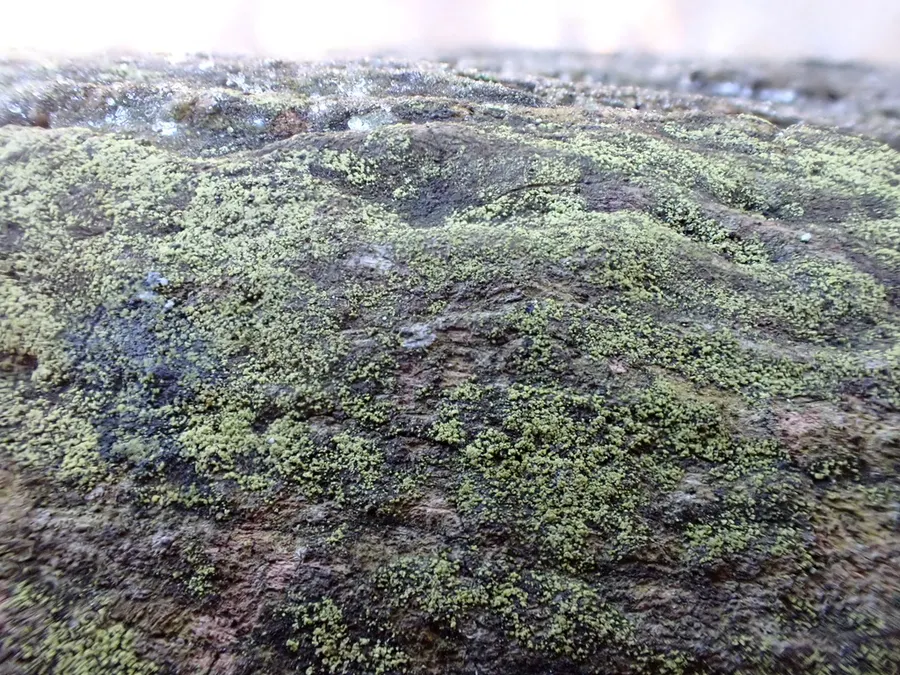
Dokumentasi Micarea viridileprosa menurut asosiasi foto pada record takson iNaturalist. Kredit: Fotografer tidak dicantumkan. Sumber observasi iNaturalist; pengunggah: Jean-Paul Boerekamps. Identitas mengikuti sumber; bukan penentuan spesimen independen.
- Jenis
- Fotografi
- Kredit
- Fotografer tidak dicantumkan. Sumber observasi iNaturalist; pengunggah: Jean-Paul Boerekamps
- Lisensi
- CC0 1.0
- Sumber media
- Buka entri sumber
Dokumentasi tambahan
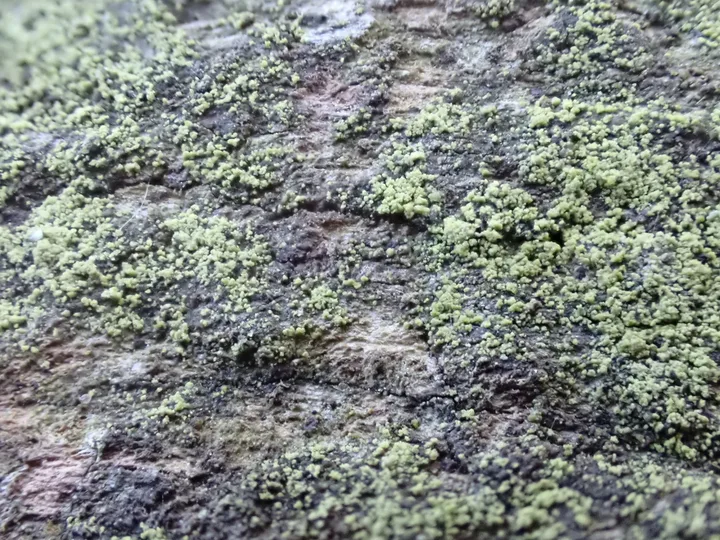
Foto yang diasosiasikan dengan Micarea viridileprosa pada iNaturalist. Identifikasi mengikuti sumber; bukan penentuan spesimen independen.
Kredit dan penggunaan
no rights reserved
Ukuran dan format gambar disesuaikan tanpa pemotongan, retus, atau penambahan skala. Lisensi sumber dipertahankan.
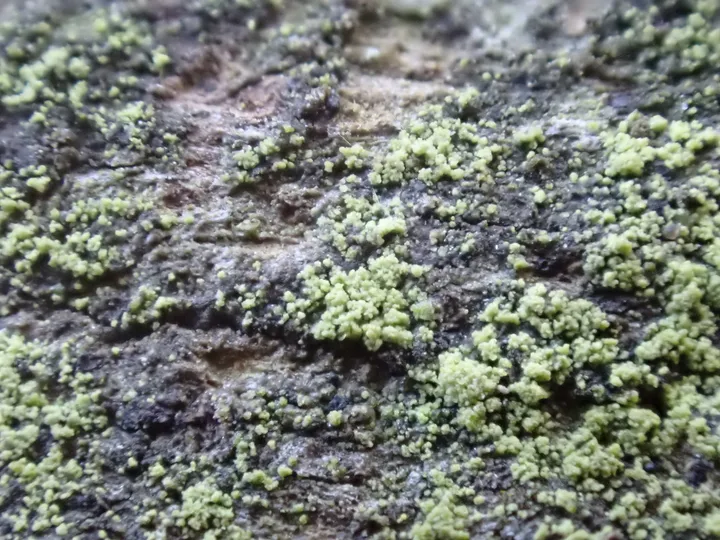
Foto yang diasosiasikan dengan Micarea viridileprosa pada iNaturalist. Identifikasi mengikuti sumber; bukan penentuan spesimen independen.
Kredit dan penggunaan
no rights reserved
Ukuran dan format gambar disesuaikan tanpa pemotongan, retus, atau penambahan skala. Lisensi sumber dipertahankan.
Sumber profil
- [1] Micarea viridileprosa — Wikipedia (en)
- [2] Catalogue of Life Base2026-09-11 — Micarea viridileprosa
- [3] Dokumentasi visual — Micarea viridileprosa
- [4] Dokumentasi visual — Micarea viridileprosa
- [5] Dokumentasi visual — Micarea viridileprosa
Rujukan halaman ini
Fungi. Micarea viridileprosa. Rilis data fungi-2026-10-12-expansion-2. https://fungi-atlas.mgadib.chatgpt.site/jamur/micarea-viridileprosa/.
Status: impor sumber; pemeriksaan editorial per profil belum selesai. Untuk klaim biologis, gunakan rujukan pada bagian terkait dan periksa konteks sumber aslinya.