01 / Morfologi

Ciri dan struktur

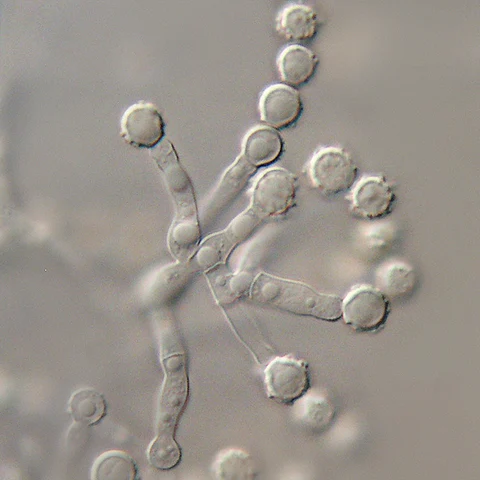
Microascus manginii is a filamentous fungal species in the genus Microascus. It produces both sexual (teleomorph) and asexual (anamorph) reproductive stages known as M. manginii and Scopulariopsis candida, respectively. Several synonyms appear in the literature because of taxonomic revisions and re-isolation of the species by different researchers. M. manginii is saprotrophic and commonly inhabits soil, indoor environments and decaying plant material. It is distinguishable from closely related species by its light colored and heart-shaped ascospores used for sexual reproduction. Scopulariopsis candida has been identified as the cause of some invasive infections, often in immunocompromised hosts, but is not considered a common human pathogen. There is concern about amphotericin B resistance in S. candida. Colonies of M. manginii are pale, white and rapid growing. Growth is tolerant of cycloheximide and restricted at 37 °C. The vegetative hyphae are septate and appear glassy (hyaline). Ascomata are the sexual structures within which ascospores are produced in sacs called asci. The ascomata of M. manginii are spherical, smooth-walled, dark-brown to black and 100–175 μm in size. These fruiting bodies are also called perithecia because of their flask-like shape wherein asci grow at the base and an opening allows for the release of mature ascospores. They are also papillate with short cone-shaped projections at the opening, sessile, and rich in carbon. Perithecia manifest as small black dots organized in concentric rings. An incubation period of over two weeks may be necessary for the production of perithecia.

Sebagian uraian ditampilkan dalam bahasa sumber; terjemahannya belum tersedia atau belum lolos pemeriksaan.

Rujukan: [1]

Pengukuran mengikuti objek, spesimen atau kultur, dan metode yang disebutkan sumber. Baca uraian asli untuk konteks lengkap.

02 / Kehidupan

Habitat dan peran ekologis

M. manginii is a saprobic fungus. It has a worldwide distribution. It is often isolated from decaying plant material, soil and indoor environments, but also human skin and nails, dust, chicken litter, atmosphere, book paper and cheese, among other locations. Contaminated dust, soil and air samples are often found in North America and Europe. In Portugal, S. candida was identified as the most prevalent fungal species contaminating the air of three poultry slaughterhouses in 2016. Contamination with fungal pathogens was found on equipment used in physiotherapy clinics in Brazil, specifically electrodes and ultrasound transducers, S. candida was found on several contact electrodes.

Sebagian uraian ditampilkan dalam bahasa sumber; terjemahannya belum tersedia atau belum lolos pemeriksaan.

Rujukan: [1]

Habitat atau konteks temuan
Informasi belum tersedia pada sumber rilis ini.
Substrat
Informasi belum tersedia pada sumber rilis ini.
Peran atau konteks
Pengurai
Temukan hubungan serupa
03 / Siklus hidup

Reproduksi

Microascus manginii is a filamentous fungal species in the genus Microascus. It produces both sexual (teleomorph) and asexual (anamorph) reproductive stages known as M. manginii and Scopulariopsis candida, respectively. Several synonyms appear in the literature because of taxonomic revisions and re-isolation of the species by different researchers. M. manginii is saprotrophic and commonly inhabits soil, indoor environments and decaying plant material. It is distinguishable from closely related species by its light colored and heart-shaped ascospores used for sexual reproduction. Scopulariopsis candida has been identified as the cause of some invasive infections, often in immunocompromised hosts, but is not considered a common human pathogen.

Sebagian uraian ditampilkan dalam bahasa sumber; terjemahannya belum tersedia atau belum lolos pemeriksaan.

Rujukan: [1]

Sinonim menurut acuan taksonomi rilis: Nephrospora manginii
04 / Batas informasi

Catatan identitas dan cakupan

  • Nama diterima mengikuti Catalogue of Life Base2026-09-11; uraian mempertahankan konsep dan nama sumber aslinya.
  • Original geographic, specimen and life-cycle scope retained; source import awaits individual editorial review.
  • Impor dan terjemahan otomatis belum diperiksa editorial per profil. Struktur reproduktif yang disebutkan tidak membuktikan seluruh siklus hidup diketahui.
  • Pengukuran pada uraian mengikuti spesimen, kultur, dan metode sumber; angka tidak diperluas ke semua populasi.

Catatan distribusi dalam narasi mengikuti sumbernya. Dokumentasi spesimen atau foto mengikuti catatan sumber. Bukti wilayah Indonesia dan penilaian konservasi tidak disimpulkan dari gambar.

05 / Dokumentasi

Melihat dengan konteks

Dokumentasi visual yang memenuhi pemeriksaan subjek dan hak penggunaan belum tersedia. Foto gejala, label, dan gambar yang meragukan tidak dihitung.

06 / Rujukan

Sumber profil

  1. [1] Microascus manginii — Wikipedia (en)Bagian sumber: Frozen revision 1364422123
    Tanggal penghimpunan sumber: 2026-10-12
    Teks sumber: CC BY-SA4.0 · Wikipedia contributors
  2. [2] Catalogue of Life Base2026-09-11 — Microascus manginiiBagian sumber: ColDP NameUsage.tsv ID 42RLQ; accepted species; source 2073
    Tanggal penghimpunan sumber: 2026-10-12

Adaptasi teks: CC BY-SA 4.0. Wikipedia contributors — Microascus manginii — Wikipedia (en)

Uraian asli dan riwayat sumber

Riwayat atau halaman sumber

Ringkasan sumber

Microascus manginii is a filamentous fungal species in the genus Microascus. It produces both sexual (teleomorph) and asexual (anamorph) reproductive stages known as M. manginii and Scopulariopsis candida, respectively. Several synonyms appear in the literature because of taxonomic revisions and re-isolation of the species by different researchers. M. manginii is saprotrophic and commonly inhabits soil, indoor environments and decaying plant material. It is distinguishable from closely related species by its light colored and heart-shaped ascospores used for sexual reproduction.

Revisi sumber

Morfologi sumber

Microascus manginii is a filamentous fungal species in the genus Microascus. It produces both sexual (teleomorph) and asexual (anamorph) reproductive stages known as M. manginii and Scopulariopsis candida, respectively. Several synonyms appear in the literature because of taxonomic revisions and re-isolation of the species by different researchers. M. manginii is saprotrophic and commonly inhabits soil, indoor environments and decaying plant material. It is distinguishable from closely related species by its light colored and heart-shaped ascospores used for sexual reproduction. Scopulariopsis candida has been identified as the cause of some invasive infections, often in immunocompromised hosts, but is not considered a common human pathogen. There is concern about amphotericin B resistance in S. candida. Colonies of M. manginii are pale, white and rapid growing. Growth is tolerant of cycloheximide and restricted at 37 °C. The vegetative hyphae are septate and appear glassy (hyaline). Ascomata are the sexual structures within which ascospores are produced in sacs called asci. The ascomata of M. manginii are spherical, smooth-walled, dark-brown to black and 100–175 μm in size. These fruiting bodies are also called perithecia because of their flask-like shape wherein asci grow at the base and an opening allows for the release of mature ascospores. They are also papillate with short cone-shaped projections at the opening, sessile, and rich in carbon. Perithecia manifest as small black dots organized in concentric rings. An incubation period of over two weeks may be necessary for the production of perithecia.

Revisi sumber

Ekologi sumber

M. manginii is a saprobic fungus. It has a worldwide distribution. It is often isolated from decaying plant material, soil and indoor environments, but also human skin and nails, dust, chicken litter, atmosphere, book paper and cheese, among other locations. Contaminated dust, soil and air samples are often found in North America and Europe. In Portugal, S. candida was identified as the most prevalent fungal species contaminating the air of three poultry slaughterhouses in 2016. Contamination with fungal pathogens was found on equipment used in physiotherapy clinics in Brazil, specifically electrodes and ultrasound transducers, S. candida was found on several contact electrodes.

Revisi sumber

Struktur reproduksi sumber

Microascus manginii is a filamentous fungal species in the genus Microascus. It produces both sexual (teleomorph) and asexual (anamorph) reproductive stages known as M. manginii and Scopulariopsis candida, respectively. Several synonyms appear in the literature because of taxonomic revisions and re-isolation of the species by different researchers. M. manginii is saprotrophic and commonly inhabits soil, indoor environments and decaying plant material. It is distinguishable from closely related species by its light colored and heart-shaped ascospores used for sexual reproduction. Scopulariopsis candida has been identified as the cause of some invasive infections, often in immunocompromised hosts, but is not considered a common human pathogen.

Revisi sumber

Rujukan halaman ini

Fungi. Microascus manginii. Rilis data fungi-2026-10-12-expansion-2. https://fungi-atlas.mgadib.chatgpt.site/jamur/microascus-manginii/.

Status: impor sumber; pemeriksaan editorial per profil belum selesai. Untuk klaim biologis, gunakan rujukan pada bagian terkait dan periksa konteks sumber aslinya.