01 / Morfologi

Ciri dan struktur

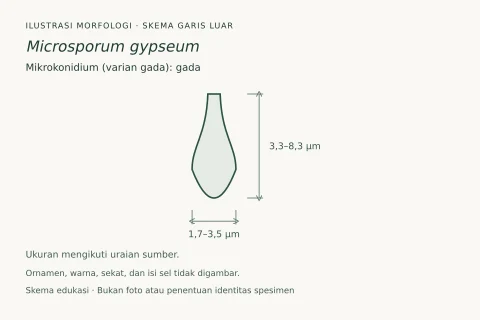
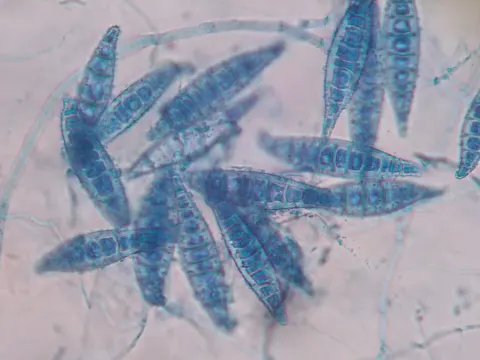
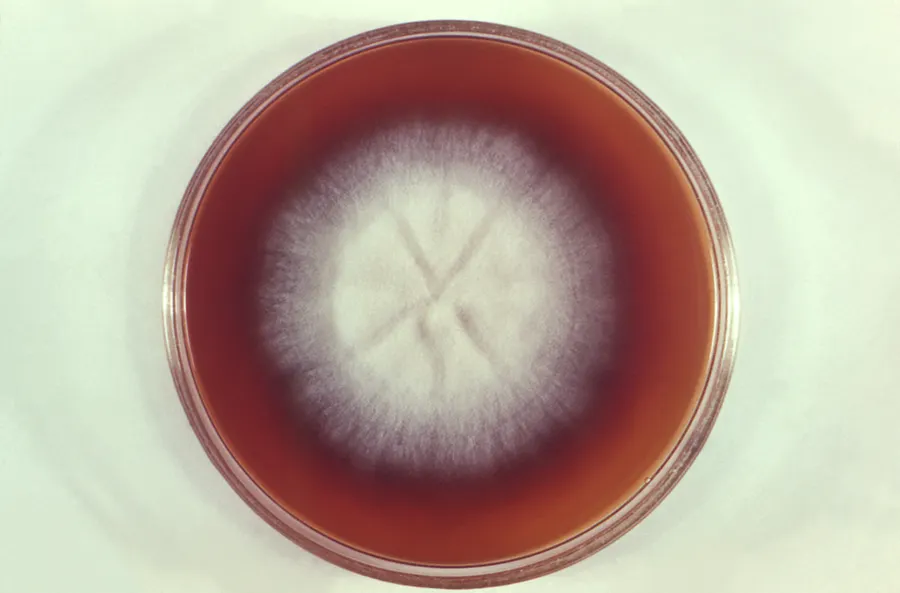
In culture, M. gallinae produces a white, satiny colony. The colony appears flat with radial folds and irregular edges as it grows in culture The colony reverse produces a strong pigmentation that changes from pink to a deep red and diffuses through the growth medium. Optimal growth of M. gallinae occurs at 26-28 °C, and no special nutritional requirements are necessary for its growth. Additionally, M. gallinae is urease positive. During sporulation, septate hyphae, with macroconidia with tappered tips, and club shaped microconidia are present. The addition of thiamine or yeast extracts promotes sporulation of M. gallinae. Hair invasion observed in M. gallinae is large spored ectothrix type, meaning that the spores form outside of the hair shaft.

Sebagian uraian ditampilkan dalam bahasa sumber; terjemahannya belum tersedia atau belum lolos pemeriksaan.

Rujukan: [1]

Pengukuran mengikuti objek, spesimen atau kultur, dan metode yang disebutkan sumber. Baca uraian asli untuk konteks lengkap.

02 / Kehidupan

Habitat dan peran ekologis

Microsporum gallinae is distributed throughout the world, with cases reported in: Europe, the Middle East, South America, North America, Africa and Japan. The fungus seems to be isolated more often in areas with high humidity and temperature.

Sebagian uraian ditampilkan dalam bahasa sumber; terjemahannya belum tersedia atau belum lolos pemeriksaan.

Rujukan: [1]

Habitat atau konteks temuan
Informasi belum tersedia pada sumber rilis ini.
Substrat
Informasi belum tersedia pada sumber rilis ini.
Peran atau konteks
Belum dikategorikan pada rilis ini.
Temukan hubungan serupa
03 / Siklus hidup

Reproduksi

During sporulation, septate hyphae, with macroconidia with tappered tips, and club shaped microconidia are present. The addition of thiamine or yeast extracts promotes sporulation of M. gallinae. Hair invasion observed in M. gallinae is large spored ectothrix type, meaning that the spores form outside of the hair shaft.

Sebagian uraian ditampilkan dalam bahasa sumber; terjemahannya belum tersedia atau belum lolos pemeriksaan.

Rujukan: [1]

Sinonim menurut acuan taksonomi rilis: Achorion gallinae; Closteroaleurosporia gallinae; Epidermophyton gallinae; Lophophyton gallinae; Sabouraudites gallinae; Trichophyton gallinae
04 / Batas informasi

Catatan identitas dan cakupan

  • Nama diterima mengikuti Catalogue of Life Base2026-09-11; uraian mempertahankan konsep dan nama sumber aslinya.
  • Original geographic, specimen and life-cycle scope retained; source import awaits individual editorial review.
  • Impor dan terjemahan otomatis belum diperiksa editorial per profil. Struktur reproduktif yang disebutkan tidak membuktikan seluruh siklus hidup diketahui.
  • Pengukuran pada uraian mengikuti spesimen, kultur, dan metode sumber; angka tidak diperluas ke semua populasi.

Catatan distribusi dalam narasi mengikuti sumbernya. Dokumentasi spesimen atau foto mengikuti catatan sumber. Bukti wilayah Indonesia dan penilaian konservasi tidak disimpulkan dari gambar.

05 / Dokumentasi

Melihat dengan konteks

Dokumentasi Microsporum gallinae dari Wikimedia Commons. petri dish growing fungal colony from the species Microsporum gallinae, which is also referred to as Trichophyton gallinae Identifikasi mengikuti record berkas sumber.

Jenis
Fotografi
Kredit
Dr. Lucille K. Georg, CDC
Sumber media
Buka entri sumber

Gambar menunjukkan objek menurut identifikasi sumber, bukan verifikasi independen spesimen oleh Fungi. Tidak ada skala baru yang ditambahkan.

06 / Rujukan

Sumber profil

  1. [1] Microsporum gallinae — Wikipedia (en)Bagian sumber: Frozen revision 1260097247
    Tanggal penghimpunan sumber: 2026-10-12
    Teks sumber: CC BY-SA4.0 · Wikipedia contributors
  2. [2] Catalogue of Life Base2026-09-11 — Microsporum gallinaeBagian sumber: ColDP NameUsage.tsv ID 4374R; accepted species; source 2073
    Tanggal penghimpunan sumber: 2026-10-12
  3. [3] Dokumentasi visual — Microsporum gallinaeBagian sumber: Individual media record; identification follows the source, not independent determination
    Tanggal penghimpunan sumber: 2026-10-12
    Media sumber: Public domain · Dr. Lucille K. Georg, CDC

Adaptasi teks: CC BY-SA 4.0. Wikipedia contributors — Microsporum gallinae — Wikipedia (en)

Uraian asli dan riwayat sumber

Riwayat atau halaman sumber

Ringkasan sumber

Microsporum gallinae is a fungus of the genus Microsporum that causes dermatophytosis, commonly known as ringworm. Chickens represent the host population of Microsporum gallinae but its opportunistic nature allows it to enter other populations of fowl, mice, squirrels, cats, dogs and monkeys. Human cases of M. gallinae are rare, and usually mild, non-life-threatening superficial infections.

Revisi sumber

Morfologi sumber

In culture, M. gallinae produces a white, satiny colony. The colony appears flat with radial folds and irregular edges as it grows in culture The colony reverse produces a strong pigmentation that changes from pink to a deep red and diffuses through the growth medium. Optimal growth of M. gallinae occurs at 26-28 °C, and no special nutritional requirements are necessary for its growth. Additionally, M. gallinae is urease positive. During sporulation, septate hyphae, with macroconidia with tappered tips, and club shaped microconidia are present. The addition of thiamine or yeast extracts promotes sporulation of M. gallinae. Hair invasion observed in M. gallinae is large spored ectothrix type, meaning that the spores form outside of the hair shaft.

Revisi sumber

Ekologi sumber

Microsporum gallinae is distributed throughout the world, with cases reported in: Europe, the Middle East, South America, North America, Africa and Japan. The fungus seems to be isolated more often in areas with high humidity and temperature.

Revisi sumber

Struktur reproduksi sumber

During sporulation, septate hyphae, with macroconidia with tappered tips, and club shaped microconidia are present. The addition of thiamine or yeast extracts promotes sporulation of M. gallinae. Hair invasion observed in M. gallinae is large spored ectothrix type, meaning that the spores form outside of the hair shaft.

Revisi sumber

Rujukan halaman ini

Fungi. Microsporum gallinae. Rilis data fungi-2026-10-12-expansion-2. https://fungi-atlas.mgadib.chatgpt.site/jamur/microsporum-gallinae/.

Status: impor sumber; pemeriksaan editorial per profil belum selesai. Untuk klaim biologis, gunakan rujukan pada bagian terkait dan periksa konteks sumber aslinya.