Ciri dan struktur
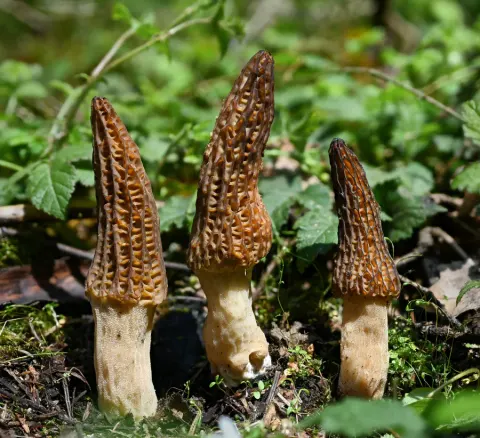
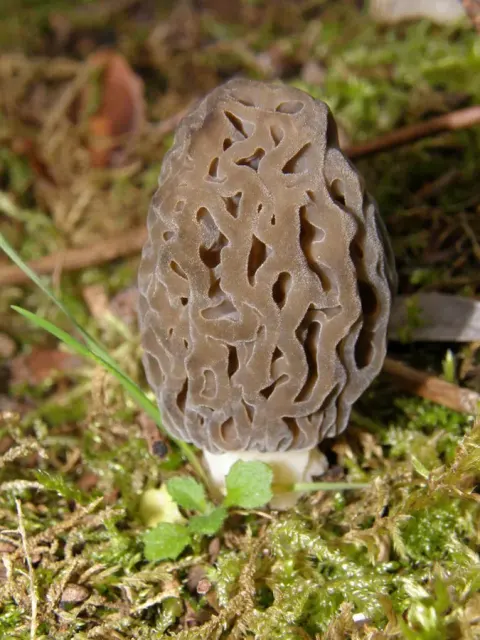
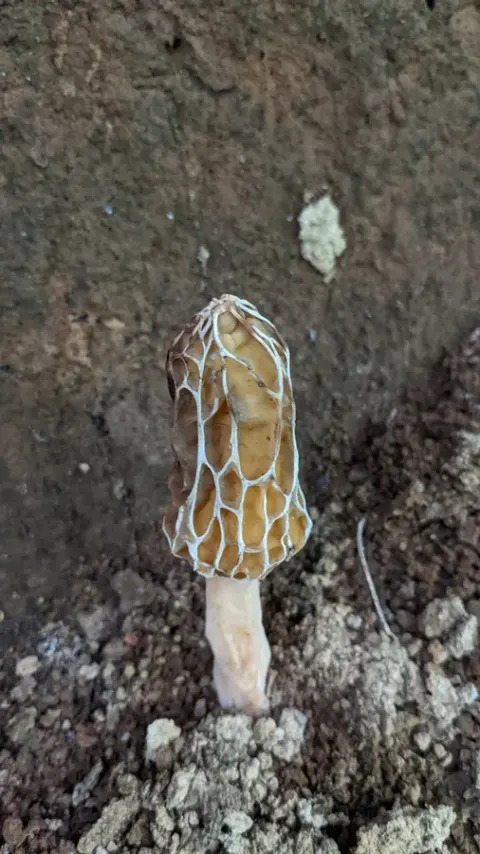
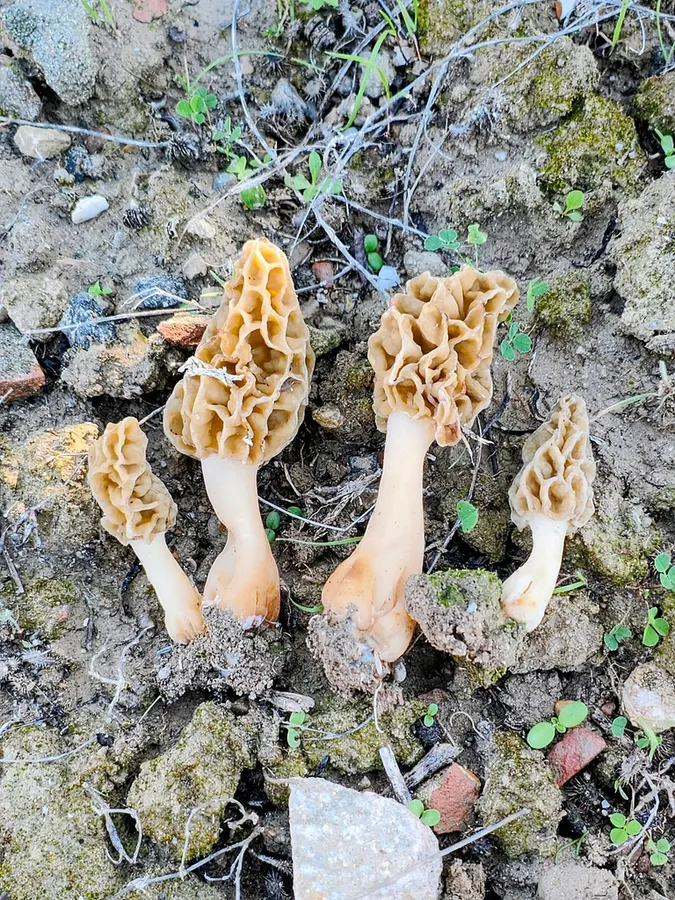
The fruiting body (ascoma) of M. galilaea stands 53–78 mm tall and bears a honey‑comb cap (hymenophore) 36–45 mm high by 12.5–17.5 mm wide. The cap comprises a network of pits and ridges: two ridge types occur, narrow polygonal ridges and longer elliptical ridges measuring 5.2–9.8 mm across and 14.5–24.7 mm tall. Young ridges are blunt and white, becoming flattened and light yellowish with age, while the pits range from silvery grey when young to olive‑brown or yellow‑brown at maturity. The stipe is 17–33 mm long and 5–8.2 mm wide, cylindrical with a slightly thickened base, glabrous and white in youth, turning pale yellowish white in maturity. The internal flesh (context) is whitish and very thin within the hollow cap. Under the microscope, ascospores are ellipsoid, smooth to finely wrinkled under scanning electron microscopy, measuring 12.5–19.5 by 7.5–10 μm, borne in eight‑spored, cylindrical asci (165–220 by 15–22 μm). Paraphyses lining the fertile surface are cylindrical to club‑shaped, 100–130 by 6–11 μm, hyaline or containing brownish contents.
Habitat dan peran ekologis
In Turkey, M. galilaea has been found fruiting solitary or scattered on volcanic tuff substrates in misted cutting propagation beds at Çukurova University, during October to December. Analysis of the tuff shows a loamy texture with normal calcium carbonate levels, slightly alkaline pH and elevated micronutrients such as copper and iron, suggesting the fungus thrives saphrotrophically on this mineral medium rather than forming a mycorrhizal relationship. Beyond Turkey and Israel, multilocus studies indicate that M. galilaea occurs in China, India, Java, Hawaii, New Zealand and parts of Africa, although fruiting seasons and tree associations vary by region. Unlike most morels, which are characterized by spring season fruiting, M. galilaea fruits in autumn (between October and December). In the Mediterranean region it is often associated with olive trees (e.g. Gozo, Malta) or pine trees. Molecular studies have shown that the fungus is found in China, Java, Hawaii, Israel, New Zealand, India, Croatia, Italy, Sicily, Gozo (Maltese Islands), Majorca (Spain), Réunion (France), Turkey, and three countries in Africa.
- Habitat atau konteks temuan
- Informasi belum tersedia pada sumber rilis ini.
- Substrat
- Informasi belum tersedia pada sumber rilis ini.
- Peran atau konteks
- Mitra tumbuhan
Reproduksi
The fruiting body (ascoma) of M. galilaea stands 53–78 mm tall and bears a honey‑comb cap (hymenophore) 36–45 mm high by 12.5–17.5 mm wide. The cap comprises a network of pits and ridges: two ridge types occur, narrow polygonal ridges and longer elliptical ridges measuring 5.2–9.8 mm across and 14.5–24.7 mm tall. Young ridges are blunt and white, becoming flattened and light yellowish with age, while the pits range from silvery grey when young to olive‑brown or yellow‑brown at maturity. The stipe is 17–33 mm long and 5–8.2 mm wide, cylindrical with a slightly thickened base, glabrous and white in youth, turning pale yellowish white in maturity. The internal flesh (context) is whitish and very thin within the hollow cap.
Catatan identitas dan cakupan
- Nama diterima mengikuti Catalogue of Life Base2026-09-11; uraian mempertahankan konsep dan nama sumber aslinya.
- Original geographic, specimen and life-cycle scope retained; source import awaits individual editorial review.
- Impor dan terjemahan otomatis belum diperiksa editorial per profil. Struktur reproduktif yang disebutkan tidak membuktikan seluruh siklus hidup diketahui.
- Pengukuran pada uraian mengikuti spesimen, kultur, dan metode sumber; angka tidak diperluas ke semua populasi.
Catatan distribusi dalam narasi mengikuti sumbernya. Dokumentasi spesimen atau foto mengikuti catatan sumber. Bukti wilayah Indonesia dan penilaian konservasi tidak disimpulkan dari gambar.
Melihat dengan konteks
Dokumentasi Morchella galilaea menurut asosiasi foto pada record takson iNaturalist. Kredit: Davide Puddu. Identitas mengikuti sumber; bukan penentuan spesimen independen.
- Jenis
- Fotografi
- Kredit
- (c) Davide Puddu, some rights reserved (CC BY), uploaded by Davide Puddu
- Lisensi
- CC BY 4.0
- Sumber media
- Buka entri sumber
Dokumentasi tambahan
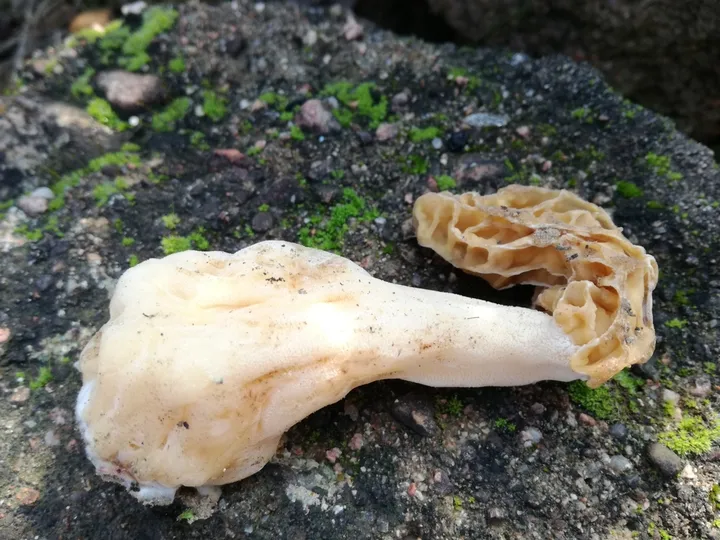
Foto yang diasosiasikan dengan Morchella galilaea pada iNaturalist. Identifikasi mengikuti sumber; bukan penentuan spesimen independen.
Kredit dan penggunaan
(c) Davide Puddu, some rights reserved (CC BY), uploaded by Davide Puddu
Ukuran dan format gambar disesuaikan tanpa pemotongan, retus, atau penambahan skala. Lisensi sumber dipertahankan.
Sumber profil
- [1] Morchella galilaea — Wikipedia (en)
- [2] Catalogue of Life Base2026-09-11 — Morchella galilaea
- [3] Dokumentasi visual — Morchella galilaea
- [4] Dokumentasi visual — Morchella galilaea
Rujukan halaman ini
Fungi. Morchella galilaea. Rilis data fungi-2026-10-12-expansion-2. https://fungi-atlas.mgadib.chatgpt.site/jamur/morchella-galilaea/.
Status: impor sumber; pemeriksaan editorial per profil belum selesai. Untuk klaim biologis, gunakan rujukan pada bagian terkait dan periksa konteks sumber aslinya.