Ciri dan struktur
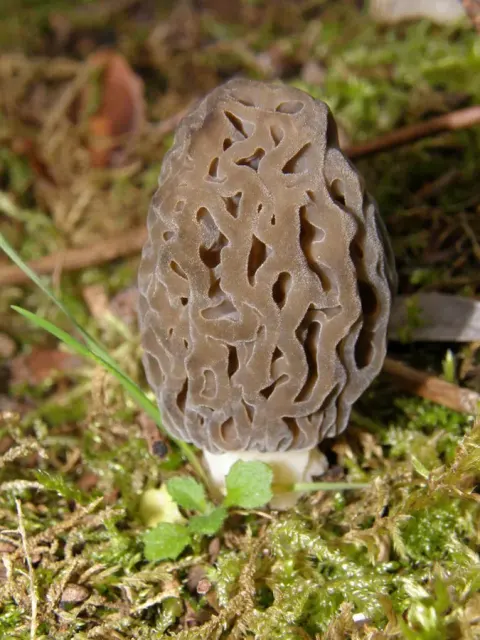
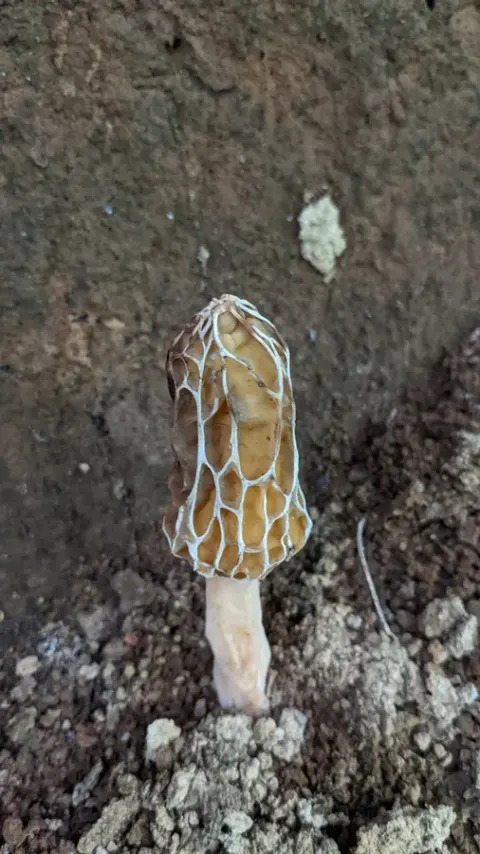
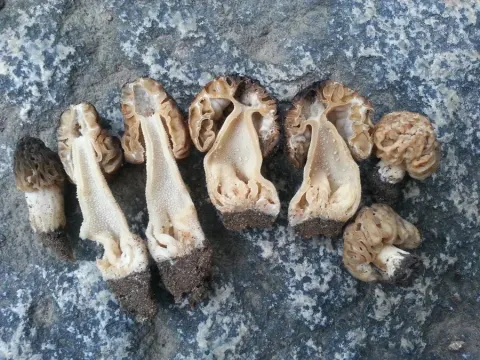
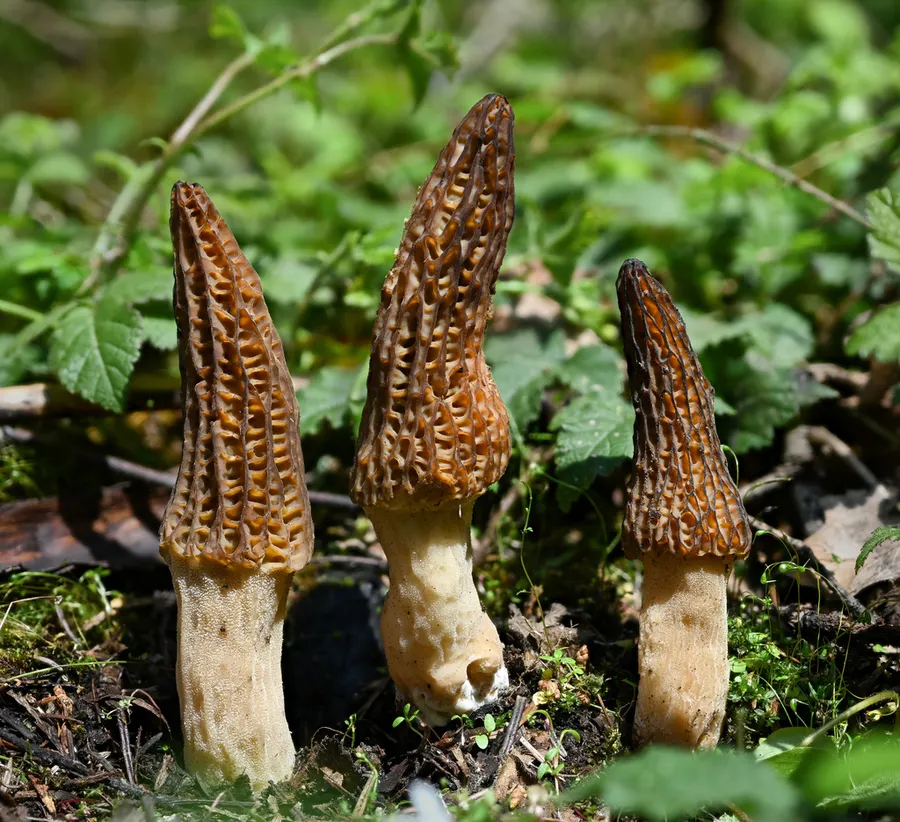
The fruit bodies of M. importuna are 6 – 20 cm high. The cap is 3 – 15 cm high and measures 2 – 9 cm wide at its widest point. It is conical to widely conical or occasionally egg-shaped. Its surface has pits and ridges, with 12–20 primary vertical ridges and numerous transecting horizontal ridges, creating a laddered appearance. The cap is attached to stipe with a sinus about 2–5 mm both deep and wide. The ridges are smooth or finely velvety and colored pale to dark gray when young, becoming dark grayish brown to nearly black in age. They are bluntly rounded when young, but later become sharpened or eroded. Pits are vertically elongated in all stages of development. They have a smooth or finely velvety texture. The pits open and deepen with development, progressing from gray to dark gray when immature to grayish brown, grayish olive or brownish yellow at maturity. The stipe measures 3 – 10 cm high and 2 – 6 cm wide, and is often somewhat thicker near the base. Its whitish to pale brownish surface is smooth or finely mealy with whitish granules. It develops longitudinal ridges and grooves (particularly near the base) as the fruit body matures. The flesh is whitish to watery tan, measuring 1–3 mm thick in the hollow cap; in the stipe, this tissue is sometimes arranged as chambers or layers. The sterile inner surface of the cap is whitish and pubescent (covered with short soft "hair"). The ascospores are elliptical, smooth, and measure 18–24 by 10–13 μm. The cylindrical, hyaline (translucent), asci are eight-spored, measuring 220–300 by 12–25 μm. Paraphyses are septate, measuring 150–250 by 7–15 μm.
Habitat dan peran ekologis
A saprobic fungus, Morchella importuna fruit bodies grow in wood chips, gardens, fire pits, planters, and almost any disturbed ground in urban areas. Kuo suggests that it has mycorrhizal tendencies when grown in an environment with trees. Known primarily from northern California and the Pacific Northwest region of the United States, it has been reported from British Columbia (Canada), California, Washington, Nevada, and Oregon, although there have been a few isolated reports of the morel from the Midwestern United States and from eastern North America. Fruiting occurs in the spring, from March until May. Identified as phylogenetic species "Mel-10", Morchella importuna has also been found in Turkey and China, but it remains unclear whether dispersal between these distant locations occurred naturally or through accidental introduction by humans.
- Habitat atau konteks temuan
- Informasi belum tersedia pada sumber rilis ini.
- Substrat
- Informasi belum tersedia pada sumber rilis ini.
- Peran atau konteks
- Pengurai; Mitra tumbuhan
Reproduksi
The ascospores are elliptical, smooth, and measure 18–24 by 10–13 μm. The cylindrical, hyaline (translucent), asci are eight-spored, measuring 220–300 by 12–25 μm. Paraphyses are septate, measuring 150–250 by 7–15 μm. They are cylindrical with variably shaped tips: rounded to roughly club-shaped, pointy, or fuse-shaped. Elements on the sterile ridges are septate and measure 25–300 by 10–30 μm. Terminal cells are cylindrical with a rounded tip that is variably shaped similar to the paraphyses. Both the paraphyses and the terminal cells are hyaline or brownish in dilute (2%) potassium hydroxide.
Catatan identitas dan cakupan
- Nama diterima mengikuti Catalogue of Life Base2026-09-11; uraian mempertahankan konsep dan nama sumber aslinya.
- Original geographic, specimen and life-cycle scope retained; source import awaits individual editorial review.
- Impor dan terjemahan otomatis belum diperiksa editorial per profil. Struktur reproduktif yang disebutkan tidak membuktikan seluruh siklus hidup diketahui.
- Pengukuran pada uraian mengikuti spesimen, kultur, dan metode sumber; angka tidak diperluas ke semua populasi.
Catatan distribusi dalam narasi mengikuti sumbernya. Dokumentasi spesimen atau foto mengikuti catatan sumber. Bukti wilayah Indonesia dan penilaian konservasi tidak disimpulkan dari gambar.
Melihat dengan konteks
Dokumentasi Morchella importuna menurut asosiasi foto pada record takson iNaturalist. Kredit: Alan Rockefeller. Identitas mengikuti sumber; bukan penentuan spesimen independen.
- Jenis
- Fotografi
- Kredit
- (c) Alan Rockefeller, some rights reserved (CC BY), uploaded by Alan Rockefeller
- Lisensi
- CC BY 4.0
- Sumber media
- Buka entri sumber
Dokumentasi tambahan
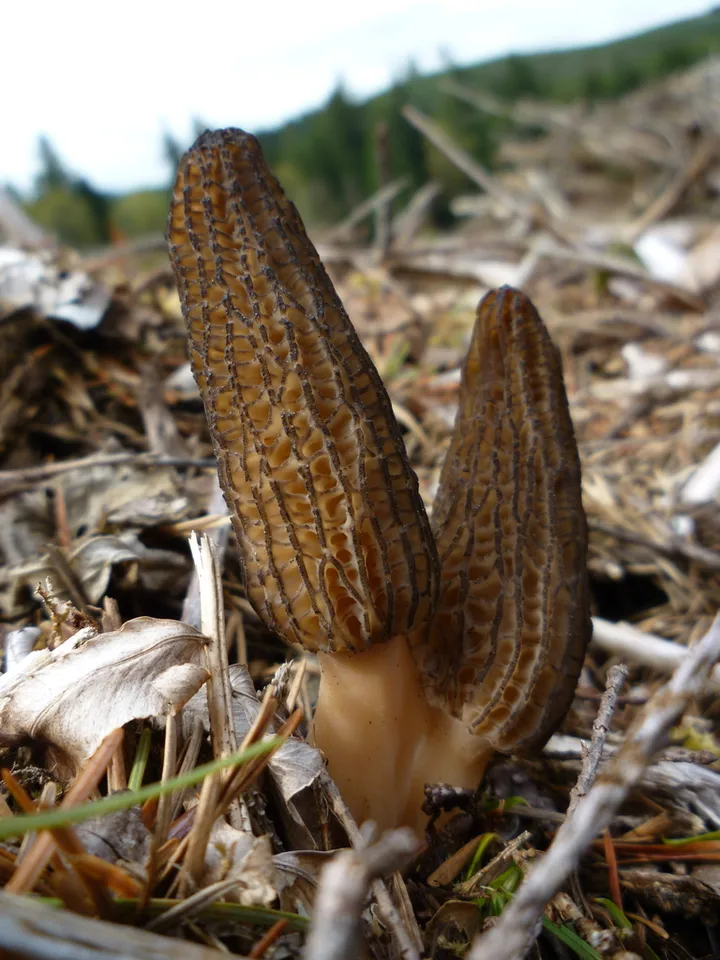
Foto yang diasosiasikan dengan Morchella importuna pada iNaturalist. Identifikasi mengikuti sumber; bukan penentuan spesimen independen.
Kredit dan penggunaan
(c) Laetiporus sulphureus, some rights reserved (CC BY-SA)
Ukuran dan format gambar disesuaikan tanpa pemotongan, retus, atau penambahan skala. Lisensi sumber dipertahankan.
Sumber profil
- [1] Morchella importuna — Wikipedia (en)
- [2] Catalogue of Life Base2026-09-11 — Morchella importuna
- [3] Dokumentasi visual — Morchella importuna
- [4] Dokumentasi visual — Morchella importuna
Rujukan halaman ini
Fungi. Morchella importuna. Rilis data fungi-2026-10-12-expansion-2. https://fungi-atlas.mgadib.chatgpt.site/jamur/morchella-importuna/.
Status: impor sumber; pemeriksaan editorial per profil belum selesai. Untuk klaim biologis, gunakan rujukan pada bagian terkait dan periksa konteks sumber aslinya.