Ciri dan struktur
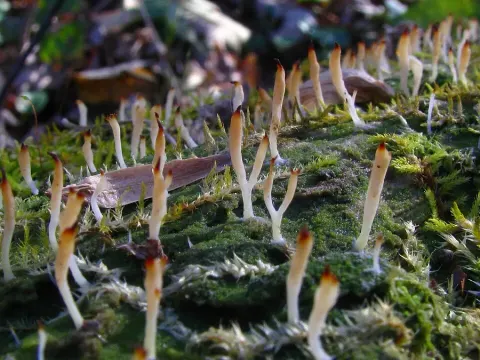
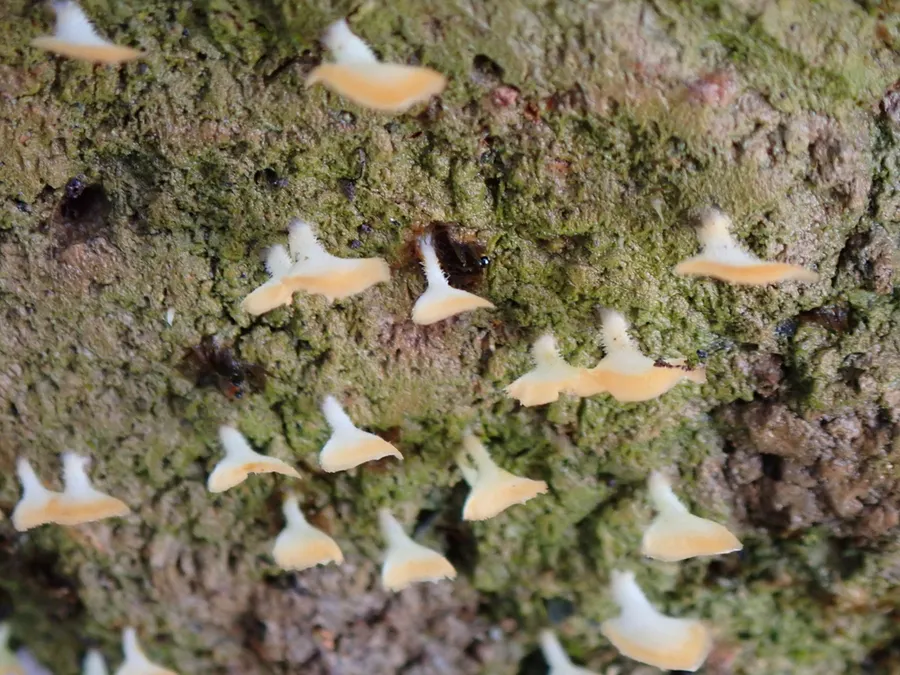
The thallus of M. ichthyiformis forms a thin, greenish film—rarely more than 5 cm across—composed of densely packed cells of the unicellular green algal genus Coccomyxa. Each alga is ensheathed by a single hyphal layer, creating microscopic bulbils that also appear on the stipe and lamina. cells are broadly ellipsoid (7–9 × 4–7 μm) and frequently divide by autospory. Fungal hyphae within the thallus are hyaline, thin-walled, and sparsely branched. Basidiocarps occur singly on the soil surface. The stipe, 2–5 mm tall and up to 0.7 mm thick, is flesh-coloured when moist and turns translucent white on drying; its surface is lined with pointed scales 0.1–0.4 mm long that incorporate algal cells. Above the stipe the lamina abruptly widens to 0.9–1.9 mm, forming a flat, blade 0.6–4 mm high. The sterile upper face carries a thin gelatinised overlain by orange-brown crystalline aggregates, which impart an ochraceous hue in the dry state, whereas the lower face bears the hymenium. Basidia (spore-bearing cells) are somewhat urn-shaped () (25–35 × 7–10 μm) and usually six-spored; basidiospores are smooth, thin-walled, spherical, and hyaline. Hyphae in the context are tightly parallel and agglutinated, measuring 3–4 μm wide in the lamina and 1.5–2 μm in the scales and outer stipe.
Habitat dan peran ekologis
Multiclavula ichthyiformis is known only from its type locality, a disturbed peat bog in upper montane rainforest just below the páramo zone on the Pacific slope of the Cordillera de Talamanca. It grows on persistently moist, acid soil along a small brook and on a roadside bank, typically among bryophyte cushions. Associated ground-dwelling lichens include Cladia aggregata, Cladonia confusa, Dictyonema glabratum, Icmadophila aversa, Phyllobaeis imbricata, and Siphula ceratites. The habitat—a remnant of high-elevation bogs scattered along the Inter-American crest—is considered ecologically sensitive owing to ongoing land-use pressures and climatic change.
- Habitat atau konteks temuan
- Informasi belum tersedia pada sumber rilis ini.
- Substrat
- Informasi belum tersedia pada sumber rilis ini.
- Peran atau konteks
- Pembentuk liken
Reproduksi
Basidiocarps occur singly on the soil surface. The stipe, 2–5 mm tall and up to 0.7 mm thick, is flesh-coloured when moist and turns translucent white on drying; its surface is lined with pointed scales 0.1–0.4 mm long that incorporate algal cells. Above the stipe the lamina abruptly widens to 0.9–1.9 mm, forming a flat, blade 0.6–4 mm high. The sterile upper face carries a thin gelatinised overlain by orange-brown crystalline aggregates, which impart an ochraceous hue in the dry state, whereas the lower face bears the hymenium. Basidia (spore-bearing cells) are somewhat urn-shaped () (25–35 × 7–10 μm) and usually six-spored; basidiospores are smooth, thin-walled, spherical, and hyaline. Hyphae in the context are tightly parallel and agglutinated, measuring 3–4 μm wide in the lamina and 1.5–2 μm in the scales and outer stipe.
Catatan identitas dan cakupan
- Nama diterima mengikuti Catalogue of Life Base2026-09-11; uraian mempertahankan konsep dan nama sumber aslinya.
- Original geographic, specimen and life-cycle scope retained; source import awaits individual editorial review.
- Impor dan terjemahan otomatis belum diperiksa editorial per profil. Struktur reproduktif yang disebutkan tidak membuktikan seluruh siklus hidup diketahui.
- Pengukuran pada uraian mengikuti spesimen, kultur, dan metode sumber; angka tidak diperluas ke semua populasi.
Catatan distribusi dalam narasi mengikuti sumbernya. Dokumentasi spesimen atau foto mengikuti catatan sumber. Bukti wilayah Indonesia dan penilaian konservasi tidak disimpulkan dari gambar.
Melihat dengan konteks
Dokumentasi Multiclavula ichthyiformis menurut asosiasi foto pada record takson iNaturalist. Kredit: Fotografer tidak dicantumkan. Sumber observasi iNaturalist; pengunggah: Lynn Harper. Identitas mengikuti sumber; bukan penentuan spesimen independen.
- Jenis
- Fotografi
- Kredit
- Fotografer tidak dicantumkan. Sumber observasi iNaturalist; pengunggah: Lynn Harper
- Lisensi
- CC0 1.0
- Sumber media
- Buka entri sumber
Dokumentasi tambahan
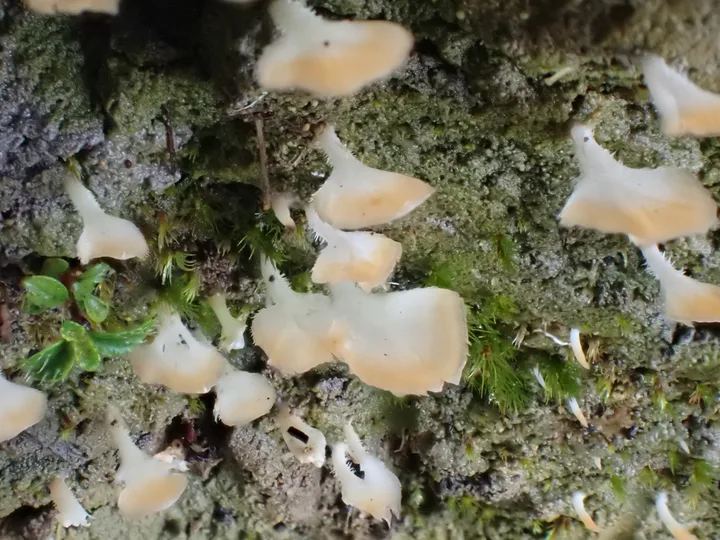
Foto yang diasosiasikan dengan Multiclavula ichthyiformis pada iNaturalist. Identifikasi mengikuti sumber; bukan penentuan spesimen independen.
Kredit dan penggunaan
no rights reserved
Ukuran dan format gambar disesuaikan tanpa pemotongan, retus, atau penambahan skala. Lisensi sumber dipertahankan.
Sumber profil
- [1] Multiclavula ichthyiformis — Wikipedia (en)
- [2] Catalogue of Life Base2026-09-11 — Multiclavula ichthyiformis
- [3] Dokumentasi visual — Multiclavula ichthyiformis
- [4] Dokumentasi visual — Multiclavula ichthyiformis
Rujukan halaman ini
Fungi. Multiclavula ichthyiformis. Rilis data fungi-2026-10-12-expansion-2. https://fungi-atlas.mgadib.chatgpt.site/jamur/multiclavula-ichthyiformis/.
Status: impor sumber; pemeriksaan editorial per profil belum selesai. Untuk klaim biologis, gunakan rujukan pada bagian terkait dan periksa konteks sumber aslinya.