01 / Morfologi

Ciri dan struktur

In the thallus of M. mucida, the algae are not merely scattered. Instead, they are organised into small, closely situated globules embedded in a gelatinous matrix on moist, rotting wood. This Botrydina-type thallus structure, common in basidiolichens, serves multiple functions. It protects the algae from UV light and desiccation, while ensuring close contact through a hyphal network that provides a continuous water and minerals supply. The fruiting bodies (basidiocarps) are typically to lobed and can reach up to 2 cm in height. They are waxy-tough but can become slimy, transitioning from white or creamy colour to grey or pale tan as they mature. These structures often dry to show a pure white tip. The fruiting bodies' stickiness often causes debris to adhere to their surfaces. The algal partners are encapsulated in tiny pockets of fungal tissue, yet they retain a loose, unstructured form, manifesting as a green crust where the fungus produces its fruiting bodies. Despite their mutualistic relationship, both the algae and the fungus maintain their individual morphology. The relationship between coccomyxoid green algae and M. mucida was documented by Geitler in 1955, noting that the algae are larger within the lichen than when free-living. He suggested in 1956 that this size difference could be due to a decrease in algal division frequency induced by the fungal partner, the . Using electron microscopy, Hiroshi Masumoto identified the partner of M. mucida as Elliptochloris subsphaerica. The fungus's internal structure features thin to slightly thick-walled hyphae. These threads are generally parallel, interlocking, and often merged, showing many branching and connecting points (anastomoses).

Sebagian uraian ditampilkan dalam bahasa sumber; terjemahannya belum tersedia atau belum lolos pemeriksaan.

Rujukan: [1]

Pengukuran mengikuti objek, spesimen atau kultur, dan metode yang disebutkan sumber. Baca uraian asli untuk konteks lengkap.

02 / Kehidupan

Habitat dan peran ekologis

This species is commonly found on decomposing wood, often in the presence of algae. It thrives on a wide variety of substrates, including bamboo, beech, cedar, poplar, and oak. In Central Europe, coniferous wood is a particularly favoured substrate. M. mucida is widely distributed, found in Asia, Europe, North and South America, and possibly Australia, with its North American range extending as far north as Alaska. The discovery of M. mucida at unusually low elevations, specifically around 130 to 135 m above sea level in the Bienwald area of Rhineland-Palatinate, has prompted a reevaluation of its distribution and naming inconsistencies across different scientific literatures. Unlike other members of its genus, which prefer sandy soils, this species predominantly relies on rotting wood in moist environments. Lothar Geitler first identified this species as an extratropical lichen in 1955, challenging the then-prevailing view that basidiolichens were exclusively tropical. Previously considered native to Northern Europe and the mountains of Central Europe, M. mucida has been increasingly observed across most European countries and globally. This expansion in its geographical range could be attributed to the establishment and maintenance of natural forest reserves, environments that foster the decay of thick logs and provide suitable habitats for the fungus.

Sebagian uraian ditampilkan dalam bahasa sumber; terjemahannya belum tersedia atau belum lolos pemeriksaan.

Rujukan: [1]

Habitat atau konteks temuan
hutan
Substrat
kayu
Peran atau konteks
Pembentuk liken
Temukan hubungan serupa
03 / Siklus hidup

Reproduksi

In the thallus of M. mucida, the algae are not merely scattered. Instead, they are organised into small, closely situated globules embedded in a gelatinous matrix on moist, rotting wood. This Botrydina-type thallus structure, common in basidiolichens, serves multiple functions. It protects the algae from UV light and desiccation, while ensuring close contact through a hyphal network that provides a continuous water and minerals supply. The fruiting bodies (basidiocarps) are typically to lobed and can reach up to 2 cm in height. They are waxy-tough but can become slimy, transitioning from white or creamy colour to grey or pale tan as they mature. These structures often dry to show a pure white tip.

Sebagian uraian ditampilkan dalam bahasa sumber; terjemahannya belum tersedia atau belum lolos pemeriksaan.

Rujukan: [1]

Sinonim menurut acuan taksonomi rilis: Calocera mucida; Clavaria mucida; Clavaria mucida var. rosea; Lentaria mucida; Lentaria mucida var. hexaspora; Pistillaria mucida; Typhula mucida
04 / Batas informasi

Catatan identitas dan cakupan

  • Nama diterima mengikuti Catalogue of Life Base2026-09-11; uraian mempertahankan konsep dan nama sumber aslinya.
  • Original geographic, specimen and life-cycle scope retained; source import awaits individual editorial review.
  • Impor dan terjemahan otomatis belum diperiksa editorial per profil. Struktur reproduktif yang disebutkan tidak membuktikan seluruh siklus hidup diketahui.
  • Pengukuran pada uraian mengikuti spesimen, kultur, dan metode sumber; angka tidak diperluas ke semua populasi.

Catatan distribusi dalam narasi mengikuti sumbernya. Dokumentasi spesimen atau foto mengikuti catatan sumber. Bukti wilayah Indonesia dan penilaian konservasi tidak disimpulkan dari gambar.

05 / Dokumentasi

Melihat dengan konteks

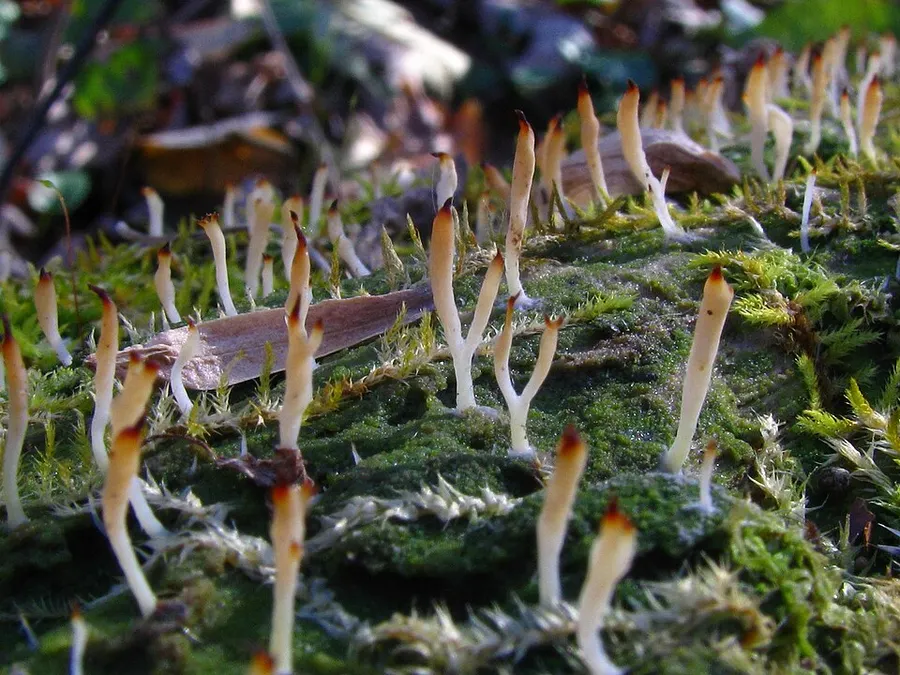
Dokumentasi Multiclavula mucida dari Wikimedia Commons. Fruit bodies of the fungus Multiclavula mucida (Pers.) R.H. Petersen. Specimens photographed in Kinderhook Trail, Wayne National Forest, Ohio, USA. Identifikasi mengikuti record berkas sumber.

Jenis
Fotografi
Kredit
Dan Molter
Sumber media
Buka entri sumber

Gambar menunjukkan objek menurut identifikasi sumber, bukan verifikasi independen spesimen oleh Fungi. Tidak ada skala baru yang ditambahkan.

06 / Rujukan

Sumber profil

  1. [1] Multiclavula mucida — Wikipedia (en)Bagian sumber: Frozen revision 1372500080
    Tanggal penghimpunan sumber: 2026-10-12
    Teks sumber: CC BY-SA4.0 · Wikipedia contributors
  2. [2] Catalogue of Life Base2026-09-11 — Multiclavula mucidaBagian sumber: ColDP NameUsage.tsv ID 44K62; accepted species; source 2073
    Tanggal penghimpunan sumber: 2026-10-12
  3. [3] Dokumentasi visual — Multiclavula mucidaBagian sumber: Individual media record; identification follows the source, not independent determination
    Tanggal penghimpunan sumber: 2026-10-12
    Media sumber: CC BY-SA 3.0 · Dan Molter

Adaptasi teks: CC BY-SA 4.0. Wikipedia contributors — Multiclavula mucida — Wikipedia (en)

Uraian asli dan riwayat sumber

Riwayat atau halaman sumber

Ringkasan sumber

Multiclavula mucida is a globally distributed species of basidiolichen belonging to the family Hydnaceae. Since its initial classification by Christiaan Hendrik Persoon in 1797, the species has been described under various synonyms and associated with multiple genera. Persoon described its fruiting bodies as gregarious (i.e. growing in groups but separate at the base), varying from simple to branching structures, predominantly whitish in colour with yellow to brownish tips. He also noted its frequent appearance in autumn on decaying, moist wood, often covered with a greenish crust necessary for its growth.

Revisi sumber

Morfologi sumber

In the thallus of M. mucida, the algae are not merely scattered. Instead, they are organised into small, closely situated globules embedded in a gelatinous matrix on moist, rotting wood. This Botrydina-type thallus structure, common in basidiolichens, serves multiple functions. It protects the algae from UV light and desiccation, while ensuring close contact through a hyphal network that provides a continuous water and minerals supply. The fruiting bodies (basidiocarps) are typically to lobed and can reach up to 2 cm in height. They are waxy-tough but can become slimy, transitioning from white or creamy colour to grey or pale tan as they mature. These structures often dry to show a pure white tip. The fruiting bodies' stickiness often causes debris to adhere to their surfaces. The algal partners are encapsulated in tiny pockets of fungal tissue, yet they retain a loose, unstructured form, manifesting as a green crust where the fungus produces its fruiting bodies. Despite their mutualistic relationship, both the algae and the fungus maintain their individual morphology. The relationship between coccomyxoid green algae and M. mucida was documented by Geitler in 1955, noting that the algae are larger within the lichen than when free-living. He suggested in 1956 that this size difference could be due to a decrease in algal division frequency induced by the fungal partner, the . Using electron microscopy, Hiroshi Masumoto identified the partner of M. mucida as Elliptochloris subsphaerica. The fungus's internal structure features thin to slightly thick-walled hyphae. These threads are generally parallel, interlocking, and often merged, showing many branching and connecting points (anastomoses).

Revisi sumber

Ekologi sumber

This species is commonly found on decomposing wood, often in the presence of algae. It thrives on a wide variety of substrates, including bamboo, beech, cedar, poplar, and oak. In Central Europe, coniferous wood is a particularly favoured substrate. M. mucida is widely distributed, found in Asia, Europe, North and South America, and possibly Australia, with its North American range extending as far north as Alaska. The discovery of M. mucida at unusually low elevations, specifically around 130 to 135 m above sea level in the Bienwald area of Rhineland-Palatinate, has prompted a reevaluation of its distribution and naming inconsistencies across different scientific literatures. Unlike other members of its genus, which prefer sandy soils, this species predominantly relies on rotting wood in moist environments. Lothar Geitler first identified this species as an extratropical lichen in 1955, challenging the then-prevailing view that basidiolichens were exclusively tropical. Previously considered native to Northern Europe and the mountains of Central Europe, M. mucida has been increasingly observed across most European countries and globally. This expansion in its geographical range could be attributed to the establishment and maintenance of natural forest reserves, environments that foster the decay of thick logs and provide suitable habitats for the fungus.

Revisi sumber

Struktur reproduksi sumber

In the thallus of M. mucida, the algae are not merely scattered. Instead, they are organised into small, closely situated globules embedded in a gelatinous matrix on moist, rotting wood. This Botrydina-type thallus structure, common in basidiolichens, serves multiple functions. It protects the algae from UV light and desiccation, while ensuring close contact through a hyphal network that provides a continuous water and minerals supply. The fruiting bodies (basidiocarps) are typically to lobed and can reach up to 2 cm in height. They are waxy-tough but can become slimy, transitioning from white or creamy colour to grey or pale tan as they mature. These structures often dry to show a pure white tip.

Revisi sumber

Rujukan halaman ini

Fungi. Multiclavula mucida. Rilis data fungi-2026-10-12-expansion-2. https://fungi-atlas.mgadib.chatgpt.site/jamur/multiclavula-mucida/.

Status: impor sumber; pemeriksaan editorial per profil belum selesai. Untuk klaim biologis, gunakan rujukan pada bagian terkait dan periksa konteks sumber aslinya.