Ciri dan struktur
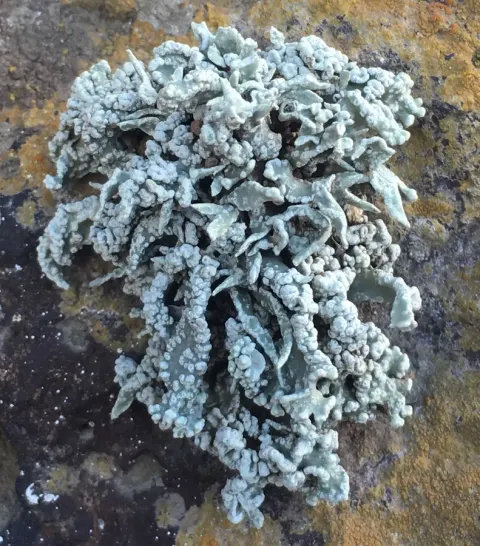
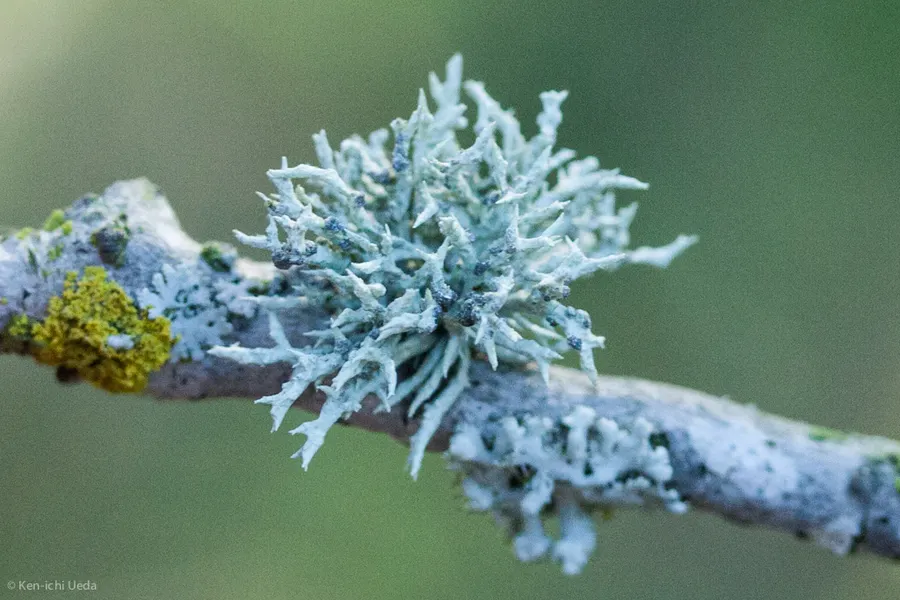
Vermilacinia cephalota is classified in the subgenus Cylindricaria in which it is distinguished from related species by the thallus divided into tubular inflated or somewhat compressed fan-shaped branches that arise from a central point of attachment and produce soredia, that occurs in most species of Vermilacinia, and may also be related to an unidentified compound, referred to as T3 (based on its Rf position on a thin-layer chromatography plate), and an aliphatic depside, bourgeanic acid. involving (1) salazinic acid in one type, (2) norstictic acid in another type or (3) neither salazinic acid or norstictic acid present. Zeorin and (-)-16 α-hydroxykaurane are the major compounds that are always present. A fourth chemotype includes the presence or absence of the T3 compound.
Habitat dan peran ekologis
Vermilacinia cephalota is a fruticose lichen usually found on trees, shrubs and wooden fences in the fog regions along the Pacific Coast of North America from southeastern Alaska to the Vizcaíno Peninsula of Baja California.
- Habitat atau konteks temuan
- Informasi belum tersedia pada sumber rilis ini.
- Substrat
- Informasi belum tersedia pada sumber rilis ini.
- Peran atau konteks
- Pembentuk liken
Reproduksi
Vermilacinia cephalota is classified in the subgenus Cylindricaria in which it is distinguished from related species by the thallus divided into tubular inflated or somewhat compressed fan-shaped branches that arise from a central point of attachment and produce soredia, that occurs in most species of Vermilacinia, and may also be related to an unidentified compound, referred to as T3 (based on its Rf position on a thin-layer chromatography plate), and an aliphatic depside, bourgeanic acid. involving (1) salazinic acid in one type, (2) norstictic acid in another type or (3) neither salazinic acid or norstictic acid present. Zeorin and (-)-16 α-hydroxykaurane are the major compounds that are always present.
Catatan identitas dan cakupan
- Nama diterima mengikuti Catalogue of Life Base2026-09-11; uraian mempertahankan konsep dan nama sumber aslinya.
- Original geographic, specimen and life-cycle scope retained; source import awaits individual editorial review.
- Impor dan terjemahan otomatis belum diperiksa editorial per profil. Struktur reproduktif yang disebutkan tidak membuktikan seluruh siklus hidup diketahui.
- Pengukuran pada uraian mengikuti spesimen, kultur, dan metode sumber; angka tidak diperluas ke semua populasi.
Catatan distribusi dalam narasi mengikuti sumbernya. Dokumentasi spesimen atau foto mengikuti catatan sumber. Bukti wilayah Indonesia dan penilaian konservasi tidak disimpulkan dari gambar.
Melihat dengan konteks
Dokumentasi Niebla cephalota menurut asosiasi foto pada record takson iNaturalist. Kredit: Ken-ichi Ueda. Identitas mengikuti sumber; bukan penentuan spesimen independen.
- Jenis
- Fotografi
- Kredit
- (c) Ken-ichi Ueda, some rights reserved (CC BY)
- Lisensi
- CC BY 4.0
- Sumber media
- Buka entri sumber
Dokumentasi tambahan
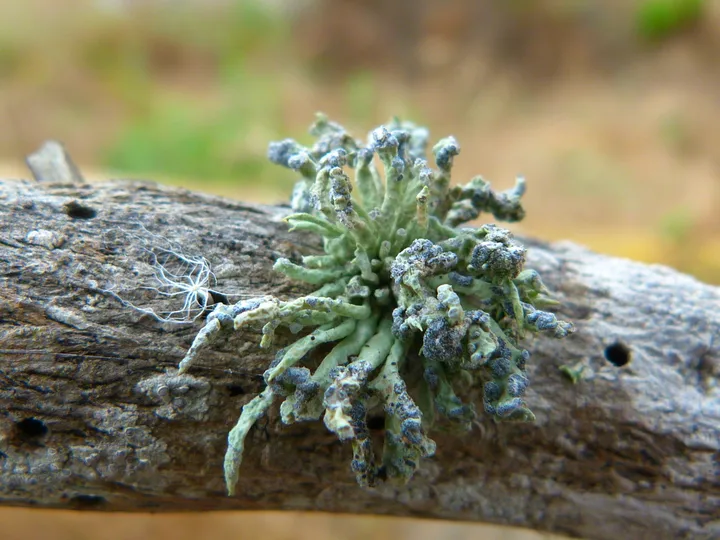
Foto yang diasosiasikan dengan Niebla cephalota pada iNaturalist. Identifikasi mengikuti sumber; bukan penentuan spesimen independen.
Kredit dan penggunaan
(c) Zack Abbey, some rights reserved (CC BY), uploaded by Zack Abbey
Ukuran dan format gambar disesuaikan tanpa pemotongan, retus, atau penambahan skala. Lisensi sumber dipertahankan.
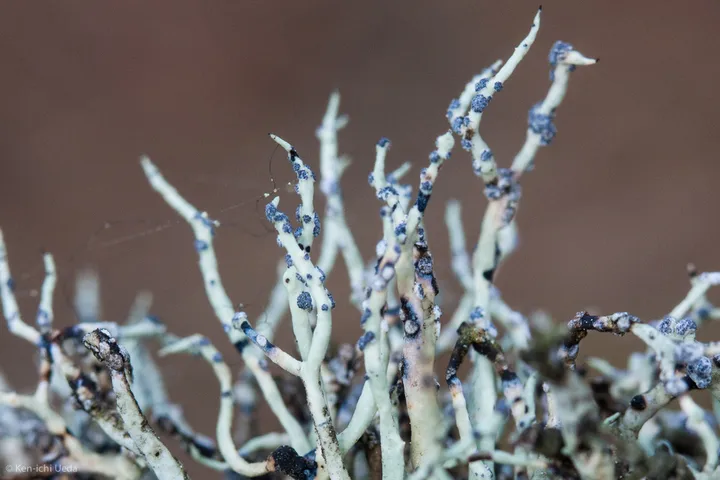
Foto yang diasosiasikan dengan Niebla cephalota pada iNaturalist. Identifikasi mengikuti sumber; bukan penentuan spesimen independen.
Kredit dan penggunaan
(c) Ken-ichi Ueda, some rights reserved (CC BY)
Ukuran dan format gambar disesuaikan tanpa pemotongan, retus, atau penambahan skala. Lisensi sumber dipertahankan.
Sumber profil
- [1] Vermilacinia cephalota — Wikipedia (en)
- [2] Catalogue of Life Base2026-09-11 — Niebla cephalota
- [3] Dokumentasi visual — Niebla cephalota
- [4] Dokumentasi visual — Niebla cephalota
- [5] Dokumentasi visual — Niebla cephalota
Rujukan halaman ini
Fungi. Niebla cephalota. Rilis data fungi-2026-10-12-expansion-2. https://fungi-atlas.mgadib.chatgpt.site/jamur/niebla-cephalota/.
Status: impor sumber; pemeriksaan editorial per profil belum selesai. Untuk klaim biologis, gunakan rujukan pada bagian terkait dan periksa konteks sumber aslinya.