01 / Morfologi

Ciri dan struktur

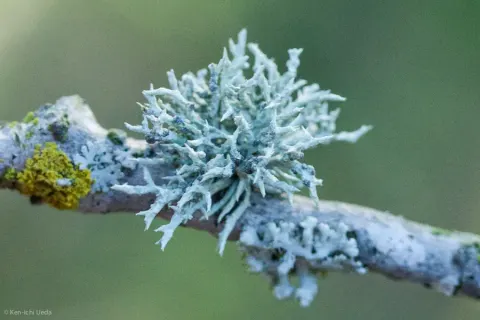
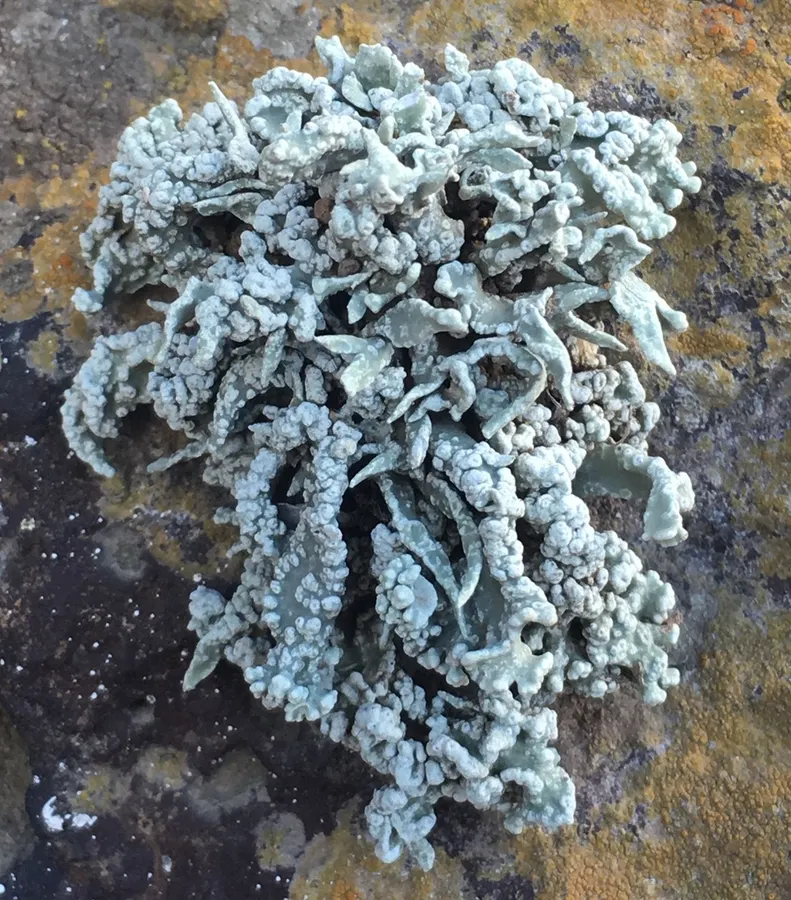
Vermilacinia polymorpha may be recognized by a thallus divided into partly strap-like branches with irregularly widened parts, somewhat spoon-shaped, as shown in a “representative specimen” in the original publication by Peter Bowler and coauthors from Aliso Canyon in Orange County, California. The authors had noted that the species “most closely resembles a deformed N. robusta which has smaller spores of 10–12 μm, inflated, rounded branches, and larger urn-shaped apothecia.” Richard Spjut, in his revision of Niebla and Vermilacinia, indicated that V. polymorpha is distinguished by the “oblong branches (less than 10 times longer than wide)”; he commented that some forms were difficult to distinguish from Vermilacinia robusta, while he was only able to briefly glance at the type while visiting Arizona State University in April 1996, The type (biology) specimen, which was not shown in the original publication, was reported to have been collected by Janet Marsh on Santa Catalina Island). It differs in having irregularly widened branch parts near thallus base and narrower tubular segments above. The branches in the type specimen appear as long as 3 cm, and described to be up to 6 mm wide where flattened, especially flattened or inflated near base.

Sebagian uraian ditampilkan dalam bahasa sumber; terjemahannya belum tersedia atau belum lolos pemeriksaan.

Rujukan: [1]

Pengukuran mengikuti objek, spesimen atau kultur, dan metode yang disebutkan sumber. Baca uraian asli untuk konteks lengkap.

02 / Kehidupan

Habitat dan peran ekologis

Vermilacinia polymorpha is a fruticose lichen infrequently found on Santa Catalina Island in the Channel Islands of California and along the mainland coast in Ventura and Orange counties. It has also been indicated to occur south into northwestern Baja California without reference to specimens to support its range extension, and shown to occur on the Vizcaíno Peninsula in central Baja California on a distribution map in a lichen flora, without reference to specimen data; however, specimen data from other sources indicate it does occur as far south as Punta Santa Rosalillita on the main peninsula of Baja California, and also reported from Guadalupe Island.

Sebagian uraian ditampilkan dalam bahasa sumber; terjemahannya belum tersedia atau belum lolos pemeriksaan.

Rujukan: [1]

Habitat atau konteks temuan
Informasi belum tersedia pada sumber rilis ini.
Substrat
Informasi belum tersedia pada sumber rilis ini.
Peran atau konteks
Pembentuk liken
Temukan hubungan serupa
03 / Siklus hidup

Reproduksi

Vermilacinia polymorpha may be recognized by a thallus divided into partly strap-like branches with irregularly widened parts, somewhat spoon-shaped, as shown in a “representative specimen” in the original publication by Peter Bowler and coauthors from Aliso Canyon in Orange County, California. The authors had noted that the species “most closely resembles a deformed N. robusta which has smaller spores of 10–12 μm, inflated, rounded branches, and larger urn-shaped apothecia.” Richard Spjut, in his revision of Niebla and Vermilacinia, indicated that V. polymorpha is distinguished by the “oblong branches (less than 10 times longer than wide)”; he commented that some forms were difficult to distinguish from Vermilacinia robusta, while he was only able to briefly glance at the type while visiting Arizona State University in April 1996,

Sebagian uraian ditampilkan dalam bahasa sumber; terjemahannya belum tersedia atau belum lolos pemeriksaan.

Rujukan: [1]

Sinonim menurut acuan taksonomi rilis: Vermilacinia polymorpha
04 / Batas informasi

Catatan identitas dan cakupan

  • Nama diterima mengikuti Catalogue of Life Base2026-09-11; uraian mempertahankan konsep dan nama sumber aslinya.
  • Original geographic, specimen and life-cycle scope retained; source import awaits individual editorial review.
  • Impor dan terjemahan otomatis belum diperiksa editorial per profil. Struktur reproduktif yang disebutkan tidak membuktikan seluruh siklus hidup diketahui.
  • Pengukuran pada uraian mengikuti spesimen, kultur, dan metode sumber; angka tidak diperluas ke semua populasi.

Catatan distribusi dalam narasi mengikuti sumbernya. Dokumentasi spesimen atau foto mengikuti catatan sumber. Bukti wilayah Indonesia dan penilaian konservasi tidak disimpulkan dari gambar.

05 / Dokumentasi

Melihat dengan konteks

Dokumentasi Niebla polymorpha menurut asosiasi foto pada record takson iNaturalist. Kredit: Adam J. Searcy. Identitas mengikuti sumber; bukan penentuan spesimen independen.

Jenis
Fotografi
Kredit
(c) Adam J. Searcy, some rights reserved (CC BY)
Lisensi
CC BY 4.0
Sumber media
Buka entri sumber

Gambar menunjukkan objek menurut identifikasi sumber, bukan verifikasi independen spesimen oleh Fungi. Tidak ada skala baru yang ditambahkan.

06 / Rujukan

Sumber profil

  1. [1] Vermilacinia polymorpha — Wikipedia (en)Bagian sumber: Frozen revision 1266771429
    Tanggal penghimpunan sumber: 2026-10-12
    Teks sumber: CC BY-SA4.0 · Wikipedia contributors
  2. [2] Catalogue of Life Base2026-09-11 — Niebla polymorphaBagian sumber: ColDP NameUsage.tsv ID 47DVM; accepted species; source 2073
    Tanggal penghimpunan sumber: 2026-10-12
  3. [3] Dokumentasi visual — Niebla polymorphaBagian sumber: Individual media record; identification follows the source, not independent determination
    Tanggal penghimpunan sumber: 2026-10-12
    Media sumber: CC BY 4.0 · (c) Adam J. Searcy, some rights reserved (CC BY)

Adaptasi teks: CC BY-SA 4.0. Wikipedia contributors — Vermilacinia polymorpha — Wikipedia (en)

Uraian asli dan riwayat sumber

Riwayat atau halaman sumber

Ringkasan sumber

Vermilacinia polymorpha is a fruticose lichen infrequently found on Santa Catalina Island in the Channel Islands of California and along the mainland coast in Ventura and Orange counties. It has also been indicated to occur south into northwestern Baja California without reference to specimens to support its range extension, and shown to occur on the Vizcaíno Peninsula in central Baja California on a distribution map in a lichen flora, without reference to specimen data; however, specimen data from other sources indicate it does occur as far south as Punta Santa Rosalillita on the main peninsula of Baja California, and also reported from Guadalupe Island.

Revisi sumber

Morfologi sumber

Vermilacinia polymorpha may be recognized by a thallus divided into partly strap-like branches with irregularly widened parts, somewhat spoon-shaped, as shown in a “representative specimen” in the original publication by Peter Bowler and coauthors from Aliso Canyon in Orange County, California. The authors had noted that the species “most closely resembles a deformed N. robusta which has smaller spores of 10–12 μm, inflated, rounded branches, and larger urn-shaped apothecia.” Richard Spjut, in his revision of Niebla and Vermilacinia, indicated that V. polymorpha is distinguished by the “oblong branches (less than 10 times longer than wide)”; he commented that some forms were difficult to distinguish from Vermilacinia robusta, while he was only able to briefly glance at the type while visiting Arizona State University in April 1996, The type (biology) specimen, which was not shown in the original publication, was reported to have been collected by Janet Marsh on Santa Catalina Island). It differs in having irregularly widened branch parts near thallus base and narrower tubular segments above. The branches in the type specimen appear as long as 3 cm, and described to be up to 6 mm wide where flattened, especially flattened or inflated near base.

Revisi sumber

Ekologi sumber

Vermilacinia polymorpha is a fruticose lichen infrequently found on Santa Catalina Island in the Channel Islands of California and along the mainland coast in Ventura and Orange counties. It has also been indicated to occur south into northwestern Baja California without reference to specimens to support its range extension, and shown to occur on the Vizcaíno Peninsula in central Baja California on a distribution map in a lichen flora, without reference to specimen data; however, specimen data from other sources indicate it does occur as far south as Punta Santa Rosalillita on the main peninsula of Baja California, and also reported from Guadalupe Island.

Revisi sumber

Struktur reproduksi sumber

Vermilacinia polymorpha may be recognized by a thallus divided into partly strap-like branches with irregularly widened parts, somewhat spoon-shaped, as shown in a “representative specimen” in the original publication by Peter Bowler and coauthors from Aliso Canyon in Orange County, California. The authors had noted that the species “most closely resembles a deformed N. robusta which has smaller spores of 10–12 μm, inflated, rounded branches, and larger urn-shaped apothecia.” Richard Spjut, in his revision of Niebla and Vermilacinia, indicated that V. polymorpha is distinguished by the “oblong branches (less than 10 times longer than wide)”; he commented that some forms were difficult to distinguish from Vermilacinia robusta, while he was only able to briefly glance at the type while visiting Arizona State University in April 1996,

Revisi sumber

Rujukan halaman ini

Fungi. Niebla polymorpha. Rilis data fungi-2026-10-12-expansion-2. https://fungi-atlas.mgadib.chatgpt.site/jamur/niebla-polymorpha/.

Status: impor sumber; pemeriksaan editorial per profil belum selesai. Untuk klaim biologis, gunakan rujukan pada bagian terkait dan periksa konteks sumber aslinya.