Ciri dan struktur
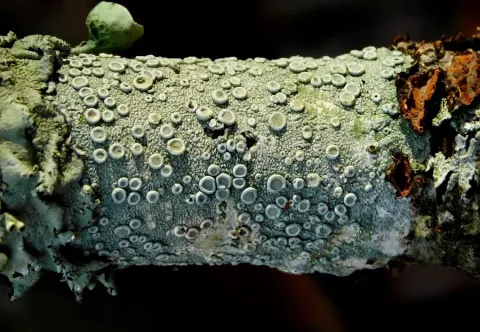
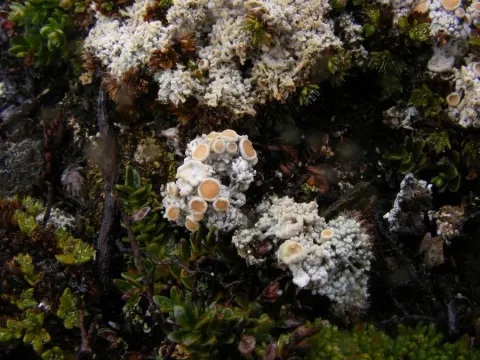
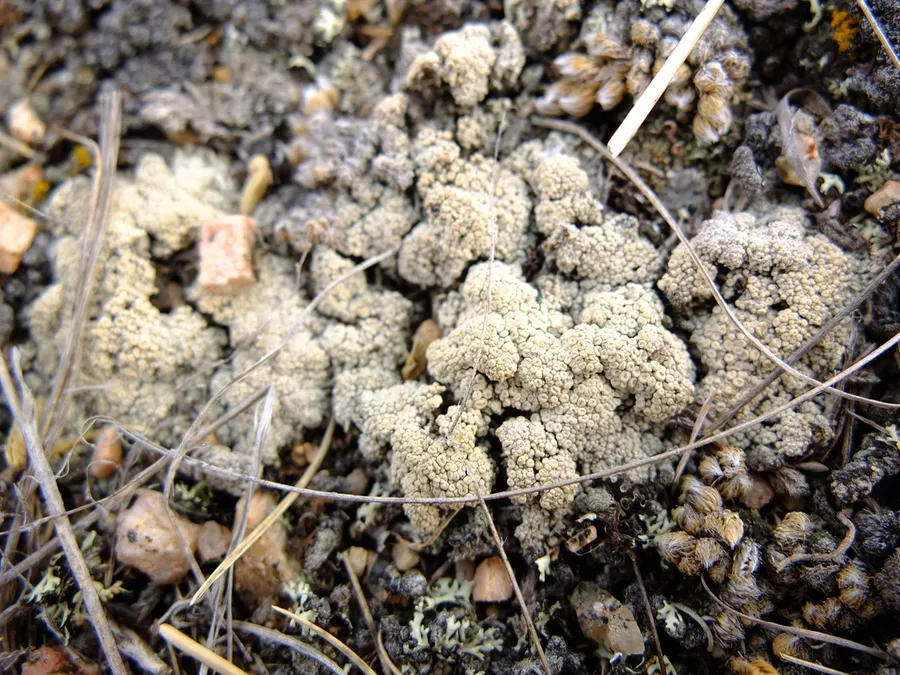
The thallus of Ochrolechia upsaliensis is white to grayish-white, and crustose; the thallus thickens with age. The texture of the thallus surface ranges from smooth to granular. The lichen produces abundant apothecia; these reproductive structures are shallowly saucer-shaped, measuring 0.5–3 mm in diameter, with a pale-buff disc. The ascospores typically number 8 per ascus; they are ellipsoid with dimensions of 31–69 by 23–37 μm. Ochrolechia upsaliensis reacts negatively to all standard lichen spot tests.
Habitat dan peran ekologis
Ochrolechia upsaliensis has a Northern Hemisphere distribution, having been reported from Europe, arctic areas of Alaska and Canada, Greenland, and mountainous areas of the United States. It also occurs in mountainous areas of Europe. There, it prefers habitats with calciferous soil and plant debris, and grows optimally above the treeline. In the Alps, where it is widespread, Ochrolechia upsaliensis reaches the Nival zone. It typically overgrows mosses, sedges, grasses, or grows on the ground; less frequently, it has been recorded growing on rock. In Greenland, it is a component of the lichen-rich biological soil crust. The species is host to the lichenicolous fungus species Sclerococcum deminutum.
- Habitat atau konteks temuan
- Informasi belum tersedia pada sumber rilis ini.
- Substrat
- tanah
- Peran atau konteks
- Pembentuk liken
Reproduksi
The thallus of Ochrolechia upsaliensis is white to grayish-white, and crustose; the thallus thickens with age. The texture of the thallus surface ranges from smooth to granular. The lichen produces abundant apothecia; these reproductive structures are shallowly saucer-shaped, measuring 0.5–3 mm in diameter, with a pale-buff disc. The ascospores typically number 8 per ascus; they are ellipsoid with dimensions of 31–69 by 23–37 μm.
Catatan identitas dan cakupan
- Nama diterima mengikuti Catalogue of Life Base2026-09-11; uraian mempertahankan konsep dan nama sumber aslinya.
- Original geographic, specimen and life-cycle scope retained; source import awaits individual editorial review.
- Impor dan terjemahan otomatis belum diperiksa editorial per profil. Struktur reproduktif yang disebutkan tidak membuktikan seluruh siklus hidup diketahui.
- Pengukuran pada uraian mengikuti spesimen, kultur, dan metode sumber; angka tidak diperluas ke semua populasi.
Catatan distribusi dalam narasi mengikuti sumbernya. Dokumentasi spesimen atau foto mengikuti catatan sumber. Bukti wilayah Indonesia dan penilaian konservasi tidak disimpulkan dari gambar.
Melihat dengan konteks
Dokumentasi Ochrolechia upsaliensis menurut asosiasi foto pada record takson iNaturalist. Kredit: Chase Mathey. Identitas mengikuti sumber; bukan penentuan spesimen independen.
- Jenis
- Fotografi
- Kredit
- (c) Chase Mathey, some rights reserved (CC BY), uploaded by Chase Mathey
- Lisensi
- CC BY 4.0
- Sumber media
- Buka entri sumber
Dokumentasi tambahan
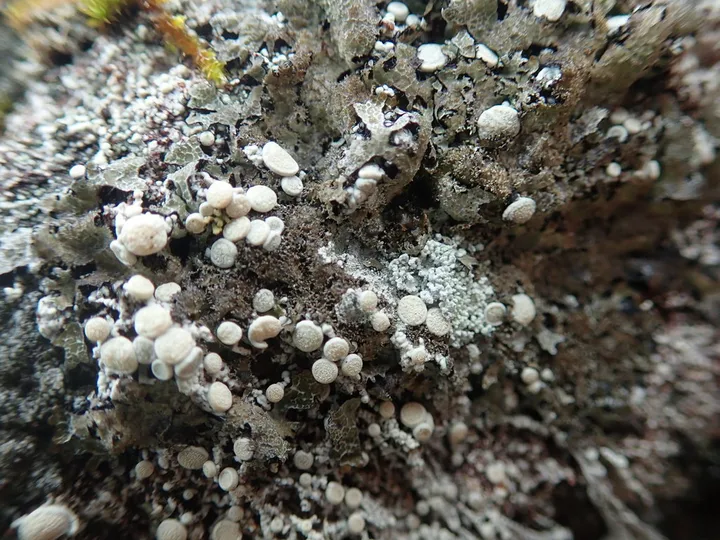
Foto yang diasosiasikan dengan Ochrolechia upsaliensis pada iNaturalist. Identifikasi mengikuti sumber; bukan penentuan spesimen independen.
Kredit dan penggunaan
no rights reserved, uploaded by Randal
Ukuran dan format gambar disesuaikan tanpa pemotongan, retus, atau penambahan skala. Lisensi sumber dipertahankan.
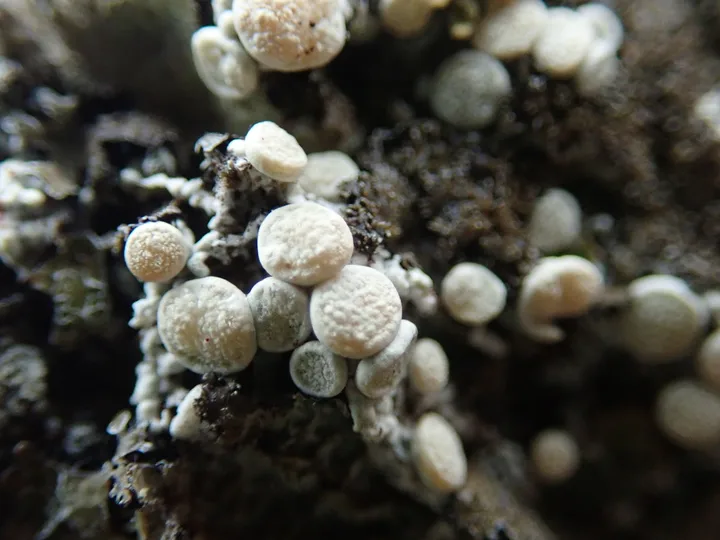
Foto yang diasosiasikan dengan Ochrolechia upsaliensis pada iNaturalist. Identifikasi mengikuti sumber; bukan penentuan spesimen independen.
Kredit dan penggunaan
no rights reserved, uploaded by Randal
Ukuran dan format gambar disesuaikan tanpa pemotongan, retus, atau penambahan skala. Lisensi sumber dipertahankan.
Sumber profil
- [1] Ochrolechia upsaliensis — Wikipedia (en)
- [2] Catalogue of Life Base2026-09-11 — Ochrolechia upsaliensis
- [3] Dokumentasi visual — Ochrolechia upsaliensis
- [4] Dokumentasi visual — Ochrolechia upsaliensis
- [5] Dokumentasi visual — Ochrolechia upsaliensis
Rujukan halaman ini
Fungi. Ochrolechia upsaliensis. Rilis data fungi-2026-10-12-expansion-2. https://fungi-atlas.mgadib.chatgpt.site/jamur/ochrolechia-upsaliensis/.
Status: impor sumber; pemeriksaan editorial per profil belum selesai. Untuk klaim biologis, gunakan rujukan pada bagian terkait dan periksa konteks sumber aslinya.