Ciri dan struktur
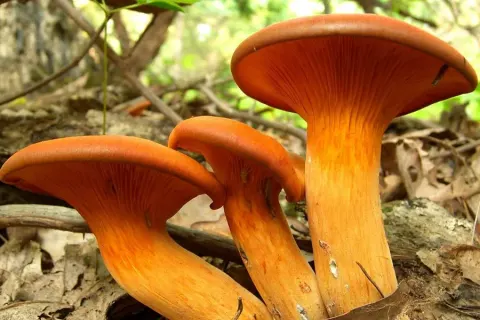
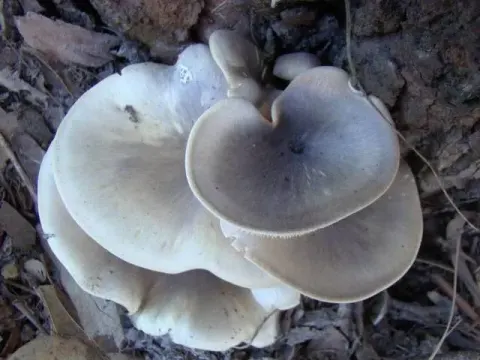
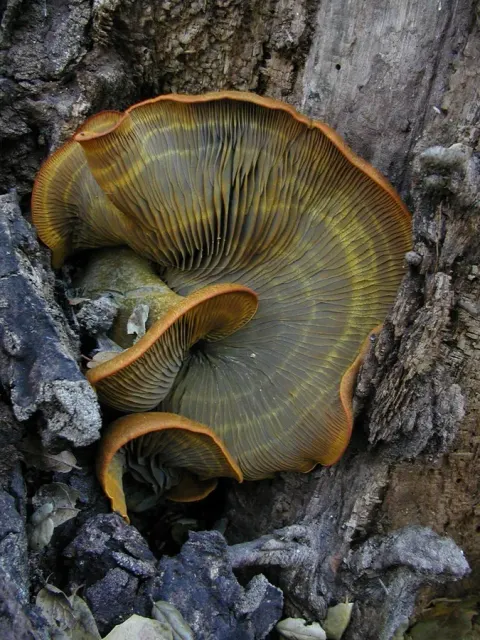
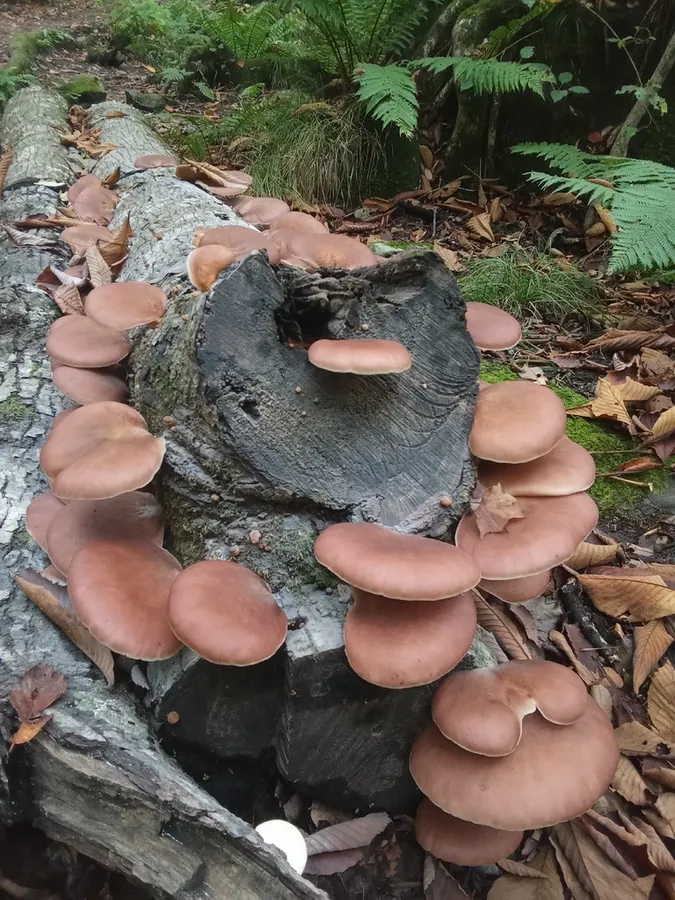
The fleshy fruit bodies have an eccentric stem rendering the cap kidney- or half-moon-shaped and only round when young. The cap is light brown when young and darkens with age, with yellow or pinkish tinges. The flesh is white and up to 2 cm (0.8 in) thick in the cap. The thick white gills are decurrent and can yellow with age. The stem is thick and fleshy and can be up to 2 cm (0.8 in) thick and 5 cm (2 in) long. The gills glow with a whitish light. Kawamura reported that the fungi can be seen from 30 m (100 ft) away at night, and that 100 square centimetres of glowing mushrooms allowed him to read Roman characters of 8 mm size by their light. This fungus is mistaken for the commonly eaten oyster mushroom (Pleurotus ostreatus), Shiitake (Lentinula edodes), and Mukitake (Sarcomyxa serotina), but is poisonous. O. japonicus was responsible for 31.6% of mushroom poisoning cases in Japan between 1996 and 2005—more than any other mushroom. Symptoms of O. japonicus poisoning are nausea, vomiting and diarrhea. The most common treatment is fluid therapy.
Habitat dan peran ekologis
The fungus grows on dead beech trees, and is found in mountainous regions of Japan, the fruit bodies appearing in September and October. One of the most common mushrooms growing on decaying beech wood in that country, it is classified as "Vulnerable" because beech forests are being depleted. It is also found in Korea, China, and far eastern Russia.
- Habitat atau konteks temuan
- hutan
- Substrat
- Informasi belum tersedia pada sumber rilis ini.
- Peran atau konteks
- Belum dikategorikan pada rilis ini.
Reproduksi
Sporophore de grande taille, de 10 à 25 (30) cm de diamètre, semi-circulaire ou réniforme, d'abord brun jaunâtre puis brun datte brillant, devenant brun violet foncé avec l'âge, avec des écailles plus sombres, cuticule non séparable, visqueuse par temps humide, se maculant de bleu-vert vif au frottement. Le pied est plus pâle que le chapeau, le plus souvent latéral, rarement presque central, épais, court, jaune-brun pâle, muni d'une crête annulaire basse à la frontière des lames, avec souvent des taches violet noirâtre à la base. Sporée jaune. Spores globuleuses, 9-14 × 8-14 µm, lisses, incolores, à parois minces, non amyloïdes. Boucles présentes. Hyphes à parois épaisses. Pas de cystides.
Catatan identitas dan cakupan
- Nama diterima mengikuti Catalogue of Life Base2026-09-11; uraian mempertahankan konsep dan nama sumber aslinya.
- Uraian digabungkan dari sumber spesies yang sama; lingkup geografis, bahan, dan kultur setiap sumber dipertahankan. Original geographic, specimen and life-cycle scope retained; source import awaits individual editorial review. Original geographic, specimen and life-cycle scope retained; source import awaits individual editorial review.
- Impor dan terjemahan otomatis belum diperiksa editorial per profil. Struktur reproduktif yang disebutkan tidak membuktikan seluruh siklus hidup diketahui.
- Pengukuran pada uraian mengikuti spesimen, kultur, dan metode sumber; angka tidak diperluas ke semua populasi.
Catatan distribusi dalam narasi mengikuti sumbernya. Dokumentasi spesimen atau foto mengikuti catatan sumber. Bukti wilayah Indonesia dan penilaian konservasi tidak disimpulkan dari gambar.
Melihat dengan konteks
Dokumentasi Omphalotus japonicus menurut asosiasi foto pada record takson iNaturalist. Kredit: Hector Montero. Identitas mengikuti sumber; bukan penentuan spesimen independen.
- Jenis
- Fotografi
- Kredit
- (c) Hector Montero, some rights reserved (CC BY), uploaded by Hector Montero
- Lisensi
- CC BY 4.0
- Sumber media
- Buka entri sumber
Dokumentasi tambahan
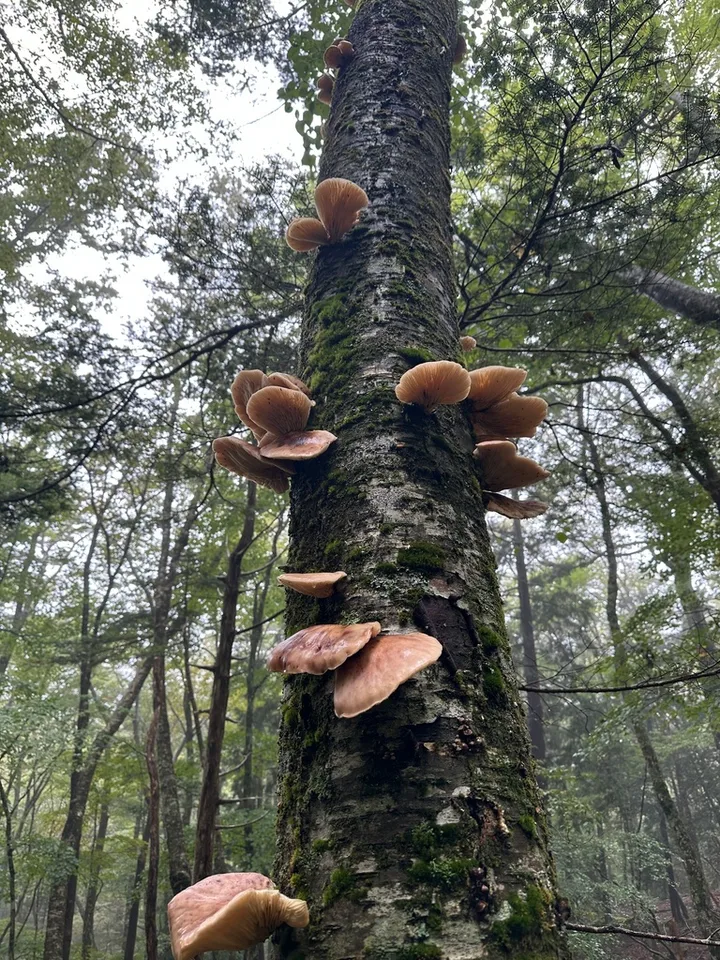
Foto yang diasosiasikan dengan Omphalotus guepiniiformis pada iNaturalist. Identifikasi mengikuti sumber; bukan penentuan spesimen independen.
Kredit dan penggunaan
(c) 岸本年郎, some rights reserved (CC BY), uploaded by 岸本年郎
Ukuran dan format gambar disesuaikan tanpa pemotongan, retus, atau penambahan skala. Lisensi sumber dipertahankan.
Sumber profil
- [1] Omphalotus japonicus — Wikipedia (en)
- [2] Omphalotus japonicus — Wikipedia (fr)
- [3] Catalogue of Life Base2026-09-11 — Omphalotus guepiniiformis
- [4] Dokumentasi visual — Omphalotus guepiniiformis
- [5] Dokumentasi visual — Omphalotus guepiniiformis
Rujukan halaman ini
Fungi. Omphalotus guepiniiformis. Rilis data fungi-2026-10-12-expansion-2. https://fungi-atlas.mgadib.chatgpt.site/jamur/omphalotus-guepiniiformis/.
Status: impor sumber; pemeriksaan editorial per profil belum selesai. Untuk klaim biologis, gunakan rujukan pada bagian terkait dan periksa konteks sumber aslinya.