Ciri dan struktur
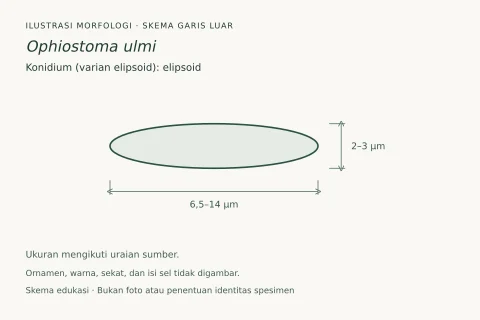
Sexual form: unknown. Asexual forms: Pesotum -like and Sporothrix -like. Pesotum -like: conidiophores macronematous, synnematous; synnemata simple, anchored into the substrate by brown rhizoid-like hyphae, (333–) 344–584 (–684) μm long including conidiogenous apparatus, the base dark brown, slightly widened, (16.7–) 17–50.5 (–65.5) μm wide, the apex cream-coloured or pale brown, slightly widening; conidia hyaline, globose to elliptical, 1-celled, smooth, (2.7–) 3.6–7.2 (–8.0) × (2.8–) 4.3–6.1 (–7.0) μm. Sporothrix -like: conidiophores semi-macronematous, mononematous, hyaline, simple or loosely branched, smooth, bearing terminal denticulate conidiogenous cells (8.3–) 15.6–30.0 (–42.5) × (1.1–) 1.7–3.1 (–4.7) μm; conidia hyaline, globose to elliptical, obovoid with pointed bases and rounded apices, 1-celled, smooth, (2.6–) 4.0–6.8 (–8.7) × (2.2–) 3.5–5.5 (–7.4) μm. Colonies on 2% MEA medium slow growing in the dark, reaching 39 mm in diam. in 8 days at 25 °C, growth rate up to 5 mm/day at the fastest; colony margin anomalous. Hyphae appressed to flocculose, black; reverse hyphae also black. Optimal growth temperature 25 °C, no growth at 5 °C and 30 °C.
Habitat dan peran ekologis
Ophiostoma tingens is a species of blue-stain fungus from the family Ophiostomataceae. It is associated with bark beetles and can be found on the sapwood of pine trees. The fungus can produce blue to dark discoloration of wood.
- Habitat atau konteks temuan
- Informasi belum tersedia pada sumber rilis ini.
- Substrat
- Informasi belum tersedia pada sumber rilis ini.
- Peran atau konteks
- Belum dikategorikan pada rilis ini.
Reproduksi
Sexual form: unknown. Asexual forms: Pesotum -like and Sporothrix -like. Pesotum -like: conidiophores macronematous, synnematous; synnemata simple, anchored into the substrate by brown rhizoid-like hyphae, (333–) 344–584 (–684) μm long including conidiogenous apparatus, the base dark brown, slightly widened, (16.7–) 17–50.5 (–65.5) μm wide, the apex cream-coloured or pale brown, slightly widening; conidia hyaline, globose to elliptical, 1-celled, smooth, (2.7–) 3.6–7.2 (–8.0) × (2.8–) 4.3–6.1 (–7.0) μm. Sporothrix -like: conidiophores semi-macronematous, mononematous, hyaline, simple or loosely branched, smooth, bearing terminal denticulate conidiogenous cells (8.3–) 15.6–30.0 (–42.5) × (1.1–) 1.7–3.1 (–4.7) μm; conidia hyaline, globose to elliptical, obovoid with pointed bases and rounded apices, 1-celled, smooth, (2.6–) 4.0–6.8 (–8.7) × (2.2–) 3.5–5.5 (–7.4) μm.
Catatan identitas dan cakupan
- Nama diterima mengikuti Catalogue of Life Base2026-09-11; uraian mempertahankan konsep dan nama sumber aslinya.
- Uraian digabungkan dari sumber spesies yang sama; lingkup geografis, bahan, dan kultur setiap sumber dipertahankan. Preserve original treatment localities, hosts and substrate scope. Materials examined describe documented specimens, not the full global range. Original geographic, specimen and life-cycle scope retained; source import awaits individual editorial review.
- Impor dan terjemahan otomatis belum diperiksa editorial per profil. Struktur reproduktif yang disebutkan tidak membuktikan seluruh siklus hidup diketahui.
- Pengukuran pada uraian mengikuti spesimen, kultur, dan metode sumber; angka tidak diperluas ke semua populasi.
Catatan distribusi dalam narasi mengikuti sumbernya. Dokumentasi spesimen atau foto mengikuti catatan sumber. Bukti wilayah Indonesia dan penilaian konservasi tidak disimpulkan dari gambar.
Melihat dengan konteks
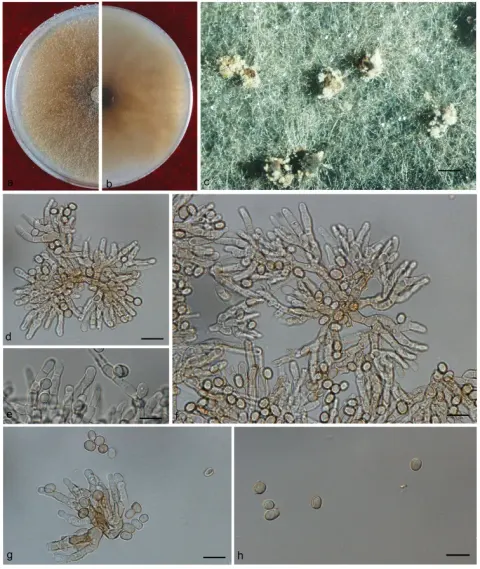
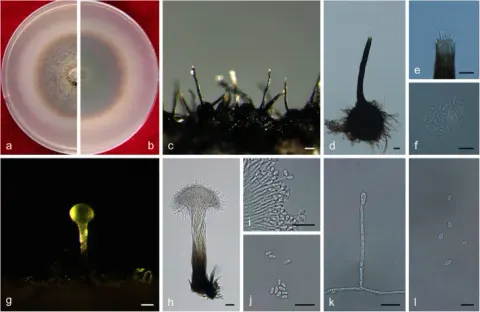
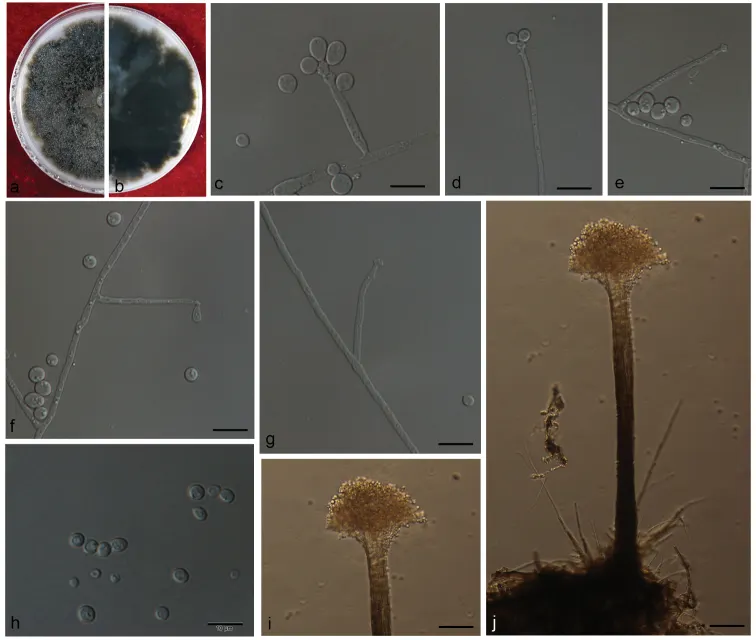
Morphological characters of Ophiostoma tingens A, B upper and reverse of cultures on 2% MEA 20 d after inoculation C–G conidiogenous cells of Sporothrix -like asexual state and conidia H–J conidiogenous cells of Pesotum -like macronematal asexual state and conidia. Scale bars: 10 μm (C–H); 50 μm (I, J).
- Jenis
- Pelat ilmiah
- Kredit
- Wang HuiMin, Zheng Wang, Fu Liu, Cheng Xu Wu, Su Fang Zhang, Xiang Bo Kong, Cony Decock, Quan Lu, Zhen Zhang
- Lisensi
- CC BY 4.0
- Sumber media
- Buka entri sumber
Sumber profil
- [1] Differential patterns of ophiostomatoid fungal communities associated with three sympatric Tomicus species infesting pines in south-western China, with a description of four new species — Ophiostoma tingens
- [2] Ophiostoma tingens — Wikipedia (en)
- [3] Catalogue of Life Base2026-09-11 — Ophiostoma tingens
- [4] Dokumentasi visual — Ophiostoma tingens
Rujukan halaman ini
Fungi. Ophiostoma tingens. Rilis data fungi-2026-10-12-expansion-2. https://fungi-atlas.mgadib.chatgpt.site/jamur/ophiostoma-tingens/.
Status: impor sumber; pemeriksaan editorial per profil belum selesai. Untuk klaim biologis, gunakan rujukan pada bagian terkait dan periksa konteks sumber aslinya.