01 / Morfologi

Ciri dan struktur

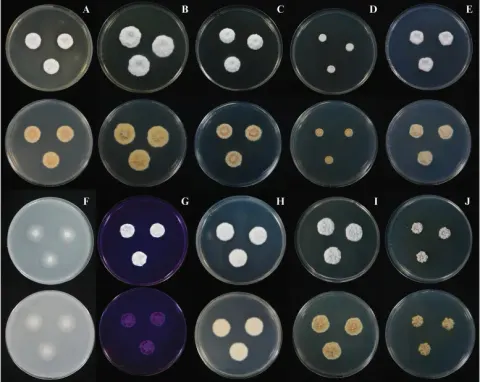
Paecilomyces variotii is fast growing, producing powdery to suede-like colonies that are yellow-brown or sand-colored. It is distinguishable from microscopically similar microfungi, such as the biverticillate members of the genus Penicillium (affiliated with the genus Talaromyces) by its broadly ellipsoidal to lemon-shaped conidia, loosely branched conidiophores and phialides with pointed tips. The colonies are usually flat, powdery to suede-like and funiculose or tufted. The color is initially white, and becomes yellow, yellow-brown, or sand-colored as they mature. A sweet aromatic odor may be associated with older cultures. Colonies of P. variotii are fast growing and mature within 3 days. Colonies grown on Sabouraud's dextrose agar reach about 7–8 mm after one week. Colonies on CYA are flat, floccose in texture, produce brown or olive brown from conidia, and range in diameter from 30 to 79 mmn in one week. Colonies on malt extract agar reach 70 mm diameter or more, otherwise very similar in appearance to those on CYA. Colonies on G25N media reach 8–16 mm diameter, similar to on CYA but with predominantly white mycelium. Microscopically, the spore-bearing structures of P. variotii consist of a loosely branched, irregularly brush-like conidiophores with phialides at the tips. The phialides are swollen at the base, and gradually taper to a sharp point at the tip. Conidia are single-celled, hyaline, and are borne in chains with the youngest at the base. Chlamydospores (thick-walled vegetative resting structures) are occasionally produced singly or in short chains. The teleomorph of Paecilomyces variotii has also been described by the name Byssochlamys spectabilis.

Sebagian uraian ditampilkan dalam bahasa sumber; terjemahannya belum tersedia atau belum lolos pemeriksaan.

Rujukan: [1]

Pengukuran mengikuti objek, spesimen atau kultur, dan metode yang disebutkan sumber. Baca uraian asli untuk konteks lengkap.

02 / Kehidupan

Habitat dan peran ekologis

This species is thermophilic, able to grow at high temperatures as high as 50–60 °C. It can withstand brief exposures of up to 15 min at 80–100 °C. Accordingly, it typically causes spoilage of food products following pasteurization or other heat-treatments (e.g., curry sauces, fruit juices). It also has been reported as a contaminant in salami and margarine. The fungus is known from a number of non-food items including compost, rubber, glue, urea-formaldehyde foam insulation and creosote-treated wooden poles. The combination of its ability to survive significant heat stress and its ability to break-down aromatic hydrocarbons has led to interest in P. variotii as a potential candidate organism to assist in bioremediation. It is also known from decaying wood and creosote-treated wood utility poles.

Sebagian uraian ditampilkan dalam bahasa sumber; terjemahannya belum tersedia atau belum lolos pemeriksaan.

Rujukan: [1]

Habitat atau konteks temuan
Informasi belum tersedia pada sumber rilis ini.
Substrat
Informasi belum tersedia pada sumber rilis ini.
Peran atau konteks
Belum dikategorikan pada rilis ini.
Temukan hubungan serupa
03 / Siklus hidup

Reproduksi

Paecilomyces variotii is fast growing, producing powdery to suede-like colonies that are yellow-brown or sand-colored. It is distinguishable from microscopically similar microfungi, such as the biverticillate members of the genus Penicillium (affiliated with the genus Talaromyces) by its broadly ellipsoidal to lemon-shaped conidia, loosely branched conidiophores and phialides with pointed tips. The colonies are usually flat, powdery to suede-like and funiculose or tufted. The color is initially white, and becomes yellow, yellow-brown, or sand-colored as they mature. A sweet aromatic odor may be associated with older cultures. Colonies of P. variotii are fast growing and mature within 3 days.

Sebagian uraian ditampilkan dalam bahasa sumber; terjemahannya belum tersedia atau belum lolos pemeriksaan.

Rujukan: [1]

Sinonim menurut acuan taksonomi rilis: Byssochlamys spectabilis; Paecilomyces spectabilis; Penicillium variotii; Talaromyces spectabilis
04 / Batas informasi

Catatan identitas dan cakupan

  • Nama diterima mengikuti Catalogue of Life Base2026-09-11; uraian mempertahankan konsep dan nama sumber aslinya.
  • Original geographic, specimen and life-cycle scope retained; source import awaits individual editorial review.
  • Impor dan terjemahan otomatis belum diperiksa editorial per profil. Struktur reproduktif yang disebutkan tidak membuktikan seluruh siklus hidup diketahui.
  • Pengukuran pada uraian mengikuti spesimen, kultur, dan metode sumber; angka tidak diperluas ke semua populasi.

Catatan distribusi dalam narasi mengikuti sumbernya. Dokumentasi spesimen atau foto mengikuti catatan sumber. Bukti wilayah Indonesia dan penilaian konservasi tidak disimpulkan dari gambar.

05 / Dokumentasi

Melihat dengan konteks

Dokumentasi visual yang memenuhi pemeriksaan subjek dan hak penggunaan belum tersedia. Foto gejala, label, dan gambar yang meragukan tidak dihitung.

06 / Rujukan

Sumber profil

  1. [1] Paecilomyces variotii — Wikipedia (en)Bagian sumber: Frozen revision 1379808933
    Tanggal penghimpunan sumber: 2026-10-12
    Teks sumber: CC BY-SA4.0 · Wikipedia contributors
  2. [2] Catalogue of Life Base2026-09-11 — Paecilomyces variotiiBagian sumber: ColDP NameUsage.tsv ID 4BWRX; accepted species; source 2073
    Tanggal penghimpunan sumber: 2026-10-12

Adaptasi teks: CC BY-SA 4.0. Wikipedia contributors — Paecilomyces variotii — Wikipedia (en)

Uraian asli dan riwayat sumber

Riwayat atau halaman sumber

Ringkasan sumber

Paecilomyces variotii, also known by the name Byssochlamys spectabilis for the sexual state, is a common environmental mold from the Phylum Ascomycota (Family Thermoascaceae). It is widespread in the environment and can be found in composts, soils and wood, as well as a common environmental contaminant in indoor air and carpet dust. Ascospores of the sexual state of P. variotii (B. spectabilis) are strongly heat-resistant. As such the fungus is a common contaminant of heat-treated foods and juices.

Revisi sumber

Morfologi sumber

Paecilomyces variotii is fast growing, producing powdery to suede-like colonies that are yellow-brown or sand-colored. It is distinguishable from microscopically similar microfungi, such as the biverticillate members of the genus Penicillium (affiliated with the genus Talaromyces) by its broadly ellipsoidal to lemon-shaped conidia, loosely branched conidiophores and phialides with pointed tips. The colonies are usually flat, powdery to suede-like and funiculose or tufted. The color is initially white, and becomes yellow, yellow-brown, or sand-colored as they mature. A sweet aromatic odor may be associated with older cultures. Colonies of P. variotii are fast growing and mature within 3 days. Colonies grown on Sabouraud's dextrose agar reach about 7–8 mm after one week. Colonies on CYA are flat, floccose in texture, produce brown or olive brown from conidia, and range in diameter from 30 to 79 mmn in one week. Colonies on malt extract agar reach 70 mm diameter or more, otherwise very similar in appearance to those on CYA. Colonies on G25N media reach 8–16 mm diameter, similar to on CYA but with predominantly white mycelium. Microscopically, the spore-bearing structures of P. variotii consist of a loosely branched, irregularly brush-like conidiophores with phialides at the tips. The phialides are swollen at the base, and gradually taper to a sharp point at the tip. Conidia are single-celled, hyaline, and are borne in chains with the youngest at the base. Chlamydospores (thick-walled vegetative resting structures) are occasionally produced singly or in short chains. The teleomorph of Paecilomyces variotii has also been described by the name Byssochlamys spectabilis.

Revisi sumber

Ekologi sumber

This species is thermophilic, able to grow at high temperatures as high as 50–60 °C. It can withstand brief exposures of up to 15 min at 80–100 °C. Accordingly, it typically causes spoilage of food products following pasteurization or other heat-treatments (e.g., curry sauces, fruit juices). It also has been reported as a contaminant in salami and margarine. The fungus is known from a number of non-food items including compost, rubber, glue, urea-formaldehyde foam insulation and creosote-treated wooden poles. The combination of its ability to survive significant heat stress and its ability to break-down aromatic hydrocarbons has led to interest in P. variotii as a potential candidate organism to assist in bioremediation. It is also known from decaying wood and creosote-treated wood utility poles.

Revisi sumber

Struktur reproduksi sumber

Paecilomyces variotii is fast growing, producing powdery to suede-like colonies that are yellow-brown or sand-colored. It is distinguishable from microscopically similar microfungi, such as the biverticillate members of the genus Penicillium (affiliated with the genus Talaromyces) by its broadly ellipsoidal to lemon-shaped conidia, loosely branched conidiophores and phialides with pointed tips. The colonies are usually flat, powdery to suede-like and funiculose or tufted. The color is initially white, and becomes yellow, yellow-brown, or sand-colored as they mature. A sweet aromatic odor may be associated with older cultures. Colonies of P. variotii are fast growing and mature within 3 days.

Revisi sumber

Rujukan halaman ini

Fungi. Paecilomyces variotii. Rilis data fungi-2026-10-12-expansion-2. https://fungi-atlas.mgadib.chatgpt.site/jamur/paecilomyces-variotii/.

Status: impor sumber; pemeriksaan editorial per profil belum selesai. Untuk klaim biologis, gunakan rujukan pada bagian terkait dan periksa konteks sumber aslinya.