01 / Morfologi

Ciri dan struktur

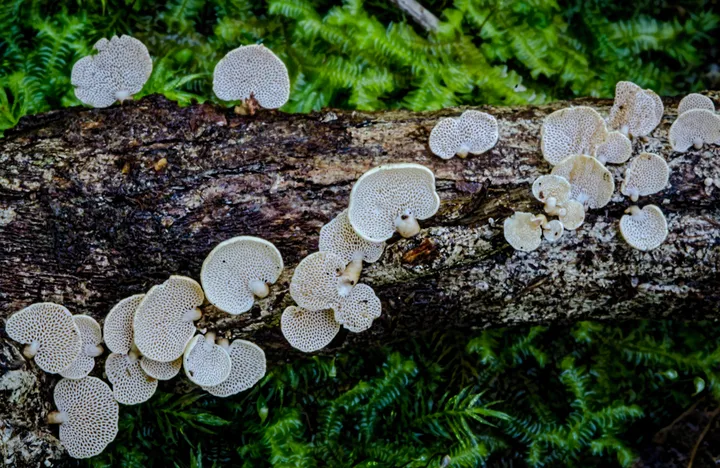
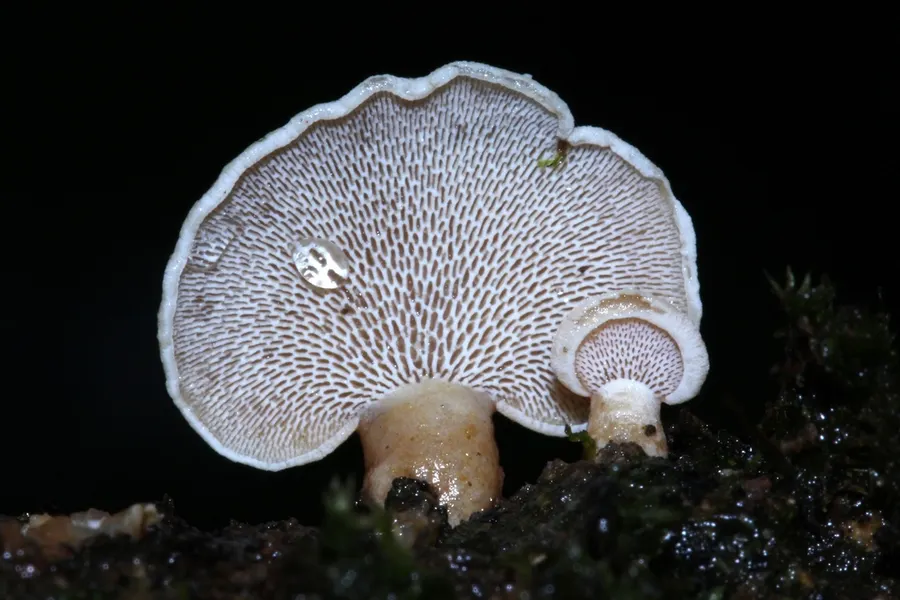
The mushroom is quite small and easy to miss in the daytime, with the widest cap reaching 16 mm. Supporting the cap is a stipe that is up to 6 mm long, 1–2 mm thick, with the base enlarged downward or nearly equal, finely pubescent, and is colored like the cap. though there hasn't been many studies done on its potential toxicity. The spores are 4.5-6 x 2-3 μm in diameter, oblong to ellipsoid, smooth-walled, hyaline, and amyloid. It's hyphal system is monomitic, with present clamp connections. The basidia is roughly 13-15 x 4.5-5 μm.

Sebagian uraian ditampilkan dalam bahasa sumber; terjemahannya belum tersedia atau belum lolos pemeriksaan.

Rujukan: [1]

Pengukuran mengikuti objek, spesimen atau kultur, dan metode yang disebutkan sumber. Baca uraian asli untuk konteks lengkap.

02 / Kehidupan

Habitat dan peran ekologis

P. pusillus has been on almost every continent except Africa and Antarctica. It is distributed mostly in Florida where it receives a lot of humidity, often growing in dense groups and overlapping clusters on decaying broadleaves in the shade. (Wassink 1979) It tends to favor hardwoods, but it has been reported growing on rotten culm of bamboo, eucalyptus, and even pine. P. pusillus is a saprobic species and causes a white rot. This is a form of wood decay in which the wood assumes a bleached appearance and where lignin as well as cellulose and hemicellulose is broken down by enzymes secreted by the fungus.

Sebagian uraian ditampilkan dalam bahasa sumber; terjemahannya belum tersedia atau belum lolos pemeriksaan.

Rujukan: [1]

Habitat atau konteks temuan
Informasi belum tersedia pada sumber rilis ini.
Substrat
Informasi belum tersedia pada sumber rilis ini.
Peran atau konteks
Pengurai
Temukan hubungan serupa
03 / Siklus hidup

Reproduksi

The spores are 4.5-6 x 2-3 μm in diameter, oblong to ellipsoid, smooth-walled, hyaline, and amyloid. It's hyphal system is monomitic, with present clamp connections. The basidia is roughly 13-15 x 4.5-5 μm.

Sebagian uraian ditampilkan dalam bahasa sumber; terjemahannya belum tersedia atau belum lolos pemeriksaan.

Rujukan: [1]

Sinonim menurut acuan taksonomi rilis: Dictyopanus copelandii; Dictyopanus gloeocystidiatus; Dictyopanus pusillus; Dictyopanus pusillus var. pseudorhipidium; Dictyopanus pusillus var. rhipidium; Dictyopanus pusillus var. sublamellatus; Dictyopanus rhipidium; Dictyopanus subpulverulentus; Favolaschia guaranitica; Favolaschia rhipidium; Favolaschia subpulverulenta; Favolus granulosus; Favolus pusillus var. pallidus; Favolus rhipidium; Favolus rhipidium subsp. subpulverulentus; Favolus rhipidium var. pusillus; Gloeoporus guaraniticus; Gloeoporus pusillus; Gloeoporus rhipidium; Laschia guaranitica; Panellus copelandii; Panellus gloeocystidiatus; Petaloides rhipidium; Polyporus diminutus; Polyporus rhipidium; Polyporus rhipidium f. pusillus; Polyporus rhipidium var. pusillus; Polyporus subpulverulentus; Polystictus rhipidium
04 / Batas informasi

Catatan identitas dan cakupan

  • Nama diterima mengikuti Catalogue of Life Base2026-09-11; uraian mempertahankan konsep dan nama sumber aslinya.
  • Original geographic, specimen and life-cycle scope retained; source import awaits individual editorial review.
  • Impor dan terjemahan otomatis belum diperiksa editorial per profil. Struktur reproduktif yang disebutkan tidak membuktikan seluruh siklus hidup diketahui.
  • Pengukuran pada uraian mengikuti spesimen, kultur, dan metode sumber; angka tidak diperluas ke semua populasi.

Catatan distribusi dalam narasi mengikuti sumbernya. Dokumentasi spesimen atau foto mengikuti catatan sumber. Bukti wilayah Indonesia dan penilaian konservasi tidak disimpulkan dari gambar.

05 / Dokumentasi

Melihat dengan konteks

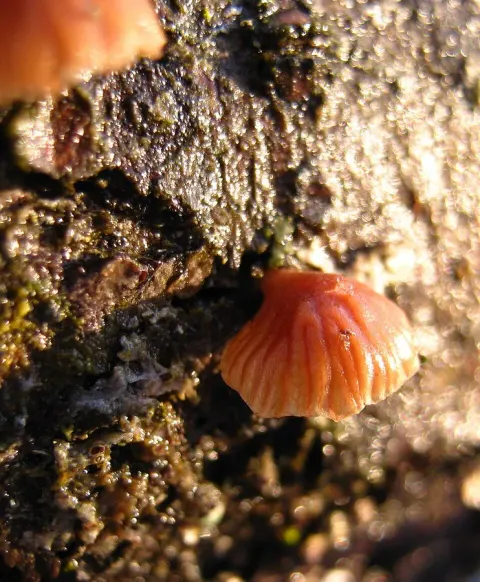
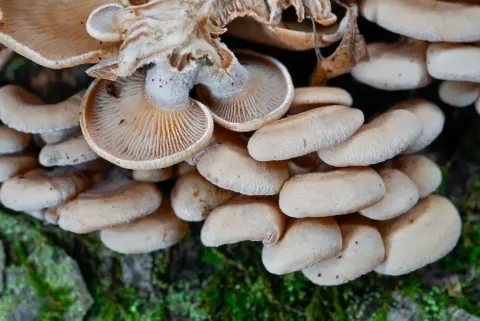
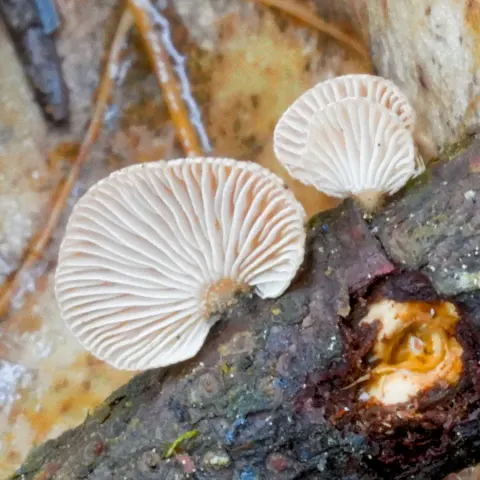
Dokumentasi Panellus pusillus menurut asosiasi foto pada record takson iNaturalist. Kredit: Alan Rockefeller. Identitas mengikuti sumber; bukan penentuan spesimen independen.

Jenis
Fotografi
Kredit
(c) Alan Rockefeller, some rights reserved (CC BY), uploaded by Alan Rockefeller
Lisensi
CC BY 4.0
Sumber media
Buka entri sumber

Gambar menunjukkan objek menurut identifikasi sumber, bukan verifikasi independen spesimen oleh Fungi. Tidak ada skala baru yang ditambahkan.

Dokumentasi tambahan

06 / Rujukan

Sumber profil

  1. [1] Panellus pusillus — Wikipedia (en)Bagian sumber: Frozen revision 1358992966
    Tanggal penghimpunan sumber: 2026-10-12
    Teks sumber: CC BY-SA4.0 · Wikipedia contributors
  2. [2] Catalogue of Life Base2026-09-11 — Panellus pusillusBagian sumber: ColDP NameUsage.tsv ID 4CC6K; accepted species; source 2073
    Tanggal penghimpunan sumber: 2026-10-12
  3. [3] Dokumentasi visual — Panellus pusillusBagian sumber: Identitas mengikuti sumber dokumentasi; bukan penentuan spesimen independen.
    Tanggal penghimpunan sumber: 2026-10-17
    Media sumber: CC BY 4.0 · (c) Alan Rockefeller, some rights reserved (CC BY), uploaded by Alan Rockefeller
  4. [4] Dokumentasi visual — Panellus pusillusBagian sumber: Identitas mengikuti sumber dokumentasi; bukan penentuan spesimen independen.
    Tanggal penghimpunan sumber: 2026-10-17
    Teks sumber: CC BY-SA 4.0 · (c) Ian Dodd (kk) (www.kundabungkid.com) Australia (kundabungkid), some rights reserved (CC BY-SA)

Adaptasi teks: CC BY-SA 4.0. Wikipedia contributors — Panellus pusillus — Wikipedia (en)

Uraian asli dan riwayat sumber

Riwayat atau halaman sumber

Ringkasan sumber

The mushroom develops into flat and broadly round fan- or kidney-shaped caps that measure up to 16 mm broad. The caps go from white to buffish color, and attached to decaying by short stubby stalks that are connected off-center, giving the mushroom it's fan look. Its luminosity has been known for more than half a century and is observable in the fruiting body as well as mycelia both in the wild and in laboratory cultures. The glow is rather weak and requires time to adjust to the dark to be able to notice it, and it isn't often photographed.

Revisi sumber

Morfologi sumber

The mushroom is quite small and easy to miss in the daytime, with the widest cap reaching 16 mm. Supporting the cap is a stipe that is up to 6 mm long, 1–2 mm thick, with the base enlarged downward or nearly equal, finely pubescent, and is colored like the cap. though there hasn't been many studies done on its potential toxicity. The spores are 4.5-6 x 2-3 μm in diameter, oblong to ellipsoid, smooth-walled, hyaline, and amyloid. It's hyphal system is monomitic, with present clamp connections. The basidia is roughly 13-15 x 4.5-5 μm.

Revisi sumber

Ekologi sumber

P. pusillus has been on almost every continent except Africa and Antarctica. It is distributed mostly in Florida where it receives a lot of humidity, often growing in dense groups and overlapping clusters on decaying broadleaves in the shade. (Wassink 1979) It tends to favor hardwoods, but it has been reported growing on rotten culm of bamboo, eucalyptus, and even pine. P. pusillus is a saprobic species and causes a white rot. This is a form of wood decay in which the wood assumes a bleached appearance and where lignin as well as cellulose and hemicellulose is broken down by enzymes secreted by the fungus.

Revisi sumber

Struktur reproduksi sumber

The spores are 4.5-6 x 2-3 μm in diameter, oblong to ellipsoid, smooth-walled, hyaline, and amyloid. It's hyphal system is monomitic, with present clamp connections. The basidia is roughly 13-15 x 4.5-5 μm.

Revisi sumber

Rujukan halaman ini

Fungi. Panellus pusillus. Rilis data fungi-2026-10-12-expansion-2. https://fungi-atlas.mgadib.chatgpt.site/jamur/panellus-pusillus/.

Status: impor sumber; pemeriksaan editorial per profil belum selesai. Untuk klaim biologis, gunakan rujukan pada bagian terkait dan periksa konteks sumber aslinya.