Ciri dan struktur
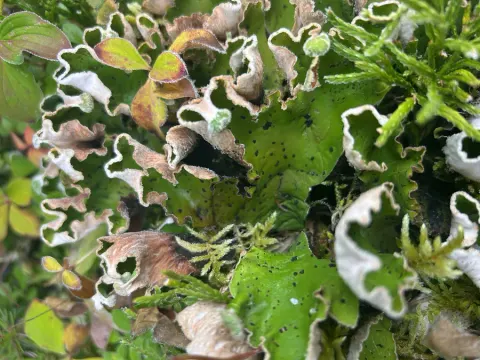
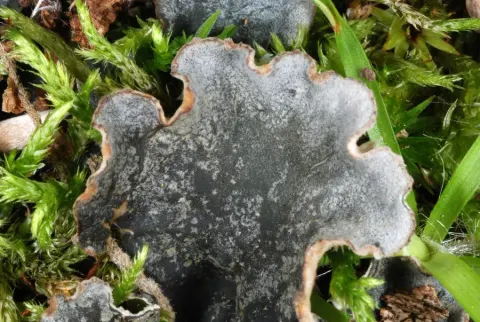
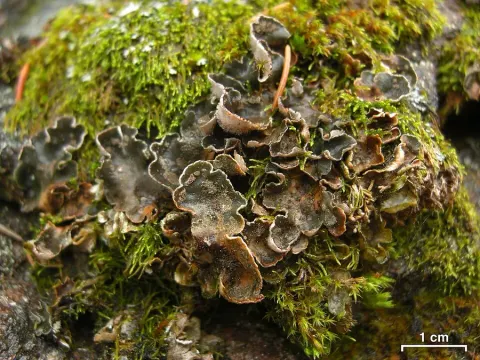
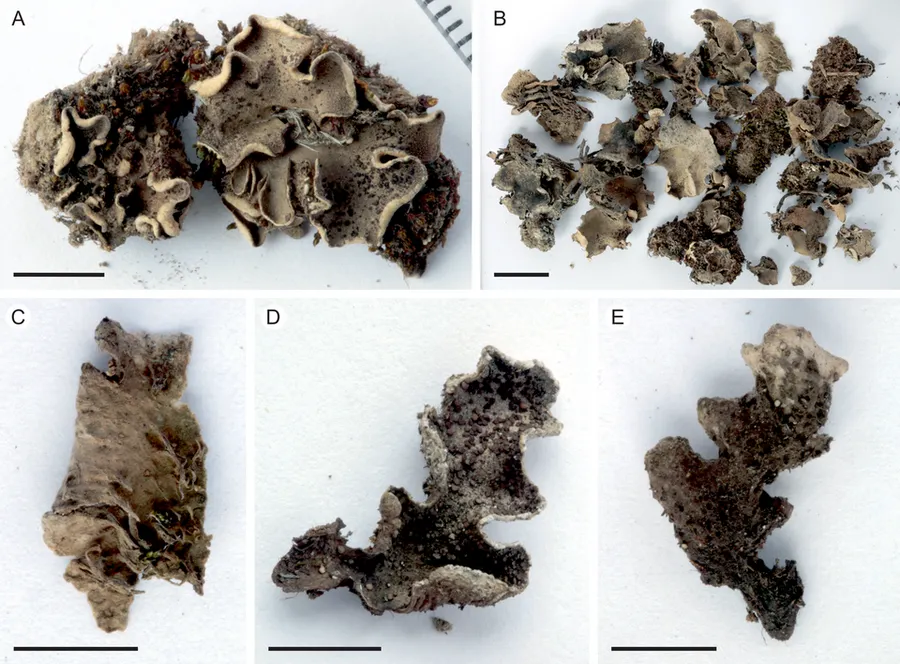
Peltigera alkalicola forms a small thallus, typically 1 – 5 cm in diameter, but usually smaller, about 1 – 2 cm. It has thick, rounded to elongate that are up to 1–2 cm long and 1 cm wide. The lobes often have rounded ends with upturned margins and may appear slightly crisped. The upper surface is , often slightly , and greyish-brown in colour. In contrast, the lower surface is generally white to pale brown, with that are the same colour or slightly darker and rhizines that are more abundant centrally, becoming shorter near the margins. This species develops isidia, which are small, dark brown to almost black outgrowths on the upper surface that are distinctly darker than the thallus surface. The species does not typically produce apothecia (sexual reproductive structures) or pycnidia (asexual reproductive structures), and no secondary metabolites (lichen products) have been detected by thin-layer chromatography. All standard chemical spot tests are negative.
Habitat dan peran ekologis
Peltigera alkalicola is found in high-elevation habitats, specifically in open, subalpine and alpine heathlands at elevations between 3940 and 4390 m. It is adapted to growing on trachybasaltic volcanic rock, a type of alkaline , and is often associated with sparse vegetation and bryophytes. At the time of its original publication, the species was known to occur only from a few locations on Mt Kilimanjaro and is considered rare. The collection sites for Peltigera alkalicola receive between 900 and 1100 mm of rainfall annually, maintain a relative humidity of 60 to 80%, and have an average annual temperature of 4 C. Initially discovered in Tanzania, genetic analysis suggests that Peltigera alkalicola may also be present in Alaska, USA, and Ningxia, China, indicating a wider distribution across diverse and extreme habitats. This distribution pattern highlights the species' preference for cold, montane regions and alkaline substrata.
- Habitat atau konteks temuan
- Informasi belum tersedia pada sumber rilis ini.
- Substrat
- Informasi belum tersedia pada sumber rilis ini.
- Peran atau konteks
- Pembentuk liken
Reproduksi
Peltigera alkalicola forms a small thallus, typically 1 – 5 cm in diameter, but usually smaller, about 1 – 2 cm. It has thick, rounded to elongate that are up to 1–2 cm long and 1 cm wide. The lobes often have rounded ends with upturned margins and may appear slightly crisped. The upper surface is , often slightly , and greyish-brown in colour. In contrast, the lower surface is generally white to pale brown, with that are the same colour or slightly darker and rhizines that are more abundant centrally, becoming shorter near the margins. This species develops isidia, which are small, dark brown to almost black outgrowths on the upper surface that are distinctly darker than the thallus surface.
Catatan identitas dan cakupan
- Nama diterima mengikuti Catalogue of Life Base2026-09-11; uraian mempertahankan konsep dan nama sumber aslinya.
- Original geographic, specimen and life-cycle scope retained; source import awaits individual editorial review.
- Impor dan terjemahan otomatis belum diperiksa editorial per profil. Struktur reproduktif yang disebutkan tidak membuktikan seluruh siklus hidup diketahui.
- Pengukuran pada uraian mengikuti spesimen, kultur, dan metode sumber; angka tidak diperluas ke semua populasi.
Catatan distribusi dalam narasi mengikuti sumbernya. Dokumentasi spesimen atau foto mengikuti catatan sumber. Bukti wilayah Indonesia dan penilaian konservasi tidak disimpulkan dari gambar.
Melihat dengan konteks
Dokumentasi Peltigera alkalicola dari Wikimedia Commons. The type specimen of the foliose lichen Peltigera alkalicola Kaasalainen (2017). Collected in Kilimanjaro National Park, Tanzania, on 8 June 2017. A, UK171254d (TYPE) from alpine Helichrysum heath, 4390 m alt. B, remainder of the same collection as the type specimen. C, lower surface and rhizines (specimen from the same collection as the type). D & E, UK171041b from disturbed Erica forest, 3940 m alt. Scales: A, C–E = 0.5 cm; B = 1 cm. Identifikasi mengikuti record berkas sumber.
- Jenis
- Fotografi
- Kredit
- Ulla Kaasalainen
- Lisensi
- CC BY-SA 4.0
- Sumber media
- Buka entri sumber
Sumber profil
- [1] Peltigera alkalicola — Wikipedia (en)
- [2] Catalogue of Life Base2026-09-11 — Peltigera alkalicola
- [3] Dokumentasi visual — Peltigera alkalicola
Rujukan halaman ini
Fungi. Peltigera alkalicola. Rilis data fungi-2026-10-12-expansion-2. https://fungi-atlas.mgadib.chatgpt.site/jamur/peltigera-alkalicola/.
Status: impor sumber; pemeriksaan editorial per profil belum selesai. Untuk klaim biologis, gunakan rujukan pada bagian terkait dan periksa konteks sumber aslinya.