Ciri dan struktur
Diagnosis: This new species is different from the similar species P. boletiformis in more yellow–green umbilici and larger conidia. Description: Thallus saxicolous, squamulose-subfruticose, loosely or tightly clustered, up to 1.5 mm in diameter, 2 mm high, stalk 0.9 mm long in average, twisted, orange to tan; lobes circular, elliptical to angular and irregular, top almost flattened, margin entire; upper surface dark olive-green, smooth, epruinose; attached the substrate by umbilicus, isidia and soredia absent. Lobes 350–600 μm thick, upper cortex not developed, with a thin yellowish epinecral layer, 5–8 μm thick; the algal layer of immature thalli 57.5–67.3 μm thick, medulla with interwoven hyphae and small air spaces and lower cortex not clear, made up of several layers of circular cells; later algal layer encircled, 119–240 μm thick, algae in clumps of 1–4 cells, cells up to 13 × 15 μm in diameter, medulla with rare and loose hyphae and big hollow areas, hyphae 2.5–3.3 μm wide. Apothecia 1 or 2 per squamule, immersed and punctiform. Epihymenium yellow; hymenium 95–215 μm tall, paraphyses 1.5–2 μm wide, I+ wine red, K-; subhymenium up to 100 μm tall, IKI+ blue after K pretreatment; asci clavate to obclavate, 70–95 × 18–20.5 μm, with a lacerate gelatinous sheath, more than 100 spores, ascus wall IKI+ blue after K pretreatment; ascospores hyaline, ellipsoid, simple, 4.5–5.5 × 3–3.8 μm. Pycnidia immersed, cerebriform. Conidia ellipsoid, hyaline, 3.5–4.1(4.5) × 1.6–2.3 μm.
Habitat dan peran ekologis
Habitat and distribution: This species colonizes on calcareous rocks exposed to the sun, and is often in the grooves of the stone where rainwater and soil occasionally accumulate. It is known only in China up to now.
- Habitat atau konteks temuan
- Informasi belum tersedia pada sumber rilis ini.
- Substrat
- Informasi belum tersedia pada sumber rilis ini.
- Peran atau konteks
- Pembentuk liken
Reproduksi
Diagnosis: This new species is different from the similar species P. boletiformis in more yellow–green umbilici and larger conidia. Description: Thallus saxicolous, squamulose-subfruticose, loosely or tightly clustered, up to 1.5 mm in diameter, 2 mm high, stalk 0.9 mm long in average, twisted, orange to tan; lobes circular, elliptical to angular and irregular, top almost flattened, margin entire; upper surface dark olive-green, smooth, epruinose; attached the substrate by umbilicus, isidia and soredia absent. Lobes 350–600 μm thick, upper cortex not developed, with a thin yellowish epinecral layer, 5–8 μm thick; the algal layer of immature thalli 57.5–67.3 μm thick, medulla with interwoven hyphae and small air spaces and lower cortex not clear, made up of several layers of circular cells; later algal layer encircled, 119–240 μm thick, algae in clumps of 1–4 cells, cells up to 13 × 15 μm in diameter, medulla with rare and loose hyphae and big hollow areas, hyphae 2.5–3.3 μm wide.
Catatan identitas dan cakupan
- Nama diterima mengikuti Catalogue of Life Base2026-09-11; uraian mempertahankan konsep dan nama sumber aslinya.
- Preserve original treatment localities, hosts and substrate scope. Materials examined describe documented specimens, not the full global range.
- Impor dan terjemahan otomatis belum diperiksa editorial per profil. Struktur reproduktif yang disebutkan tidak membuktikan seluruh siklus hidup diketahui.
- Pengukuran pada uraian mengikuti spesimen, kultur, dan metode sumber; angka tidak diperluas ke semua populasi.
Catatan distribusi dalam narasi mengikuti sumbernya. Dokumentasi spesimen atau foto mengikuti catatan sumber. Bukti wilayah Indonesia dan penilaian konservasi tidak disimpulkan dari gambar.
Melihat dengan konteks
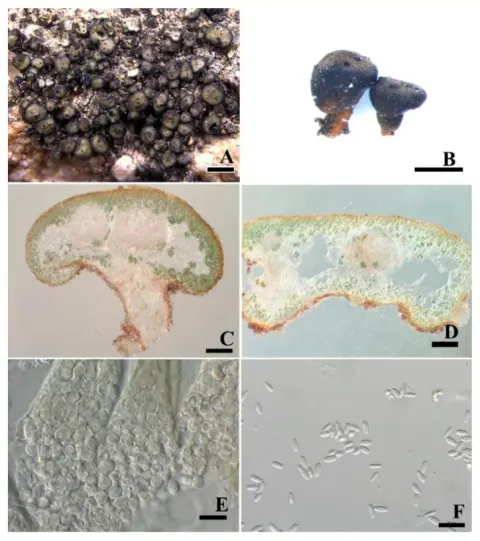
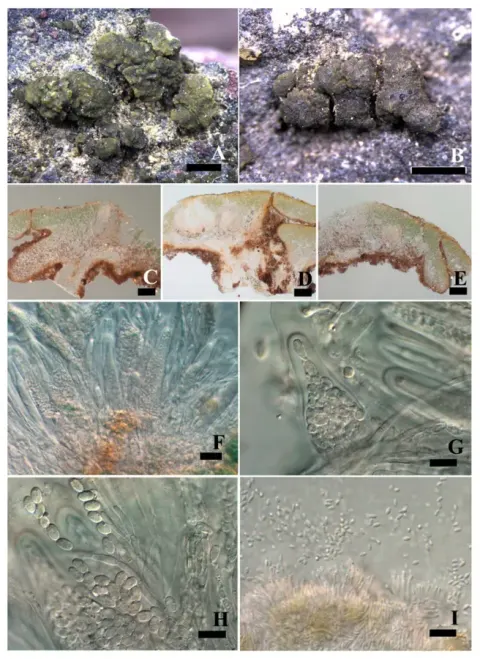
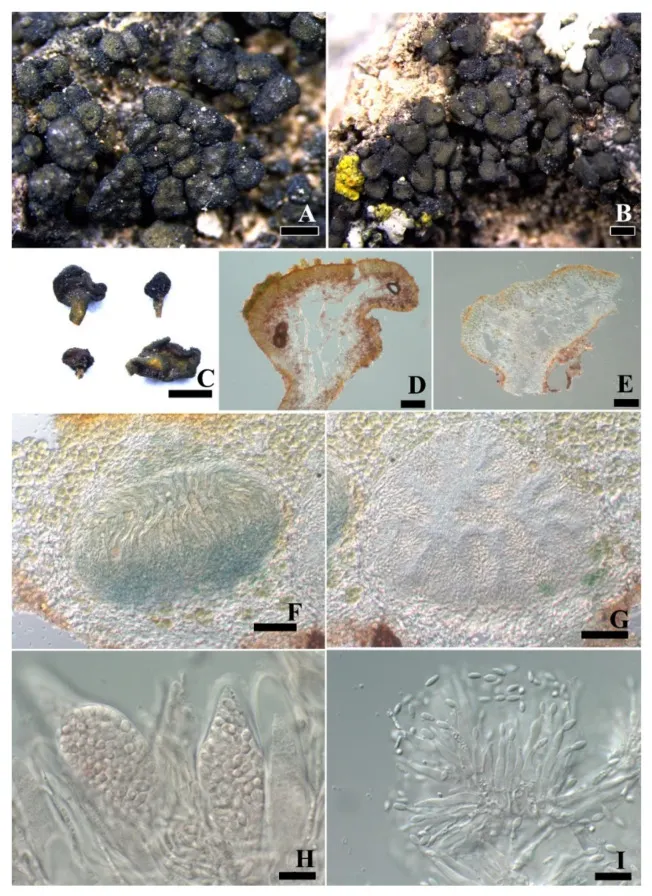
The thallus habit and the anatomic structure of Peltula pseudoboletiformis (holotype). (A, B). Squamulose thallus. (C). Side view of thallus with a stalk. (D, E). Thallus section with endolichenic fruiting bodies and algal layer encircled. (F). Immature fruiting body. (G). Immersed pycnidia. (H). Polysporous asci and elliptical ascospores. (I). Conidia. Bars: (A, B) = 0.5 mm, (C) = 1 mm, (D, E) = 100 μm, (F, G) = 50 μm, (H, I) = 10 μm.
- Jenis
- Pelat ilmiah
- Kredit
- © 2022 by the authors.
- Lisensi
- CC BY 4.0
- Sumber media
- Buka entri sumber
Sumber profil
- [1] Five New Species of the Lichen-Forming Fungal Genus Peltula from China — Peltula pseudoboletiformis
- [2] Catalogue of Life Base2026-09-11 — Peltula pseudoboletiformis
- [3] Dokumentasi visual — Peltula pseudoboletiformis
Rujukan halaman ini
Fungi. Peltula pseudoboletiformis. Rilis data fungi-2026-10-12-expansion-2. https://fungi-atlas.mgadib.chatgpt.site/jamur/peltula-pseudoboletiformis/.
Status: impor sumber; pemeriksaan editorial per profil belum selesai. Untuk klaim biologis, gunakan rujukan pada bagian terkait dan periksa konteks sumber aslinya.