Ciri dan struktur
Hymenophore annual, coriaceous, pileate. Pilei stipitate, flabelliform with excentric stems, or campanulate with central stems, usually aggregated into groups of 3-5 with free stems but fused margins, sometimes forming rosettes, less frequently solitary, 2-5 cm tall, 1-5 cm radius. Pileus surface black, glabrous, radiately sulcate; margin incurved, thin, lobed or complicate. Hymenial surface black, tinted olivaceous, with a broad sterile border. Stems 0.5-2 cm x 1-5 mm, concolorous, flattened or terete, solid, glabrous save towards the base where sometimes tomentose, arising from a common mycelial mass. Spines decurrent, 0.5-2 mm long, subulate, terete, crowded, black with an olivaceous tinge. Context 0.5-1.5 mm thick, black, shining, composed of parallel hyphae firmly compacted; generative hyphae 3.5-4.5 µ diameter, walls 0.2 µ thick, coloured with black pigment granules, sparsely branched, septate, without clamp connexions. Hymenial layer to 30µ deep, a dense palisade of basidia and paraphyses. Basidia subclavate, 18-22 x 5-6 µ, 2-4-spored; sterigmata erect, slender, to 4 µ long. Paraphyses subclavate, 16-20 x 5-6 µ. Spores globose, 4-5 µ diameter (with spines 5-6 µ), walls moderately verruculose (spines 0.5 µ long), hyaline, 0.1 µ thick.
Habitat dan peran ekologis
Plants commonly grow in crowded groups with stems free but margins fused to form rosettes, when pilei are flabelliform with excentric or lateral stems. Solitary pilei are usually campanulate with central stems. The entire plant is black when dry, colour being produced from black pigment granules embedded in walls of hyphae. Purple when they first emerge from the humus under beech trees, plants rapidly change to fuscous, then black. When fertile the hymenial surface assumes an olivaceous tinge, when sterile it also is black. Spores are globose with hyaline and finely verruculose walls, spines being about 0.5 µ long. Even after long keeping in the herbarium, plants possess a strong odour of aniseed. Collections match the type in Kew herbarium, which consists of five specimens in excellent condition, collected by Dr. Sinclair at Maungatua in 1860.
- Habitat atau konteks temuan
- Informasi belum tersedia pada sumber rilis ini.
- Substrat
- Informasi belum tersedia pada sumber rilis ini.
- Peran atau konteks
- Belum dikategorikan pada rilis ini.
Reproduksi
Hymenophore annual, coriaceous, pileate. Pilei stipitate, flabelliform with excentric stems, or campanulate with central stems, usually aggregated into groups of 3-5 with free stems but fused margins, sometimes forming rosettes, less frequently solitary, 2-5 cm tall, 1-5 cm radius. Pileus surface black, glabrous, radiately sulcate; margin incurved, thin, lobed or complicate. Hymenial surface black, tinted olivaceous, with a broad sterile border. Stems 0.5-2 cm x 1-5 mm, concolorous, flattened or terete, solid, glabrous save towards the base where sometimes tomentose, arising from a common mycelial mass. Spines decurrent, 0.5-2 mm long, subulate, terete, crowded, black with an olivaceous tinge.
Catatan identitas dan cakupan
- Nama diterima mengikuti Catalogue of Life Base2026-09-11; uraian mempertahankan konsep dan nama sumber aslinya.
- Historical description as cited by BiotaNZ. Preserve explicit New Zealand/locality, host and specimen qualifiers. Distribution is the cited source scope, not a current global range.
- Impor dan terjemahan otomatis belum diperiksa editorial per profil. Struktur reproduktif yang disebutkan tidak membuktikan seluruh siklus hidup diketahui.
- Pengukuran pada uraian mengikuti spesimen, kultur, dan metode sumber; angka tidak diperluas ke semua populasi.
Catatan distribusi dalam narasi mengikuti sumbernya. Dokumentasi spesimen atau foto mengikuti catatan sumber. Bukti wilayah Indonesia dan penilaian konservasi tidak disimpulkan dari gambar.
Melihat dengan konteks
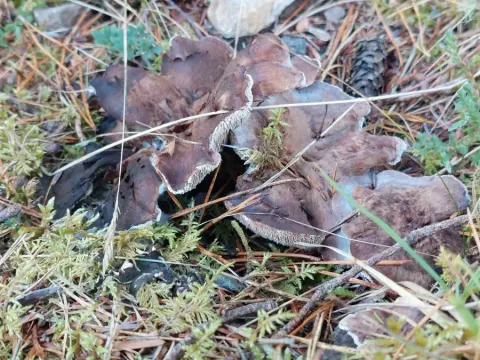
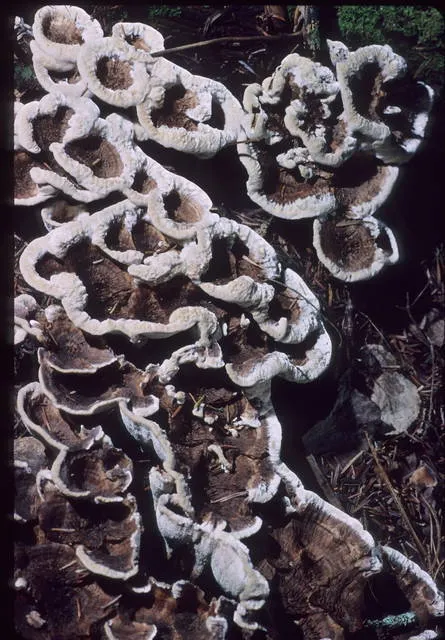
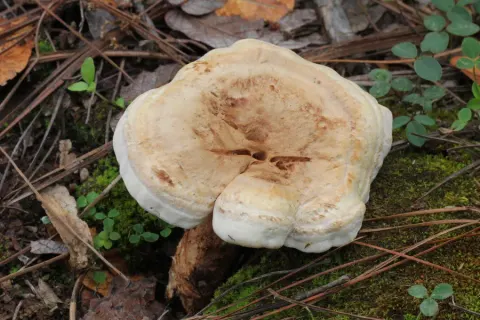
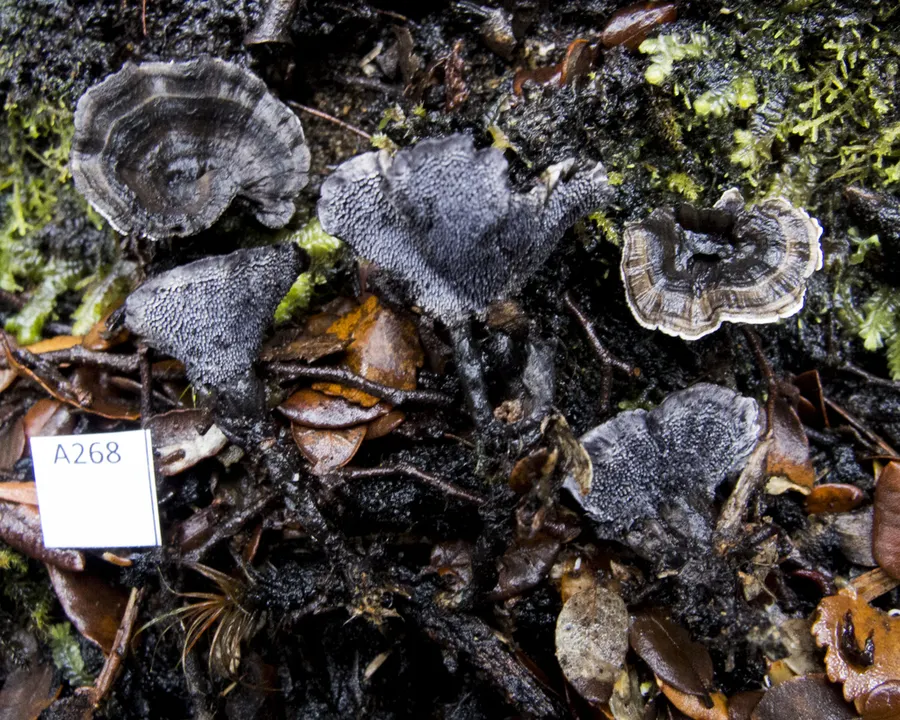
Dokumentasi Phellodon sinclairii menurut asosiasi foto pada record takson iNaturalist. Kredit: Jerry Cooper. Identitas mengikuti sumber; bukan penentuan spesimen independen.
- Jenis
- Fotografi
- Kredit
- (c) Jerry Cooper, some rights reserved (CC BY), uploaded by Jerry Cooper
- Lisensi
- CC BY 4.0
- Sumber media
- Buka entri sumber
Dokumentasi tambahan
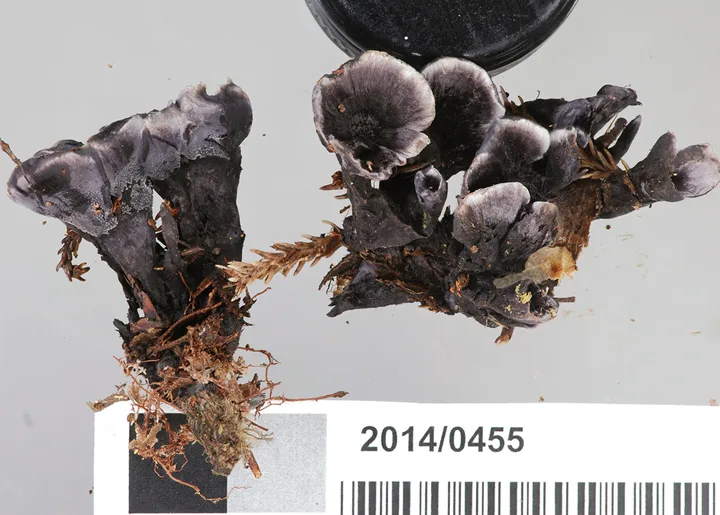
Foto yang diasosiasikan dengan Phellodon sinclairii pada iNaturalist. Identifikasi mengikuti sumber; bukan penentuan spesimen independen.
Kredit dan penggunaan
(c) Jerry Cooper, some rights reserved (CC BY), uploaded by Jerry Cooper
Ukuran dan format gambar disesuaikan tanpa pemotongan, retus, atau penambahan skala. Lisensi sumber dipertahankan.
Sumber profil
- [1] Cunningham, G.H. 1958: Hydnaceae of New Zealand. Part I. The pileate genera Beenakia, Dentinum, Hericium, Hydnum, Phellodon and Steccherinum. Transactions of the Royal Society of New Zealand 85(4): 585-601. — Phellodon sinclairii
- [2] Catalogue of Life Base2026-09-11 — Phellodon sinclairii
- [3] Dokumentasi visual — Phellodon sinclairii
- [4] Dokumentasi visual — Phellodon sinclairii
Rujukan halaman ini
Fungi. Phellodon sinclairii. Rilis data fungi-2026-10-12-expansion-2. https://fungi-atlas.mgadib.chatgpt.site/jamur/phellodon-sinclairii/.
Status: impor sumber; pemeriksaan editorial per profil belum selesai. Untuk klaim biologis, gunakan rujukan pada bagian terkait dan periksa konteks sumber aslinya.