Ciri dan struktur
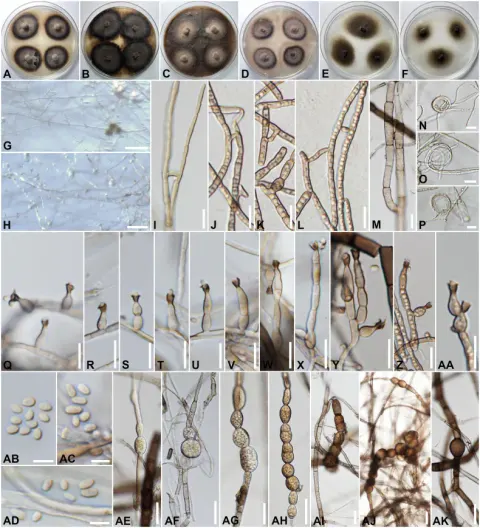
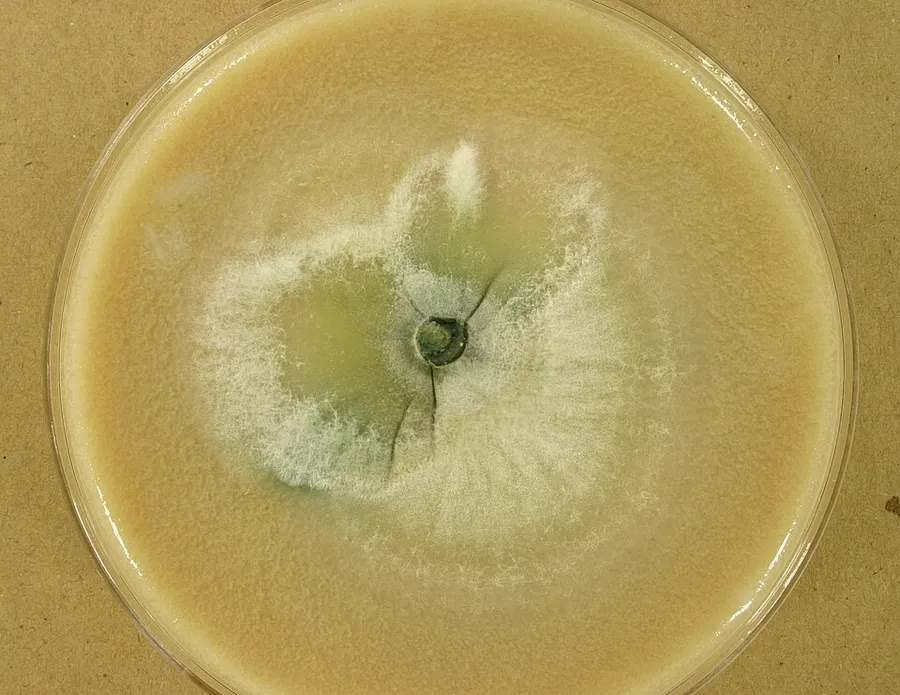
In culture, colonies of P. obovatum begin as white or off-white in colour becoming pale green and centrally darkened with age. The green pigments diffuse into the growth medium ultimately becoming blackish-green in colour. Although the hyphae of the fungus are typically colourless (hyaline), the presence of these dark diffusible pigments has resulted in this species being considered one of the dematiaceous ( filamentous, darkly-pigmented) fungi. This placement may be further justified by the confirmation of melanin pigments in hyphal walls and septa as demonstrated by the Fontana–Masson staining procedure. These melanins are responsible for the slight dark coloration of hyphae and conidia as well as the dark colours seen in the center of the colonies. Gams and McGinnis described P. obovatum as having a flat, smooth colony texture with hyphal strands that radiate outwards described as floccose (fluffy or cottony). Colonies of this species appear moist and lack a distinctive odour. The fungus produces droplets of smooth-walled, obovate conidia with a narrow base. Their shape is similar to a tear drop or an egg-like shape. Phialemonium obovatum conidia arise from adelophialides (phialides lacking a basal septum) that do not have a collarette. Conidia are typically produced only at the interface of the medium surface and the air, and are rarely present on submerged or aerial hyphae. Phialemonium obovatum grows optimally between 24–33 C although it can grow at temperatures as low as 15 C and as high as 40 C.
Habitat dan peran ekologis
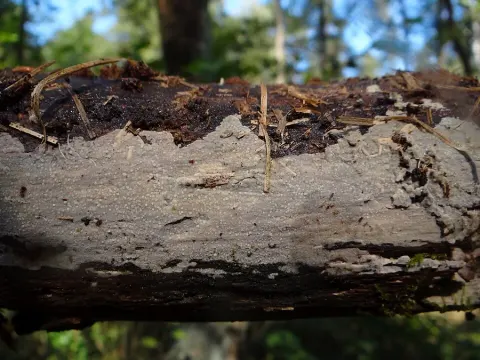
Phialemonium obovatum is a saprotrophic filamentous fungus able to cause opportunistic infections in humans with weakened immune systems. P. obovatum is widespread throughout the environment, occurring commonly in sewage, soil, air and water. Currently, three species of Phialemonium are recognized of which P. obovatum is the only one to produce greenish colonies and obovate conidia. It has been investigated as one of several microfungi with potential use in the accelerated aging of wine.
- Habitat atau konteks temuan
- Informasi belum tersedia pada sumber rilis ini.
- Substrat
- Informasi belum tersedia pada sumber rilis ini.
- Peran atau konteks
- Pengurai
Reproduksi
In culture, colonies of P. obovatum begin as white or off-white in colour becoming pale green and centrally darkened with age. The green pigments diffuse into the growth medium ultimately becoming blackish-green in colour. Although the hyphae of the fungus are typically colourless (hyaline), the presence of these dark diffusible pigments has resulted in this species being considered one of the dematiaceous ( filamentous, darkly-pigmented) fungi. This placement may be further justified by the confirmation of melanin pigments in hyphal walls and septa as demonstrated by the Fontana–Masson staining procedure. These melanins are responsible for the slight dark coloration of hyphae and conidia as well as the dark colours seen in the center of the colonies.
Catatan identitas dan cakupan
- Nama diterima mengikuti Catalogue of Life Base2026-09-11; uraian mempertahankan konsep dan nama sumber aslinya.
- Original geographic, specimen and life-cycle scope retained; source import awaits individual editorial review.
- Impor dan terjemahan otomatis belum diperiksa editorial per profil. Struktur reproduktif yang disebutkan tidak membuktikan seluruh siklus hidup diketahui.
- Pengukuran pada uraian mengikuti spesimen, kultur, dan metode sumber; angka tidak diperluas ke semua populasi.
Catatan distribusi dalam narasi mengikuti sumbernya. Dokumentasi spesimen atau foto mengikuti catatan sumber. Bukti wilayah Indonesia dan penilaian konservasi tidak disimpulkan dari gambar.
Melihat dengan konteks
Dokumentasi Phialemonium obovatum dari Wikimedia Commons. Phialemonium obovatum UAMH 4962 grown on cereal agar for 14 days at 25 C. Identifikasi mengikuti record berkas sumber.
- Jenis
- Fotografi
- Kredit
- Medmyco
- Lisensi
- CC BY-SA 4.0
- Sumber media
- Buka entri sumber
Sumber profil
- [1] Phialemonium obovatum — Wikipedia (en)
- [2] Catalogue of Life Base2026-09-11 — Phialemonium obovatum
- [3] Dokumentasi visual — Phialemonium obovatum
Rujukan halaman ini
Fungi. Phialemonium obovatum. Rilis data fungi-2026-10-12-expansion-2. https://fungi-atlas.mgadib.chatgpt.site/jamur/phialemonium-obovatum/.
Status: impor sumber; pemeriksaan editorial per profil belum selesai. Untuk klaim biologis, gunakan rujukan pada bagian terkait dan periksa konteks sumber aslinya.