01 / Morfologi

Ciri dan struktur

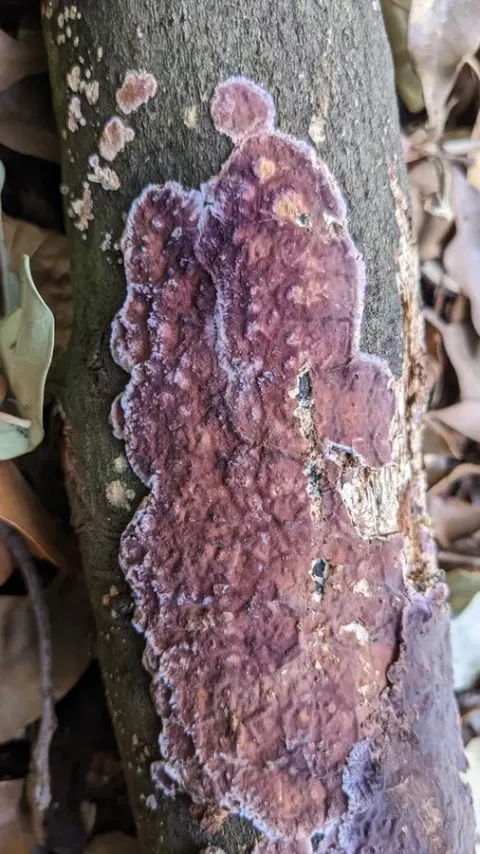
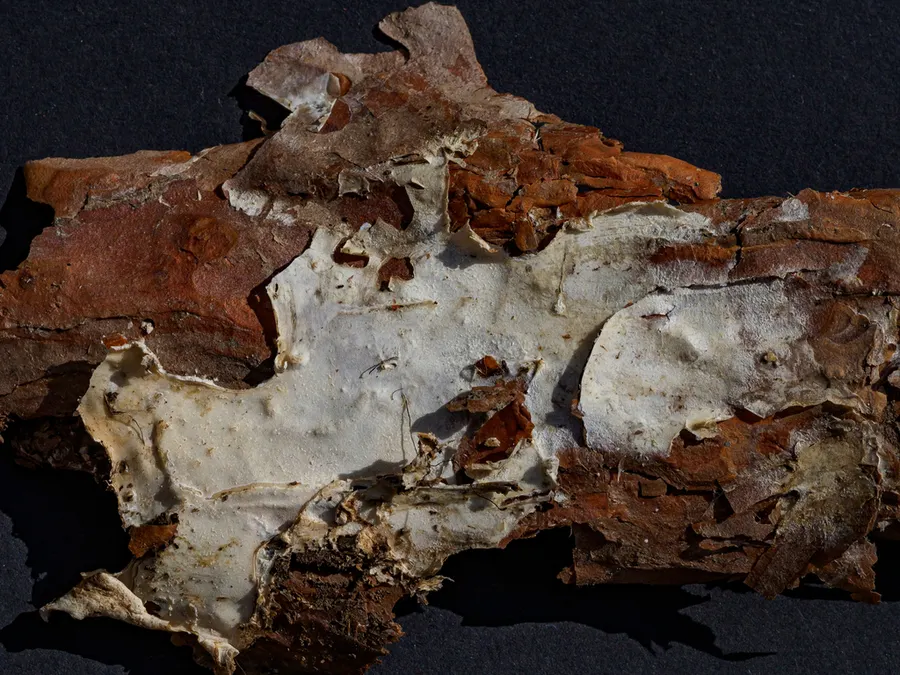
Hymenophore annual, ceraceous, drying horny, somewhat loosely attached and tending to peel from the substratum when dry, effused forming irregular areas 2-12 cm across; hymenial surface pallid ochre or pallid flesh colour, even or irregularly rugulose, not creviced; margin thinning out, fibrillose, white or cream, loosely attached. Context white, drying isabelline, 200-500 µm thick, basal layer well developed, of mainly parallel compacted hyphae with walls tinted in a few next the substratum, intermediate layer of mainly erect hyphae densely arranged; generative hyphae 4-7 µm diameter, walls 0.25-1 µm thick, hyaline, with rare clamp connections, sometimes wanting. Metuloids arising in the hymenial layer when some project to 35 µm and scattered among hyphae of the intermediate layer and subhymenium, conical, subfusiform, or cylindrical with acuminate apices, 55-84 x 8-16 µm, encrusted wholly or upon apices only, crystals deciduous, walls to 5 µm thick in submerged metuloids. Hymenial layer to 40 µm deep, a dense palisade of basidia, paraphyses, and metuloids. Basidia clavate, 14-22 x 4.5-6 µm, bearing 4 spores; sterigmata erect, slender, to 6 µm long. Paraphyses subclavate, 12-18 x 4-5 µm. Spores elliptical or obovate, some with oblique apiculi, 5-6.5 x 2.5-3 µm, walls smooth, hyaline, 0.1 µm thick.

Sebagian uraian ditampilkan dalam bahasa sumber; terjemahannya belum tersedia atau belum lolos pemeriksaan.

Rujukan: [1]

Pengukuran mengikuti objek, spesimen atau kultur, dan metode yang disebutkan sumber. Baca uraian asli untuk konteks lengkap.

02 / Kehidupan

Habitat dan peran ekologis

DISTRIBUTION: Europe, Great Britain, North America, New Zealand. HABITAT: Effused on bark or decorticated wood of dead branches and trunks.

Sebagian uraian ditampilkan dalam bahasa sumber; terjemahannya belum tersedia atau belum lolos pemeriksaan.

Rujukan: [1]

Habitat atau konteks temuan
Informasi belum tersedia pada sumber rilis ini.
Substrat
kulit kayu
Peran atau konteks
Belum dikategorikan pada rilis ini.
Temukan hubungan serupa
03 / Siklus hidup

Reproduksi

Hymenophore annual, ceraceous, drying horny, somewhat loosely attached and tending to peel from the substratum when dry, effused forming irregular areas 2-12 cm across; hymenial surface pallid ochre or pallid flesh colour, even or irregularly rugulose, not creviced; margin thinning out, fibrillose, white or cream, loosely attached. Context white, drying isabelline, 200-500 µm thick, basal layer well developed, of mainly parallel compacted hyphae with walls tinted in a few next the substratum, intermediate layer of mainly erect hyphae densely arranged; generative hyphae 4-7 µm diameter, walls 0.25-1 µm thick, hyaline, with rare clamp connections, sometimes wanting. Metuloids arising in the hymenial layer when some project to 35 µm and scattered among hyphae of the intermediate layer and subhymenium, conical, subfusiform, or cylindrical with acuminate apices, 55-84 x 8-16 µm, encrusted wholly or upon apices only, crystals deciduous, walls to 5 µm thick in submerged metuloids.

Sebagian uraian ditampilkan dalam bahasa sumber; terjemahannya belum tersedia atau belum lolos pemeriksaan.

Rujukan: [1]

Sinonim menurut acuan taksonomi rilis: Corticium giganteum; Kneiffia gigantea; Kneiffia lurideolivacea; Peniophora crosslandii; Peniophora gigantea; Peniophora gigantea f. pruinosa; Peniophora globifera; Peniophora lurideolivacea; Phanerochaete gigantea; Phlebia gigantea; Scopuloides gigantea; Terana gigantea; Thelephora gigantea; Thelephora pergamenea
04 / Batas informasi

Catatan identitas dan cakupan

  • Nama diterima mengikuti Catalogue of Life Base2026-09-11; uraian mempertahankan konsep dan nama sumber aslinya.
  • Historical description as cited by BiotaNZ. Preserve explicit New Zealand/locality, host and specimen qualifiers. Distribution is the cited source scope, not a current global range.
  • Impor dan terjemahan otomatis belum diperiksa editorial per profil. Struktur reproduktif yang disebutkan tidak membuktikan seluruh siklus hidup diketahui.
  • Pengukuran pada uraian mengikuti spesimen, kultur, dan metode sumber; angka tidak diperluas ke semua populasi.

Catatan distribusi dalam narasi mengikuti sumbernya. Dokumentasi spesimen atau foto mengikuti catatan sumber. Bukti wilayah Indonesia dan penilaian konservasi tidak disimpulkan dari gambar.

05 / Dokumentasi

Melihat dengan konteks

Dokumentasi Phlebiopsis gigantea menurut asosiasi foto pada record takson iNaturalist. Kredit: rainerburkard. Identitas mengikuti sumber; bukan penentuan spesimen independen.

Jenis
Fotografi
Kredit
(c) rainerburkard, some rights reserved (CC BY), uploaded by rainerburkard
Lisensi
CC BY 4.0
Sumber media
Buka entri sumber

Gambar menunjukkan objek menurut identifikasi sumber, bukan verifikasi independen spesimen oleh Fungi. Tidak ada skala baru yang ditambahkan.

06 / Rujukan

Sumber profil

  1. [1] Cunningham, G.H. 1963: The Thelephoraceae of Australia and New Zealand. New Zealand Department of Scientific and Industrial Research, Bulletin. 145. — Peniophora giganteaBagian sumber: biota:1cb0defb-36b9-11d5-9548-00d0592d548c:1cb1d531-36b9-11d5-9548-00d0592d548c
    Tanggal penghimpunan sumber: 2026-10-12
    Teks sumber: CC BY 4.0 · Cunningham, G.H. 1963: The Thelephoraceae of Australia and New Zealand. New Zealand Department of Scientific and Industrial Research, Bulletin. 145.
  2. [2] Catalogue of Life Base2026-09-11 — Phlebiopsis giganteaBagian sumber: ColDP NameUsage.tsv ID 77B32; accepted species; source 2073
    Tanggal penghimpunan sumber: 2026-10-12
  3. [3] Dokumentasi visual — Phlebiopsis giganteaBagian sumber: Individual media record; identification follows the source, not independent determination
    Tanggal penghimpunan sumber: 2026-10-12
    Media sumber: CC BY 4.0 · (c) rainerburkard, some rights reserved (CC BY), uploaded by rainerburkard

Adaptasi teks: CC BY 4.0. Cunningham, G.H. 1963: The Thelephoraceae of Australia and New Zealand. New Zealand Department of Scientific and Industrial Research, Bulletin. 145. — Cunningham, G.H. 1963: The Thelephoraceae of Australia and New Zealand. New Zealand Department of Scientific and Industrial Research, Bulletin. 145. — Peniophora gigantea

Uraian asli dan riwayat sumber

Riwayat atau halaman sumber

Ringkasan sumber

Hymenophore annual, ceraceous, drying horny, somewhat loosely attached and tending to peel from the substratum when dry, effused forming irregular areas 2-12 cm across; hymenial surface pallid ochre or pallid flesh colour, even or irregularly rugulose, not creviced; margin thinning out, fibrillose, white or cream, loosely attached. Context white, drying isabelline, 200-500 µm thick, basal layer well developed, of mainly parallel compacted hyphae with walls tinted in a few next the substratum, intermediate layer of mainly erect hyphae densely arranged; generative hyphae 4-7 µm diameter, walls 0.25-1 µm thick, hyaline, with rare clamp connections, sometimes wanting.

Revisi sumber

Morfologi sumber

Hymenophore annual, ceraceous, drying horny, somewhat loosely attached and tending to peel from the substratum when dry, effused forming irregular areas 2-12 cm across; hymenial surface pallid ochre or pallid flesh colour, even or irregularly rugulose, not creviced; margin thinning out, fibrillose, white or cream, loosely attached. Context white, drying isabelline, 200-500 µm thick, basal layer well developed, of mainly parallel compacted hyphae with walls tinted in a few next the substratum, intermediate layer of mainly erect hyphae densely arranged; generative hyphae 4-7 µm diameter, walls 0.25-1 µm thick, hyaline, with rare clamp connections, sometimes wanting. Metuloids arising in the hymenial layer when some project to 35 µm and scattered among hyphae of the intermediate layer and subhymenium, conical, subfusiform, or cylindrical with acuminate apices, 55-84 x 8-16 µm, encrusted wholly or upon apices only, crystals deciduous, walls to 5 µm thick in submerged metuloids. Hymenial layer to 40 µm deep, a dense palisade of basidia, paraphyses, and metuloids. Basidia clavate, 14-22 x 4.5-6 µm, bearing 4 spores; sterigmata erect, slender, to 6 µm long. Paraphyses subclavate, 12-18 x 4-5 µm. Spores elliptical or obovate, some with oblique apiculi, 5-6.5 x 2.5-3 µm, walls smooth, hyaline, 0.1 µm thick.

Revisi sumber

Ekologi sumber

DISTRIBUTION: Europe, Great Britain, North America, New Zealand. HABITAT: Effused on bark or decorticated wood of dead branches and trunks.

Revisi sumber

Struktur reproduksi sumber

Hymenophore annual, ceraceous, drying horny, somewhat loosely attached and tending to peel from the substratum when dry, effused forming irregular areas 2-12 cm across; hymenial surface pallid ochre or pallid flesh colour, even or irregularly rugulose, not creviced; margin thinning out, fibrillose, white or cream, loosely attached. Context white, drying isabelline, 200-500 µm thick, basal layer well developed, of mainly parallel compacted hyphae with walls tinted in a few next the substratum, intermediate layer of mainly erect hyphae densely arranged; generative hyphae 4-7 µm diameter, walls 0.25-1 µm thick, hyaline, with rare clamp connections, sometimes wanting. Metuloids arising in the hymenial layer when some project to 35 µm and scattered among hyphae of the intermediate layer and subhymenium, conical, subfusiform, or cylindrical with acuminate apices, 55-84 x 8-16 µm, encrusted wholly or upon apices only, crystals deciduous, walls to 5 µm thick in submerged metuloids.

Revisi sumber

Rujukan halaman ini

Fungi. Phlebiopsis gigantea. Rilis data fungi-2026-10-12-expansion-2. https://fungi-atlas.mgadib.chatgpt.site/jamur/phlebiopsis-gigantea/.

Status: impor sumber; pemeriksaan editorial per profil belum selesai. Untuk klaim biologis, gunakan rujukan pada bagian terkait dan periksa konteks sumber aslinya.