Ciri dan struktur
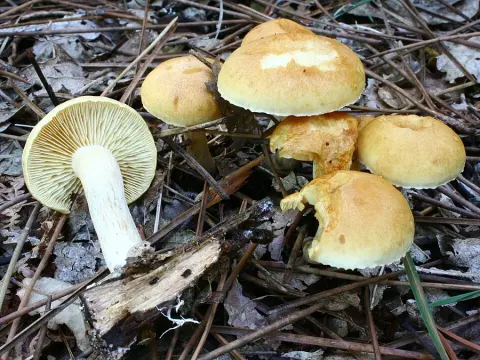
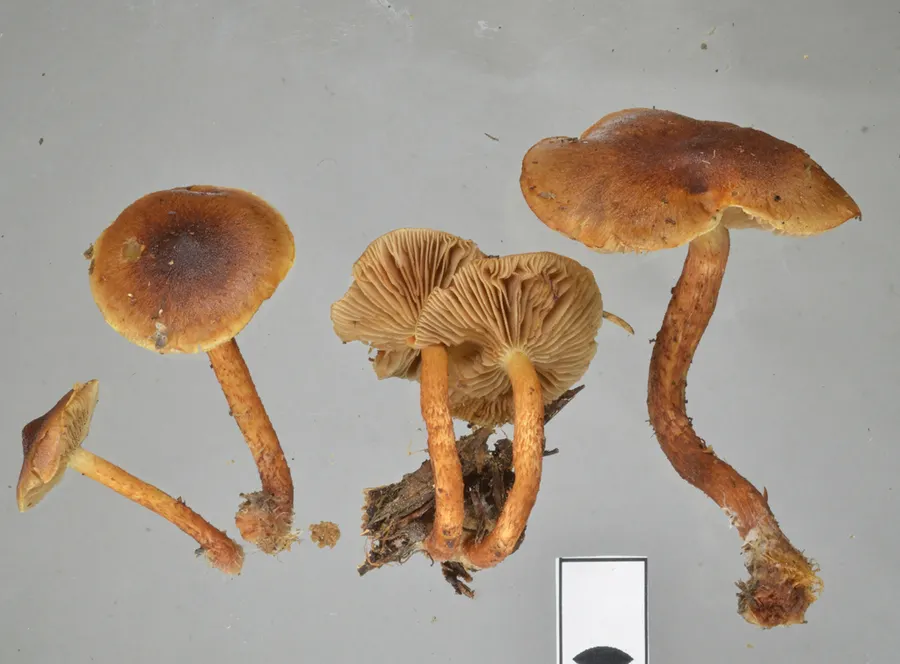
The fruit bodies (basidiocarps) of P. multicingulata have 17–34 mm or 55 mm wide caps (pilei). They are convex when young, with a slight central bump, becoming plano-convex at maturity. The cap is slimy when wet, and it has rings around the centre of the cap. It varies in colour, ranging from reddish-brown, yellowish-brown, or umber-brown, with a reddish-orange centre in some specimens. The margins are initially incurved, becoming plane at maturity. The gills (lamella) can also vary in colour, from greyish-white to grey, waxy-clay, or brown. The gills are adnate. The stipes are 32 × 4 mm or 55 × 5 mm in length and width. They are yellow near the apex and darker toward the base, cylindrical, hollow, and fibrillose. A partial veil is present in young specimens, and the rhizoids are found at the base. The fungus morphologically and microscopically ranges in colour and spore size, possibly due to climatic and regional variation. The species has been implicated in two non-fatal mushroom-poisoning cases in China. The spores measure 6.5–8 × 4.5–5 μm. They are ovoid, smooth, and have a thickened wall and a distinct germ pore. The cystidia measure 40–70 × 10–15 μm long, are spindle-shaped, and are covered with a yellowish-brown incrustation. The pileipellis consists of gelatinised hyphae with brown pigments. Pholiota species have rusty-brown to yellow-brown spore prints.
Habitat dan peran ekologis
Pholiota multicingulata was first recorded in Australia and New Zealand by Horak in his description of the species. The fungus has also been reported in Chile, China, Japan, Korea, Indonesia, and India. As a saprotroph, P. multicingulata decays dead organic material. Pholiota species are primarily found on decayed wood and are important wood decomposers. It has been recorded growing on coniferous wood and on wood from the genera Eucalyptus, Leptospermum, and Nothofagus. P. multicingulata does not exclusively grow on wood; it has also been recorded growing in leaf litter of bamboo (Dendrocalamus sp.) in the Kalimpong District in India. The fungus has also been reported growing in soil under a red pine (Pinus densiflora) dominated forest in South Korea.
- Habitat atau konteks temuan
- hutan
- Substrat
- kayu; tanah
- Peran atau konteks
- Pengurai
Reproduksi
The fruit bodies (basidiocarps) of P. multicingulata have 17–34 mm or 55 mm wide caps (pilei). They are convex when young, with a slight central bump, becoming plano-convex at maturity. The cap is slimy when wet, and it has rings around the centre of the cap. It varies in colour, ranging from reddish-brown, yellowish-brown, or umber-brown, with a reddish-orange centre in some specimens. The margins are initially incurved, becoming plane at maturity. The gills (lamella) can also vary in colour, from greyish-white to grey, waxy-clay, or brown. The gills are adnate. The stipes are 32 × 4 mm or 55 × 5 mm in length and width. They are yellow near the apex and darker toward the base, cylindrical, hollow, and fibrillose.
Catatan identitas dan cakupan
- Nama diterima mengikuti Catalogue of Life Base2026-09-11; uraian mempertahankan konsep dan nama sumber aslinya.
- Original geographic, specimen and life-cycle scope retained; source import awaits individual editorial review.
- Impor dan terjemahan otomatis belum diperiksa editorial per profil. Struktur reproduktif yang disebutkan tidak membuktikan seluruh siklus hidup diketahui.
- Pengukuran pada uraian mengikuti spesimen, kultur, dan metode sumber; angka tidak diperluas ke semua populasi.
Catatan distribusi dalam narasi mengikuti sumbernya. Dokumentasi spesimen atau foto mengikuti catatan sumber. Bukti wilayah Indonesia dan penilaian konservasi tidak disimpulkan dari gambar.
Melihat dengan konteks
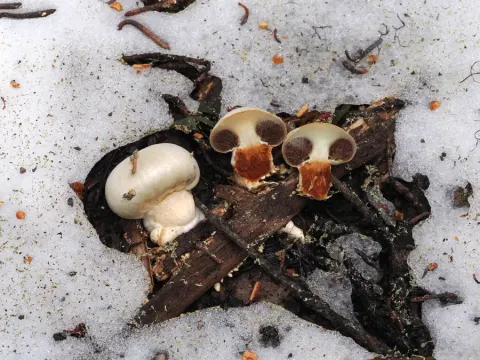
Dokumentasi Pholiota multicingulata menurut asosiasi foto pada record takson iNaturalist. Kredit: Jerry Cooper. Identitas mengikuti sumber; bukan penentuan spesimen independen.
- Jenis
- Fotografi
- Kredit
- (c) Jerry Cooper, some rights reserved (CC BY), uploaded by Jerry Cooper
- Lisensi
- CC BY 4.0
- Sumber media
- Buka entri sumber
Dokumentasi tambahan
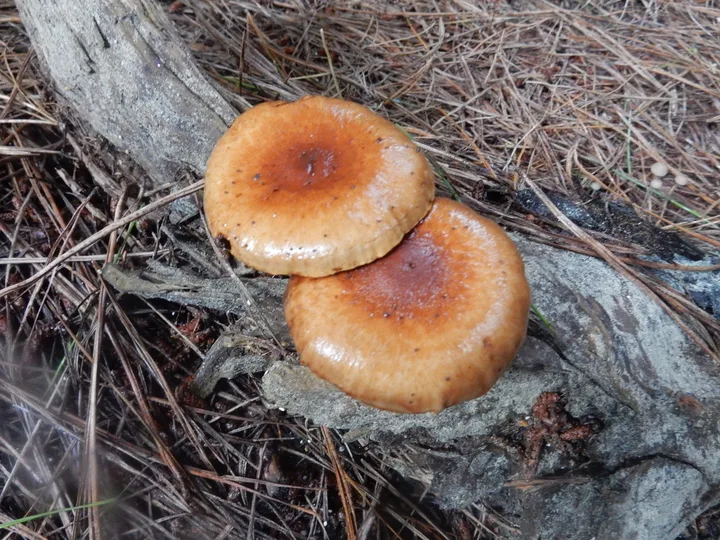
Foto yang diasosiasikan dengan Pholiota multicingulata pada iNaturalist. Identifikasi mengikuti sumber; bukan penentuan spesimen independen.
Kredit dan penggunaan
(c) Ray Jackson, some rights reserved (CC BY), uploaded by Ray Jackson
Ukuran dan format gambar disesuaikan tanpa pemotongan, retus, atau penambahan skala. Lisensi sumber dipertahankan.
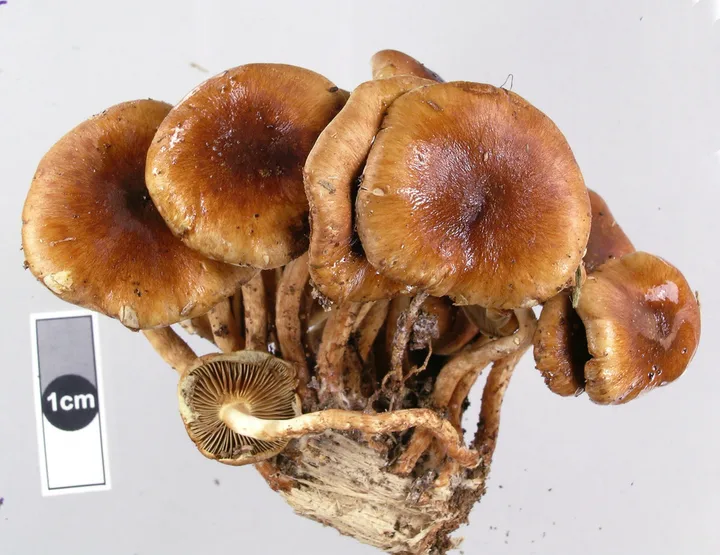
Foto yang diasosiasikan dengan Pholiota multicingulata pada iNaturalist. Identifikasi mengikuti sumber; bukan penentuan spesimen independen.
Kredit dan penggunaan
(c) Jerry Cooper, some rights reserved (CC BY), uploaded by Jerry Cooper
Ukuran dan format gambar disesuaikan tanpa pemotongan, retus, atau penambahan skala. Lisensi sumber dipertahankan.
Sumber profil
- [1] Pholiota multicingulata — Wikipedia (en)
- [2] Catalogue of Life Base2026-09-11 — Pholiota multicingulata
- [3] Dokumentasi visual — Pholiota multicingulata
- [4] Dokumentasi visual — Pholiota multicingulata
- [5] Dokumentasi visual — Pholiota multicingulata
Rujukan halaman ini
Fungi. Pholiota multicingulata. Rilis data fungi-2026-10-12-expansion-2. https://fungi-atlas.mgadib.chatgpt.site/jamur/pholiota-multicingulata/.
Status: impor sumber; pemeriksaan editorial per profil belum selesai. Untuk klaim biologis, gunakan rujukan pada bagian terkait dan periksa konteks sumber aslinya.