01 / Morfologi

Ciri dan struktur

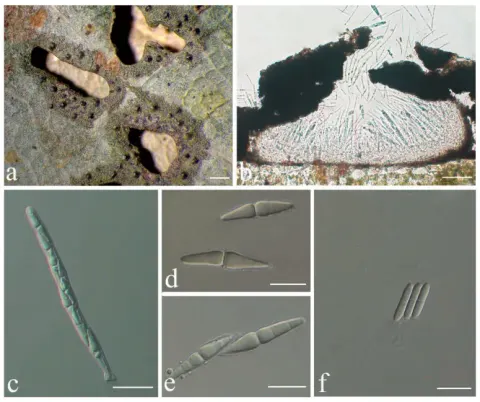
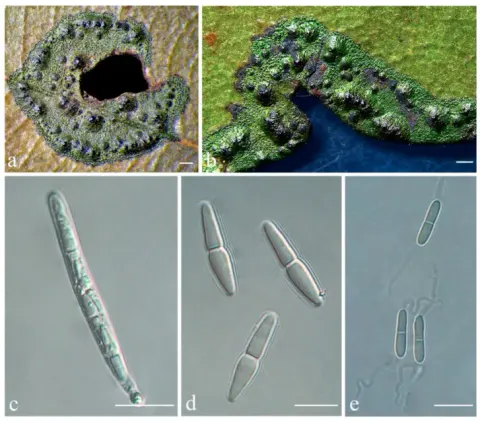
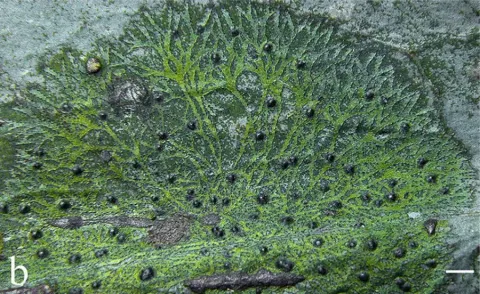
Phyllocharis orbicularis is a lichen forming thalli on leaves in which the fungal partner is associated with the green alga Cephaleuros as . The thallus is more or less to pseudo-corticate, pale grey-green in colour, and typically forms just beneath the leaf cuticle. This subcuticular growth can sometimes result in visible damage to the supporting leaf tissue. The sexual morph produces ascomata (fruiting bodies) in the form of perithecia. These fruiting bodies are prominent and black, but are largely covered by the overlying thallus layer, so that they appear as wart-like, , ostiolate swellings. Each perithecium has an that is present but only weakly carbonised, and an composed of brownish . The consists of slender, hyaline paraphyses, about 0.5–0.7 μm wide, which are and unbranched. Asci are 8-spored, and , to fusiform in shape, with a short stalk and a narrow ocular chamber, and they do not show an amyloid reaction. The ascospores are arranged irregularly to in the asci; they are oblong, hyaline and 3-septate, with thin true septa () and rectangular internal , and have smooth walls. The asexual morph is well developed. Pycnidia are common, occurring immersed in the thallus to and visible at the surface as small black dots. They produce acrogenous conidia of two types, macroconidia and microconidia. The macroconidia are long, filiform spores with 3–9 septa and gelatinous appendages, and they are hyaline. The microconidia are aseptate, fusiform, small and likewise hyaline. No lichen secondary metabolites are known from Phyllocharis on the basis of chemical studies.

Sebagian uraian ditampilkan dalam bahasa sumber; terjemahannya belum tersedia atau belum lolos pemeriksaan.

Rujukan: [1]

Pengukuran mengikuti objek, spesimen atau kultur, dan metode yang disebutkan sumber. Baca uraian asli untuk konteks lengkap.

02 / Kehidupan

Habitat dan peran ekologis

Phyllocharis orbicularis is a foliicolous lichen, growing on leaves in terrestrial habitats. It occurs from lowland to montane sites in tropical to subtropical regions, where it forms subcuticular thalli within the leaf surface. The lichen has a wide pantropical distribution. In the Americas it is known from Costa Rica, Bolivia, Colombia, Suriname, Argentina, and Florida in the United States. It has also been recorded from Australia, the Philippines, Vietnam, India, and Kenya.

Sebagian uraian ditampilkan dalam bahasa sumber; terjemahannya belum tersedia atau belum lolos pemeriksaan.

Rujukan: [1]

Habitat atau konteks temuan
Informasi belum tersedia pada sumber rilis ini.
Substrat
Informasi belum tersedia pada sumber rilis ini.
Peran atau konteks
Pembentuk liken
Temukan hubungan serupa
03 / Siklus hidup

Reproduksi

The sexual morph produces ascomata (fruiting bodies) in the form of perithecia. These fruiting bodies are prominent and black, but are largely covered by the overlying thallus layer, so that they appear as wart-like, , ostiolate swellings. Each perithecium has an that is present but only weakly carbonised, and an composed of brownish . The consists of slender, hyaline paraphyses, about 0.5–0.7 μm wide, which are and unbranched. Asci are 8-spored, and , to fusiform in shape, with a short stalk and a narrow ocular chamber, and they do not show an amyloid reaction. The ascospores are arranged irregularly to in the asci; they are oblong, hyaline and 3-septate, with thin true septa () and rectangular internal , and have smooth walls.

Sebagian uraian ditampilkan dalam bahasa sumber; terjemahannya belum tersedia atau belum lolos pemeriksaan.

Rujukan: [1]

Sinonim menurut acuan taksonomi rilis: Phyllocharis complanata; Strigula complanata; Strigula orbicularis
04 / Batas informasi

Catatan identitas dan cakupan

  • Nama diterima mengikuti Catalogue of Life Base2026-09-11; uraian mempertahankan konsep dan nama sumber aslinya.
  • Original geographic, specimen and life-cycle scope retained; source import awaits individual editorial review.
  • Impor dan terjemahan otomatis belum diperiksa editorial per profil. Struktur reproduktif yang disebutkan tidak membuktikan seluruh siklus hidup diketahui.
  • Pengukuran pada uraian mengikuti spesimen, kultur, dan metode sumber; angka tidak diperluas ke semua populasi.

Catatan distribusi dalam narasi mengikuti sumbernya. Dokumentasi spesimen atau foto mengikuti catatan sumber. Bukti wilayah Indonesia dan penilaian konservasi tidak disimpulkan dari gambar.

05 / Dokumentasi

Melihat dengan konteks

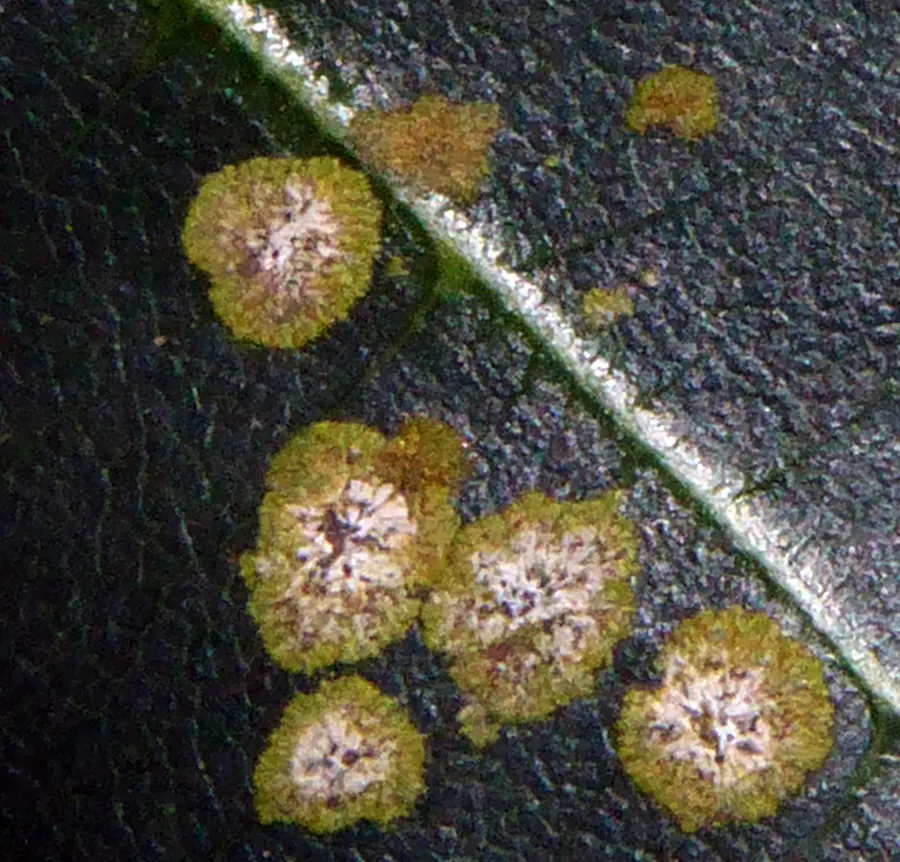
Dokumentasi Strigula orbicularis menurut asosiasi foto pada record takson iNaturalist. Kredit: Peter de Lange. Identitas mengikuti sumber; bukan penentuan spesimen independen.

Jenis
Fotografi
Kredit
no rights reserved, uploaded by Peter de Lange
Lisensi
CC0 1.0
Sumber media
Buka entri sumber

Gambar menunjukkan objek menurut identifikasi sumber, bukan verifikasi independen spesimen oleh Fungi. Tidak ada skala baru yang ditambahkan.

06 / Rujukan

Sumber profil

  1. [1] Phyllocharis orbicularis — Wikipedia (en)Bagian sumber: Frozen revision 1368030906
    Tanggal penghimpunan sumber: 2026-10-12
    Teks sumber: CC BY-SA4.0 · Wikipedia contributors
  2. [2] Catalogue of Life Base2026-09-11 — Phyllocharis orbicularisBagian sumber: ColDP NameUsage.tsv ID B2T5C; accepted species; source 2073
    Tanggal penghimpunan sumber: 2026-10-12
  3. [3] Dokumentasi visual — Strigula orbicularisBagian sumber: Individual media record; identification follows the source, not independent determination
    Tanggal penghimpunan sumber: 2026-10-12
    Media sumber: CC0 1.0 · no rights reserved, uploaded by Peter de Lange

Adaptasi teks: CC BY-SA 4.0. Wikipedia contributors — Phyllocharis orbicularis — Wikipedia (en)

Uraian asli dan riwayat sumber

Riwayat atau halaman sumber

Ringkasan sumber

Phyllocharis orbicularis is a leaf-dwelling lichen in the family Strigulaceae. It is the only known species in the fungal genus Phyllocharis. The genus was originally erected by Antoine Fée in 1825; in its modern circumscription its sole species, P. orbicularis, is based on a lichen first described by Elias Magnus Fries in 1830. This leaf-dwelling lichen grows beneath the surface layer of leaves in tropical and subtropical regions, forming pale grey-green patches from lowland to mountain forests.

Revisi sumber

Morfologi sumber

Phyllocharis orbicularis is a lichen forming thalli on leaves in which the fungal partner is associated with the green alga Cephaleuros as . The thallus is more or less to pseudo-corticate, pale grey-green in colour, and typically forms just beneath the leaf cuticle. This subcuticular growth can sometimes result in visible damage to the supporting leaf tissue. The sexual morph produces ascomata (fruiting bodies) in the form of perithecia. These fruiting bodies are prominent and black, but are largely covered by the overlying thallus layer, so that they appear as wart-like, , ostiolate swellings. Each perithecium has an that is present but only weakly carbonised, and an composed of brownish . The consists of slender, hyaline paraphyses, about 0.5–0.7 μm wide, which are and unbranched. Asci are 8-spored, and , to fusiform in shape, with a short stalk and a narrow ocular chamber, and they do not show an amyloid reaction. The ascospores are arranged irregularly to in the asci; they are oblong, hyaline and 3-septate, with thin true septa () and rectangular internal , and have smooth walls. The asexual morph is well developed. Pycnidia are common, occurring immersed in the thallus to and visible at the surface as small black dots. They produce acrogenous conidia of two types, macroconidia and microconidia. The macroconidia are long, filiform spores with 3–9 septa and gelatinous appendages, and they are hyaline. The microconidia are aseptate, fusiform, small and likewise hyaline. No lichen secondary metabolites are known from Phyllocharis on the basis of chemical studies.

Revisi sumber

Ekologi sumber

Phyllocharis orbicularis is a foliicolous lichen, growing on leaves in terrestrial habitats. It occurs from lowland to montane sites in tropical to subtropical regions, where it forms subcuticular thalli within the leaf surface. The lichen has a wide pantropical distribution. In the Americas it is known from Costa Rica, Bolivia, Colombia, Suriname, Argentina, and Florida in the United States. It has also been recorded from Australia, the Philippines, Vietnam, India, and Kenya.

Revisi sumber

Struktur reproduksi sumber

The sexual morph produces ascomata (fruiting bodies) in the form of perithecia. These fruiting bodies are prominent and black, but are largely covered by the overlying thallus layer, so that they appear as wart-like, , ostiolate swellings. Each perithecium has an that is present but only weakly carbonised, and an composed of brownish . The consists of slender, hyaline paraphyses, about 0.5–0.7 μm wide, which are and unbranched. Asci are 8-spored, and , to fusiform in shape, with a short stalk and a narrow ocular chamber, and they do not show an amyloid reaction. The ascospores are arranged irregularly to in the asci; they are oblong, hyaline and 3-septate, with thin true septa () and rectangular internal , and have smooth walls.

Revisi sumber

Rujukan halaman ini

Fungi. Phyllocharis orbicularis. Rilis data fungi-2026-10-12-expansion-2. https://fungi-atlas.mgadib.chatgpt.site/jamur/phyllocharis-orbicularis/.

Status: impor sumber; pemeriksaan editorial per profil belum selesai. Untuk klaim biologis, gunakan rujukan pada bagian terkait dan periksa konteks sumber aslinya.