Ciri dan struktur
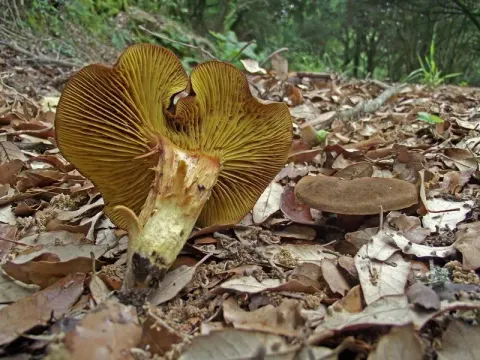
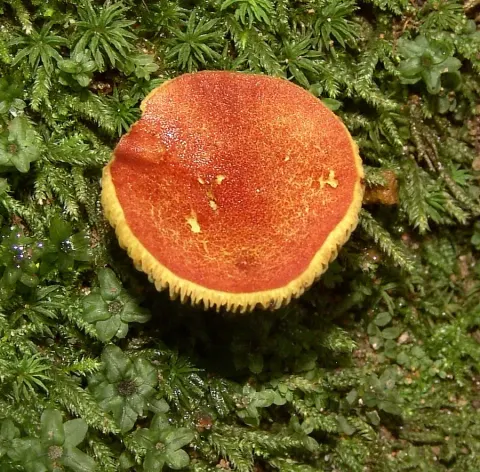
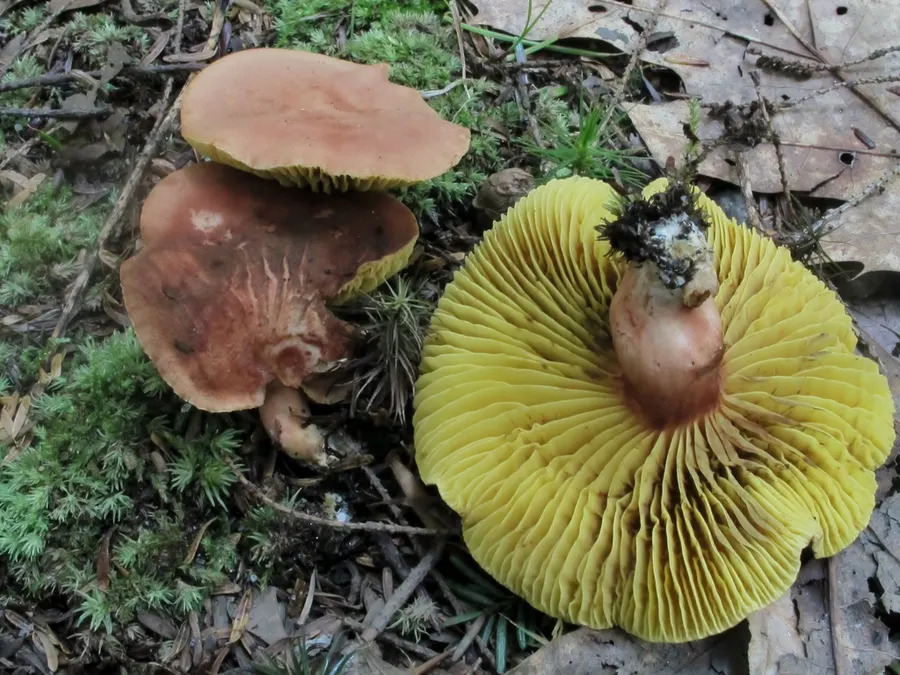
The cap is initially convex before flattening out in maturity, sometimes developing a shallow depression; it reaches a diameter of 4 – 8 cm. The cap surface is dry, with a somewhat felt-like texture, and it often develops cracks in maturity. Its color is dark red to reddish chestnut, usually with a paler central portion in mature individuals. The flesh is whitish to pale yellow, and lacks any distinctive taste or odor. The pores on the underside of the cap are quite gill-like, and decurrent (running down the length of the stem). They are yellow in color, sometimes forked, and have cross-veins in the intervening spaces. The stem measures 4 – 8 cm long by 0.5 – 1.3 cm thick, and is nearly equal in width throughout or thicker near the base. It often has ribs near the top, and the surface has small brown dots and points. The overall stem color is yellow with reddish tinges. There is white mycelium at the stem base. Phylloporus leucomycelinus produces a yellowish spore print. Spores are roughly elliptical to spindle-shaped, smooth, and measure 8–14 by 3–5 μm. The basidia (spore-bearing cells) are ventricose (swollen in the middle), four-spored, and measure 20–25 by 6–7 μm.
Habitat dan peran ekologis
The fruit bodies of P. leucomycelinus grow scattered or in groups on the ground in deciduous forests, usually near beech and oak trees. Found in North America, its range includes eastern Canada south to Florida, and west to Michigan. The bolete was reported from a Mexican beech (Fagus mexicana) forest in Hidalgo, Mexico in 2010. It has also been collected in the Philippines.
- Habitat atau konteks temuan
- hutan
- Substrat
- tanah
- Peran atau konteks
- Belum dikategorikan pada rilis ini.
Reproduksi
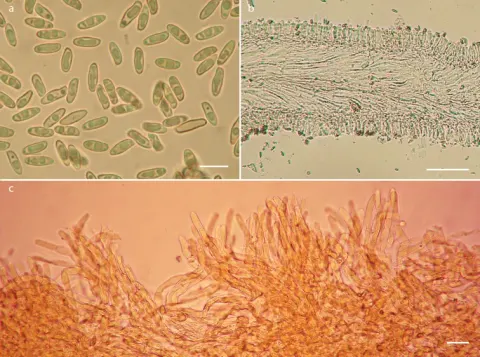
Phylloporus leucomycelinus produces a yellowish spore print. Spores are roughly elliptical to spindle-shaped, smooth, and measure 8–14 by 3–5 μm. The basidia (spore-bearing cells) are ventricose (swollen in the middle), four-spored, and measure 20–25 by 6–7 μm.
Catatan identitas dan cakupan
- Nama diterima mengikuti Catalogue of Life Base2026-09-11; uraian mempertahankan konsep dan nama sumber aslinya.
- Original geographic, specimen and life-cycle scope retained; source import awaits individual editorial review.
- Impor dan terjemahan otomatis belum diperiksa editorial per profil. Struktur reproduktif yang disebutkan tidak membuktikan seluruh siklus hidup diketahui.
- Pengukuran pada uraian mengikuti spesimen, kultur, dan metode sumber; angka tidak diperluas ke semua populasi.
Catatan distribusi dalam narasi mengikuti sumbernya. Dokumentasi spesimen atau foto mengikuti catatan sumber. Bukti wilayah Indonesia dan penilaian konservasi tidak disimpulkan dari gambar.
Melihat dengan konteks
Dokumentasi Phylloporus leucomycelinus menurut asosiasi foto pada record takson iNaturalist. Kredit: mycowalt. Identitas mengikuti sumber; bukan penentuan spesimen independen.
- Jenis
- Fotografi
- Kredit
- (c) mycowalt, some rights reserved (CC BY-SA), uploaded by mycowalt
- Lisensi
- CC BY-SA 4.0
- Sumber media
- Buka entri sumber
Dokumentasi tambahan
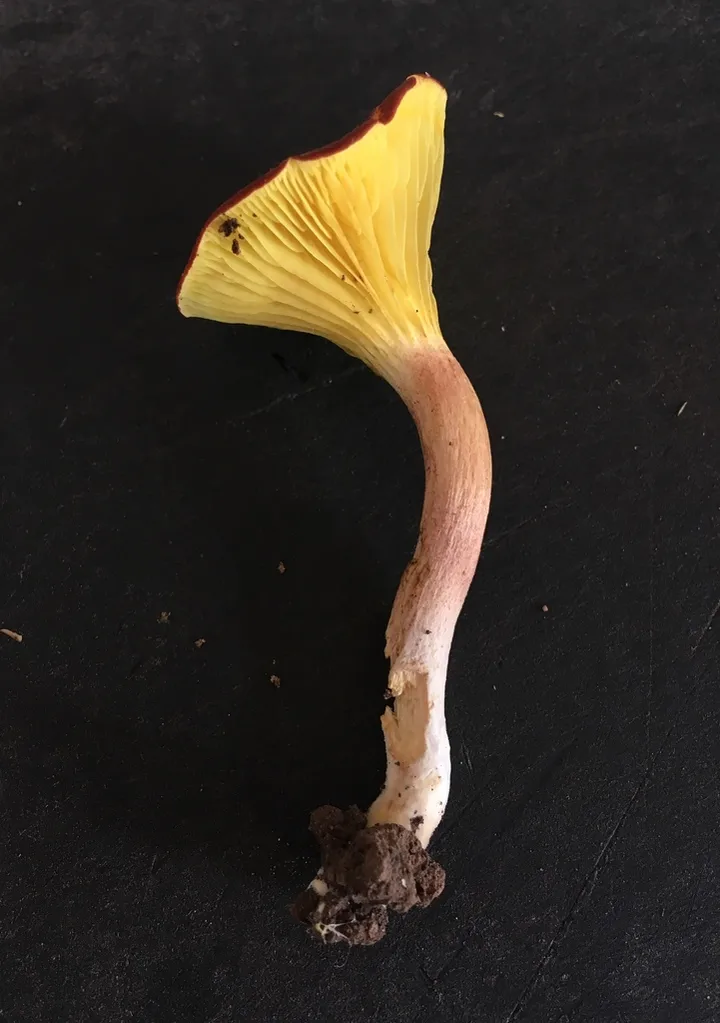
Foto yang diasosiasikan dengan Phylloporus leucomycelinus pada iNaturalist. Identifikasi mengikuti sumber; bukan penentuan spesimen independen.
Kredit dan penggunaan
no rights reserved, uploaded by Sigrid Jakob
Ukuran dan format gambar disesuaikan tanpa pemotongan, retus, atau penambahan skala. Lisensi sumber dipertahankan.
Sumber profil
- [1] Phylloporus leucomycelinus — Wikipedia (en)
- [2] Catalogue of Life Base2026-09-11 — Phylloporus leucomycelinus
- [3] Dokumentasi visual — Phylloporus leucomycelinus
- [4] Dokumentasi visual — Phylloporus leucomycelinus
Rujukan halaman ini
Fungi. Phylloporus leucomycelinus. Rilis data fungi-2026-10-12-expansion-2. https://fungi-atlas.mgadib.chatgpt.site/jamur/phylloporus-leucomycelinus/.
Status: impor sumber; pemeriksaan editorial per profil belum selesai. Untuk klaim biologis, gunakan rujukan pada bagian terkait dan periksa konteks sumber aslinya.