Ciri dan struktur
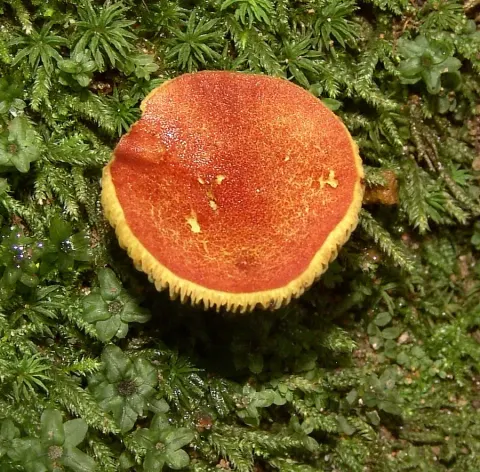
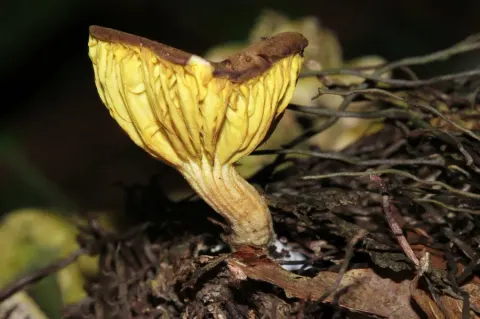
Its reddish pileus tinges together with, context staining reddish, basidiospores 9–13 × 3–4 µm and narrowly utriform or subcylindrical cystidia and its habitat distinguish it from close related species, such as P. caballeroi Singer. Pileus 15–65 mm diam., hemispheric at first, then becoming convex to plane-convex,; surface velvety, reddish-vinaceous (8D7, 8E7–8), dark reddish-brown (9E6–7), brown (7C5) with pinkish tinges to pinkish-vinaceous (7C6) with paler zones and dark vinaceous tinges (7D6–D7); margin straight to slightly decurved to incurved, undulate. Lamellae 5–8 mm width, adnate to subdecurrent, close to slightly subdistant, yellow (3A5, 3B7), mustard-yellow (4B7–B8), staining pale brown or blue-greenish when handled, veined or anastomosed mostly below pileus surface and with interparietal veins, margin finely fimbriate, lamellullae of different sizes, with reddish spots. Stipe 25–55 × 3–13 mm, central, attenuated towards the base, sinuous, compact, reddish-vinaceous (9E7), middle and basal part yellowish to pale brown, bright yellow (3A2, 4A6), with olive to pinkish-vinaceous tinges when young, frequently with a reddish pruina and fine appressed scales over the apex, surface smooth, with peeling fibers especially in mature specimens. Basal mycelium whitish to yellowish. Context dirty whitish, staining reddish especially towards the pileus area where it is hygrophanous; stipe at times fistulose but mostly compact, especially at apical area. KOH 3% blackish on pileus, greenish to brown in lamellae, negative in context; NH 4 OH 10% bluish on pileus, or bluish-greenish at the beginning, later blackish in pileus and stipe, dark grayish-blue in context and lamellae.
Habitat dan peran ekologis
In soil, in small groups or solitary, in tropical oak forest, under Quercus oleoides Schltdl. & Cham.
- Habitat atau konteks temuan
- hutan
- Substrat
- tanah
- Peran atau konteks
- Belum dikategorikan pada rilis ini.
Reproduksi
Its reddish pileus tinges together with, context staining reddish, basidiospores 9–13 × 3–4 µm and narrowly utriform or subcylindrical cystidia and its habitat distinguish it from close related species, such as P. caballeroi Singer. Pileus 15–65 mm diam., hemispheric at first, then becoming convex to plane-convex,; surface velvety, reddish-vinaceous (8D7, 8E7–8), dark reddish-brown (9E6–7), brown (7C5) with pinkish tinges to pinkish-vinaceous (7C6) with paler zones and dark vinaceous tinges (7D6–D7); margin straight to slightly decurved to incurved, undulate. Lamellae 5–8 mm width, adnate to subdecurrent, close to slightly subdistant, yellow (3A5, 3B7), mustard-yellow (4B7–B8), staining pale brown or blue-greenish when handled, veined or anastomosed mostly below pileus surface and with interparietal veins, margin finely fimbriate, lamellullae of different sizes, with reddish spots.
Catatan identitas dan cakupan
- Nama diterima mengikuti Catalogue of Life Base2026-09-11; uraian mempertahankan konsep dan nama sumber aslinya.
- Preserve original treatment localities, hosts and substrate scope. Materials examined describe documented specimens, not the full global range.
- Impor dan terjemahan otomatis belum diperiksa editorial per profil. Struktur reproduktif yang disebutkan tidak membuktikan seluruh siklus hidup diketahui.
- Pengukuran pada uraian mengikuti spesimen, kultur, dan metode sumber; angka tidak diperluas ke semua populasi.
Catatan distribusi dalam narasi mengikuti sumbernya. Dokumentasi spesimen atau foto mengikuti catatan sumber. Bukti wilayah Indonesia dan penilaian konservasi tidak disimpulkan dari gambar.
Melihat dengan konteks
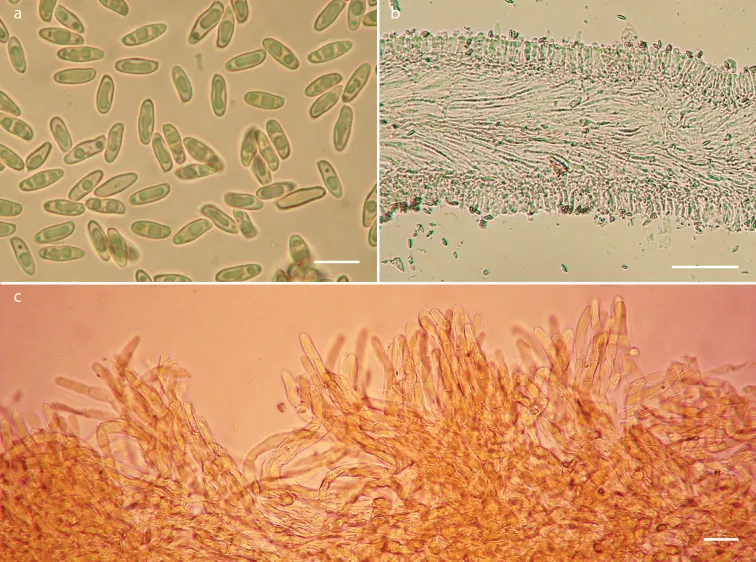
Phylloporus quercophilus (Montoya 5239, holotype). a Basidiospores b hymenophoral trama c longitudinal section of pileipellis. Scale bars: 10 μm (a), 100 μm (b), 25 μm (c).
- Jenis
- Pelat ilmiah
- Kredit
- Leticia Montoya, Edith Garay-Serrano, Victor M. Bandala
- Lisensi
- CC BY 4.0
- Sumber media
- Buka entri sumber
Dokumentasi tambahan
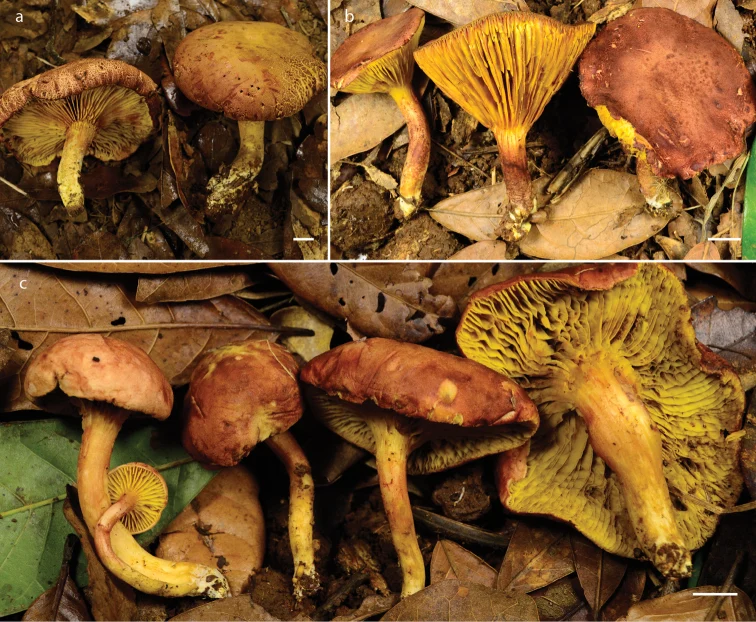
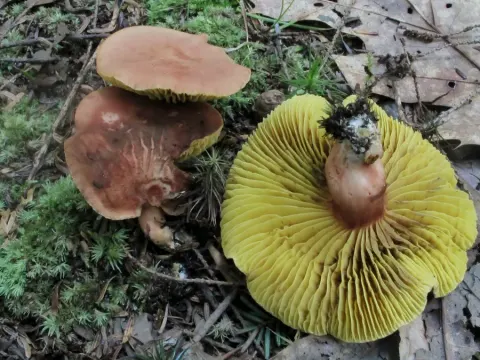
Basidiomes of Phylloporus species. a, b P. rimosus (a Garrido 3, b Montoya 5232a) c P. quercophilus (LM5239 holotype). Scale bars: 10 mm.
Kredit dan penggunaan
Leticia Montoya, Edith Garay-Serrano, Victor M. Bandala
Ukuran dan format gambar disesuaikan tanpa pemotongan, retus, atau penambahan skala. Lisensi sumber dipertahankan.
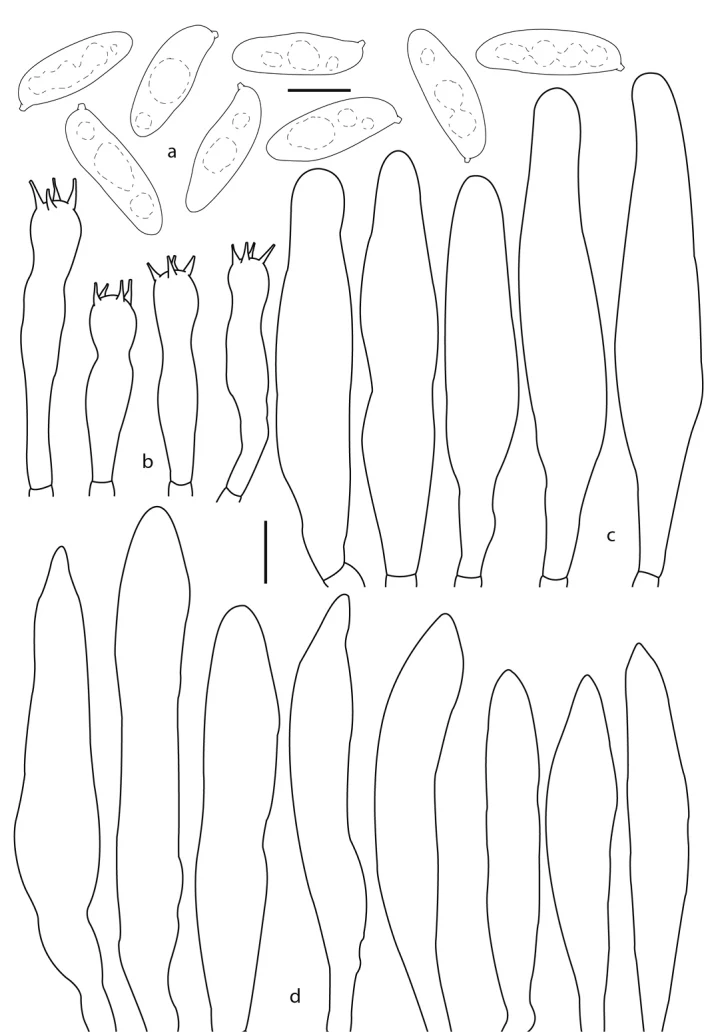
Phylloporus quercophilus (Montoya 5239, holotype). a Basidiospores b basidia c pleurocystidia d cheilocystidia. Scale bars: 5 μm (a), 10 μm (b–d).
Kredit dan penggunaan
Leticia Montoya, Edith Garay-Serrano, Victor M. Bandala
Ukuran dan format gambar disesuaikan tanpa pemotongan, retus, atau penambahan skala. Lisensi sumber dipertahankan.
Sumber profil
- [1] Two new species of Phylloporus (Fungi, Boletales) from tropical Quercus forests in eastern Mexico — Phylloporus quercophilus
- [2] Catalogue of Life Base2026-09-11 — Phylloporus quercophilus
- [3] Dokumentasi visual — Phylloporus quercophilus
- [4] Dokumentasi visual — Phylloporus quercophilus
- [5] Dokumentasi visual — Phylloporus quercophilus
Rujukan halaman ini
Fungi. Phylloporus quercophilus. Rilis data fungi-2026-10-12-expansion-2. https://fungi-atlas.mgadib.chatgpt.site/jamur/phylloporus-quercophilus/.
Status: impor sumber; pemeriksaan editorial per profil belum selesai. Untuk klaim biologis, gunakan rujukan pada bagian terkait dan periksa konteks sumber aslinya.