01 / Morfologi

Ciri dan struktur

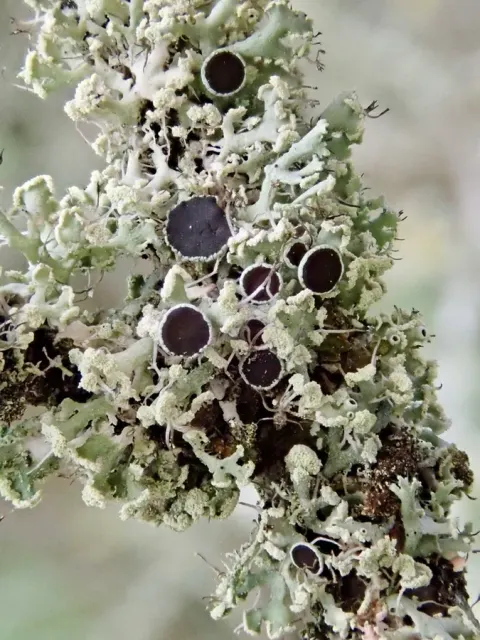
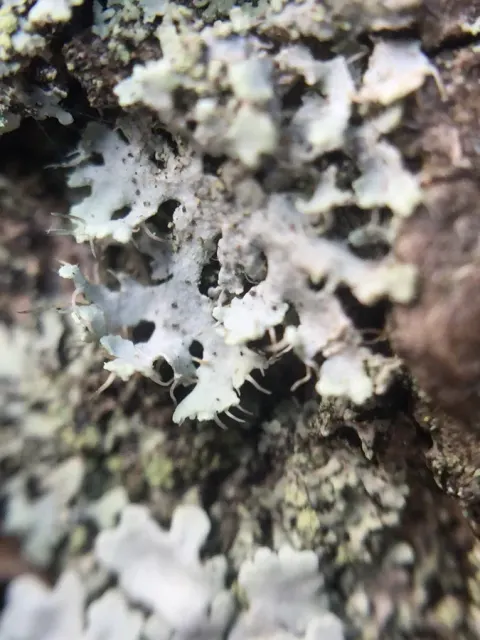
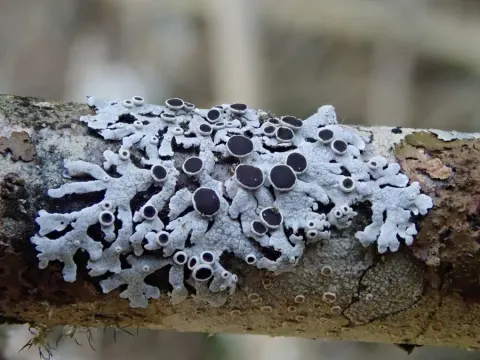
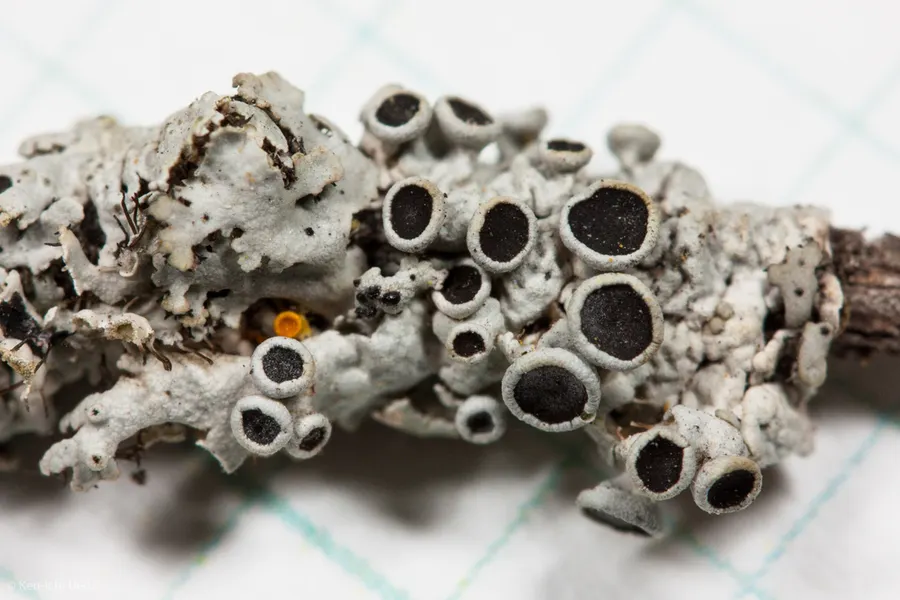
The thallus of Physcia stellaris can be described as foliose as it has aspects of leaf-like lichen structures. Lobes are loosely appressed and are on average only 0.5 mm in size. The upper surface is whitish grey, appearing as almost a cream color. It lacks any form of soredia or isidia on the upper surface. The lower surface is white to brown with simple rhizines. Apothecia are abundant varying in size from 0.5mm-1.5mm and have fruiting bodies shaped like a plate with a ring around them called lecanorine. Ascocarp containing 8 brown, septate ascospores ranging in size from 15-18 μm. Is found as a lichen in all forms. Physcia stellaris can be differentiated from all other Physcia species due to lack of soredia, with exception to P. aipolia. P. aipolia can be differentiated from P. stellaris due to aipolia’s broader lobes and apothecia that tend to be pruinose.

Sebagian uraian ditampilkan dalam bahasa sumber; terjemahannya belum tersedia atau belum lolos pemeriksaan.

Rujukan: [1]

Pengukuran mengikuti objek, spesimen atau kultur, dan metode yang disebutkan sumber. Baca uraian asli untuk konteks lengkap.

02 / Kehidupan

Habitat dan peran ekologis

This species is commonly found lichenized on bark and rock all across the temperate zones of North America as well as parts of Europe. Documented findings of this species range from Georgia to the Canadian Northwest Territories. The species is quite common on deciduous trees but can also be found less commonly on conifers.

Sebagian uraian ditampilkan dalam bahasa sumber; terjemahannya belum tersedia atau belum lolos pemeriksaan.

Rujukan: [1]

Habitat atau konteks temuan
Informasi belum tersedia pada sumber rilis ini.
Substrat
kulit kayu
Peran atau konteks
Pembentuk liken
Temukan hubungan serupa
03 / Siklus hidup

Reproduksi

The thallus of Physcia stellaris can be described as foliose as it has aspects of leaf-like lichen structures. Lobes are loosely appressed and are on average only 0.5 mm in size. The upper surface is whitish grey, appearing as almost a cream color. It lacks any form of soredia or isidia on the upper surface. The lower surface is white to brown with simple rhizines. Apothecia are abundant varying in size from 0.5mm-1.5mm and have fruiting bodies shaped like a plate with a ring around them called lecanorine. Ascocarp containing 8 brown, septate ascospores ranging in size from 15-18 μm. Is found as a lichen in all forms. Physcia stellaris can be differentiated from all other Physcia species due to lack of soredia, with exception to P. aipolia.

Sebagian uraian ditampilkan dalam bahasa sumber; terjemahannya belum tersedia atau belum lolos pemeriksaan.

Rujukan: [1]

Sinonim menurut acuan taksonomi rilis: Anaptychia stellaris; Borrera stellaris; Dimelaena stellaris f. rosulata; Geissodea stellaris; Hagenia stellaris; Imbricaria stellaris; Lichen stellaris; Lobaria stellaris; Parmelia aipolia var. rosulata; Parmelia rosulata; Parmelia stellaris; Parmelia stellaris f. rosulata; Parmelia stellaris var. rosulata; Physcia aipolia var. stellaris; Physcia retrogressa; Physcia stellaris f. rosulata; Physcia stellaris var. rosulata; Squamaria stellaris; Xanthoria stellaris
04 / Batas informasi

Catatan identitas dan cakupan

  • Nama diterima mengikuti Catalogue of Life Base2026-09-11; uraian mempertahankan konsep dan nama sumber aslinya.
  • Original geographic, specimen and life-cycle scope retained; source import awaits individual editorial review.
  • Impor dan terjemahan otomatis belum diperiksa editorial per profil. Struktur reproduktif yang disebutkan tidak membuktikan seluruh siklus hidup diketahui.
  • Pengukuran pada uraian mengikuti spesimen, kultur, dan metode sumber; angka tidak diperluas ke semua populasi.

Catatan distribusi dalam narasi mengikuti sumbernya. Dokumentasi spesimen atau foto mengikuti catatan sumber. Bukti wilayah Indonesia dan penilaian konservasi tidak disimpulkan dari gambar.

05 / Dokumentasi

Melihat dengan konteks

Dokumentasi Physcia stellaris menurut asosiasi foto pada record takson iNaturalist. Kredit: Ken-ichi Ueda. Identitas mengikuti sumber; bukan penentuan spesimen independen.

Jenis
Fotografi
Kredit
(c) Ken-ichi Ueda, some rights reserved (CC BY), uploaded by Ken-ichi Ueda
Lisensi
CC BY 4.0
Sumber media
Buka entri sumber

Gambar menunjukkan objek menurut identifikasi sumber, bukan verifikasi independen spesimen oleh Fungi. Tidak ada skala baru yang ditambahkan.

06 / Rujukan

Sumber profil

  1. [1] Physcia stellaris — Wikipedia (en)Bagian sumber: Frozen revision 1338013438
    Tanggal penghimpunan sumber: 2026-10-12
    Teks sumber: CC BY-SA4.0 · Wikipedia contributors
  2. [2] Catalogue of Life Base2026-09-11 — Physcia stellarisBagian sumber: ColDP NameUsage.tsv ID 4HGP8; accepted species; source 2073
    Tanggal penghimpunan sumber: 2026-10-12
  3. [3] Dokumentasi visual — Physcia stellarisBagian sumber: Individual media record; identification follows the source, not independent determination
    Tanggal penghimpunan sumber: 2026-10-12
    Media sumber: CC BY 4.0 · (c) Ken-ichi Ueda, some rights reserved (CC BY), uploaded by Ken-ichi Ueda

Adaptasi teks: CC BY-SA 4.0. Wikipedia contributors — Physcia stellaris — Wikipedia (en)

Uraian asli dan riwayat sumber

Riwayat atau halaman sumber

Ringkasan sumber

Physcia stellaris is a species of lichen. It is pale grey, but darker in the centre, and lacks isidia, lobules, soredia and pruina.It tests positive K+ yellow upper cortex with a 10% potassium hydroxide solution. In North America, it is known colloquially as the fringed rosette lichen. It can grow as an epiphyte. In Greece, it has been reported from the trunk of Platanus trees.

Revisi sumber

Morfologi sumber

The thallus of Physcia stellaris can be described as foliose as it has aspects of leaf-like lichen structures. Lobes are loosely appressed and are on average only 0.5 mm in size. The upper surface is whitish grey, appearing as almost a cream color. It lacks any form of soredia or isidia on the upper surface. The lower surface is white to brown with simple rhizines. Apothecia are abundant varying in size from 0.5mm-1.5mm and have fruiting bodies shaped like a plate with a ring around them called lecanorine. Ascocarp containing 8 brown, septate ascospores ranging in size from 15-18 μm. Is found as a lichen in all forms. Physcia stellaris can be differentiated from all other Physcia species due to lack of soredia, with exception to P. aipolia. P. aipolia can be differentiated from P. stellaris due to aipolia’s broader lobes and apothecia that tend to be pruinose.

Revisi sumber

Ekologi sumber

This species is commonly found lichenized on bark and rock all across the temperate zones of North America as well as parts of Europe. Documented findings of this species range from Georgia to the Canadian Northwest Territories. The species is quite common on deciduous trees but can also be found less commonly on conifers.

Revisi sumber

Struktur reproduksi sumber

The thallus of Physcia stellaris can be described as foliose as it has aspects of leaf-like lichen structures. Lobes are loosely appressed and are on average only 0.5 mm in size. The upper surface is whitish grey, appearing as almost a cream color. It lacks any form of soredia or isidia on the upper surface. The lower surface is white to brown with simple rhizines. Apothecia are abundant varying in size from 0.5mm-1.5mm and have fruiting bodies shaped like a plate with a ring around them called lecanorine. Ascocarp containing 8 brown, septate ascospores ranging in size from 15-18 μm. Is found as a lichen in all forms. Physcia stellaris can be differentiated from all other Physcia species due to lack of soredia, with exception to P. aipolia.

Revisi sumber

Rujukan halaman ini

Fungi. Physcia stellaris. Rilis data fungi-2026-10-12-expansion-2. https://fungi-atlas.mgadib.chatgpt.site/jamur/physcia-stellaris/.

Status: impor sumber; pemeriksaan editorial per profil belum selesai. Untuk klaim biologis, gunakan rujukan pada bagian terkait dan periksa konteks sumber aslinya.