01 / Morfologi

Ciri dan struktur

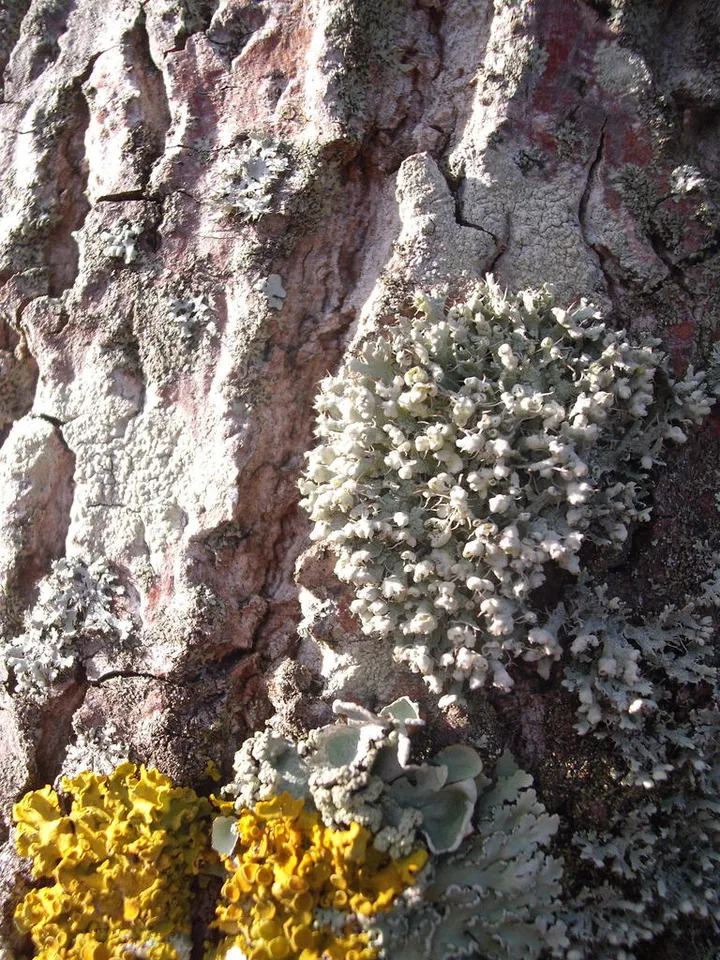
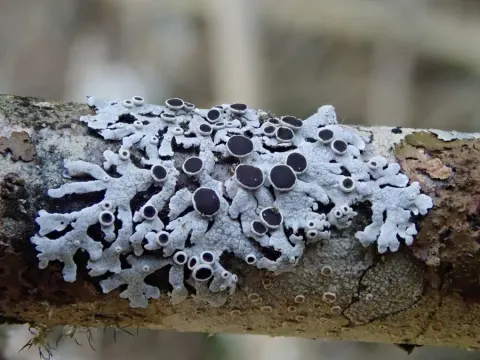
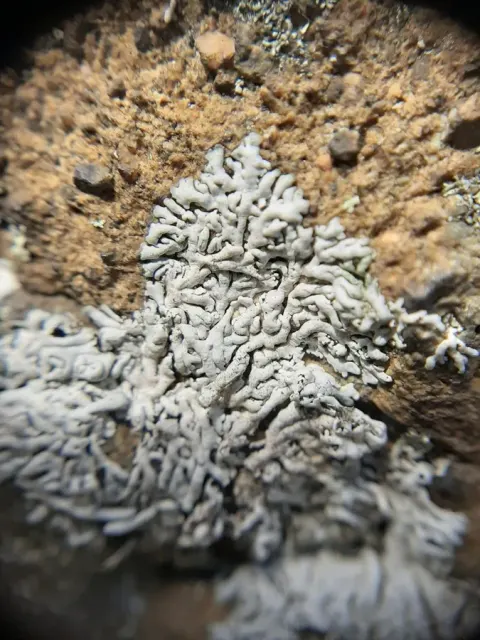
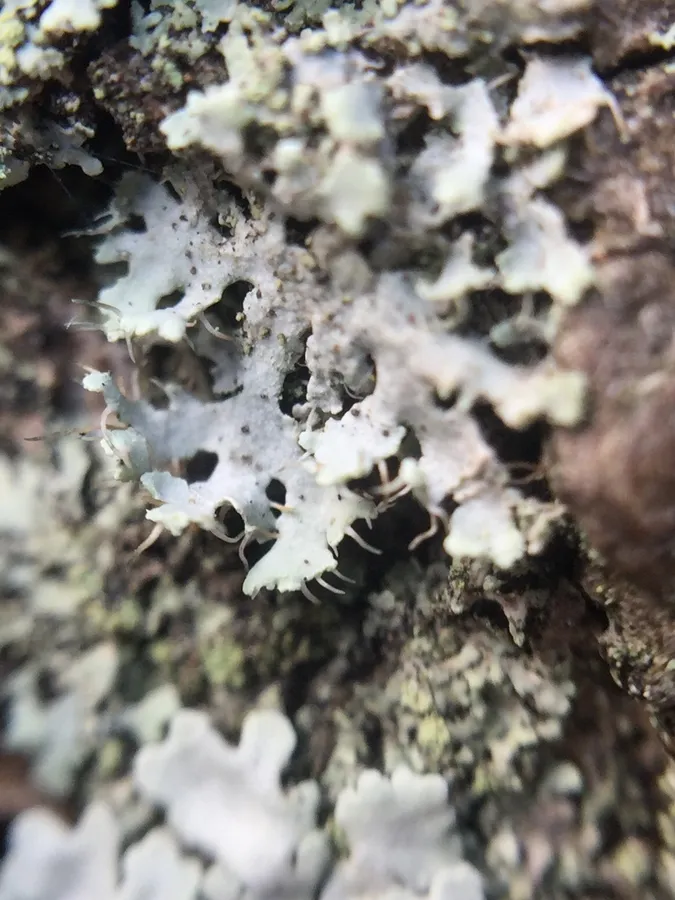
Physcia adscendens has a thallus that ranges in colour from grey to greenish grey, with narrow hood-shaped turned up at the ends. Long dark tipped cilia grow from under the hoods. Pseudocyphellae cover the upper surface. Soralia form at the edges of hoods to open out revealing soredia. Apothecia appear on short stalks with black pruinose discs. The spores measure 16–23 by 7–10 μm. Spot tests of the cortex are K+ (yellow); the medulla is unreactive (K−, C−, P−), a combination that indicates the presence of atranorin.

Sebagian uraian ditampilkan dalam bahasa sumber; terjemahannya belum tersedia atau belum lolos pemeriksaan.

Rujukan: [1]

Pengukuran mengikuti objek, spesimen atau kultur, dan metode yang disebutkan sumber. Baca uraian asli untuk konteks lengkap.

02 / Kehidupan

Habitat dan peran ekologis

Physcia adscendens grows on both calcareous and siliceous rocks. It is common on limestone monuments, twigs and tree trunks. In a Spanish study of the post-fire colonisation success of various lichen species, Physcia adscendens was determined to have one of the greatest colonisation success rates due to its ability to colonise a variety of substrates. It was able to grow on all of the studied substrates, and comprised the largest biomass percentage in the study area. It is often found colonising granite, including churches and monuments. In a 2011 study, Physcia adscendens thallus was fed to nine snail species that are common in temperate Europe. The lichen was able to regenerate from about 40% of the faecal pellets, suggesting that this could be another way that the lichen is dispersed. A 2025 survey of epiphytic lichens on 576 roadside trees in Amsterdam recorded 100 species; P. adscendens was among the very common epiphytes, occurring on more than 500 of the 576 surveyed trees alongside Xanthoria parietina. The authors placed P. adscendens at the core of a xerophytic–nitrophilous ecological group (corresponding to the Physcietum adscendentis association) that forms lush mosaics on many urban trunks, and often persists as one of the last lichens on severely desiccated bark where most other species have disappeared.

Sebagian uraian ditampilkan dalam bahasa sumber; terjemahannya belum tersedia atau belum lolos pemeriksaan.

Rujukan: [1]

Habitat atau konteks temuan
Informasi belum tersedia pada sumber rilis ini.
Substrat
Informasi belum tersedia pada sumber rilis ini.
Peran atau konteks
Pembentuk liken
Temukan hubungan serupa
03 / Siklus hidup

Reproduksi

Physcia adscendens has a thallus that ranges in colour from grey to greenish grey, with narrow hood-shaped turned up at the ends. Long dark tipped cilia grow from under the hoods. Pseudocyphellae cover the upper surface. Soralia form at the edges of hoods to open out revealing soredia. Apothecia appear on short stalks with black pruinose discs. The spores measure 16–23 by 7–10 μm. Spot tests of the cortex are K+ (yellow); the medulla is unreactive (K−, C−, P−), a combination that indicates the presence of atranorin.

Sebagian uraian ditampilkan dalam bahasa sumber; terjemahannya belum tersedia atau belum lolos pemeriksaan.

Rujukan: [1]

Sinonim menurut acuan taksonomi rilis: Dimelaena stellaris f. anthelina; Dimelaena stellaris var. adscendens; Lichen aipolius anthelina; Lichen anthelinus; Parmelia aipolia var. anthelina; Parmelia anthelina; Parmelia stellaris f. anthelina; Physcia aipolia f. anthelina; Physcia ascendens; Physcia hispida f. adscendens; Physcia stellaris f. anthelina; Physcia stellaris var. anthelina; Xanthoria aipolia var. anthelina
04 / Batas informasi

Catatan identitas dan cakupan

  • Nama diterima mengikuti Catalogue of Life Base2026-09-11; uraian mempertahankan konsep dan nama sumber aslinya.
  • Original geographic, specimen and life-cycle scope retained; source import awaits individual editorial review.
  • Impor dan terjemahan otomatis belum diperiksa editorial per profil. Struktur reproduktif yang disebutkan tidak membuktikan seluruh siklus hidup diketahui.
  • Pengukuran pada uraian mengikuti spesimen, kultur, dan metode sumber; angka tidak diperluas ke semua populasi.

Catatan distribusi dalam narasi mengikuti sumbernya. Dokumentasi spesimen atau foto mengikuti catatan sumber. Bukti wilayah Indonesia dan penilaian konservasi tidak disimpulkan dari gambar.

05 / Dokumentasi

Melihat dengan konteks

Dokumentasi Physcia adscendens menurut asosiasi foto pada record takson iNaturalist. Kredit: Stephen Thorpe. Identitas mengikuti sumber; bukan penentuan spesimen independen.

Jenis
Fotografi
Kredit
(c) Stephen Thorpe, some rights reserved (CC BY), uploaded by Stephen Thorpe
Lisensi
CC BY 4.0
Sumber media
Buka entri sumber

Gambar menunjukkan objek menurut identifikasi sumber, bukan verifikasi independen spesimen oleh Fungi. Tidak ada skala baru yang ditambahkan.

Dokumentasi tambahan

06 / Rujukan

Sumber profil

  1. [1] Physcia adscendens — Wikipedia (en)Bagian sumber: Frozen revision 1353397371
    Tanggal penghimpunan sumber: 2026-10-12
    Teks sumber: CC BY-SA4.0 · Wikipedia contributors
  2. [2] Catalogue of Life Base2026-09-11 — Physcia adscendensBagian sumber: ColDP NameUsage.tsv ID 4HGHT; accepted species; source 2073
    Tanggal penghimpunan sumber: 2026-10-12
  3. [3] Dokumentasi visual — Physcia adscendensBagian sumber: Identitas mengikuti sumber dokumentasi; bukan penentuan spesimen independen.
    Tanggal penghimpunan sumber: 2026-10-17
    Media sumber: CC BY 4.0 · (c) Stephen Thorpe, some rights reserved (CC BY), uploaded by Stephen Thorpe
  4. [4] Dokumentasi visual — Physcia adscendensBagian sumber: Identitas mengikuti sumber dokumentasi; bukan penentuan spesimen independen.
    Tanggal penghimpunan sumber: 2026-10-17
    Teks sumber: CC BY 4.0 · (c) Stephen Thorpe, some rights reserved (CC BY), uploaded by Stephen Thorpe

Adaptasi teks: CC BY-SA 4.0. Wikipedia contributors — Physcia adscendens — Wikipedia (en)

Uraian asli dan riwayat sumber

Riwayat atau halaman sumber

Ringkasan sumber

Physcia adscendens, the hooded rosette lichen, is a species of foliose lichen in the family Physciaceae. Originally described in 1882, this widely distributed lichen is characterised by its distinctive hood-shaped that curl upward at the tips and long dark-tipped hairs growing from underneath. The species has a broad ecological tolerance and can colonise various substrates, from limestone monuments to tree bark, contributing to its success as a pioneer species following environmental disturbances.

Revisi sumber

Morfologi sumber

Physcia adscendens has a thallus that ranges in colour from grey to greenish grey, with narrow hood-shaped turned up at the ends. Long dark tipped cilia grow from under the hoods. Pseudocyphellae cover the upper surface. Soralia form at the edges of hoods to open out revealing soredia. Apothecia appear on short stalks with black pruinose discs. The spores measure 16–23 by 7–10 μm. Spot tests of the cortex are K+ (yellow); the medulla is unreactive (K−, C−, P−), a combination that indicates the presence of atranorin.

Revisi sumber

Ekologi sumber

Physcia adscendens grows on both calcareous and siliceous rocks. It is common on limestone monuments, twigs and tree trunks. In a Spanish study of the post-fire colonisation success of various lichen species, Physcia adscendens was determined to have one of the greatest colonisation success rates due to its ability to colonise a variety of substrates. It was able to grow on all of the studied substrates, and comprised the largest biomass percentage in the study area. It is often found colonising granite, including churches and monuments. In a 2011 study, Physcia adscendens thallus was fed to nine snail species that are common in temperate Europe. The lichen was able to regenerate from about 40% of the faecal pellets, suggesting that this could be another way that the lichen is dispersed. A 2025 survey of epiphytic lichens on 576 roadside trees in Amsterdam recorded 100 species; P. adscendens was among the very common epiphytes, occurring on more than 500 of the 576 surveyed trees alongside Xanthoria parietina. The authors placed P. adscendens at the core of a xerophytic–nitrophilous ecological group (corresponding to the Physcietum adscendentis association) that forms lush mosaics on many urban trunks, and often persists as one of the last lichens on severely desiccated bark where most other species have disappeared.

Revisi sumber

Struktur reproduksi sumber

Physcia adscendens has a thallus that ranges in colour from grey to greenish grey, with narrow hood-shaped turned up at the ends. Long dark tipped cilia grow from under the hoods. Pseudocyphellae cover the upper surface. Soralia form at the edges of hoods to open out revealing soredia. Apothecia appear on short stalks with black pruinose discs. The spores measure 16–23 by 7–10 μm. Spot tests of the cortex are K+ (yellow); the medulla is unreactive (K−, C−, P−), a combination that indicates the presence of atranorin.

Revisi sumber

Rujukan halaman ini

Fungi. Physcia adscendens. Rilis data fungi-2026-10-12-expansion-2. https://fungi-atlas.mgadib.chatgpt.site/jamur/physcia-adscendens/.

Status: impor sumber; pemeriksaan editorial per profil belum selesai. Untuk klaim biologis, gunakan rujukan pada bagian terkait dan periksa konteks sumber aslinya.