01 / Morfologi

Ciri dan struktur

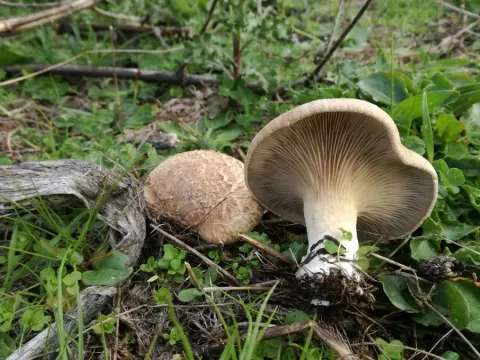
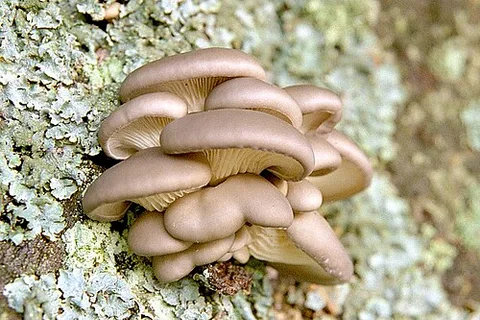
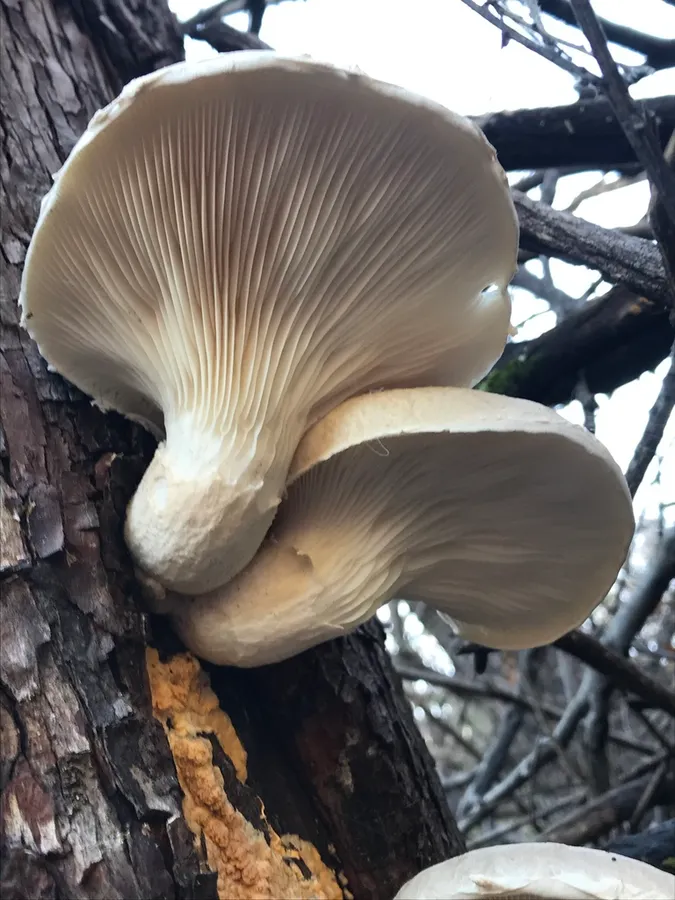
The cap grows to 20 cm across. It is pale to beige, but can turn yellowish. Veil remnants may adhere to the edge. At first it is velvety (tomentose) and the tomentum can develop into grey-brown scales; in old specimens the surface becomes bare and may crack. The whitish or pale brownish lateral stem may be very short or up to 10 cm long, generally with a membranous ring. The gills are decurrent well down the stipe and may anastomose (criss-cross) at the lower extreme. They are white, sometimes turning yellowish. The smell is described as "pleasant" or "slightly polypore-like" or "complex, a bit fruity or sourish". The taste is mild. As with ordinary fragile mushrooms, the flesh may be monomitic but may be dimitic, having extra thick-walled hyphae which give the flesh a tough consistency. There are no cystidia. The spores are elongated in the form of a rounded cylinder and around 9–15 μm by 3–5 μm.

Sebagian uraian ditampilkan dalam bahasa sumber; terjemahannya belum tersedia atau belum lolos pemeriksaan.

Rujukan: [1]

Pengukuran mengikuti objek, spesimen atau kultur, dan metode yang disebutkan sumber. Baca uraian asli untuk konteks lengkap.

02 / Kehidupan

Habitat dan peran ekologis

Appearing from musim panas sampai musim gugur, ia didistribusikan di seluruh Eropa, di mana ia bervariasi secara lokal antara umum dan langka. Ia juga ditemukan di Amerika Utara. Jamur ini saprobik pada kayu mati dan juga bisa menjadi parasit pohon yang lemah (sebagai "puas putih"). Hal ini terutama terjadi pada ek (dari mana ia memperoleh namanya), tetapi juga pada buk, pohon berdaun lebar lainnya, dan terkadang pada konifer. It is often solitary or may grow in small groups.

Sebagian uraian ditampilkan dalam bahasa sumber; terjemahannya belum tersedia atau belum lolos pemeriksaan.

Rujukan: [1]

Habitat atau konteks temuan
Informasi belum tersedia pada sumber rilis ini.
Substrat
kayu
Peran atau konteks
Pengurai
Temukan hubungan serupa
03 / Siklus hidup

Reproduksi

The spores are elongated in the form of a rounded cylinder and around 9–15 μm by 3–5 μm.

Sebagian uraian ditampilkan dalam bahasa sumber; terjemahannya belum tersedia atau belum lolos pemeriksaan.

Rujukan: [1]

Sinonim menurut acuan taksonomi rilis: Agaricus acerinus; Agaricus albertinii; Agaricus corticatus; Agaricus corticatus var. tephrotrichus; Agaricus dryinus; Agaricus dryinus subsp. gibbosus; Agaricus dryinus var. lateralis; Agaricus dryinus var. subcentralis; Agaricus pometi var. pipaeformis; Agaricus torulosus var. tephrotrichus; Armillaria corticata; Armillaria corticata tephrotricha; Armillaria dryina; Armillaria spongiosa; Armillariella corticata; Armillariella dryina; Armillariella dryina subsp. corticata; Clitocybe acerina; Lentinus integer; Lentinus underwoodii; Lentodiopsis dryina; Pleuropus dryinus; Pleurotus acerinus; Pleurotus albertinii; Pleurotus corticatus; Pleurotus corticatus f. gracilis; Pleurotus corticatus f. nana; Pleurotus corticatus subsp. tephrotrichus; Pleurotus corticatus var. aesculi; Pleurotus corticatus var. albertinii; Pleurotus corticatus var. tephrotrichus; Pleurotus dryinus var. tephrotrichus; Pleurotus spongiosus; Pleurotus tephrotrichus
04 / Batas informasi

Catatan identitas dan cakupan

  • Nama diterima mengikuti Catalogue of Life Base2026-09-11; uraian mempertahankan konsep dan nama sumber aslinya.
  • Original geographic, specimen and life-cycle scope retained; source import awaits individual editorial review.
  • Impor dan terjemahan otomatis belum diperiksa editorial per profil. Struktur reproduktif yang disebutkan tidak membuktikan seluruh siklus hidup diketahui.
  • Pengukuran pada uraian mengikuti spesimen, kultur, dan metode sumber; angka tidak diperluas ke semua populasi.

Catatan distribusi dalam narasi mengikuti sumbernya. Dokumentasi spesimen atau foto mengikuti catatan sumber. Bukti wilayah Indonesia dan penilaian konservasi tidak disimpulkan dari gambar.

05 / Dokumentasi

Melihat dengan konteks

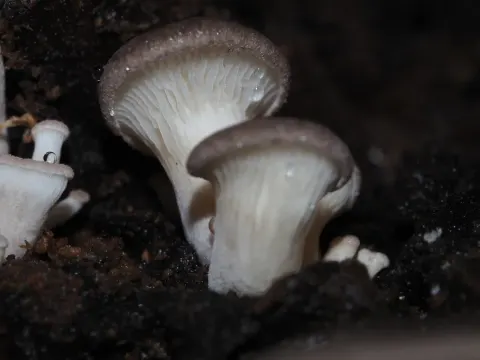
Dokumentasi Pleurotus dryinus menurut asosiasi foto pada record takson iNaturalist. Kredit: LJ Moore-McClelland. Identitas mengikuti sumber; bukan penentuan spesimen independen.

Jenis
Fotografi
Kredit
(c) LJ Moore-McClelland, some rights reserved (CC BY), uploaded by LJ Moore-McClelland
Lisensi
CC BY 4.0
Sumber media
Buka entri sumber

Gambar menunjukkan objek menurut identifikasi sumber, bukan verifikasi independen spesimen oleh Fungi. Tidak ada skala baru yang ditambahkan.

06 / Rujukan

Sumber profil

  1. [1] Pleurotus dryinus — Wikipedia (en)Bagian sumber: Frozen revision 1361825856
    Tanggal penghimpunan sumber: 2026-10-12
    Teks sumber: CC BY-SA4.0 · Wikipedia contributors
  2. [2] Catalogue of Life Base2026-09-11 — Pleurotus dryinusBagian sumber: ColDP NameUsage.tsv ID 77RJJ; accepted species; source 2073
    Tanggal penghimpunan sumber: 2026-10-12
  3. [3] Dokumentasi visual — Pleurotus dryinusBagian sumber: Individual media record; identification follows the source, not independent determination
    Tanggal penghimpunan sumber: 2026-10-12
    Media sumber: CC BY 4.0 · (c) LJ Moore-McClelland, some rights reserved (CC BY), uploaded by LJ Moore-McClelland

Adaptasi teks: CC BY-SA 4.0. Wikipedia contributors — Pleurotus dryinus — Wikipedia (en)

Uraian asli dan riwayat sumber

Riwayat atau halaman sumber

Ringkasan sumber

Pleurotus dryinus, commonly known as the veiled oyster mushroom, is a species of fungus in the family Pleurotaceae. It grows on dead wood and is a weak pathogen, especially infecting broad-leaved trees.

Revisi sumber

Morfologi sumber

The cap grows to 20 cm across. It is pale to beige, but can turn yellowish. Veil remnants may adhere to the edge. At first it is velvety (tomentose) and the tomentum can develop into grey-brown scales; in old specimens the surface becomes bare and may crack. The whitish or pale brownish lateral stem may be very short or up to 10 cm long, generally with a membranous ring. The gills are decurrent well down the stipe and may anastomose (criss-cross) at the lower extreme. They are white, sometimes turning yellowish. The smell is described as "pleasant" or "slightly polypore-like" or "complex, a bit fruity or sourish". The taste is mild. As with ordinary fragile mushrooms, the flesh may be monomitic but may be dimitic, having extra thick-walled hyphae which give the flesh a tough consistency. There are no cystidia. The spores are elongated in the form of a rounded cylinder and around 9–15 μm by 3–5 μm.

Revisi sumber

Ekologi sumber

Appearing from summer to autumn, it is distributed throughout Europe, where it varies locally between common and rare. It is also found in North America. This mushroom is saprobic on dead wood and can also be a weak parasite of trees (as a "white rot"). It occurs especially on oak (from which it derives its name), but also on beech, other broad-leaved trees, and occasionally on conifers. It is often solitary or may grow in small groups.

Revisi sumber

Struktur reproduksi sumber

The spores are elongated in the form of a rounded cylinder and around 9–15 μm by 3–5 μm.

Revisi sumber

Rujukan halaman ini

Fungi. Pleurotus dryinus. Rilis data fungi-2026-10-12-expansion-2. https://fungi-atlas.mgadib.chatgpt.site/jamur/pleurotus-dryinus/.

Status: impor sumber; pemeriksaan editorial per profil belum selesai. Untuk klaim biologis, gunakan rujukan pada bagian terkait dan periksa konteks sumber aslinya.