Ciri dan struktur
Basidiomata medium to large-sized. Pileus 30–51 mm diam; plano-convex to convex, slightly obtuse raised in the middle; yellow (10YR 6/6) to yellow-brown (10YR 5/6), with brown (5YR 3/6) warped scales attached to the surface, the middle scales densely forming a vein-like, gradually becoming sparser toward the margin, with triangular scales toward the margin. Context white (10P 9/2) and odorless. Lamellae free, 4–6 mm wide, crowded, yellowish-brown (2.5YR 4/6), unequal, thin, ventricose, white and even to flocculose edges. Stipe 32–95 × 3–8 mm, fibrous, clavate, hollow, slightly expanded at the base, white (10P 9/2) overall, with denser brown (10YR 3/6) cilia on the middle to lower portion. Spore print unknown. Basidiospores [60/2/1] 5.5–6.0(–6.5) × 4.5–5.0 µm, avL × avW = 5.7–6.0 × 4.6–4.8 µm, Q = 1.10–1.30 µm, avQ = 1.20 µm, subglobose, broadly ellipsoid to ellipsoid, smooth, slightly pinkish, thick-walled. Basidia 23–28 × 8–11 μm, broadly clavate, thin-walled, 4-sterigmate, and hyaline. Pleurocystidia 55–83 × 15–33 μm, scattered, rare, two forms, one fusiform, with apical finger-like projections, 3–6 μm long, the other narrowly clavate to clavate, with an obtusely rounded apical portion, thin-walled, smooth, partly with brown intracellular pigment. Lamellar edge sterile. Cheilocystidia 34–65 × 13–22 μm, abundant, clustered, broadly clavate to clavate, apically obtuse, thin-walled, smooth, hyaline. Pileipellis a trichohymeniderm composed of narrowed fusiform and clavate elements, with terminal elements 130–216 × 17–31 μm, often aggregated into bundles, pointed towards the apex, with brown intracellular pigment, thin-walled, smooth.
Habitat dan peran ekologis
Scattered on very rotten decaying wood in broad-leaved forests (Q. mongolica). USA (Peck 1885, 1899; Murrill 1917; Kauffman 1918; Bessette et al. 1997; Justo et al. 2011b), Turkey (Kaygusuz et al. 2019), China (Yang 2011). Jilin Province, Sichuan Province, Yunnan Province, Tibet Autonomous Region (Yang 2011).
- Habitat atau konteks temuan
- hutan
- Substrat
- Informasi belum tersedia pada sumber rilis ini.
- Peran atau konteks
- Belum dikategorikan pada rilis ini.
Reproduksi
Basidiomata medium to large-sized. Pileus 30–51 mm diam; plano-convex to convex, slightly obtuse raised in the middle; yellow (10YR 6/6) to yellow-brown (10YR 5/6), with brown (5YR 3/6) warped scales attached to the surface, the middle scales densely forming a vein-like, gradually becoming sparser toward the margin, with triangular scales toward the margin. Context white (10P 9/2) and odorless. Lamellae free, 4–6 mm wide, crowded, yellowish-brown (2.5YR 4/6), unequal, thin, ventricose, white and even to flocculose edges. Stipe 32–95 × 3–8 mm, fibrous, clavate, hollow, slightly expanded at the base, white (10P 9/2) overall, with denser brown (10YR 3/6) cilia on the middle to lower portion. Spore print unknown.
Catatan identitas dan cakupan
- Nama diterima mengikuti Catalogue of Life Base2026-09-11; uraian mempertahankan konsep dan nama sumber aslinya.
- Preserve original treatment localities, hosts and substrate scope. Materials examined describe documented specimens, not the full global range.
- Impor dan terjemahan otomatis belum diperiksa editorial per profil. Struktur reproduktif yang disebutkan tidak membuktikan seluruh siklus hidup diketahui.
- Pengukuran pada uraian mengikuti spesimen, kultur, dan metode sumber; angka tidak diperluas ke semua populasi.
Catatan distribusi dalam narasi mengikuti sumbernya. Dokumentasi spesimen atau foto mengikuti catatan sumber. Bukti wilayah Indonesia dan penilaian konservasi tidak disimpulkan dari gambar.
Melihat dengan konteks
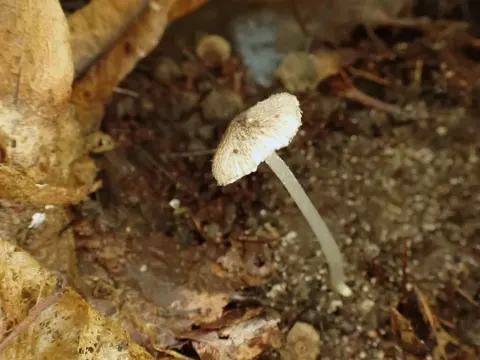
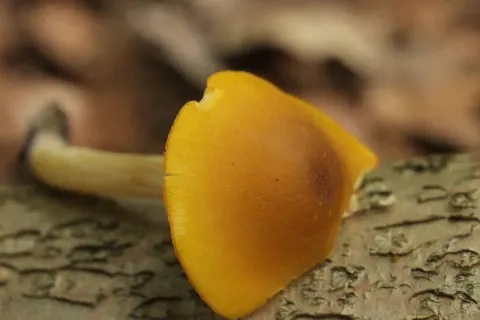
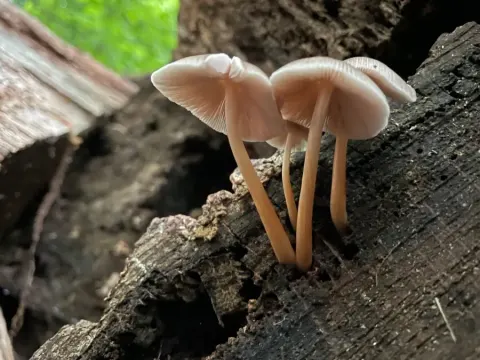
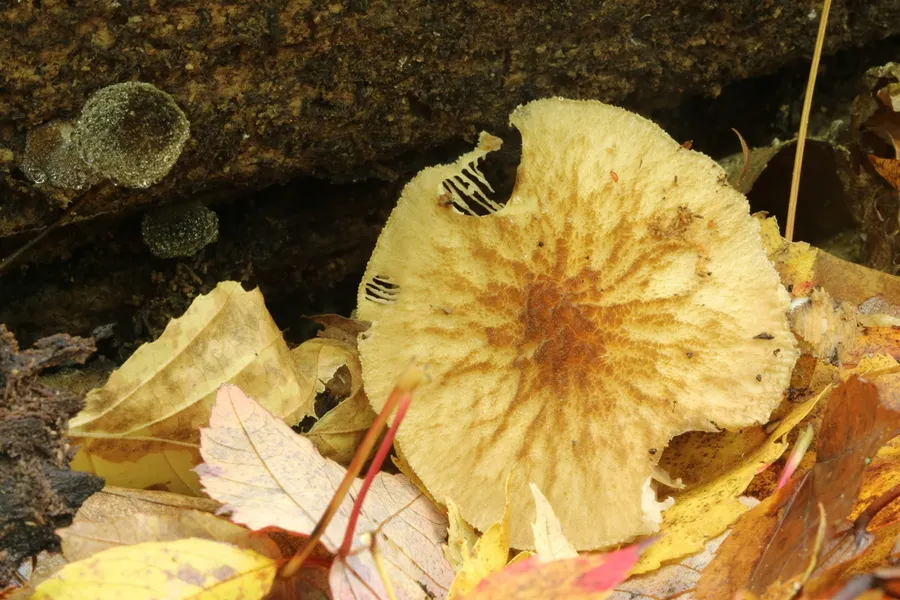
Dokumentasi Pluteus granularis menurut asosiasi foto pada record takson iNaturalist. Kredit: Garrett Taylor. Identitas mengikuti sumber; bukan penentuan spesimen independen.
- Jenis
- Fotografi
- Kredit
- no rights reserved, uploaded by Garrett Taylor
- Lisensi
- CC0 1.0
- Sumber media
- Buka entri sumber
Dokumentasi tambahan
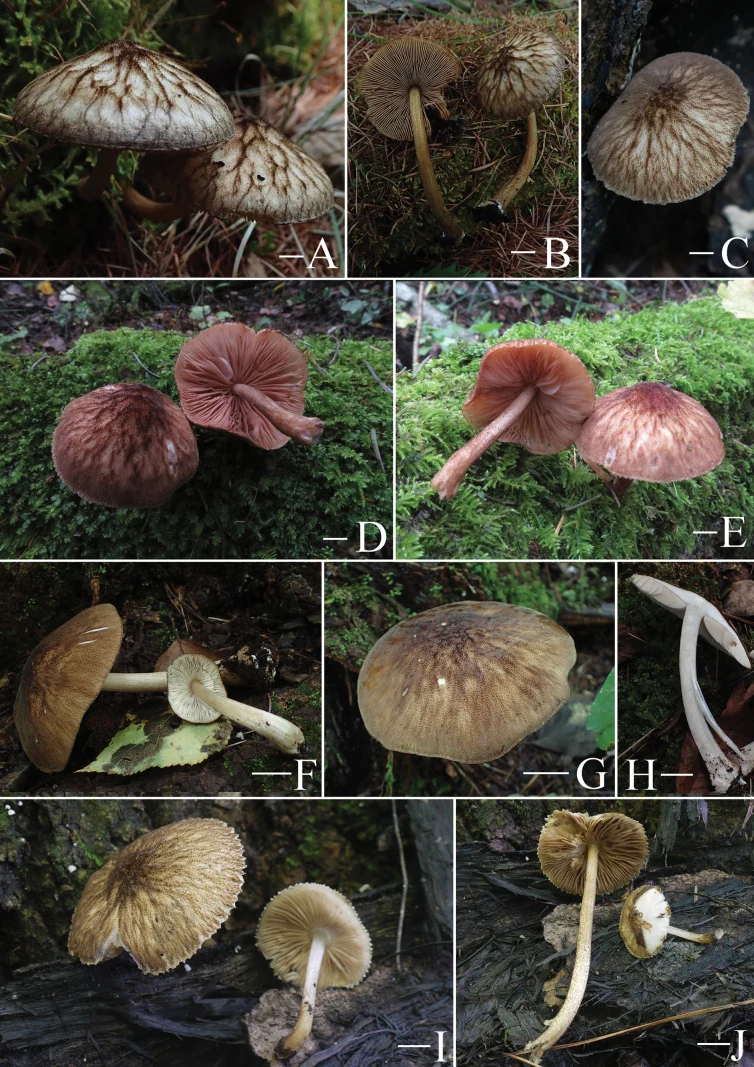
Basidiomata features. A–C. Pluteus costatus (A, B. FJAU66589, C. FJAU66618). D, E. P. umbrosus (FJAU66590). F–H. P. umbrosoides (FJAU66615). I, J. P. granularis (FJAU66612). A–C. Photos by Di-Zhe Guo. D, E. Photos by Jia-Jun Hu. C, F–H. Photos by Gu Rao. I, J. Photos by Zheng-Xiang Qi. Scale bars: 1 cm.
Kredit dan penggunaan
Zheng-Xiang Qi, Li-Bo Wang, Ke-Qing Qian, Li-Li Shi, Jia-Jun Hu, Yong-Lan Tuo, Gu Rao, Muharagi Samwel Jacob, Rui-Peng Liu, Ming-Hao Liu, Di-Zhe Guo, Ya-Jie Liu, Bo Zhang, Xiao Li, Yu Li
Ukuran dan format gambar disesuaikan tanpa pemotongan, retus, atau penambahan skala. Lisensi sumber dipertahankan.
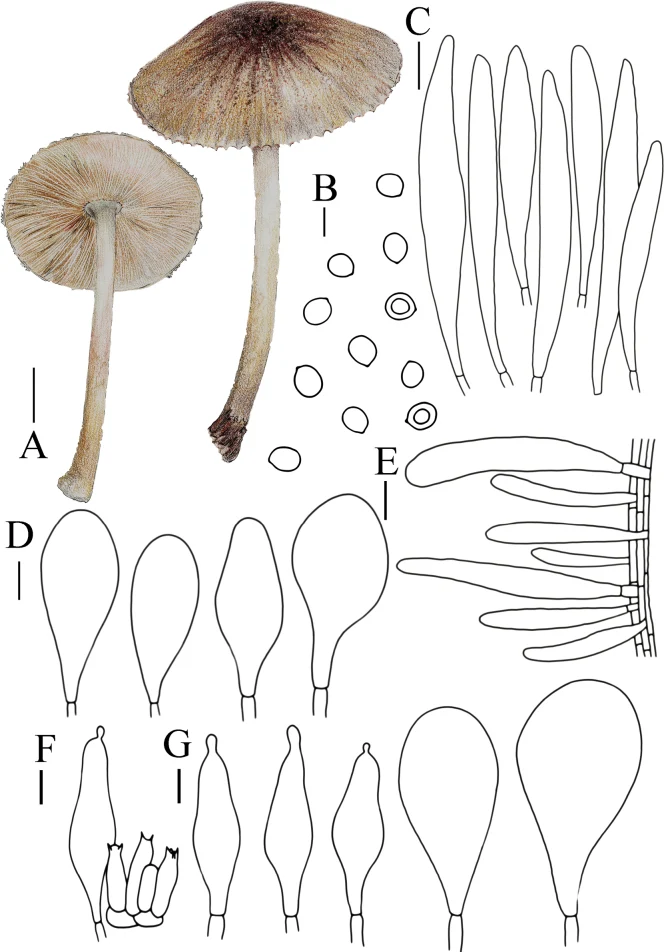
A. Macroscopic characteristics of Pluteus granularis. B. Basidiospores. C. Pileipellis elements. D. Cheilocystidia. E. Caulocystidia. F. Basidia and Pleurocystidia. G. Pleurocystidia. Scale bars: 1 cm (A); 5 µm (B); 10 µm (D–G); 20 µm (C).
Kredit dan penggunaan
Zheng-Xiang Qi, Li-Bo Wang, Ke-Qing Qian, Li-Li Shi, Jia-Jun Hu, Yong-Lan Tuo, Gu Rao, Muharagi Samwel Jacob, Rui-Peng Liu, Ming-Hao Liu, Di-Zhe Guo, Ya-Jie Liu, Bo Zhang, Xiao Li, Yu Li
Ukuran dan format gambar disesuaikan tanpa pemotongan, retus, atau penambahan skala. Lisensi sumber dipertahankan.
Sumber profil
- [1] Integrating morphology, phylogeny, substrate, and distribution: clarifying the major phylogenetic framework of Pluteus sect. Hispidoderma (Agaricales, Pluteaceae) and describing 18 species — Pluteus granularis
- [2] Catalogue of Life Base2026-09-11 — Pluteus granularis
- [3] Dokumentasi visual — Pluteus granularis
- [4] Dokumentasi visual — Pluteus granularis
- [5] Dokumentasi visual — Pluteus granularis
Rujukan halaman ini
Fungi. Pluteus granularis. Rilis data fungi-2026-10-12-expansion-2. https://fungi-atlas.mgadib.chatgpt.site/jamur/pluteus-granularis/.
Status: impor sumber; pemeriksaan editorial per profil belum selesai. Untuk klaim biologis, gunakan rujukan pada bagian terkait dan periksa konteks sumber aslinya.