Ciri dan struktur
Basidiomata small to medium-sized. Pileus 21–42 mm diam; campanulate to hemispherical when young, egg-yellow (5.0Y 9/12); gradually plano-convex at maturity, bright yellow (5.0Y 9/18), brown in the middle (7.5YR 7/18); the white margin, with striate from the middle to the margin, straight. Context yellowish (2.5Y 8/18), odorless, 2–4 mm thick. Lamellae initially white, becoming pink to flesh-pink at maturity (2.5Y 9/12–2.5Y 8/12), free, crowded, thick, unequal, 3–5 mm wide. Stipe 37–75 × 6–11 mm, cylindrical to compressed, hollow, white, fibrous, base light brown (2.5Y 8/16), slightly thick to bulbous, surface relatively smooth. Odorless. Spore prints pink. Basidiospores 5.0–5.5(–6.0) × 4.5–5.0(–5.5) μm, avL × avW = 5.2–5.5 × 4.8–5.0 µm, Q = 1.00–1.33 μm, avQ = 1.10–1.15 μm, spherical to subglobose, slightly pinkish, smooth, thin-walled. Basidia 24–30 × 7–10 μm, clavate, thin-walled, 4-sterigmate, hyaline. Pleurocystidia 55–87 × 12–24 μm, scattered, fusiform, lageniform, or utriform, some with or without 1–2 digitiform excrescences at apex, thin-walled, smooth, hyaline. Lamellar edge sterile. Cheilocystidia 31–68 × 9–16 μm, numerous, clustered, subfusiform to fusiform, apically diverticulate or shortly rostrate, thin-walled, hyaline. Pileipellis a hymeniderm formed of variable and often mixed elements, from short and rounded to clavate or cylindrical terminal elements, 62–101 × 22–36 μm, with yellow intracellular pigment, with thin and smooth walls. Stipitipellis a cutis, hyphae 5–12 µm diam, cylindrical, hyaline, thin-walled. Caulocystidia 53–88 × 11–22 μm, mostly grouped, fusiform, lageniform to broadly lageniform, apical with short rostrate, thin-walled, smooth, hyaline.
Habitat dan peran ekologis
Solitary to scattered on rotting wood in broad-leaved or mixed forests. Hungary (Babos 1978), Europe from Austria (Lohmeyer et al. 1994), Italy (Lanconelli et al. 1998; Migliozzi 2011; Lezzi et al. 2014), Romania (Béres 2012), Russia (as P. castri) (Justo et al. 2011a), Slovenia (Jogan et al. 2012), Moldova (Lezzi et al. 2014), Japan (as P. castri) (Justo et al. 2011a), Germany (Ludwig 2007), Turkey (Kaygusuz et al. 2019), China (as P. luteus) (Ševčíková and Dima 2021). Henan Province, Sichuan Province, Jiangsu Province.
- Habitat atau konteks temuan
- hutan
- Substrat
- kayu
- Peran atau konteks
- Belum dikategorikan pada rilis ini.
Reproduksi
Basidiomata small to medium-sized. Pileus 21–42 mm diam; campanulate to hemispherical when young, egg-yellow (5.0Y 9/12); gradually plano-convex at maturity, bright yellow (5.0Y 9/18), brown in the middle (7.5YR 7/18); the white margin, with striate from the middle to the margin, straight. Context yellowish (2.5Y 8/18), odorless, 2–4 mm thick. Lamellae initially white, becoming pink to flesh-pink at maturity (2.5Y 9/12–2.5Y 8/12), free, crowded, thick, unequal, 3–5 mm wide. Stipe 37–75 × 6–11 mm, cylindrical to compressed, hollow, white, fibrous, base light brown (2.5Y 8/16), slightly thick to bulbous, surface relatively smooth. Odorless. Spore prints pink. Basidiospores 5.0–5.5(–6.0) × 4.5–5.0(–5.5) μm, avL × avW = 5.2–5.5 × 4.8–5.0 µm, Q = 1.00–1.33 μm, avQ = 1.10–1.15 μm, spherical to subglobose, slightly pinkish, smooth, thin-walled.
Catatan identitas dan cakupan
- Nama diterima mengikuti Catalogue of Life Base2026-09-11; uraian mempertahankan konsep dan nama sumber aslinya.
- Preserve original treatment localities, hosts and substrate scope. Materials examined describe documented specimens, not the full global range.
- Impor dan terjemahan otomatis belum diperiksa editorial per profil. Struktur reproduktif yang disebutkan tidak membuktikan seluruh siklus hidup diketahui.
- Pengukuran pada uraian mengikuti spesimen, kultur, dan metode sumber; angka tidak diperluas ke semua populasi.
Catatan distribusi dalam narasi mengikuti sumbernya. Dokumentasi spesimen atau foto mengikuti catatan sumber. Bukti wilayah Indonesia dan penilaian konservasi tidak disimpulkan dari gambar.
Melihat dengan konteks
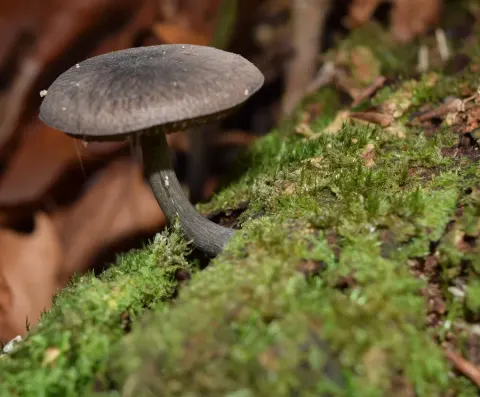
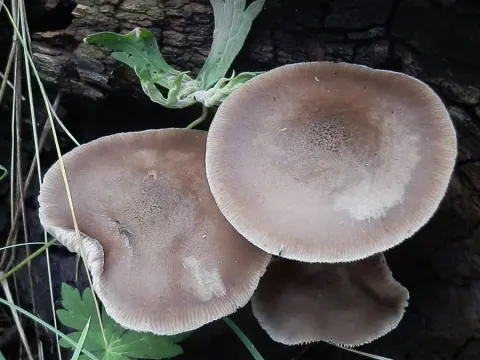
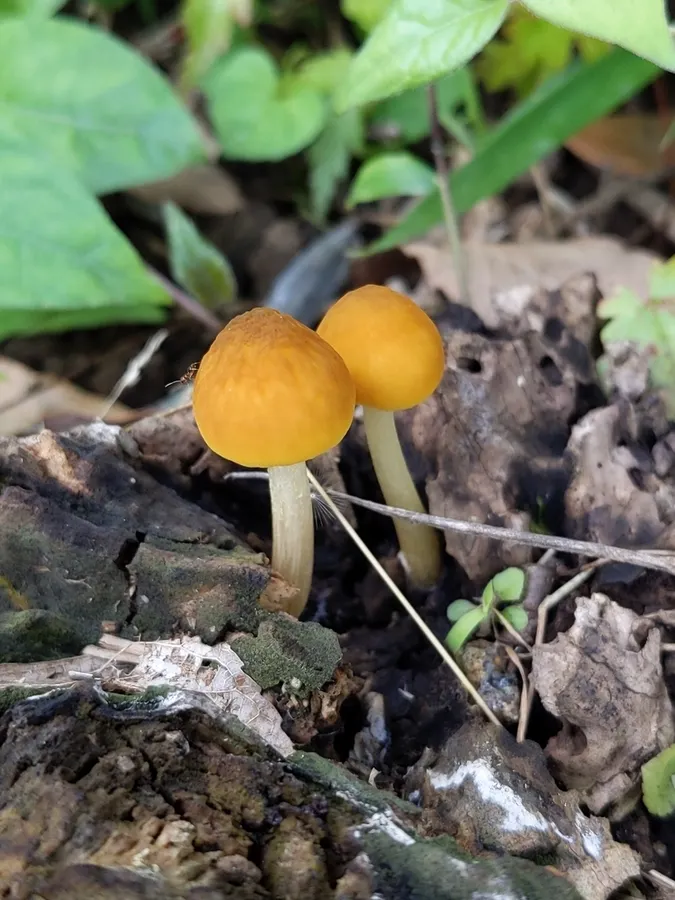
Dokumentasi Pluteus variabilicolor menurut asosiasi foto pada record takson iNaturalist. Kredit: MUNENORI YAMAKAWA. Identitas mengikuti sumber; bukan penentuan spesimen independen.
- Jenis
- Fotografi
- Kredit
- (c) MUNENORI YAMAKAWA, kai kurios teisės saugomos (CC BY), uploaded by MUNENORI YAMAKAWA
- Lisensi
- CC BY 4.0
- Sumber media
- Buka entri sumber
Dokumentasi tambahan
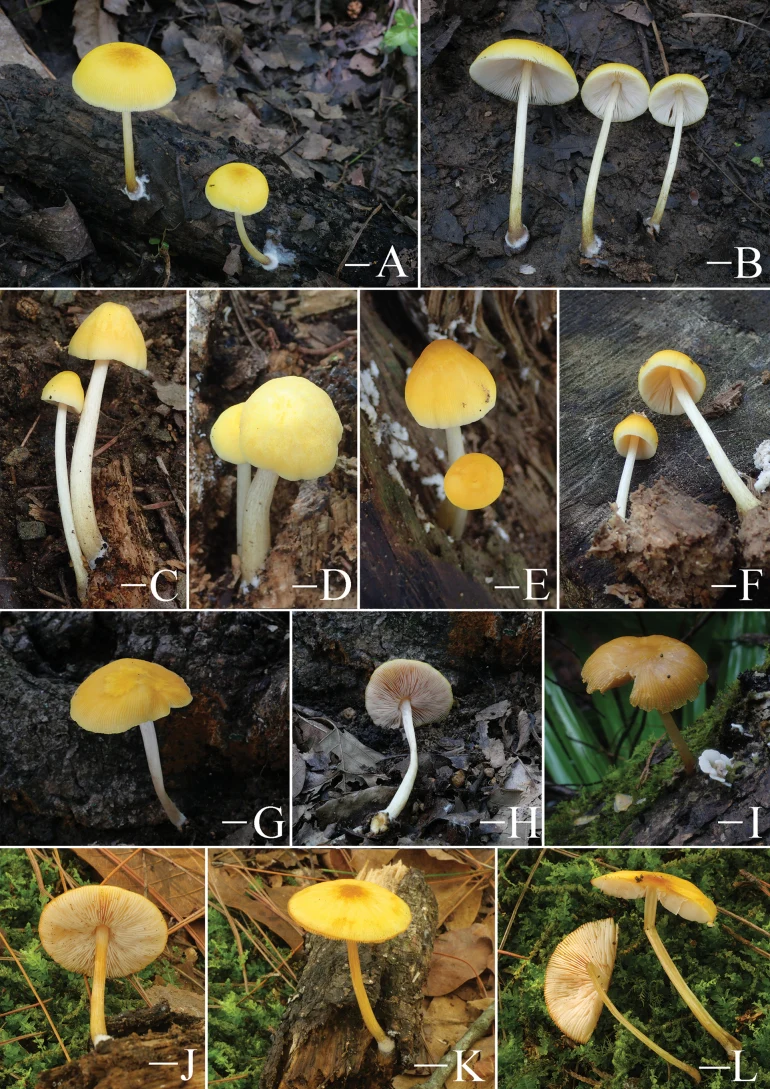
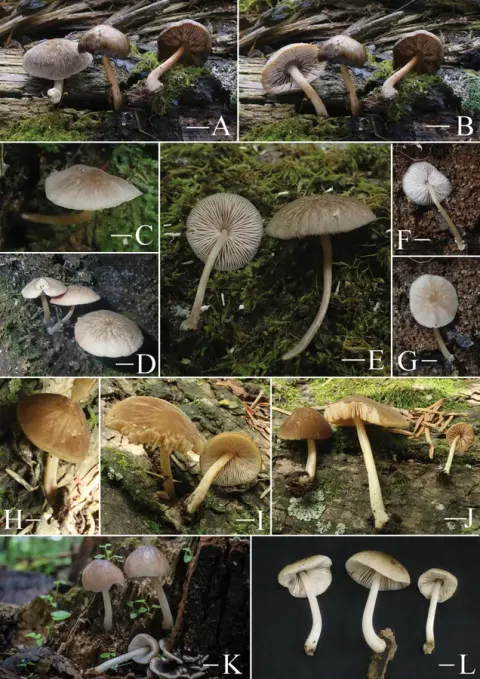
Basidiomata features. A–L. Pluteus variabilicolor (A, B. FJAU66585, C, D. FJAU66584, E, F. FJAU66583, G, H. FJAU66586, I. FJAU66588, J–L. FJAU66623). A–H. Photos by Ya-Jie Liu. I–L. Photos by Li-Bo Wang. Scale bars: 1 cm.
Kredit dan penggunaan
Zheng-Xiang Qi, Li-Bo Wang, Ke-Qing Qian, Li-Li Shi, Jia-Jun Hu, Yong-Lan Tuo, Gu Rao, Muharagi Samwel Jacob, Rui-Peng Liu, Ming-Hao Liu, Di-Zhe Guo, Ya-Jie Liu, Bo Zhang, Xiao Li, Yu Li
Ukuran dan format gambar disesuaikan tanpa pemotongan, retus, atau penambahan skala. Lisensi sumber dipertahankan.
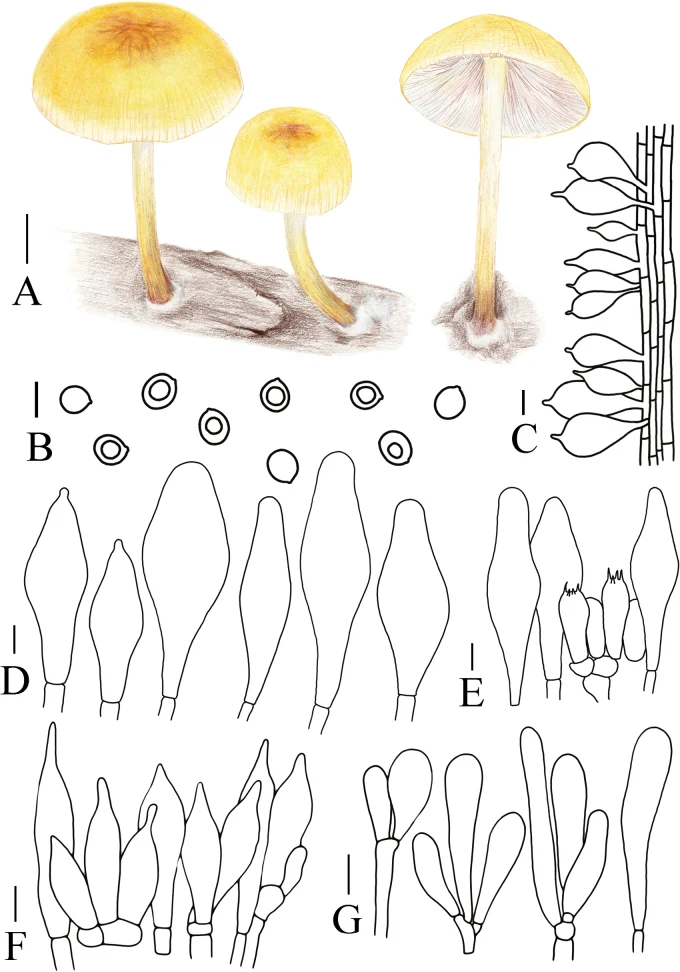
A. Macroscopic characteristics of Pluteus variabilicolor. B. Basidiospores. C. Caulocystidia. D. Pleurocystidia. E. Basidia and Pleurocystidia. F. Cheilocystidia. G. Pileipellis elements. Scale bars: 1 cm (A); 10 µm (C–F); 20 µm (B, G).
Kredit dan penggunaan
Zheng-Xiang Qi, Li-Bo Wang, Ke-Qing Qian, Li-Li Shi, Jia-Jun Hu, Yong-Lan Tuo, Gu Rao, Muharagi Samwel Jacob, Rui-Peng Liu, Ming-Hao Liu, Di-Zhe Guo, Ya-Jie Liu, Bo Zhang, Xiao Li, Yu Li
Ukuran dan format gambar disesuaikan tanpa pemotongan, retus, atau penambahan skala. Lisensi sumber dipertahankan.
Sumber profil
- [1] Integrating morphology, phylogeny, substrate, and distribution: clarifying the major phylogenetic framework of Pluteus sect. Hispidoderma (Agaricales, Pluteaceae) and describing 18 species — Pluteus variabilicolor
- [2] Catalogue of Life Base2026-09-11 — Pluteus variabilicolor
- [3] Dokumentasi visual — Pluteus variabilicolor
- [4] Dokumentasi visual — Pluteus variabilicolor
- [5] Dokumentasi visual — Pluteus variabilicolor
Rujukan halaman ini
Fungi. Pluteus variabilicolor. Rilis data fungi-2026-10-12-expansion-2. https://fungi-atlas.mgadib.chatgpt.site/jamur/pluteus-variabilicolor/.
Status: impor sumber; pemeriksaan editorial per profil belum selesai. Untuk klaim biologis, gunakan rujukan pada bagian terkait dan periksa konteks sumber aslinya.