01 / Morfologi

Ciri dan struktur

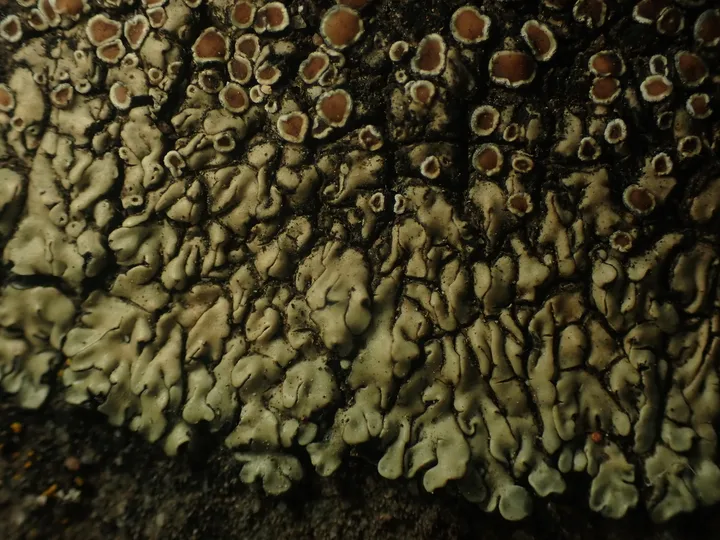
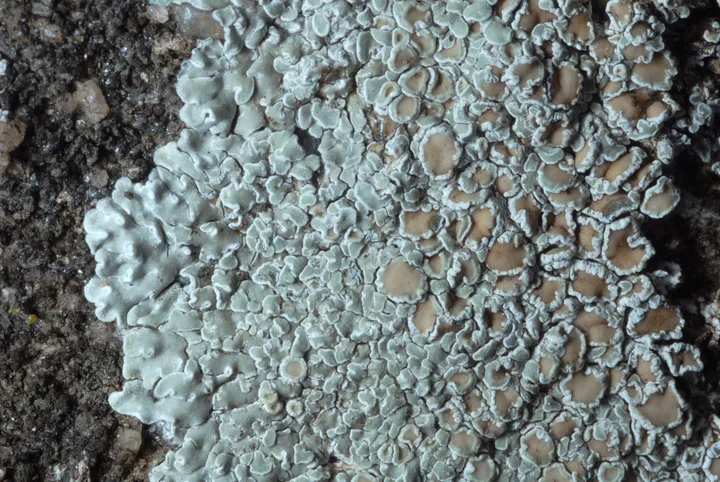
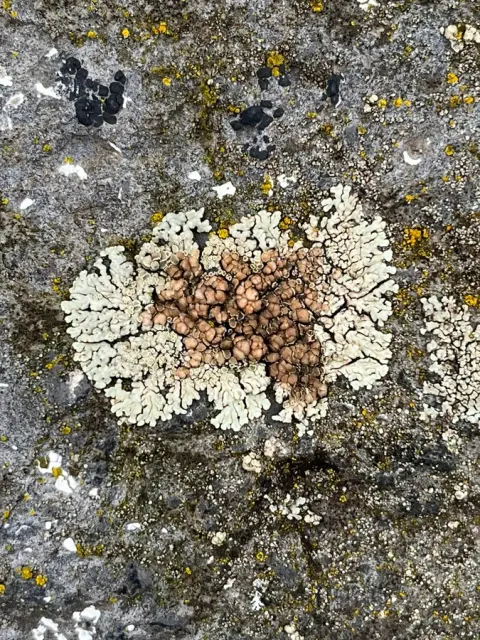
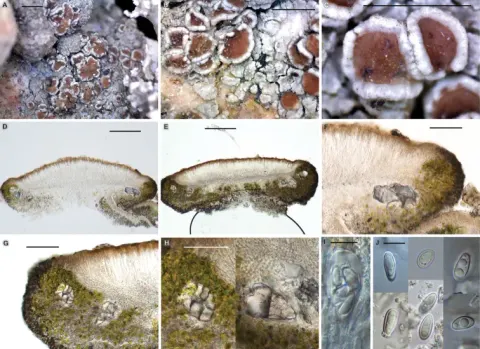
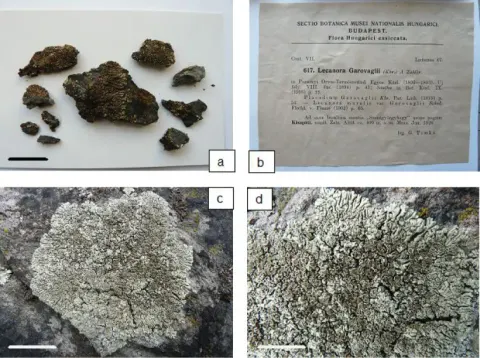
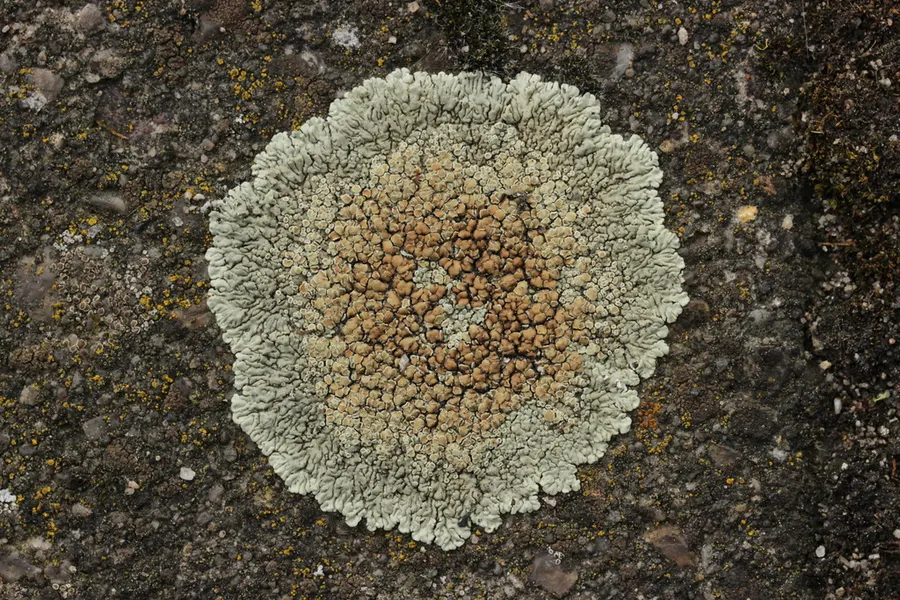
The usually 1.5–3.5 cm (or more) wide nonvegetative body (thallus) is made up of parts separated by cracks (areolate) that may lift at their edges (squamulose), usually growing in a neat rosette radiating from the center (placodioid in lobes. The upper surface is pale grayish to yellow-green, being more yellow towards the lobe tips. It may be continuous to rimose, with a surface that is shiny or waxy. Contiguous or widely separated lobes radiate outward, but may be randomly oriented. The lobes are roughly 1.5–4.5 mm long, and 0.5–0.6 mm wide. Lobes are sometimes short and like squamules. They may be concave, convex, or undulate, with their edges folded along sinuses, but never sinuous to plicate. Like the areolas, the edges of the lobes may be flat like planes, or raised, thickening towards the tips. The ends of the lobes may be simple or incised to crenate. The extreme tips of the lobes are in segments that are 0.3–1 mm wide. The outer edges of the lobes are darker, sometimes being blue-green to black. The center is 0.5–2 mm (or more) thick. The prothallus is either absent or vestigial, with areoles sometimes being contiguous and sometimes scattered. The 0.5–1 mm wide areolas may be irregular to round, with edges that are sometimes raised (squamulous), and thickened where they raise. Coastal forms are more pale yellowish green than gray. It usually does not have a coating of fine dustlike particles (pruinose), but sometimes may, especially at the margins, especially where the sinuses are folded. There are no particles are little granules of algae wrapped in fungi, for propagation (soredia) to the point of being densely covered in chalky white material (albopulverulenta), but soredia may be entirely lacking (esorediate).

Sebagian uraian ditampilkan dalam bahasa sumber; terjemahannya belum tersedia atau belum lolos pemeriksaan.

Rujukan: [1]

Pengukuran mengikuti objek, spesimen atau kultur, dan metode yang disebutkan sumber. Baca uraian asli untuk konteks lengkap.

02 / Kehidupan

Habitat dan peran ekologis

It grows on rock including basalt, pumice, rhyolite, granite, sandstone, and limestone. Sometimes it can be found growing on bark. It may be tightly or loosely attached to the substrate. It grows all over the world including in Europe, Asia, North America, South America, Africa, Macaronesia, Oceania, and Australasia. In California, it may be the most common member of the Lecanora genus found growing on rocks (saxicolous). In the Sonoran Desert it is found from southern California to both north and south Baja California, and through Arizona to Sonora, Mexico, at elevations ranging from 20 to 2800 m.

Sebagian uraian ditampilkan dalam bahasa sumber; terjemahannya belum tersedia atau belum lolos pemeriksaan.

Rujukan: [1]

Habitat atau konteks temuan
Informasi belum tersedia pada sumber rilis ini.
Substrat
kulit kayu
Peran atau konteks
Pembentuk liken
Temukan hubungan serupa
03 / Siklus hidup

Reproduksi

It usually does not have a coating of fine dustlike particles (pruinose), but sometimes may, especially at the margins, especially where the sinuses are folded. There are no particles are little granules of algae wrapped in fungi, for propagation (soredia) to the point of being densely covered in chalky white material (albopulverulenta), but soredia may be entirely lacking (esorediate).

Sebagian uraian ditampilkan dalam bahasa sumber; terjemahannya belum tersedia atau belum lolos pemeriksaan.

Rujukan: [1]

Sinonim menurut acuan taksonomi rilis: Acarospora squamulosa f. albomarginata; Callopisma pusillum; Caloplaca murorum f. pusilla; Caloplaca tegularis var. pusilla; Gasparrinia saxicola; Gasparrinia saxicola var. versicolor; Lecanora albomarginata; Lecanora diffracta; Lecanora galactina f. muralis; Lecanora muralis; Lecanora muralis f. areolata; Lecanora muralis f. diffracta; Lecanora muralis f. dispersa; Lecanora muralis f. saxicola; Lecanora muralis f. semitensis; Lecanora muralis f. versicolor; Lecanora muralis subsp. diffracta; Lecanora muralis subsp. dubyi; Lecanora muralis subsp. saxicola; Lecanora muralis subsp. versicolor; Lecanora muralis var. albomarginata; Lecanora muralis var. areolata; Lecanora muralis var. diffracta; Lecanora muralis var. dubyi; Lecanora muralis var. saxicola; Lecanora muralis var. schneebergensis; Lecanora muralis var. versicolor; Lecanora murorum var. pusilla; Lecanora saxicola; Lecanora saxicola f. areolata; Lecanora saxicola f. dispersa; Lecanora saxicola f. versicolor; Lecanora saxicola subsp. albomarginata; Lecanora saxicola var. albomarginata; Lecanora saxicola var. diffracta; Lecanora saxicola var. schneebergensis; Lecanora saxicola var. semitensis; Lecanora saxicola var. versicolor; Lecanora semitensis; Lichen diffractus; Lichen muralis; Lichen muralis var. saxicola; Lichen peltatus diffracta; Lobaria muralis; Lobaria saxicola; Lobaria versicolor; Parmelia muralis; Parmelia muralis var. diffracta; Parmelia saxicola; Parmelia saxicola f. diffracta; Parmelia saxicola f. versicolor; Parmelia saxicola var. diffracta; Parmelia saxicola var. muralis; Parmelia saxicola var. versicolor; Parmularia albomarginata; Parmularia muralis; Parmularia muralis var. diffracta; Parmularia muralis var. saxicola; Patellaria muralis; Placodium albomarginatum; Placodium diffractum; Placodium murale; Placodium murale f. diffractum; Placodium murale f. versicolor; Placodium murale var. areolatum; Placodium murale var. diffractum; Placodium murale var. saxicola; Placodium murale var. schneebergense; Placodium murale var. versicolor; Placodium murorum f. pusillum; Placodium murorum var. pusillum; Placodium ochroleucum var. muralis; Placodium saxicola; Placodium saxicola f. diffractum; Placodium saxicola var. diffractum; Placodium saxicola var. versicolor; Placodium versicolor; Placolecanora albomarginata; Placolecanora muralis; Placolecanora muralis f. albomarginata; Placolecanora muralis f. diffracta; Placolecanora muralis var. albomarginata; Placolecanora muralis var. saxicola; Placolecanora muralis var. versicolor; Placolecanora versicolor; Protoparmeliopsis muralis var. diffracta; Protoparmeliopsis muralis var. dubyi; Protoparmeliopsis muralis var. schneebergensis; Protoparmeliopsis versicolor; Psora muralis; Psoroma murale; Psoroma saxicola; Psoroma saxicola var. diffractum; Psoroma saxicola var. versicolor; Squamaria carphinea var. dubyi; Squamaria diffracta; Squamaria diffracta f. areolata; Squamaria muralis; Squamaria muralis f. albomarginata; Squamaria muralis var. areolata; Squamaria muralis var. diffracta; Squamaria muralis var. saxicola; Squamaria muralis var. versicolor; Squamaria riparia var. muralis; Squamaria saxicola; Squamaria saxicola f. dispersa; Squamaria saxicola subsp. albomarginata; Squamaria saxicola var. albomarginata; Squamaria saxicola var. areolata; Squamaria saxicola var. diffracta; Squamaria saxicola var. versicolor; Squamaria versicolor; Squamaria versicolor f. areolata; Squamaria versicolor f. dispersa; Squamaria versicolor f. schneebergensis
04 / Batas informasi

Catatan identitas dan cakupan

  • Nama diterima mengikuti Catalogue of Life Base2026-09-11; uraian mempertahankan konsep dan nama sumber aslinya.
  • Original geographic, specimen and life-cycle scope retained; source import awaits individual editorial review.
  • Impor dan terjemahan otomatis belum diperiksa editorial per profil. Struktur reproduktif yang disebutkan tidak membuktikan seluruh siklus hidup diketahui.
  • Pengukuran pada uraian mengikuti spesimen, kultur, dan metode sumber; angka tidak diperluas ke semua populasi.

Catatan distribusi dalam narasi mengikuti sumbernya. Dokumentasi spesimen atau foto mengikuti catatan sumber. Bukti wilayah Indonesia dan penilaian konservasi tidak disimpulkan dari gambar.

05 / Dokumentasi

Melihat dengan konteks

Dokumentasi Protoparmeliopsis muralis menurut asosiasi foto pada record takson iNaturalist. Kredit: Björn Sothmann. Identitas mengikuti sumber; bukan penentuan spesimen independen.

Jenis
Fotografi
Kredit
(c) Björn Sothmann, some rights reserved (CC BY-SA), uploaded by Björn Sothmann
Sumber media
Buka entri sumber

Gambar menunjukkan objek menurut identifikasi sumber, bukan verifikasi independen spesimen oleh Fungi. Tidak ada skala baru yang ditambahkan.

Dokumentasi tambahan

06 / Rujukan

Sumber profil

  1. [1] Lecanora muralis — Wikipedia (en)Bagian sumber: Frozen revision 1369625725
    Tanggal penghimpunan sumber: 2026-10-12
    Teks sumber: CC BY-SA4.0 · Wikipedia contributors
  2. [2] Catalogue of Life Base2026-09-11 — Protoparmeliopsis muralisBagian sumber: ColDP NameUsage.tsv ID 4N6KB; accepted species; source 2073
    Tanggal penghimpunan sumber: 2026-10-12
  3. [3] Dokumentasi visual — Protoparmeliopsis muralisBagian sumber: Identitas mengikuti sumber dokumentasi; bukan penentuan spesimen independen.
    Tanggal penghimpunan sumber: 2026-10-17
    Media sumber: CC BY-SA 4.0 · (c) Björn Sothmann, some rights reserved (CC BY-SA), uploaded by Björn Sothmann
  4. [4] Dokumentasi visual — Protoparmeliopsis muralisBagian sumber: Identitas mengikuti sumber dokumentasi; bukan penentuan spesimen independen.
    Tanggal penghimpunan sumber: 2026-10-17
    Teks sumber: CC BY-SA 4.0 · (c) Rand Workman, some rights reserved (CC BY-SA), uploaded by Rand Workman
  5. [5] Dokumentasi visual — Protoparmeliopsis muralisBagian sumber: Identitas mengikuti sumber dokumentasi; bukan penentuan spesimen independen.
    Tanggal penghimpunan sumber: 2026-10-17
    Teks sumber: CC BY-SA 4.0 · (c) Douglas Goldman, some rights reserved (CC BY-SA), uploaded by Douglas Goldman

Adaptasi teks: CC BY-SA 4.0. Wikipedia contributors — Lecanora muralis — Wikipedia (en)

Uraian asli dan riwayat sumber

Riwayat atau halaman sumber

Ringkasan sumber

Lecanora muralis (Protoparmeliopsis muralis), the stonewall rim lichen, is a waxy-looking, pale yellowish-green crustose lichen that usually grows in rosettes radiating from a center (placodioid) filled with disc-like yellowish-tan fruiting bodies (apothecia). It grows all over the world. It is extremely variable in its characteristics as a single taxon, and may represent a complex of species. The fruiting body parts have rims of tissue similar to that of the main nonfruiting body (thallus), which is called lecanorine.

Revisi sumber

Morfologi sumber

The usually 1.5–3.5 cm (or more) wide nonvegetative body (thallus) is made up of parts separated by cracks (areolate) that may lift at their edges (squamulose), usually growing in a neat rosette radiating from the center (placodioid in lobes. The upper surface is pale grayish to yellow-green, being more yellow towards the lobe tips. It may be continuous to rimose, with a surface that is shiny or waxy. Contiguous or widely separated lobes radiate outward, but may be randomly oriented. The lobes are roughly 1.5–4.5 mm long, and 0.5–0.6 mm wide. Lobes are sometimes short and like squamules. They may be concave, convex, or undulate, with their edges folded along sinuses, but never sinuous to plicate. Like the areolas, the edges of the lobes may be flat like planes, or raised, thickening towards the tips. The ends of the lobes may be simple or incised to crenate. The extreme tips of the lobes are in segments that are 0.3–1 mm wide. The outer edges of the lobes are darker, sometimes being blue-green to black. The center is 0.5–2 mm (or more) thick. The prothallus is either absent or vestigial, with areoles sometimes being contiguous and sometimes scattered. The 0.5–1 mm wide areolas may be irregular to round, with edges that are sometimes raised (squamulous), and thickened where they raise. Coastal forms are more pale yellowish green than gray. It usually does not have a coating of fine dustlike particles (pruinose), but sometimes may, especially at the margins, especially where the sinuses are folded. There are no particles are little granules of algae wrapped in fungi, for propagation (soredia) to the point of being densely covered in chalky white material (albopulverulenta), but soredia may be entirely lacking (esorediate).

Revisi sumber

Ekologi sumber

It grows on rock including basalt, pumice, rhyolite, granite, sandstone, and limestone. Sometimes it can be found growing on bark. It may be tightly or loosely attached to the substrate. It grows all over the world including in Europe, Asia, North America, South America, Africa, Macaronesia, Oceania, and Australasia. In California, it may be the most common member of the Lecanora genus found growing on rocks (saxicolous). In the Sonoran Desert it is found from southern California to both north and south Baja California, and through Arizona to Sonora, Mexico, at elevations ranging from 20 to 2800 m.

Revisi sumber

Struktur reproduksi sumber

It usually does not have a coating of fine dustlike particles (pruinose), but sometimes may, especially at the margins, especially where the sinuses are folded. There are no particles are little granules of algae wrapped in fungi, for propagation (soredia) to the point of being densely covered in chalky white material (albopulverulenta), but soredia may be entirely lacking (esorediate).

Revisi sumber

Rujukan halaman ini

Fungi. Protoparmeliopsis muralis. Rilis data fungi-2026-10-12-expansion-2. https://fungi-atlas.mgadib.chatgpt.site/jamur/protoparmeliopsis-muralis/.

Status: impor sumber; pemeriksaan editorial per profil belum selesai. Untuk klaim biologis, gunakan rujukan pada bagian terkait dan periksa konteks sumber aslinya.