Ciri dan struktur
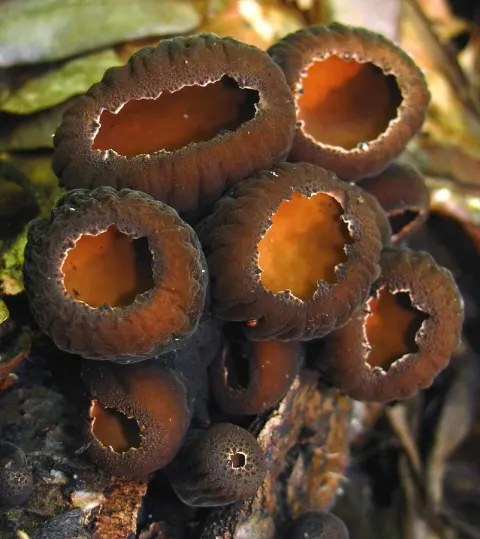
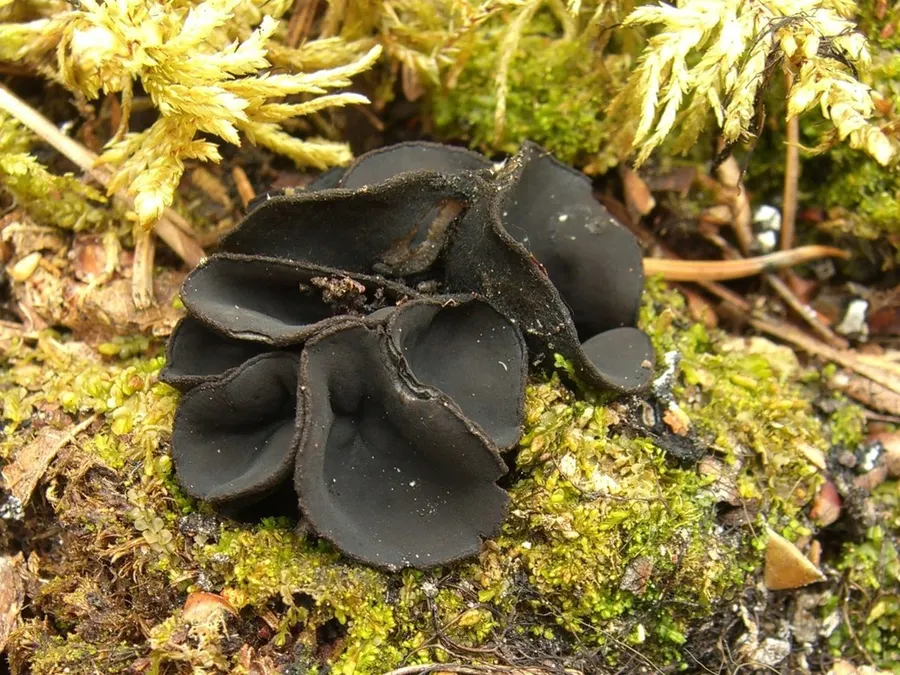
The fruit bodies (technically called apothecia) typically grow in groups, or sometimes crowded closely together, with small stems or missing them entirely. Initially, the fruit bodies are closed and roughly spherical, but as they develop they expand to become cup-shaped, or almost flat. The inner surface of the cups bear the reproductive spore-bearing layer, or hymenium; it is brownish-black, with an edge that is often wavy and curved slightly inwards, and covered with fine hairs. The cups may reach up to 2 cm in diameter. The hairs are long but usually closely coiled and twisted, which gives the cap's exterior a slightly tomentose appearance of nearly uniform thickness. They are pale brown and 4–6 μm in diameter. The fungus has no distinctive taste or odor and is considered inedible. The asci are roughly cylindrical with a long stem-like base; the entire ascus is often as long as 300–325 μm and about 15 μm in diameter at the thickest point. The spores are round, smooth, translucent (hyaline), and have diameters of about 12–14 μm. They are filled with many small oil droplets. The paraphyses (sterile filamentous hyphae in the hymenium) are enlarged at their tips and filled with brown colored matter, about 4 μm thick.
Habitat dan peran ekologis
P. nigrella memiliki distribusi di seluruh dunia, dan telah ditemukan di Amerika Utara, Karibia, Eropa, India, Madagaskar, Selandia Baru, Israel, dan Jepang. Spesies ini adalah saprobik, dan ditemukan tumbuh dalam kelompok di tanah atau di atas kayu yang rusak yang ditutupi lumut, terutama di antara jarum pinus yang jatuh. Di Amerika Utara, tubuh buah muncul di musim semi dan musim panas, dan cukup umum; di Inggris, buah jamur dari musim dingin hingga musim semi, dan jarang. Ukuran kecil dan warna gelapnya membuatnya mudah diabaikan.
- Habitat atau konteks temuan
- Informasi belum tersedia pada sumber rilis ini.
- Substrat
- tanah
- Peran atau konteks
- Pengurai
Reproduksi
The fruit bodies (technically called apothecia) typically grow in groups, or sometimes crowded closely together, with small stems or missing them entirely. Initially, the fruit bodies are closed and roughly spherical, but as they develop they expand to become cup-shaped, or almost flat. The inner surface of the cups bear the reproductive spore-bearing layer, or hymenium; it is brownish-black, with an edge that is often wavy and curved slightly inwards, and covered with fine hairs. The cups may reach up to 2 cm in diameter. The hairs are long but usually closely coiled and twisted, which gives the cap's exterior a slightly tomentose appearance of nearly uniform thickness. They are pale brown and 4–6 μm in diameter.
Catatan identitas dan cakupan
- Nama diterima mengikuti Catalogue of Life Base2026-09-11; uraian mempertahankan konsep dan nama sumber aslinya.
- Original geographic, specimen and life-cycle scope retained; source import awaits individual editorial review.
- Impor dan terjemahan otomatis belum diperiksa editorial per profil. Struktur reproduktif yang disebutkan tidak membuktikan seluruh siklus hidup diketahui.
- Pengukuran pada uraian mengikuti spesimen, kultur, dan metode sumber; angka tidak diperluas ke semua populasi.
Catatan distribusi dalam narasi mengikuti sumbernya. Dokumentasi spesimen atau foto mengikuti catatan sumber. Bukti wilayah Indonesia dan penilaian konservasi tidak disimpulkan dari gambar.
Melihat dengan konteks
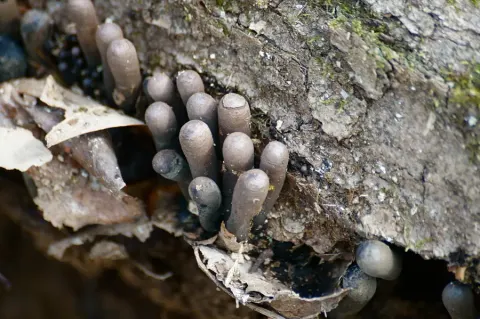
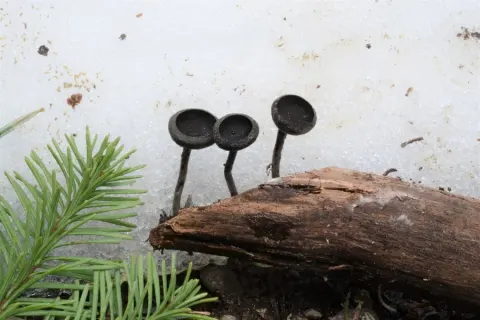
Dokumentasi Pseudoplectania nigrella menurut asosiasi foto pada record takson iNaturalist. Kredit: Jason Hollinger. Identitas mengikuti sumber; bukan penentuan spesimen independen.
- Jenis
- Fotografi
- Kredit
- (c) Jason Hollinger, some rights reserved (CC BY)
- Lisensi
- CC BY 4.0
- Sumber media
- Buka entri sumber
Dokumentasi tambahan
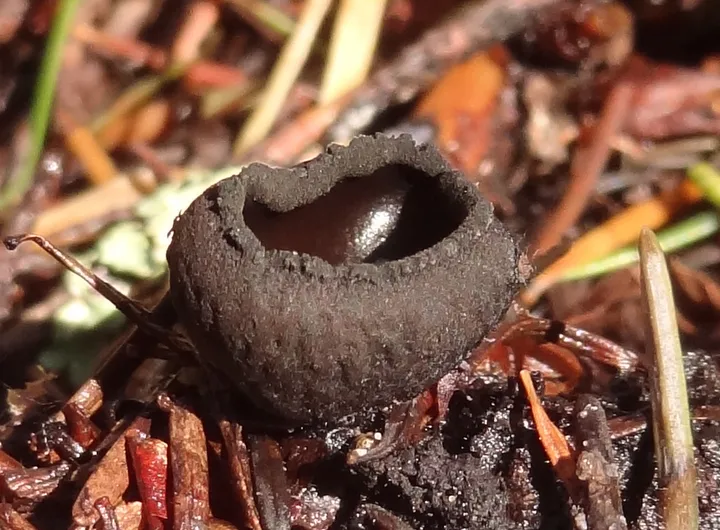
Foto yang diasosiasikan dengan Pseudoplectania nigrella pada iNaturalist. Identifikasi mengikuti sumber; bukan penentuan spesimen independen.
Kredit dan penggunaan
(c) Thomas Laxton, some rights reserved (CC BY-SA), uploaded by Thomas Laxton
Ukuran dan format gambar disesuaikan tanpa pemotongan, retus, atau penambahan skala. Lisensi sumber dipertahankan.
Sumber profil
- [1] Pseudoplectania nigrella — Wikipedia (en)
- [2] Catalogue of Life Base2026-09-11 — Pseudoplectania nigrella
- [3] Dokumentasi visual — Pseudoplectania nigrella
- [4] Dokumentasi visual — Pseudoplectania nigrella
Rujukan halaman ini
Fungi. Pseudoplectania nigrella. Rilis data fungi-2026-10-12-expansion-2. https://fungi-atlas.mgadib.chatgpt.site/jamur/pseudoplectania-nigrella/.
Status: impor sumber; pemeriksaan editorial per profil belum selesai. Untuk klaim biologis, gunakan rujukan pada bagian terkait dan periksa konteks sumber aslinya.