Ciri dan struktur
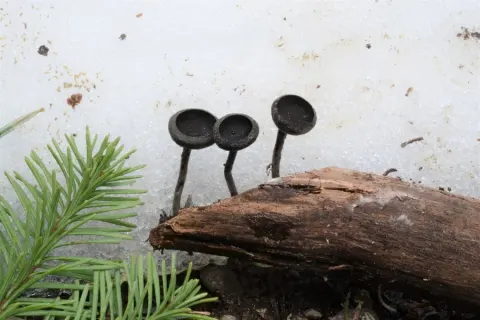
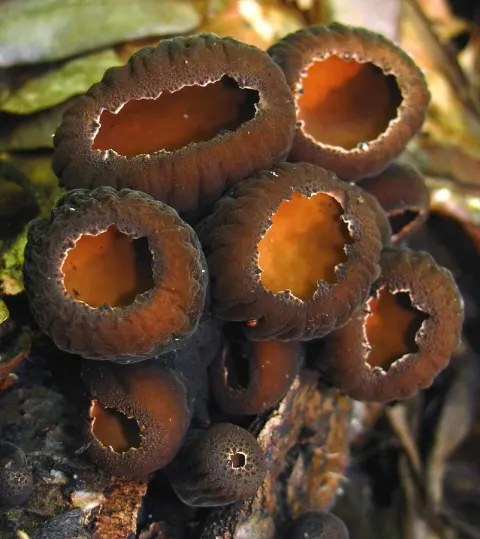
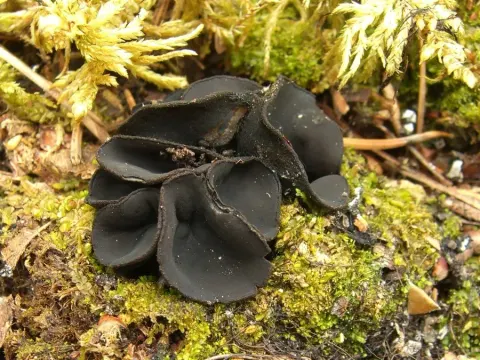
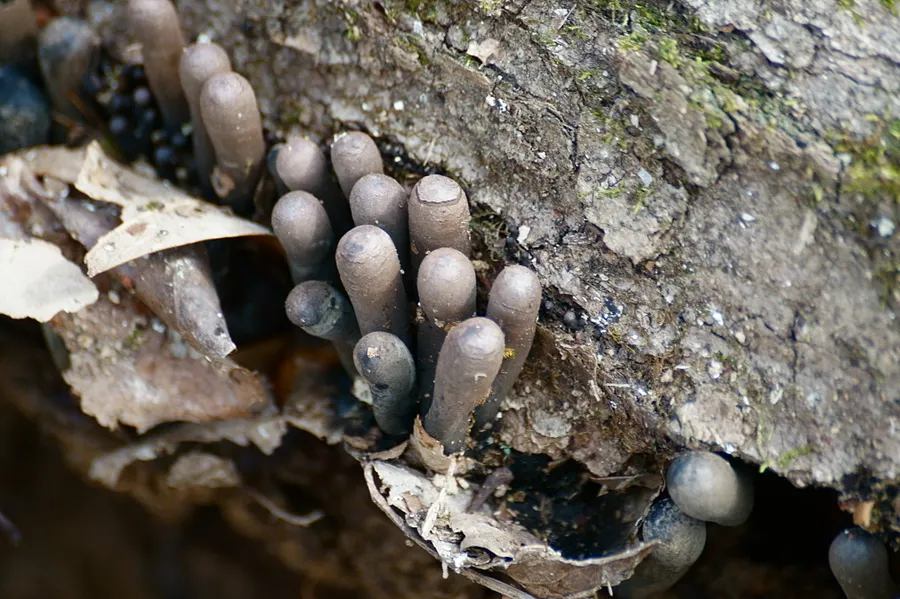
The fruit bodies begin from dense, black mycelium on the surface of oak branches in contact with the ground. Starting out as rolls of cylindrical tissue 1 or more centimeters long and 3–4 mm wide, they expand slowly over the winter, and grow rapidly in the spring when the weather becomes warmer. The goblet-shaped fruit body (technically an ascocarp) is 3–4 cm in diameter and 4–6 cm deep; initially it is closed, but opens as it matures, leaving a ragged or smooth inrolled margin around a round opening. The flesh of the ascocarp walls is tough and initially gelatinous, later becoming leathery. The exterior of the ascocarp is brownish black to black, with a velvety surface, while the interior spore-bearing surface, the hymenium, is brownish black in color, usually somewhat paler than the outside. The outer surface may be partially covered with small flakelike patches of tissue. When viewed with a magnifying glass, the "hairs" (fungal hyphae) making up the outer velvety surface are variable in length, and are thick-walled, blunt, and appear to wind from side to side (flexuous). The ascocarp is connected to a stalk that is typically 3–4 cm long by 0.4–0.8 cm thick, with black mycelia at its base. The spores are ellipsoid or sausage-shaped (allantoid), smooth, and thin-walled. They are non-amyloid (not taking up iodine stain), and hyaline (translucent), with dimensions of 22–37 by 10–15 μm. The spore-bearing cells, the asci are eight-spored, cylindrical, and measure 600 by 15–17 μm. They are operculate, analogous to having a flip-top lid mechanism to release the spores. Interspersed among the asci are thin, filamentous, branched paraphyses that extend beyond the tops of the asci.
Habitat dan peran ekologis
Urnula craterium grows singly or clustered together, usually attached to sticks and branches (especially oak) that are partially buried in the ground. The teleomorph state is saprobic, and decomposes hardwood; the anamorph state is parasitic, and causes a canker of various hardwoods, including oaks, hickories, basswood and beech. It is often found in deciduous forests, although it is sometimes inconspicuous due to its dark color, and because it may be partially covered with leaf litter. One of the first fleshy fungi to appear from March to May, U. craterium has been dubbed a "harbinger of spring", and is sometimes encountered under melting snow. The distribution of U. craterium includes eastern North America, Europe (including the Czech Republic, Finland, and Spain), Japan, and China. It is red-listed as critically endangered in the Czech Republic.
- Habitat atau konteks temuan
- Informasi belum tersedia pada sumber rilis ini.
- Substrat
- Informasi belum tersedia pada sumber rilis ini.
- Peran atau konteks
- Pengurai
Reproduksi
The goblet-shaped fruit body (technically an ascocarp) is 3–4 cm in diameter and 4–6 cm deep; initially it is closed, but opens as it matures, leaving a ragged or smooth inrolled margin around a round opening. The flesh of the ascocarp walls is tough and initially gelatinous, later becoming leathery. The exterior of the ascocarp is brownish black to black, with a velvety surface, while the interior spore-bearing surface, the hymenium, is brownish black in color, usually somewhat paler than the outside. The outer surface may be partially covered with small flakelike patches of tissue. When viewed with a magnifying glass, the "hairs" (fungal hyphae) making up the outer velvety surface are variable in length, and are thick-walled, blunt, and appear to wind from side to side (flexuous).
Catatan identitas dan cakupan
- Nama diterima mengikuti Catalogue of Life Base2026-09-11; uraian mempertahankan konsep dan nama sumber aslinya.
- Original geographic, specimen and life-cycle scope retained; source import awaits individual editorial review.
- Impor dan terjemahan otomatis belum diperiksa editorial per profil. Struktur reproduktif yang disebutkan tidak membuktikan seluruh siklus hidup diketahui.
- Pengukuran pada uraian mengikuti spesimen, kultur, dan metode sumber; angka tidak diperluas ke semua populasi.
Catatan distribusi dalam narasi mengikuti sumbernya. Dokumentasi spesimen atau foto mengikuti catatan sumber. Bukti wilayah Indonesia dan penilaian konservasi tidak disimpulkan dari gambar.
Melihat dengan konteks
Dokumentasi Urnula craterium menurut asosiasi foto pada record takson iNaturalist. Kredit: psweet. Identitas mengikuti sumber; bukan penentuan spesimen independen.
- Jenis
- Fotografi
- Kredit
- (c) psweet, some rights reserved (CC BY-SA), uploaded by psweet
- Lisensi
- CC BY-SA 4.0
- Sumber media
- Buka entri sumber
Dokumentasi tambahan
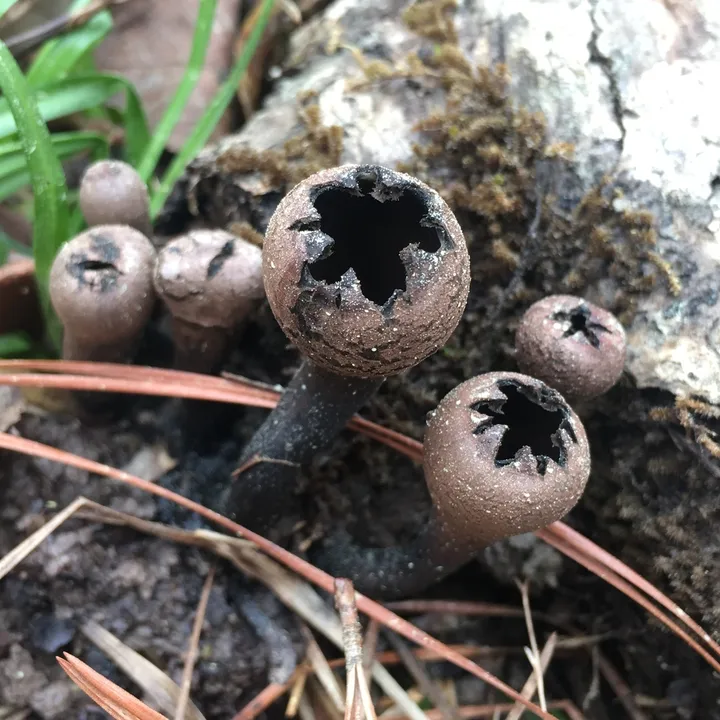
Foto yang diasosiasikan dengan Urnula craterium pada iNaturalist. Identifikasi mengikuti sumber; bukan penentuan spesimen independen.
Kredit dan penggunaan
(c) Matt Berger, some rights reserved (CC BY), uploaded by Matt Berger
Ukuran dan format gambar disesuaikan tanpa pemotongan, retus, atau penambahan skala. Lisensi sumber dipertahankan.
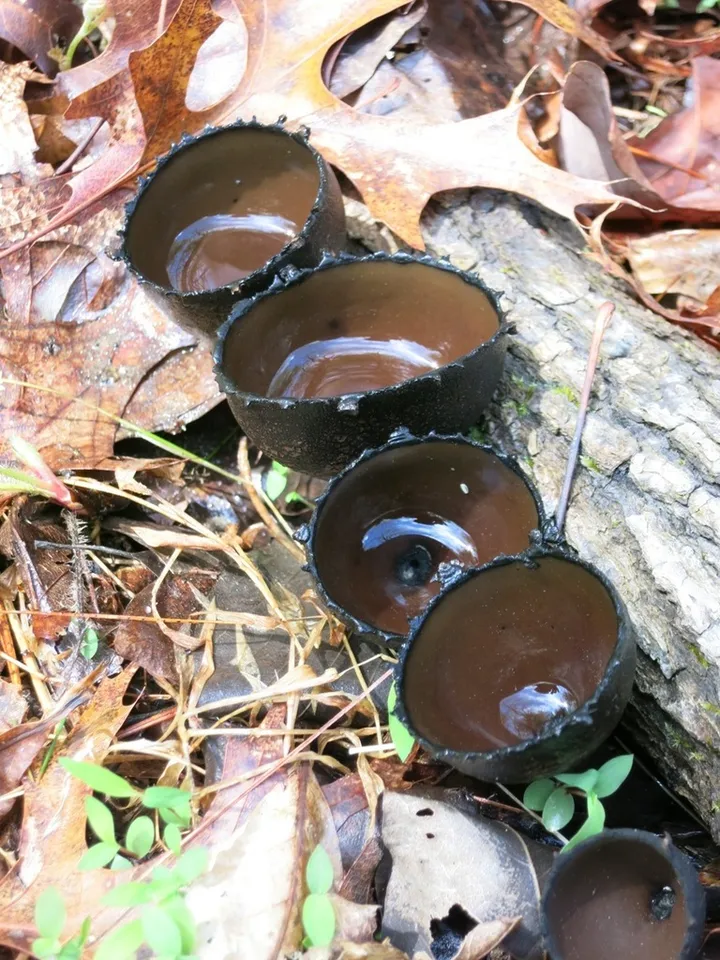
Foto yang diasosiasikan dengan Urnula craterium pada iNaturalist. Identifikasi mengikuti sumber; bukan penentuan spesimen independen.
Kredit dan penggunaan
(c) Evan M. Raskin, some rights reserved (CC BY), uploaded by Evan M. Raskin
Ukuran dan format gambar disesuaikan tanpa pemotongan, retus, atau penambahan skala. Lisensi sumber dipertahankan.
Sumber profil
- [1] Urnula craterium — Wikipedia (en)
- [2] Catalogue of Life Base2026-09-11 — Urnula craterium
- [3] Dokumentasi visual — Urnula craterium
- [4] Dokumentasi visual — Urnula craterium
- [5] Dokumentasi visual — Urnula craterium
Rujukan halaman ini
Fungi. Urnula craterium. Rilis data fungi-2026-10-12-expansion-2. https://fungi-atlas.mgadib.chatgpt.site/jamur/urnula-craterium/.
Status: impor sumber; pemeriksaan editorial per profil belum selesai. Untuk klaim biologis, gunakan rujukan pada bagian terkait dan periksa konteks sumber aslinya.