Ciri dan struktur
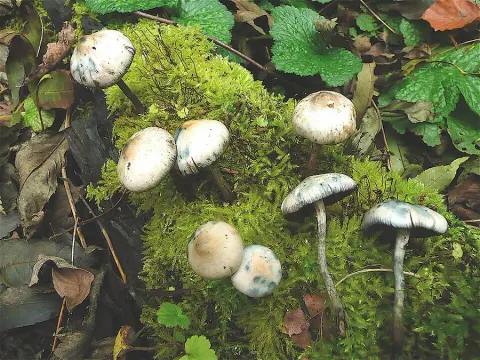
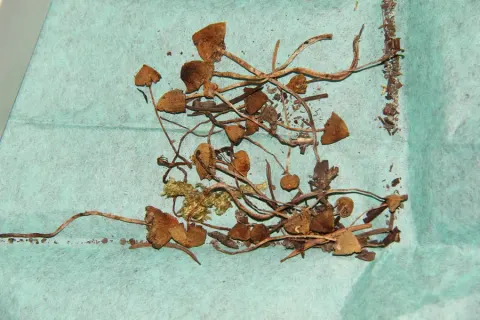
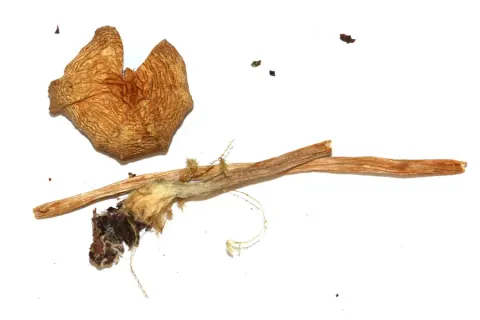
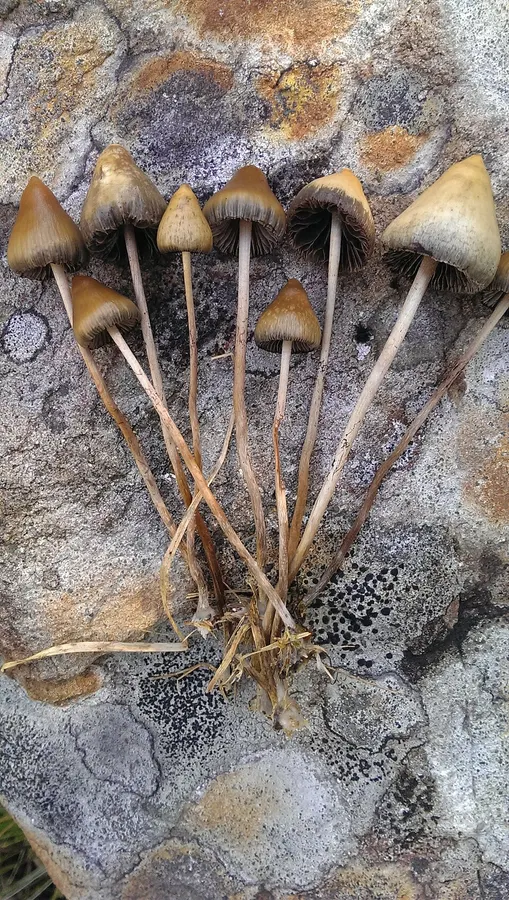
The cap of P. semilanceata is 5-25 mm in diameter and 6 - 22 mm tall. It varies in shape from sharply conical to bell-shaped, often with a prominent papilla (a nipple-shaped structure), and does not change shape considerably as it ages. The cap margin is initially rolled inward but unrolls to become straight or even curled upwards in maturity. The cap is hygrophanous, meaning it assumes different colors depending on its state of hydration. When it is moist, the cap is ochraceous to pale brown to dark chestnut brown, but darker in the center, often with a greenish-blue tinge. When moist, radial grooves (striations) can be seen on the cap that correspond to the positions of the gills underneath. When the cap is dry, it becomes much paler, a light yellow-brown color. Moist mushrooms have sticky surfaces that result from a thin gelatinous film called a pellicle. This film becomes apparent if a piece of the cap is broken by bending it back and peeling away the piece. When the cap dries from exposure to the sun, the film turns whitish and is no longer peelable. On the underside of the mushroom's cap, there are between 15 and 27 individual narrow gills that are moderately crowded together, and they have a narrowly adnexed to almost free attachment to the stipe. Their color is initially pale brown, but becomes dark gray to purple-brown with a lighter edge as the spores mature. The slender yellowish-brown stipe is 4.5-14 cm long by 1-3.5 mm thick, and usually slightly thicker towards the base. The mushroom has a thin cobweb-like partial veil that does not last long before disappearing; sometimes, the partial veil leaves an annular zone on the stipe that may be darkened by spores.
Habitat dan peran ekologis
Psilocybe semilanceata fruits solitarily or in groups on rich Like some other grassland psilocybin mushroom species such as P. mexicana, P. tampanensis and Conocybe cyanopus, P. semilanceata may form sclerotia, a dormant form of the fungus, which affords it some protection from wildfires and other natural disasters. Laboratory tests have shown P. semilanceata to suppress the growth of the soil-borne water mold Phytophthora cinnamomi, a virulent plant pathogen that causes the disease root rot. When grown in dual culture with other saprobic fungi isolated from the rhizosphere of grasses from its habitat, P. semilanceata significantly suppresses their growth. This antifungal activity, which can be traced at least partly to two phenolic compounds it secretes, helps it compete successfully with other fungal species in the intense competition for nutrients provided by decaying plant matter. Using standard antimicrobial susceptibility tests, Psilocybe semilanceata was shown to strongly inhibit the growth of the human pathogen methicillin-resistant Staphylococcus aureus (MRSA). The source of the antimicrobial activity is unknown. Psilocybe authority Gastón Guzmán, in his 1983 monograph on psilocybin mushrooms, considered Psilocybe semilanceata the world's most widespread psilocybin mushroom species, as it has been reported on 18 countries. the United Kingdom and Ukraine.
- Habitat atau konteks temuan
- padang rumput; kultur yang didokumentasikan
- Substrat
- Informasi belum tersedia pada sumber rilis ini.
- Peran atau konteks
- Pengurai
Reproduksi
On the underside of the mushroom's cap, there are between 15 and 27 individual narrow gills that are moderately crowded together, and they have a narrowly adnexed to almost free attachment to the stipe. Their color is initially pale brown, but becomes dark gray to purple-brown with a lighter edge as the spores mature. The slender yellowish-brown stipe is 4.5-14 cm long by 1-3.5 mm thick, and usually slightly thicker towards the base. The mushroom has a thin cobweb-like partial veil that does not last long before disappearing; sometimes, the partial veil leaves an annular zone on the stipe that may be darkened by spores. The flesh is thin and membrane-like, and roughly the same color as the surface tissue.
Catatan identitas dan cakupan
- Nama diterima mengikuti Catalogue of Life Base2026-09-11; uraian mempertahankan konsep dan nama sumber aslinya.
- Original geographic, specimen and life-cycle scope retained; source import awaits individual editorial review.
- Impor dan terjemahan otomatis belum diperiksa editorial per profil. Struktur reproduktif yang disebutkan tidak membuktikan seluruh siklus hidup diketahui.
- Pengukuran pada uraian mengikuti spesimen, kultur, dan metode sumber; angka tidak diperluas ke semua populasi.
Catatan distribusi dalam narasi mengikuti sumbernya. Dokumentasi spesimen atau foto mengikuti catatan sumber. Bukti wilayah Indonesia dan penilaian konservasi tidak disimpulkan dari gambar.
Melihat dengan konteks
Dokumentasi Psilocybe semilanceata dari Wikimedia Commons. Psilocybe Semilanceata mushrooms, freshly picked in highland Norway and photographed on a piece of rock. Identifikasi mengikuti record berkas sumber.
- Jenis
- Fotografi
- Kredit
- Scienceman71
- Lisensi
- CC BY-SA 4.0
- Sumber media
- Buka entri sumber
Sumber profil
- [1] Psilocybe semilanceata — Wikipedia (en)
- [2] Catalogue of Life Base2026-09-11 — Psilocybe semilanceata
- [3] Dokumentasi visual — Psilocybe semilanceata
Rujukan halaman ini
Fungi. Psilocybe semilanceata. Rilis data fungi-2026-10-12-expansion-2. https://fungi-atlas.mgadib.chatgpt.site/jamur/psilocybe-semilanceata/.
Status: impor sumber; pemeriksaan editorial per profil belum selesai. Untuk klaim biologis, gunakan rujukan pada bagian terkait dan periksa konteks sumber aslinya.