Ciri dan struktur
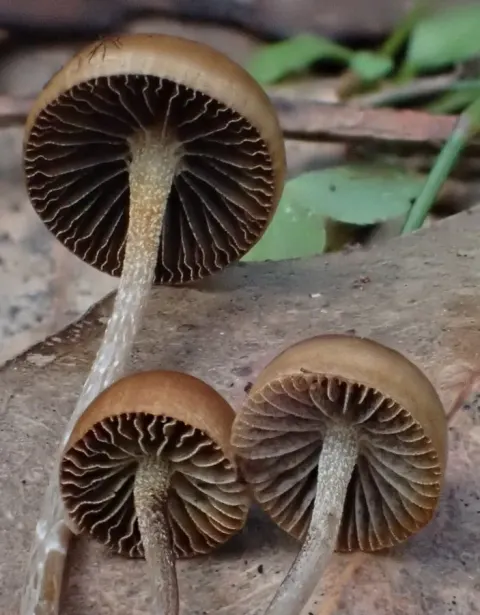
The cap is obtusely conic to convex, and does not expand to become flattened with age; it reaches 1 – 2 cm in diameter. Its margin is bent in slightly at first but soon straightens. The cap surface is smooth except for a faint fringe at the margin from a rudimentary veil, sticky, hygrophanous but opaque when moist, deep brown in the center and somewhat darker brown near the margin. As the mushroom matures, it fades slowly in the center to a dull cinnamon color. The pellicle rips into shreds when peeled. The pliant flesh is thin, 2 mm in the center of the cap and tapered evenly to the margin. The cap surface is covered with grayish fibrils; underneath the fibrils the color is initially the same as the cap, but becomes blackish-brown in age at the base or over lower parts. The gills are slightly darker than the cap in color, broadly adnate, but develop a slight decurrent tooth in age (when the gill separates slightly from the stem). The gills are broad (about 3 mm), with a close to subdistant spacing. Roughly 24 gills reach the cap edge from the stem; there are additionally 2 or three tiers of lamellulae—short gills that do not extend completely from the stem to the cap edge. The stem is 3 to 5 cm long by 1.5–2.5 mm thick, and equal in width throughout its length. It is attached to its substrate (wood or sticks) by a grayish mat of mycelium. It is not known if the mushroom contains psychoactive compounds like psilocybin or psilocin. The spore print is purple-brown. The spores are ellipsoid to slightly egg-shaped, smooth, and measure 6.3–7.5 by 3.8–4.5 μm. The spores have an apical pore, but it is small and inconspicuous.
Habitat dan peran ekologis
Psilocybe washingtonensis grows scattered or in groups on decaying conifer wood in forests. Spesies ini hanya dikenal dari Washington state dan dari Oregon utara, dekat Welches.
- Habitat atau konteks temuan
- hutan
- Substrat
- Informasi belum tersedia pada sumber rilis ini.
- Peran atau konteks
- Belum dikategorikan pada rilis ini.
Reproduksi
The spore print is purple-brown. The spores are ellipsoid to slightly egg-shaped, smooth, and measure 6.3–7.5 by 3.8–4.5 μm. The spores have an apical pore, but it is small and inconspicuous. The basidia (spore-bearing cells) are four-spored, narrowly club-shaped to somewhat cylindrical, and measure 18–24 by 5–6 μm. P. washingtonensis has scattered to abundant pleurocystidia (cystidia on the gill face) that typically measure 38–56 by 9–12 μm. There are two forms of cheilocystidia (cystidia in the gill edge): one is fusoid-ventricose (distinctly enlarged in the middle and tapered toward both ends) with blunt to somewhat sharp apices, often covered with mucilage, and measures 26–38 by 7–11 μm; the other is broadly club-shaped to capitate (with a distinct spherical tip), and measures 26 by 10–12 μm.
Catatan identitas dan cakupan
- Nama diterima mengikuti Catalogue of Life Base2026-09-11; uraian mempertahankan konsep dan nama sumber aslinya.
- Original geographic, specimen and life-cycle scope retained; source import awaits individual editorial review.
- Impor dan terjemahan otomatis belum diperiksa editorial per profil. Struktur reproduktif yang disebutkan tidak membuktikan seluruh siklus hidup diketahui.
- Pengukuran pada uraian mengikuti spesimen, kultur, dan metode sumber; angka tidak diperluas ke semua populasi.
Catatan distribusi dalam narasi mengikuti sumbernya. Dokumentasi spesimen atau foto mengikuti catatan sumber. Bukti wilayah Indonesia dan penilaian konservasi tidak disimpulkan dari gambar.
Melihat dengan konteks
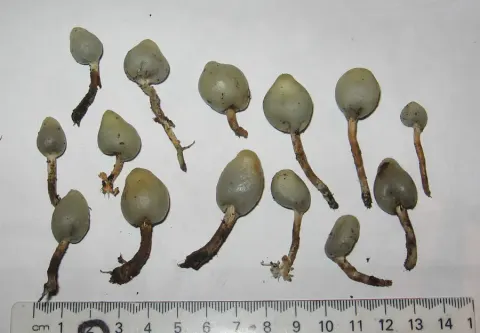
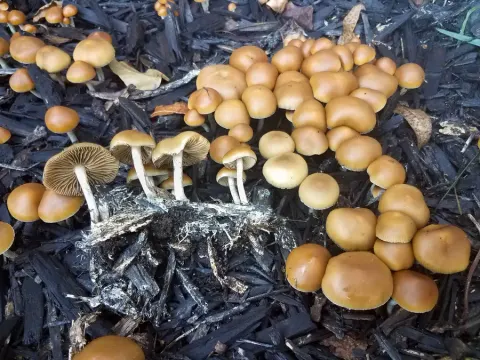
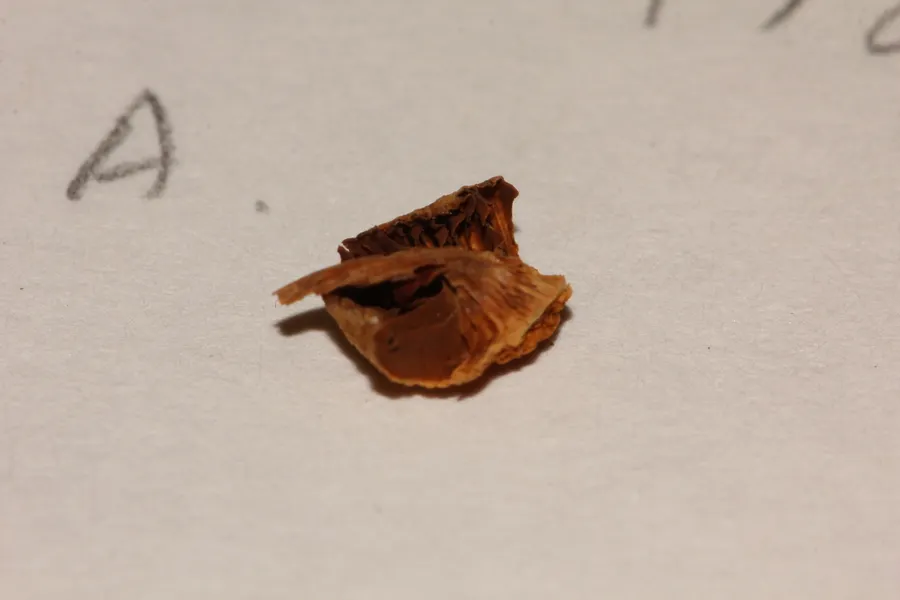
Dokumentasi Psilocybe washingtonensis menurut asosiasi foto pada record takson iNaturalist. Kredit: Alan Rockefeller. Identitas mengikuti sumber; bukan penentuan spesimen independen.
- Jenis
- Fotografi
- Kredit
- (c) Alan Rockefeller, some rights reserved (CC BY), uploaded by Alan Rockefeller
- Lisensi
- CC BY 4.0
- Sumber media
- Buka entri sumber
Dokumentasi tambahan
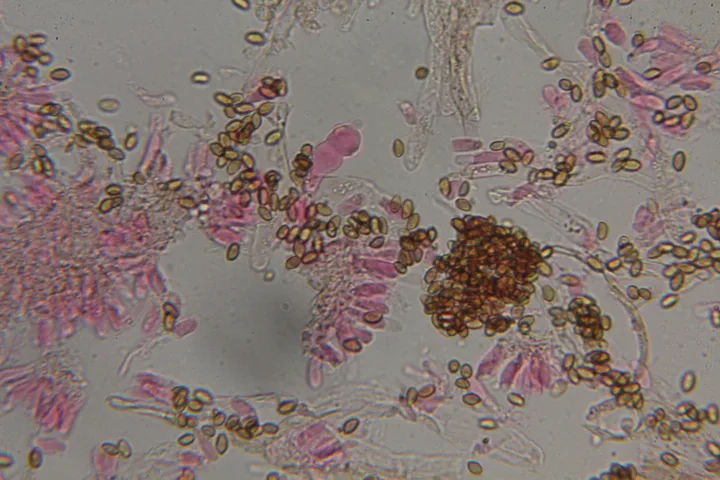
Foto yang diasosiasikan dengan Psilocybe washingtonensis pada iNaturalist. Identifikasi mengikuti sumber; bukan penentuan spesimen independen.
Kredit dan penggunaan
(c) Alan Rockefeller, some rights reserved (CC BY), uploaded by Alan Rockefeller
Ukuran dan format gambar disesuaikan tanpa pemotongan, retus, atau penambahan skala. Lisensi sumber dipertahankan.
Sumber profil
- [1] Psilocybe washingtonensis — Wikipedia (en)
- [2] Catalogue of Life Base2026-09-11 — Psilocybe washingtonensis
- [3] Dokumentasi visual — Psilocybe washingtonensis
- [4] Dokumentasi visual — Psilocybe washingtonensis
Rujukan halaman ini
Fungi. Psilocybe washingtonensis. Rilis data fungi-2026-10-12-expansion-2. https://fungi-atlas.mgadib.chatgpt.site/jamur/psilocybe-washingtonensis/.
Status: impor sumber; pemeriksaan editorial per profil belum selesai. Untuk klaim biologis, gunakan rujukan pada bagian terkait dan periksa konteks sumber aslinya.