Ciri dan struktur
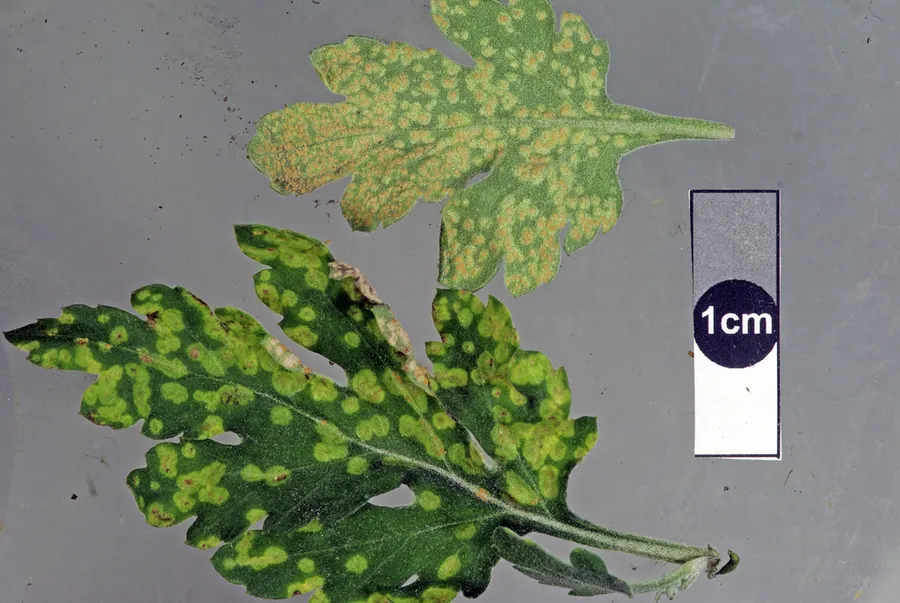
Plants infected by chrysanthemum white rust exhibit spots on the upper surfaces of leaves. These spots are initially pale-green to yellow in color and up to 5mm in diameter, but may turn brown as the tissue becomes necrotic. On the underside of the leaf, stems, and flower, spots develop into pink or white waxy telial clusters/pustules where teliospores develop. Pustules are able to form on any green tissue of the plant, but are most common on young leaves and flower bracts. Puccinia horiana is a microcyclic, autoecious rust, meaning that the fungus has two known spore stages: teliospores and basidiospores, as well as no known alternate host. Similar to other microcyclic rusts, two-celled teliospores produce unicellular basidiospores which are then dispersed via air currents. Basidiospores are disseminated 3–6 hours after development through wind and/or water. Symptoms begin to occur 7–10 days after penetration into the epidermis. Shortly after leaf spots appear, telial clusters will begin to form on the stems, flowers, and abaxial leaf surfaces. This is where teliospores develop. These teliospores will produce basidiospores initiating a new cycle. (i) Basidospore lands on susceptible plant. Development of germ tube and infection peg begins. (iv) Formation of septate fungal vesicles with branching hyphae. Here the fungus will move to infect the rest of the plant. Maintain production area at less than preferred humidity for spore germination and survival Follow specific sanitation protocols for personnel Train personnel on symptoms and proper management practices Avoid over and under-story of known hosts Confirm that host stock comes from CWR free nursery Inspect plants as soon as they arrive Cuttings should be treated with fungicide before planting Separate mother stock from main production area
Habitat dan peran ekologis
Chrysanthemum white karat (CWR) pertama kali diidentifikasi di Japan in 1895. Jamur Puccinia horiana pertama kali dijelaskan dan diterbitkan oleh German mycologist Paul Christoph Hennings (1841–1908), ketika ditemukan di daun Chrysanthemum sinense di Honshu, Jepang. Sekarang sudah ada di seluruh Asia, Eropa, Australia, dan Amerika Selatan. Penyakit ini telah ditemukan di Amerika Serikat States on beberapa kali, tetapi upaya mendeteksi dan memberantasnya sejak dini telah mencegah penyakit ini menjadi mapan.
- Habitat atau konteks temuan
- Informasi belum tersedia pada sumber rilis ini.
- Substrat
- Informasi belum tersedia pada sumber rilis ini.
- Peran atau konteks
- Belum dikategorikan pada rilis ini.
Reproduksi
Puccinia horiana is a microcyclic, autoecious rust, meaning that the fungus has two known spore stages: teliospores and basidiospores, as well as no known alternate host. Similar to other microcyclic rusts, two-celled teliospores produce unicellular basidiospores which are then dispersed via air currents. Basidiospores are disseminated 3–6 hours after development through wind and/or water. Symptoms begin to occur 7–10 days after penetration into the epidermis. Shortly after leaf spots appear, telial clusters will begin to form on the stems, flowers, and abaxial leaf surfaces. This is where teliospores develop. These teliospores will produce basidiospores initiating a new cycle. Maintain production area at less than preferred humidity for spore germination and survival Follow specific sanitation protocols for personnel Train personnel on symptoms and proper management practices Avoid over and under-story of known hosts Confirm that host stock comes from CWR free nursery Inspect plants as soon as they arrive Cuttings should be treated with fungicide before planting Separate mother stock from main production area
Catatan identitas dan cakupan
- Nama diterima mengikuti Catalogue of Life Base2026-09-11; uraian mempertahankan konsep dan nama sumber aslinya.
- Original geographic, specimen and life-cycle scope retained; source import awaits individual editorial review.
- Impor dan terjemahan otomatis belum diperiksa editorial per profil. Struktur reproduktif yang disebutkan tidak membuktikan seluruh siklus hidup diketahui.
- Pengukuran pada uraian mengikuti spesimen, kultur, dan metode sumber; angka tidak diperluas ke semua populasi.
Catatan distribusi dalam narasi mengikuti sumbernya. Dokumentasi spesimen atau foto mengikuti catatan sumber. Bukti wilayah Indonesia dan penilaian konservasi tidak disimpulkan dari gambar.
Melihat dengan konteks
Dokumentasi Puccinia horiana menurut asosiasi foto pada record takson iNaturalist. Kredit: Jerry Cooper. Identitas mengikuti sumber; bukan penentuan spesimen independen.
- Jenis
- Fotografi
- Kredit
- (c) Jerry Cooper, some rights reserved (CC BY), uploaded by Jerry Cooper
- Lisensi
- CC BY 4.0
- Sumber media
- Buka entri sumber
Dokumentasi tambahan
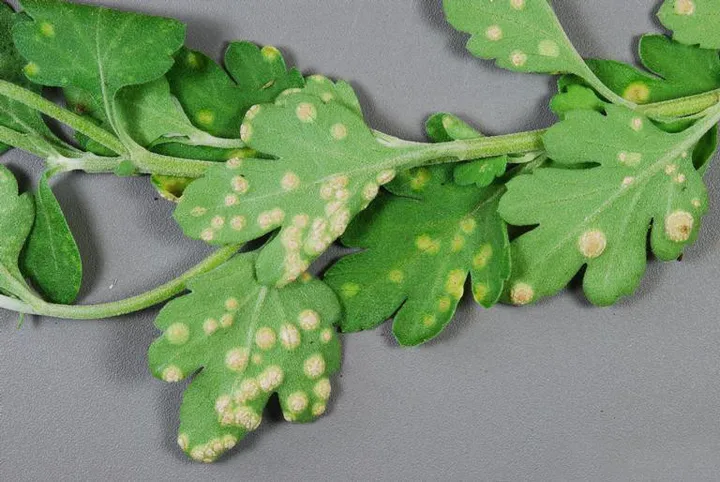
Foto yang diasosiasikan dengan Puccinia horiana pada iNaturalist. Identifikasi mengikuti sumber; bukan penentuan spesimen independen.
Kredit dan penggunaan
(c) Nancy Gregory, some rights reserved (CC BY)
Ukuran dan format gambar disesuaikan tanpa pemotongan, retus, atau penambahan skala. Lisensi sumber dipertahankan.
Sumber profil
- [1] Puccinia horiana — Wikipedia (en)
- [2] Catalogue of Life Base2026-09-11 — Puccinia horiana
- [3] Dokumentasi visual — Puccinia horiana
- [4] Dokumentasi visual — Puccinia horiana
Rujukan halaman ini
Fungi. Puccinia horiana. Rilis data fungi-2026-10-12-expansion-2. https://fungi-atlas.mgadib.chatgpt.site/jamur/puccinia-horiana/.
Status: impor sumber; pemeriksaan editorial per profil belum selesai. Untuk klaim biologis, gunakan rujukan pada bagian terkait dan periksa konteks sumber aslinya.