Ciri dan struktur
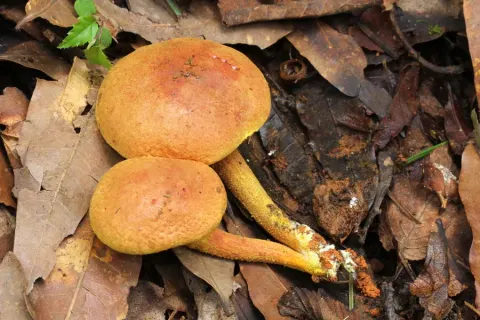
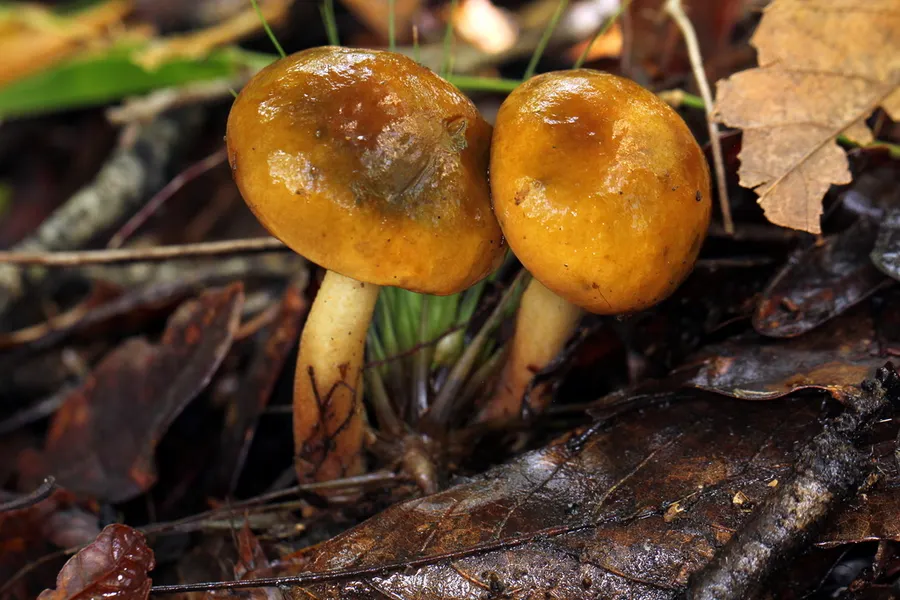
The cap is 3 – 9.5 cm wide, and initially obtuse to convex in shape before becoming broadly convex to nearly flat when mature. The cap margin has a narrow band of sterile tissue that in young fruit bodies is curved inwards. The cap surface is somewhat sticky when fresh, smooth, and bright yellow to orange-yellow, sometimes with brownish tints or whitish areas in age. The whitish flesh does not change color when exposed to air, and has no distinctive odor or taste. On the underside of the cap, the pore surface is initially whitish to buff or pale yellow, but becomes duller and darker at maturity, often depressed near the stem in age. Unlike some other boletes, B. curtisii does not turn blue when bruised or injured. The pores are circular to angular, and there are 2–3 per mm; the tubes are 6–12 mm deep. The spores are 9.5–17 by 4–6 μm, ellipsoid to somewhat ventricose (inflated on one side), smooth, and yellowish. The basidia (spore-bearing cells) are four-spored, measuring 25–32 by 6–10.8 μm. The cystidia lining the inside of the tubes are shaped like setae (i.e., thick-walled and thornlike) and have dimensions of 43–86 by 6.5–11 μm. All hyphae lack clamp connections.
Habitat dan peran ekologis
The fruit bodies of B. curtisii grow singly, scattered, or in small groups on the ground in coniferous or mixed woods, often with pines. Fruit bodies generally appear from August to November. The geographical distribution of the fungus is limited to eastern and southern North America. In the United States, it occurs from New England south to Florida, and west to Texas. The species was newly reported from Mexico in 2001.
- Habitat atau konteks temuan
- Informasi belum tersedia pada sumber rilis ini.
- Substrat
- tanah
- Peran atau konteks
- Belum dikategorikan pada rilis ini.
Reproduksi
The spores are 9.5–17 by 4–6 μm, ellipsoid to somewhat ventricose (inflated on one side), smooth, and yellowish. The basidia (spore-bearing cells) are four-spored, measuring 25–32 by 6–10.8 μm. The cystidia lining the inside of the tubes are shaped like setae (i.e., thick-walled and thornlike) and have dimensions of 43–86 by 6.5–11 μm. All hyphae lack clamp connections.
Catatan identitas dan cakupan
- Nama diterima mengikuti Catalogue of Life Base2026-09-11; uraian mempertahankan konsep dan nama sumber aslinya.
- Original geographic, specimen and life-cycle scope retained; source import awaits individual editorial review.
- Impor dan terjemahan otomatis belum diperiksa editorial per profil. Struktur reproduktif yang disebutkan tidak membuktikan seluruh siklus hidup diketahui.
- Pengukuran pada uraian mengikuti spesimen, kultur, dan metode sumber; angka tidak diperluas ke semua populasi.
Catatan distribusi dalam narasi mengikuti sumbernya. Dokumentasi spesimen atau foto mengikuti catatan sumber. Bukti wilayah Indonesia dan penilaian konservasi tidak disimpulkan dari gambar.
Melihat dengan konteks
Dokumentasi Pulveroboletus curtisii menurut asosiasi foto pada record takson iNaturalist. Kredit: Alan Rockefeller. Identitas mengikuti sumber; bukan penentuan spesimen independen.
- Jenis
- Fotografi
- Kredit
- (c) Alan Rockefeller, some rights reserved (CC BY), uploaded by Alan Rockefeller
- Lisensi
- CC BY 4.0
- Sumber media
- Buka entri sumber
Dokumentasi tambahan
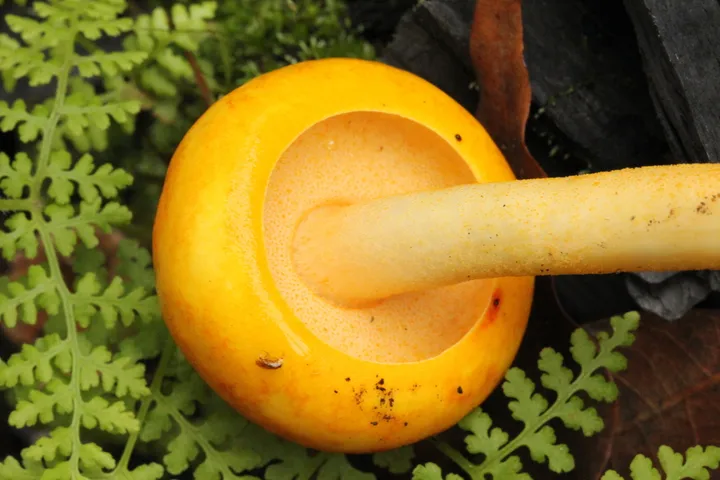
Foto yang diasosiasikan dengan Pulveroboletus curtisii pada iNaturalist. Identifikasi mengikuti sumber; bukan penentuan spesimen independen.
Kredit dan penggunaan
(c) Alan Rockefeller, some rights reserved (CC BY), uploaded by Alan Rockefeller
Ukuran dan format gambar disesuaikan tanpa pemotongan, retus, atau penambahan skala. Lisensi sumber dipertahankan.
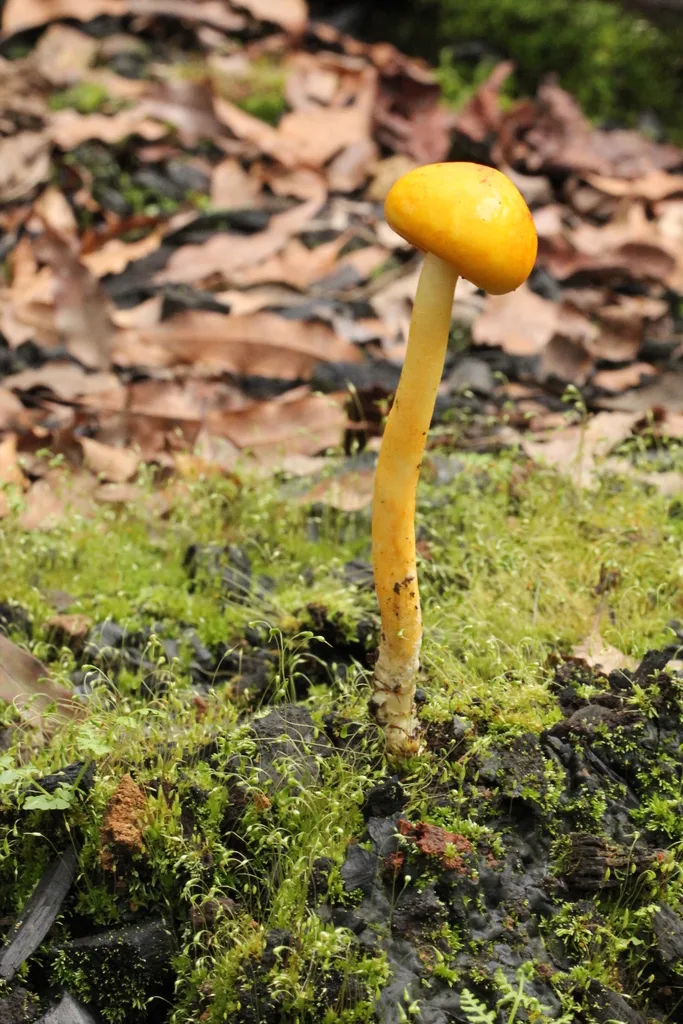
Foto yang diasosiasikan dengan Pulveroboletus curtisii pada iNaturalist. Identifikasi mengikuti sumber; bukan penentuan spesimen independen.
Kredit dan penggunaan
(c) Alan Rockefeller, some rights reserved (CC BY), uploaded by Alan Rockefeller
Ukuran dan format gambar disesuaikan tanpa pemotongan, retus, atau penambahan skala. Lisensi sumber dipertahankan.
Sumber profil
- [1] Boletus curtisii — Wikipedia (en)
- [2] Catalogue of Life Base2026-09-11 — Pulveroboletus curtisii
- [3] Dokumentasi visual — Pulveroboletus curtisii
- [4] Dokumentasi visual — Pulveroboletus curtisii
- [5] Dokumentasi visual — Pulveroboletus curtisii
Rujukan halaman ini
Fungi. Pulveroboletus curtisii. Rilis data fungi-2026-10-12-expansion-2. https://fungi-atlas.mgadib.chatgpt.site/jamur/pulveroboletus-curtisii/.
Status: impor sumber; pemeriksaan editorial per profil belum selesai. Untuk klaim biologis, gunakan rujukan pada bagian terkait dan periksa konteks sumber aslinya.